John Legend opens a new era on the Bigger Than tour
Published on 05/17/2026 at 02:18 | Editorial responsibility: Rafael Müller, Editor-in-Chief AD HOC NEWS
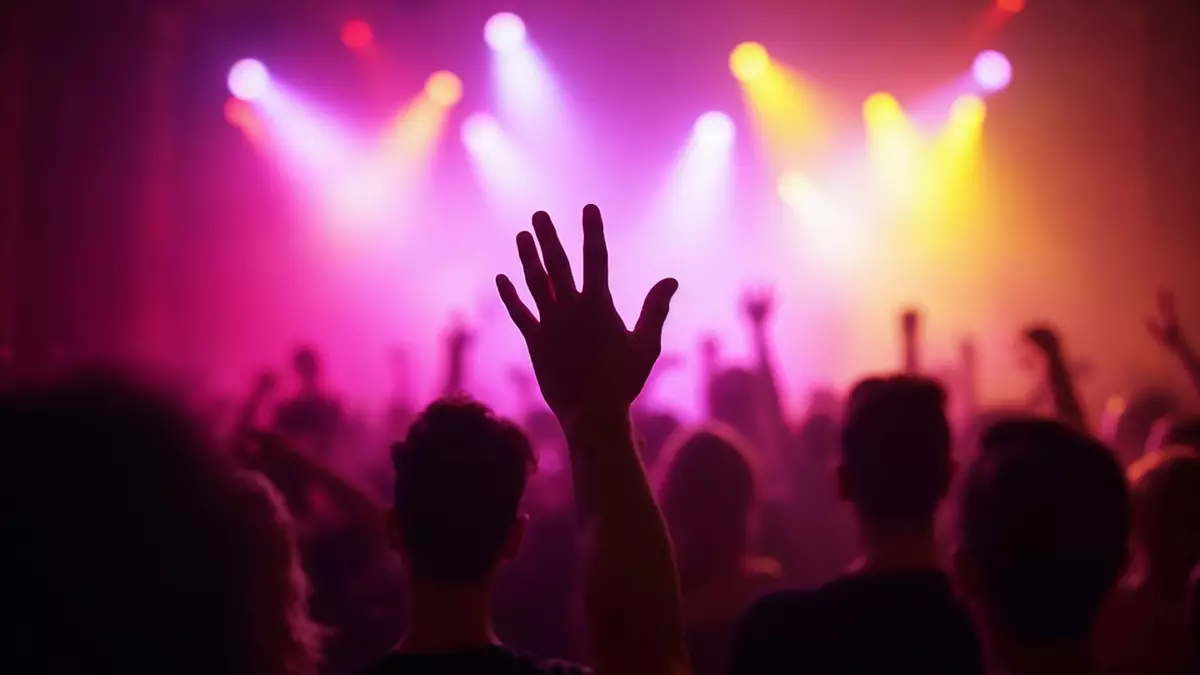
Under soft gold lights at New York's Radio City Music Hall, John Legend eased into the piano intro of Ordinary People and turned a sold-out theater into a quiet choir. The R&B hitmaker has spent two decades playing arenas and festivals, but on his current Bigger Than tour he is rewriting the script on how a veteran star revisits a catalog in real time.
John Legend's current chapter — the Bigger Than tour and recent releases
As of May 17, 2026, John Legend is in an ongoing touring cycle around his latest studio era, anchored by the intimate Bigger Than tour concept and the recent deluxe expansion of his self-titled album Legend. While no brand-new album has dropped in the last 72 hours, the show he is taking through U.S. theaters radically reframes songs that first made him a star in the mid-2000s.
According to Billboard, Legend's most recent full-length release, Legend, arrived in 2022 as a double album on Republic Records and G.O.O.D. Music, reinforcing his status as one of contemporary R&B's most reliable album artists while spotlighting collaborations with Saweetie, Jhene Aiko, Rick Ross, and Jazmine Sullivan. Rolling Stone noted that the project leaned into sleek, modern production without abandoning the gospel-tinged warmth that defined his breakout work on Get Lifted.
On the road, the singer is threading material from Legend into a setlist that still gives prominent space to All of Me, Ordinary People, Green Light, and his Grammy-winning Glory collaboration with Common. In contrast to the arena-scale shows that followed his 2013 smash Love in the Future, the current tour emphasizes storytelling, with Legend introducing songs from a solo piano or standing center stage backed by a tight rhythm section and three-piece vocal ensemble.
Recent U.S. dates have included multi-night runs at Los Angeles's Dolby Theatre, Chicago's Chicago Theatre, Nashville's Ryman Auditorium, and a string of East Coast stops including Boston's Wang Theatre and Washington, D.C.'s The Anthem. While many veteran acts lean on large-scale production, Legend's new stage design favors a curved riser, a single LED backdrop, and lighting that shifts from candlelit amber to saturated blues, underscoring the human-scale intent of the shows.
The singer has also remained a visible presence on television. His long-running role as a coach on NBC's The Voice has kept him in front of mainstream audiences between album cycles, and his mentorship of younger performers feeds directly into the narrative he spins onstage about staying curious, studying classic soul, and embracing streaming-era pop structures without losing emotional clarity.
In interviews promoting the current leg, the artist has framed this period as a reset. Instead of chasing a particular streaming trend, he is doubling down on songwriting craft, live musicianship, and the wide dynamic range of his voice. That approach mirrors a broader industry pivot in which established singers lean on catalog strength and fan intimacy rather than spectacle alone.
The tour also positions Legend within the still-growing market for adult R&B shows, a lane in which artists like Alicia Keys, Maxwell, and Mary J. Blige have built robust touring businesses around multi-decade songbooks. Ticket demand for Legend's theater dates underscores that fans who discovered him through All of Me are now coming back to hear deeper cuts from Once Again and Evolver in a focused, narrative-driven setting.
On the recorded side, the deluxe edition of Legend and a steady drip of singles and collaborations have kept his streaming profiles active. While not every track is a chart event, the cumulative effect fortifies his presence on playlists that blend contemporary R&B with classic soul, placing him alongside both his original influences and the younger acts he now inspires.
Crucially for fans planning their concert calendars, future touring plans and potential festival appearances continue to evolve as promoters respond to ticket sales and routing windows. That means checking current listings and local venue announcements remains essential, particularly as Legend pivots between his own headlining shows and occasional one-off performances for award shows, benefit concerts, and televised specials.
Who John Legend is and why his art still matters
Two decades into a career that bridges hip-hop, gospel, pop, and adult contemporary R&B, John Legend occupies a singular slot in American music. He is at once a chart-tested hitmaker, an Oscar-winning songwriter, and a stage performer whose roots lie in church choirs and Ivy League a cappella groups.
The singer's mainstream breakthrough arrived with his 2004 debut studio album Get Lifted, executive produced in part by Kanye West and released on GOOD Music and Columbia Records. As NPR Music has observed, that record distilled the warmth of 1970s soul and the confessional honesty of early 2000s neo-soul into a package that felt timeless yet contemporary, thanks to understated hip-hop beats and piano-driven arrangements.
For many U.S. listeners, though, the moment Legend became inescapable came nearly a decade later, when All of Me, a piano ballad from Love in the Future, topped the Billboard Hot 100 in 2014. Billboard reports that the single became his first Number One on the chart, displacing Pharrell Williams's Happy and eventually earning multi-Platinum certification from the Recording Industry Association of America (RIAA).
That song's wedding-ready lyrics and uncluttered arrangement turned Legend into a household name, opening doors to Super Bowl performances, high-profile TV appearances, and a broader pop audience that might not have encountered his earlier, more overtly soul-rooted work. Yet longtime fans recognize that the artist's catalog has always been broader, stretching from the brassy swing of Save Room to the uptempo bounce of Green Light and the protest intensity of Glory.
Legend also matters in 2026 because of his ability to navigate multiple cultural arenas. He has served as a coach on The Voice, executive produced projects for film and television, and lent his voice to social and political causes, particularly around criminal justice reform and voting rights. While those efforts sit outside the strict boundaries of music, they inform how his songs resonate with listeners who look to him as both an entertainer and a public figure.
In an era when streaming algorithms reward short attention spans and viral hooks, the fact that Legend can still anchor a tour around slow-burning ballads and midtempo grooves suggests that there remains a large audience for music that prizes craft over novelty. His continued nominations and wins at the Grammys and other ceremonies reinforce that sense of staying power, even as the broader R&B landscape shifts toward alternative and trap-influenced sounds.
For U.S. audiences, his story also offers a connective thread between generations. Older listeners may have discovered him via his early guest appearances with Kanye West on songs like Never Let Me Down, while younger fans might know him primarily from All of Me, Glory, or his television work. In concert, he leans into that cross-generational appeal, welcoming parents and teenagers in the same room and treating his shows as communal gatherings rather than nostalgia trips.
John Legend's origin story and rise to stardom
Born John Roger Stephens in Springfield, Ohio, in 1978, the future star was raised in a musical family that immersed him in church choirs and gospel from an early age. He began playing piano as a child and was already directing the choir at his local church as a teenager, experiences that would later inform the call-and-response energy of his live shows.
After graduating from high school at 16, he attended the University of Pennsylvania, where he studied English with a concentration in African-American literature. There he joined the a cappella group Counterparts and became known on campus for his rich tenor voice and nuanced arrangements of classics by Lauryn Hill and other contemporary artists.
Legend's path into the professional music world came through behind-the-scenes work long before he had a major-label deal. He recorded demos, played piano on early Kanye West tracks, and contributed background vocals for artists such as Alicia Keys on the song You Don't Know My Name. As The New York Times later recounted, this period honed his studio skills and expanded his network inside the then-booming intersection of hip-hop and soul.
His debut album Get Lifted arrived in December 2004, powered by the singles Used to Love U, Ordinary People, and Number One. According to the RIAA database and Billboard's chart archive, the album eventually went Platinum in the United States, while its singles made inroads on both the Hot 100 and R&B/Hip-Hop charts. The project earned Legend three Grammy Awards, including Best New Artist, cementing his arrival as a serious force.
Follow-up albums Once Again (2006) and Evolver (2008) showed a willingness to experiment. The former embraced vintage soul textures and string arrangements, while the latter tilted toward more contemporary production and featured the Andre 3000-assisted single Green Light, which pushed him further into the crossover pop space. Critics at outlets like Rolling Stone and Entertainment Weekly praised his ability to explore new sounds without losing the emotional core of his songwriting.
Throughout the 2010s, Legend expanded his creative footprint beyond his own studio albums. The rootsy collaborative project Wake Up! with The Roots, released in 2010, reimagined socially conscious soul songs from the 1960s and 1970s and won the Grammy for Best R&B Album. In 2016, his song Glory, co-written and performed with Common for Ava DuVernay's film Selma, won the Academy Award for Best Original Song, making him part of the rare group of performers who hold an Emmy, Grammy, Oscar, and Tony (EGOT).
That EGOT status, completed when he won a Tony Award as a producer for the 2017 revival of Jitney and an Emmy for his work on Jesus Christ Superstar Live in Concert, elevated Legend into a new echelon of cultural recognition. It also opened doors to further collaborations in film and television, from voice roles in animated features to executive producing and appearing in music-centered documentaries and live specials.
Even as he moved into these broader endeavors, Legend continued to release new music at a steady pace. Albums like Darkness and Light (2016), featuring production by Blake Mills and contributions from Brittany Howard and Miguel, and Bigger Love (2020), released during the first year of the COVID-19 pandemic, reinforced his commitment to fusing contemporary sounds with classic influences. NPR Music and The Guardian both highlighted Darkness and Light as one of his most adventurous projects, citing its atmospheric guitar textures and subtly political lyrics.
By the time the double album Legend arrived, the performer had firmly transitioned into the veteran phase of his career, one where he could afford to take stylistic risks without worrying about whether every song would dominate radio. The breadth of collaborators on that project speaks to his standing in the industry and his interest in staying current while honoring the slow-burning qualities that first earned him an audience.
Signature sound, style, and key works in John Legend's catalog
John Legend's signature sound rests on the intersection of gospel-trained vocals, R&B melody, and pop songcraft. His voice, a supple tenor with a slightly husky midrange, is often recorded with minimal processing, foregrounding vibrato and natural dynamics over heavy auto-tune. That choice stands out in a contemporary landscape where many vocal tracks are heavily edited and layered.
At the center of that sound sits the piano. Many of his defining songs, from Ordinary People to All of Me, are built around a simple chord progression played on acoustic piano, with arrangements that add strings, subtle percussion, and background vocals as the track unfolds. Producers like Kanye West, Dave Tozer, will.i.am, and Blake Mills have helped shape different eras of his work, but the common thread is a respect for space and dynamics.
Among his key studio albums, several stand out as pillars of the catalog:
- Get Lifted (2004) — The debut that introduced his blend of gospel, soul, and hip-hop, featuring Ordinary People and Used to Love U.
- Once Again (2006) — A lush, retro-leaning set that includes Save Room and P.D.A. (We Just Don't Care), showcasing a warmer, classic-soul palette.
- Evolver (2008) — A more contemporary and rhythmic record anchored by Green Light, pairing him with Andre 3000 and emphasizing uptempo grooves.
- Love in the Future (2013) — The album that produced All of Me, weaving atmospheric production with intimate balladry.
- Darkness and Light (2016) — A collaboration with producer Blake Mills that stretches into indie-soul territory, featuring guests like Brittany Howard and Chance the Rapper.
- Bigger Love (2020) — A vibrant, joy-forward set released in the early months of the pandemic, doubling down on warmth and optimism.
- Legend (2022) — A double album that leans into contemporary R&B and pop, featuring Saweetie, Jhene Aiko, Jazmine Sullivan, and more.
On the singles front, All of Me remains the crown jewel in terms of chart impact. Billboard's data show that the song not only reached Number One on the Hot 100 but also dominated adult contemporary and adult R&B formats, becoming one of the defining ballads of the 2010s. Its success was amplified by wedding season playlists, social-media tributes, and a sweeping video that underscored the song's intimate tone.
Yet tracks like Ordinary People, with its gospel chorus and conversational verses, and Glory, with its cinematic swell and lyrical nods to civil rights struggles, play an equally important role in defining his artistic identity. They demonstrate a spectrum that spans personal vulnerability and broader social commentary, often tied together by an undercurrent of resilience and hope.
Legend's collaborations are another key component of his discography. Early features with Kanye West and Jay-Z connected him to the early-2000s rap mainstream, while later guest spots with Meghan Trainor on Like I'm Gonna Lose You and Gallant on Cave Me In aligned him with both pop radio and the alt-R&B scene. These pairings show an artist comfortable stepping into different sonic contexts without diluting his core identity.
Live, his arrangements tend to emphasize musicianship over backing tracks. Guitar, bass, drums, keys, and a small horn or string section are common building blocks, giving songs room to breathe and allowing for subtle tempo shifts and extended codas. Ballads often begin with just piano and voice before swelling into full-band climaxes, while uptempo cuts like Green Light lean on tight rhythm interplay and call-and-response sections with the crowd.
Visually, Legend's style favors tailored suits, monochrome color palettes, and stage sets that evoke classic theater glamour rather than avant-garde spectacle. That decision aligns with the way his music nods to tradition even when the arrangements incorporate modern drum programming or synth textures.
Even as trends in R&B have shifted toward darker, more atmospheric production, Legend's best work continues to foreground clarity of melody and lyric. Love, heartbreak, forgiveness, and perseverance remain his primary themes, analyzed through narratives that are specific enough to feel real but broad enough to resonate widely. When he sings a line about staying through storms and seasons, it feels anchored not in abstraction but in lived experience.
Cultural impact, accolades, and John Legend's evolving legacy
John Legend's cultural footprint extends well beyond his chart statistics. In addition to being one of the most visible R&B artists of his generation, he has become a symbol of artistic versatility and civic engagement. That dual role influences how his work is received and how younger performers imagine their own careers.
On the awards front, Legend's trophy case is crowded. According to Grammy.com, he has won multiple Grammy Awards across categories including Best New Artist, Best R&B Album, and Best R&B Performance. His Oscar and Golden Globe for Glory, combined with his Tony and Emmy Awards, make him one of the relatively few EGOT recipients in entertainment history, a status frequently referenced by outlets like Variety and The Hollywood Reporter when discussing his projects.
From a commercial standpoint, the RIAA lists several of his albums and singles as Gold or Platinum, including the multi-Platinum Get Lifted and Love in the Future and the Diamond-level success of All of Me in some global tallies. His songs routinely appear on major streaming playlists curated by platforms like Spotify and Apple Music, ensuring that new listeners still encounter cuts from across his career, not just the biggest hits.
Legend's influence is particularly notable among a rising generation of singer-songwriters who blur boundaries between genres. Artists in the alternative R&B and indie-soul space, from Daniel Caesar to Snoh Aalegra, have cited his balance of vulnerability and polish as a template for how to make emotionally direct music that still feels meticulously crafted.
His appearances at major U.S. festivals further cement his standing. Over the years he has delivered sets at Coachella in Indio, California, and New Orleans Jazz & Heritage Festival, as well as headlining nights at city-focused events like Chicago's Taste of Chicago and New York's Governors Ball. At those shows, he often tailors the setlist to emphasize either groove-heavy cuts or message-driven material, depending on the festival's audience and ethos.
On television, his coaching stint on NBC's The Voice serves as a weekly master class in song interpretation for millions of viewers. By breaking down arrangements, encouraging contestants to alter melodies, and referencing classic records from Marvin Gaye to Nina Simone, he quietly educates a mainstream audience on the mechanics of performance and arrangement.
Legend's work in social justice and philanthropy adds another dimension to his legacy. He founded the FREEAMERICA campaign to address mass incarceration, supported initiatives to expand voting access, and lent his platform to fundraising efforts for disaster relief and education. While those efforts are not primarily musical, they shape how listeners interpret songs like Glory, Preach, and If You're Out There, which blend spiritual uplift with political urgency.
As streaming reshapes the economics of recorded music, Legend has leaned into touring, television, and film as complementary revenue and storytelling streams. Pollstar and Billboard Boxscore figures over the past decade have consistently placed his tours in the upper tier of R&B and adult contemporary acts, even when he is not at the top of the Hot 100. That consistency suggests a fan base willing to follow him through stylistic changes and media experiments.
Looking forward, his legacy seems likely to rest on several pillars: his role in bridging 2000s neo-soul with 2010s pop, his contributions to the canon of contemporary love ballads, his achievement as an EGOT winner, and his visible advocacy on social issues. For many fans, the John Legend story is less about a single peak moment and more about a steady accumulation of songs and gestures that, taken together, map out what a long-term modern R&B career can look like.
Frequently asked questions about John Legend
How did John Legend first become famous?
John Legend emerged from the Philadelphia and New York studio scenes in the early 2000s, contributing piano parts and background vocals to tracks by artists like Kanye West and Alicia Keys before releasing his own debut album Get Lifted in 2004. That record, powered by the singles Ordinary People and Used to Love U, earned him multiple Grammy Awards and established him as a leading new voice in R&B.
What is John Legend's biggest hit song?
In commercial terms, the singer's biggest hit is All of Me, a piano ballad from his 2013 album Love in the Future. The track reached Number One on the Billboard Hot 100 in 2014, became a staple at weddings and on adult contemporary radio, and has accumulated billions of streams across platforms, making it one of the defining love songs of the 2010s.
Has John Legend won an EGOT?
Yes. John Legend is among the relatively small group of performers who have achieved EGOT status, winning at least one Emmy, Grammy, Oscar, and Tony Award. His Grammys recognize both albums and individual performances, his Oscar and Golden Globe came from co-writing the song Glory for the film Selma, his Tony was earned as a producer on the play Jitney, and his Emmy is tied to his work on the live television production Jesus Christ Superstar Live in Concert.
What kind of music does John Legend make?
Legend's music sits at the crossroads of R&B, soul, gospel, and pop. His albums often blend classic piano ballads with midtempo grooves and occasional uptempo tracks, drawing on influences from Stevie Wonder and Donny Hathaway to hip-hop producers of the 2000s. While his biggest hits are romantic ballads, his catalog also includes socially conscious songs and collaborations that lean into contemporary R&B and pop trends.
Is John Legend touring in the United States right now?
As of May 17, 2026, John Legend is actively performing in support of his recent studio work and ongoing Bigger Than-style shows, focusing on theater-size venues across major U.S. cities. Because tour schedules can change due to new opportunities, production needs, or personal commitments, fans should consult his official website and local venue listings for the most current information on dates, cities, and ticket availability.
John Legend on social media and streaming
For listeners and viewers who want to follow his latest performances, behind-the-scenes clips, and catalog highlights, John Legend maintains an active presence across major social platforms and streaming services.
John Legend – moods, reactions, and trends across social media:
More coverage from AD HOC NEWS
More coverage of John Legend at AD HOC NEWS:
Read more on John Legend at AD HOC NEWS ->Browse all John Legend coverage at AD HOC NEWS ->
Disclaimer regarding our articles: No investment advice, no buy or sell recommendation. Information on prices, companies, and markets is provided without guarantee; changes are possible at any time. Stock market transactions can lead to substantial losses. Our articles are created and reviewed in whole or in part automatically with the support of AI.