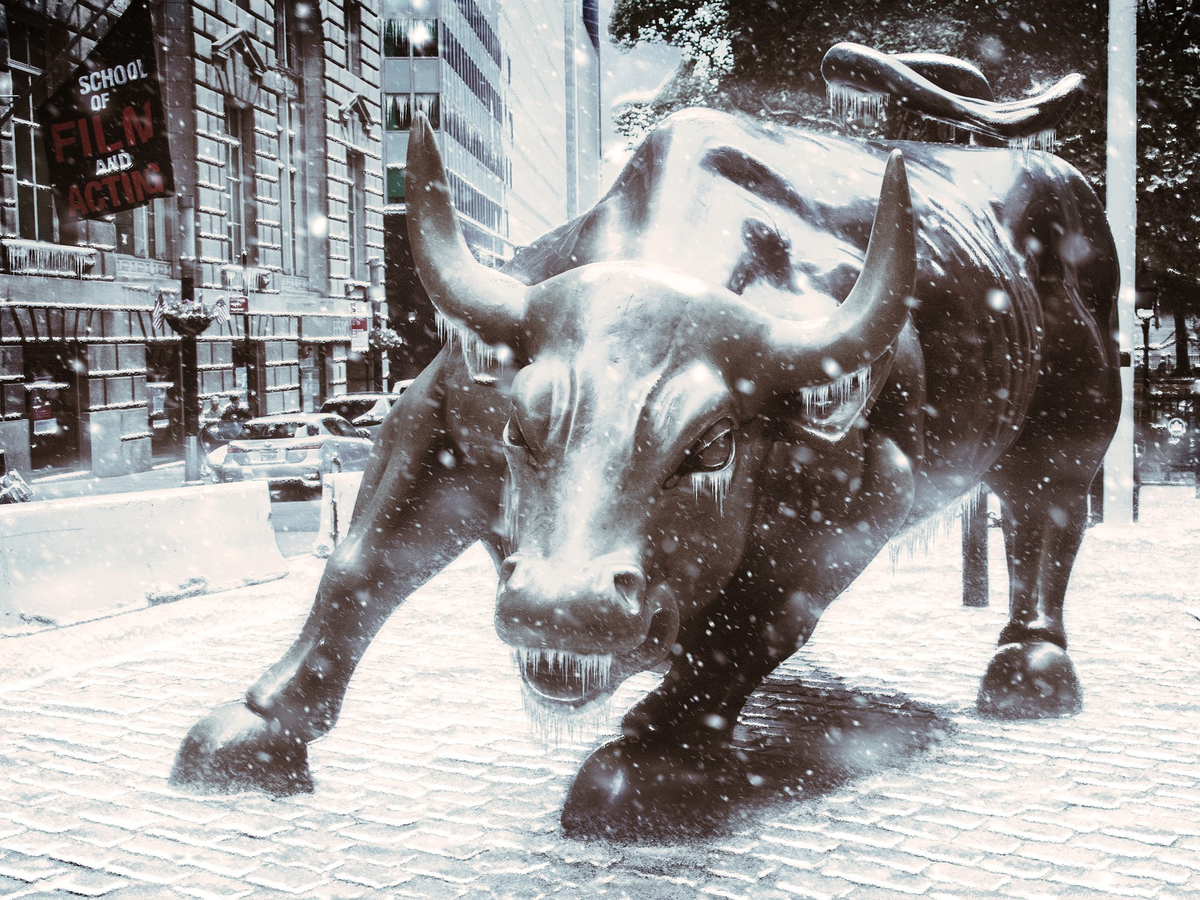
Is the Dow Jones Setting Up for a Major Bull Breakout or a Brutal Bull Trap?
14.02.2026 - 17:36:17 | ad-hoc-news.de
Get the professional edge. Since 2005, the 'trading-notes' market letter has delivered reliable trading recommendations – three times a week, directly to your inbox. 100% free. 100% expert knowledge. Simply enter your email address and never miss a top opportunity again. Sign up for free now
Vibe Check: The Dow Jones is locked in a tense, high-stakes zone right now – not an outright crash, not a euphoric melt-up, but a heavy, emotional tug-of-war between cautious Bulls and battle-scarred Bears. The move is defined by choppy swings, fake breakouts, and sudden risk-on bursts followed by nervous sell-offs. This is the kind of tape where weak hands get shaken out and patient traders quietly build positions.
Want to see what people are saying? Check out real opinions here:
- Watch live Dow Jones streams and trader reactions in real time on YouTube
- Scroll the latest Wall Street mood swings and chart posts on Instagram
- Tap into viral short-form tips and trading hacks from TikTok investors
The Story: Right now, the Dow Jones Industrial Average is being driven less by pure earnings hype and more by one big, brutal question: how long will the Fed keep the money tight?
The US macro backdrop is in full drama mode:
- Inflation: CPI and PPI are no longer in free fall. Instead, they are showing a stubborn, sticky pattern. Not runaway, but not comfortably back at the Fed’s target either. That means every data release has the power to flip sentiment from relief rally to panic sell-off.
- Fed Policy: Jerome Powell is walking a tightrope. The market had been dreaming of rapid and aggressive rate cuts. Now the narrative has shifted towards a slower, more cautious easing path. Every Fed speech is dissected word by word, and Dow futures react instantly to even tiny shifts in tone.
- Bond Yields: US Treasury yields have been swinging between “supportive for risk assets” and “danger zone for equities.” When yields ease, you see an instant risk-on pop in the Dow. When yields spike again, heavy cyclical names and financials feel the pain first.
- Consumer Confidence: The US consumer is not collapsing, but is clearly more selective. Strong job markets and solid wage growth are clashing with higher borrowing costs and expensive credit cards. That mix favors defensive blue chips and quality names over speculative stories.
On CNBC’s US markets narrative, the story is a rotating carousel of themes: soft landing hopes, recession fears, AI enthusiasm, and higher-for-longer rates. What matters for the Dow is this: old-school, cash-flow-rich companies with real earnings and dividends are still being favored over profitless growth stories. That keeps the index relatively resilient compared to more tech-heavy benchmarks, but not immune to macro shockwaves.
Meanwhile, on YouTube, TikTok, and Instagram, the sentiment is split. One camp is shouting about an incoming Dow crash, pointing to stretched valuations in some blue chips and the relentless uncertainty around the Fed. The other camp is fully in buy-the-dip mode, posting charts of multi-decade uptrends and long-term compounding in industrial giants. This split in social sentiment itself is a signal: we are not in full-blown euphoria, nor in total despair. It is a nervous mid-zone where smart money quietly hunts for mispriced opportunities.
Deep Dive Analysis: To really understand what is going on with the Dow, you have to zoom out to the macro battlefield: bond yields, the US dollar index, and global liquidity.
1. Bond Yields – The Invisible Gravity
Bond yields are the hidden gravity of the stock market. When yields rise aggressively, that gravity intensifies, pulling valuations down and punishing anything with a long-duration cash flow profile. Even the stoic Dow feels it when yields jump.
- Higher yields mean higher discount rates, which compress price-to-earnings multiples. Industrial leaders, banks, and even some defensive names get repriced.
- Lower yields are like oxygen for equities, especially dividend payers. Blue chips in the Dow can suddenly look very attractive when Treasury yields ease off their peaks.
Currently, yields are stuck in a tense range – not at crisis highs, but not reassuringly low either. That keeps the Dow in a cautious, two-steps-forward-one-step-back rhythm.
2. The Dollar Index – Global Shockwave Machine
The US dollar index (DXY) is another crucial driver. A stronger dollar can be a headache for many Dow components with big international exposure. It makes US exports more expensive and foreign revenues worth less when translated back into dollars.
- When the dollar rips higher, multinational Dow names face earnings pressure and margin squeezes.
- When the dollar cools off, global-facing blue chips breathe easier and can lead relief rallies.
Right now, the dollar is being pulled between two forces: relatively high US yields (supportive for the dollar) and expectations that the Fed will eventually ease policy (a potential cap for the dollar). That tug-of-war keeps Dow traders on their toes and makes earnings guidance from global companies even more important.
3. Sector Rotation Inside the Dow – Quiet but Powerful
The drama is not just in the index level – it is in the rotation under the surface:
- Tech-leaning Dow names are riding the AI and digital transformation narrative, but they are still sensitive to every move in yields. When rates wobble, these names can see fast swings.
- Industrials and traditional cyclicals are trading as a proxy for the global growth story. Better manufacturing data, infrastructure spending, and stable commodity prices tend to boost these stocks.
- Energy inside the Dow is surfing on oil price swings and geopolitical risk. Tensions in key regions, OPEC decisions, and demand signals from China can all trigger aggressive rotations in and out of energy names.
- Financials are the litmus test for the health of the credit system and yield curve. Steepening yield curves can help banks, while fears about credit quality or regulation can slam them.
Recently, there has been a noticeable flow from pure growth toward quality, cash-generating names. That plays straight into the Dow’s DNA. It is not the sexiest index, but in times of macro stress, boring can become beautiful.
4. Global Context – Asia, Europe, and the Liquidity Tide
The Dow Jones does not trade in a vacuum. Overnight moves in Asia and the European session are increasingly shaping the opening bell mood in New York.
- Asia: Concerns about China’s growth, property sector stress, and stimulus promises are creating an on-off pattern in global risk appetite. Positive Chinese policy signals can spark bullish global rotations into cyclicals and industrials – a direct boost to many Dow components. Negative headlines, on the other hand, trigger defensive flows.
- Europe: European equity sentiment and bond yields influence global risk parity strategies and cross-asset flows. When Europe wobbles, there is often a short-term flight to US blue chips, which can buoy the Dow – but if European data points to deeper recession risk, it can also weigh on cyclicals.
Global central banks are also playing a coordinated game of tightening, pausing, and very cautious easing. That ebb and flow of liquidity across regions ultimately feeds back into how much speculative firepower is left for US equities – including the Dow.
5. Sentiment – Fear, Greed, and Smart Money
Sentiment indicators and smart money behavior paint a complex picture:
- Fear & Greed style signals are often hovering in a neutral-to-cautious zone. Not screaming panic, but far from maximum greed. That usually suggests there is still room for upside if macro data cooperates – but also that downside protection is being quietly accumulated.
- Institutional flows show selective risk-taking. Instead of chasing every breakout, funds are loading up on high-quality, dividend-paying, cash-generating blue chips – a classic Dow profile. Hedging activity in options is elevated, which matches the choppy tape.
- Retail sentiment on social platforms is polarized. Viral crash calls coexist with confident long-term investors dollar-cost averaging into index exposure. That lack of consensus is typical of a transition phase, not the end of a cycle.
Key Levels & Control of the Tape
- Key Levels: For the Dow right now, traders are watching several important zones rather than fixating on a single line in the sand. On the upside, there are heavy resistance regions where recent rallies have repeatedly stalled – that is where potential breakouts could trigger a short squeeze and bring in momentum buyers. On the downside, there are clearly defined support clusters where dip-buyers previously stepped in aggressively. A decisive break below those zones could flip the narrative into a more serious risk-off phase.
- Sentiment – Bulls vs Bears: Neither camp fully owns the field at the moment. Bulls have the long-term trend and the structural quality of Dow components on their side: strong brands, real earnings, and global footprints. Bears have macro uncertainty, sticky inflation, and the threat of tighter-for-longer policy in their corner. The result is a battlefield of sharp rallies followed by abrupt pullbacks – classic conditions for experienced swing traders and painful for late chasers.
Conclusion: The Dow Jones is not screaming a clear message of total safety or imminent disaster. Instead, it is quietly broadcasting a more nuanced signal: this is a market where discipline, patience, and selectivity matter more than ever.
From the macro side, the big forces are clear: the Fed is not in a hurry to flood the system with cheap money again, bond yields remain a constant threat to equity valuations, and the dollar continues to influence the earnings outlook for multinational giants. At the same time, the US economy has not rolled over. Labor markets remain reasonably strong, corporate balance sheets in many Dow names are robust, and the earnings season has shown that high-quality companies can still deliver in a tougher environment.
Inside the index, sector rotation is doing the heavy lifting. Cyclicals and industrials move on every new data point about growth and global trade. Energy swings with geopolitics and supply headlines. Financials trade off the yield curve and credit fears. Tech-leaning components surf the AI and digitization wave but must constantly negotiate with bond yields.
Globally, Asia and Europe are adding layers of complexity. Overnight sentiment whipsaws futures, and cross-border liquidity flows mean that what happens in Tokyo, Shanghai, or Frankfurt does not stay there – it shows up at the New York opening bell in the Dow’s first candle.
For traders and investors, the real takeaway is this:
- This is not a mindless, runaway bull market where anything goes. Risk needs to be managed, not ignored.
- It is also not a hopeless crash environment. High-quality blue chips with solid dividends and predictable cash flows are still being rewarded.
- Volatility spikes, sharp pullbacks, and sudden short squeezes will likely remain a feature, not a bug, of this phase.
If you are looking at the Dow Jones as your main playground, think like a pro: define your zones, respect your risk, and focus on quality. Use moves into important resistance zones to trim or hedge. Use panic-driven dips into strong support areas to scale into names you truly understand.
The big question is not simply “Will the Dow moon or crash from here?” The sharper question is: “Who will use this choppy, emotional, macro-obsessed environment to accumulate strong positions – and who will get shaken out by every headline?” In that gap between noise and strategy, real opportunity lives.
Smart money is not obsessed with predicting the exact next tick. It is watching bond yields, the Fed, the dollar, and global flows – and then quietly using every exaggerated move to upgrade portfolio quality. If you want to ride with the pros, you do not have to guess the next headline. You have to master your process.
In this kind of Dow Jones environment, the edge belongs to the trader who combines macro awareness with razor-sharp risk management. The index is not just a number – it is a live pulse of how capital, fear, and opportunity collide every single trading day.
Tired of poor service? At trading-house, you trade with Neo-Broker conditions (free!), but with real professional support. Use exclusive trading signals, algo-trading, and personal coaching for your success. Swap anonymity for real support. Open an account now and start with pro support
Risk Warning: Financial instruments, especially CFDs on indices like the Dow Jones, are complex and come with a high risk of losing money rapidly due to leverage. You should consider whether you understand how these instruments work and whether you can afford to take the high risk of losing your money. This content is for informational purposes only and does not constitute investment advice.
So schätzen die Börsenprofis Aktien ein!

Für. Immer. Kostenlos.