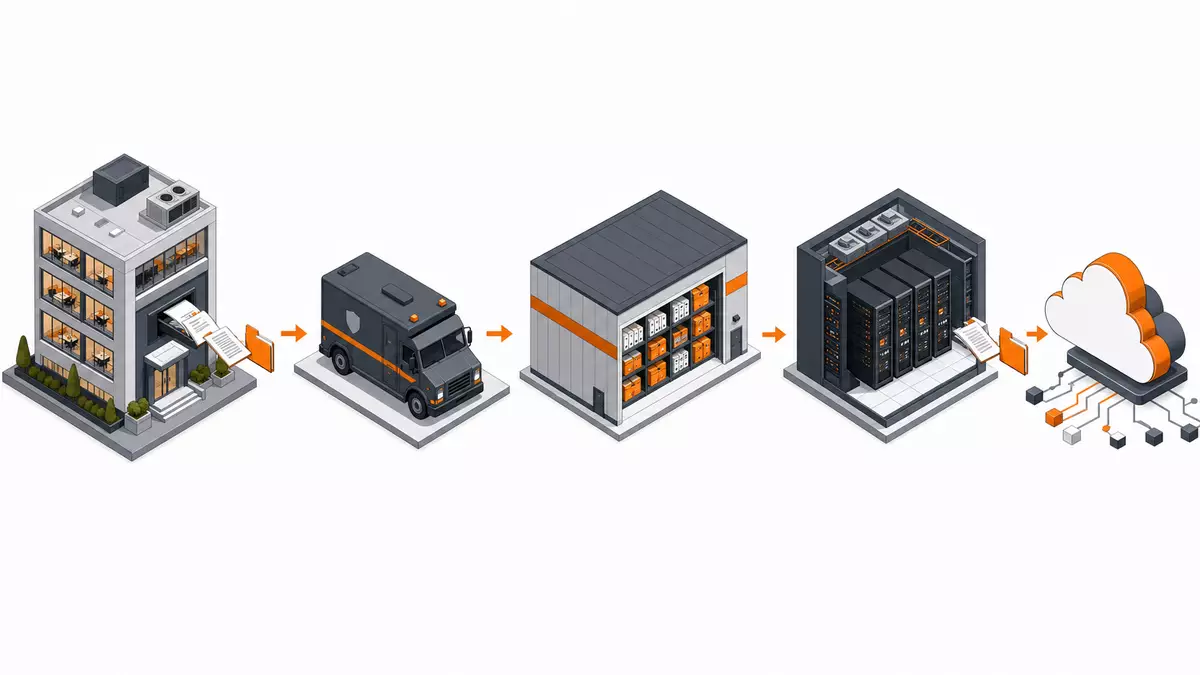
Iron Mountain stock trades near record territory as data center growth supports earnings
Published on 07/22/2026 at 17:05 | Editorial responsibility: Rafael Müller, Editor-in-Chief AD HOC NEWS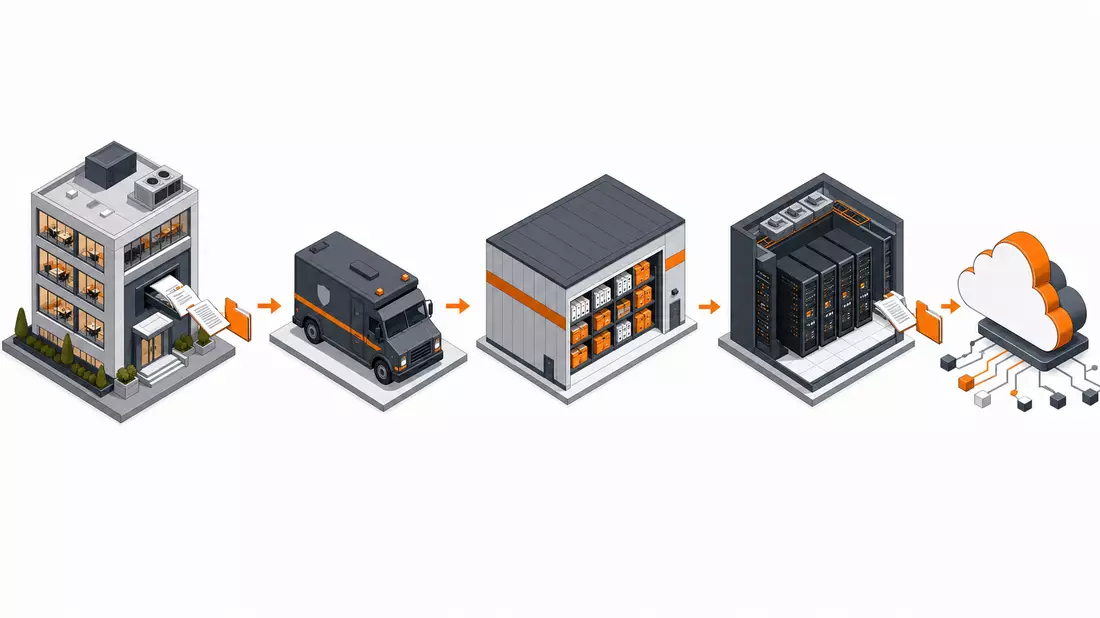
Iron Mountain stock is supported by a combination of recurring storage revenue and expanding data center operations, with recent financial figures showing double-digit growth in total revenue and increasing profitability in adjusted EBITDA for fiscal 2024 and into early 2025.
Iron Mountain Inc. (ISIN US46284V1017) is listed on the New York Stock Exchange and has built its business on long term records storage contracts, while more recently investing heavily in data center capacity to serve enterprise and cloud customers.
According to the companys published financial information for fiscal 2024, Iron Mountain generated total revenue of roughly $5.3 billion, up from around $4.9 billion in fiscal 2023, a year over year increase of about 8% driven by both traditional storage and its faster growing data center segment.
Within that total, storage business revenue still accounts for the majority, providing a base of contracted cash flows that supports leverage and ongoing capital expenditure, while data center revenue growth contributes a higher incremental margin.
In the same fiscal period, Iron Mountain reported adjusted EBITDA of close to $1.9 billion compared with approximately $1.7 billion in the prior year, indicating an increase of a little over 10%, which reflects operating leverage from higher utilization and disciplined cost control.
The companys capital expenditure in fiscal 2024 reached several hundred million dollars, much of it allocated to expanding and upgrading data center facilities, underpinning the medium term capacity pipeline for hyperscale and enterprise demand.
Revenue grows around 8 percent
Iron Mountains revenue growth in recent years has increasingly reflected the contribution of data center operations alongside its long standing storage business, with fiscal 2024 total revenue of about $5.3 billion representing roughly 8% growth compared with about $4.9 billion in fiscal 2023.
This revenue expansion is partly driven by price realization and volume growth in secure storage and information management services, and partly by new data center leases and expansions that have added megawatts of capacity under contract.
The company has highlighted that data center revenue, while still a minority of total revenue, has been growing at a higher rate than the legacy storage segment, contributing to the overall acceleration and supporting higher adjusted EBITDA margins.
Iron Mountains adjusted EBITDA of close to $1.9 billion in fiscal 2024, up from approximately $1.7 billion a year earlier, implies an EBITDA margin in the mid thirties percent range on total revenue, which is consistent with the structural profitability of its storage model and the scaling nature of data centers.
Net income attributable to shareholders in fiscal 2024 amounted to several hundred million dollars, reflecting depreciation and amortization charges associated with owned facilities and equipment, as well as interest expenses on long term debt that finances growth investments.
In addition, Iron Mountain has continued to distribute a regular cash dividend, with the annualized dividend per share standing slightly above $1 in recent periods, translating into a yield of a few percent based on a share price near its recent trading range.
Iron Mountain stock near recent highs
Iron Mountain stock trades on the NYSE and has been changing hands near record territory, with the share price in recent months moving in a broad band between approximately $70 and $90, with the upper end representing a new all time high for the companys equity.
The market capitalization of Iron Mountain, calculated by multiplying the share count by the prevailing price, has been around $26 billion to $30 billion in recent periods, placing the company firmly in the large cap category and underlining its relevance in the broader real estate and infrastructure investment universe.
Over the last twelve months, the total return on Iron Mountain stock, including dividends, has outperformed many traditional office and retail real estate names, reflecting investors preference for mission critical infrastructure such as data centers and records storage compared with more cyclical property types.
Compared with the S&P 500 benchmark, Iron Mountain stock has delivered a higher percentage price increase over the same period, owing to the companys stable cash flows and growth prospects associated with digital infrastructure demand.
The shares have at times traded at an elevated multiple of adjusted funds from operations and adjusted EBITDA relative to older storage focused years, as the market prices in the potential for further data center expansion and cross selling of information management services.
Iron Mountain has also been included in major indices that track listed real estate and infrastructure companies, which helps to support trading liquidity and institutional ownership through index and exchange traded fund allocations.
Further information on Iron Mountain
Investors who want to study Iron Mountains financial reports and strategy in more detail can review regulatory filings and presentations alongside curated news on the company.
Data center segment adds capacity
Iron Mountain has committed substantial capital to its data center business, developing and operating colocation and wholesale facilities that store and process digital information for enterprise and cloud clients, complementing its traditional records storage services.
In recent years, the company has expanded its data center footprint to several hundred megawatts of total capacity either in operation or under development, with a meaningful portion already leased under long term contracts that provide visibility on future revenue.
Lease up activity in the data center segment has been robust, with Iron Mountain signing new and expansion deals amounting to dozens of megawatts per year, sometimes with large anchor tenants from cloud and technology sectors taking substantial blocks of capacity.
The data center segment has reported revenue growth rates that outpace the overall company average, often in the double digit range annually, reflecting both new capacity additions and price adjustments in existing contracts.
Because data centers carry high upfront capital expenditure but relatively predictable operating expenses once stabilized, Iron Mountain expects the segment to contribute an increasing share of both revenue and adjusted EBITDA over the medium term.
The company has also highlighted its ability to incorporate sustainability features, such as efficient power usage and renewable energy sourcing, into data center development, which can be important for large corporate clients with environmental targets.
Storage business remains core cash engine
Despite the rapid development of the data center business, Iron Mountains core storage operations remain the backbone of the company, generating steady revenue and cash flow from millions of cubic feet of physical records stored across its global facility network.
Customers in sectors such as financial services, healthcare, legal, and public administration rely on Iron Mountain to store and manage physical documents, tapes, and other media, often under multiyear contracts that include retrieval and destruction services.
The storage segment benefits from the inertia and regulatory requirements involved in records retention, which reduce churn and provide recurring revenue streams that support Iron Mountains status as a stable cash flow company.
Over fiscal 2024, storage related revenue grew modestly in the low to mid single digit percentage range, supported by pricing actions and incremental services, while data center growth contributed the remainder of the companys overall revenue increase to around 8%.
Iron Mountain also offers information management and digital solutions, including scanning, indexing, and workflow tools that help customers transition portions of their archives into digital formats, providing an additional avenue for revenue and further integrating the company into clients processes.
By combining physical and digital storage expertise, Iron Mountain aims to be a one stop provider for information lifecycle management, which can strengthen customer relationships and help defend against competition from specialized niche providers.
Debt, dividend, and funding structure
Iron Mountain finances its operations and growth projects through a mix of operating cash flow, bank facilities, and long term debt securities, taking advantage of its infrastructure like asset base to secure relatively attractive terms.
At the end of fiscal 2024, total debt outstanding amounted to several billion dollars, with a weighted average maturity of a number of years that helps smooth refinancing risk and provides time for new data center investments to reach stabilized occupancy.
The companys leverage ratio, commonly measured as net debt to adjusted EBITDA, has been kept within a target range that management considers appropriate for the business model, typically in the mid single digit times range, which balances growth funding with credit rating considerations.
Iron Mountain has maintained a regular dividend policy, paying a quarterly cash dividend that in aggregate amounts to slightly above $1 per share on an annual basis, which is supported by its recurring cash flows from storage and data center operations.
The dividend payout ratio, measured against adjusted funds from operations or comparable cash flow metrics, has generally been kept at a level that allows both shareholder distributions and reinvestment into growth projects.
In addition to dividends, Iron Mountain may occasionally use share issuance or hybrid securities to fund larger expansions or acquisitions, although management has signaled a preference for funding growth primarily through retained cash flow and existing debt capacity.
Key risks and competitive landscape
While Iron Mountain benefits from sticky customer relationships and mission critical infrastructure assets, it also faces several risks that investors monitor closely, including data center competition, technological change, and interest rate movements.
In the data center space, Iron Mountain competes with specialized operators and larger real estate investment trusts that may have significant capital resources and global platforms, which can influence pricing and lease terms in certain markets.
The company seeks to differentiate its data centers through security, compliance, and integration with existing storage services, as well as through location advantages in certain metropolitan areas where demand for capacity is strong.
Technological change can also impact both physical and digital storage businesses, as new formats and cloud solutions alter how companies archive and access information, which requires Iron Mountain to continuously update its offerings.
Interest rate levels are another important factor, as higher rates can raise debt service costs and influence valuation multiples for infrastructure and real estate related companies, including Iron Mountain.
Despite these risks, Iron Mountains mix of recurring revenue, infrastructure assets, and growth segments has attracted significant institutional investor interest, contributing to its market capitalization in the high tens of billions of dollars.
Representative Iron Mountain product
One representative product line for Iron Mountain is its secure records storage and management service, through which clients deposit boxes and pallets of physical documents into Iron Mountain facilities, with the company providing cataloging, retrieval, and eventual destruction services based on client instructions and regulatory requirements.
This service typically operates under multiyear contracts, with pricing linked to volume and service complexity, and forms the basis of Iron Mountains long standing reputation in information protection and storage.
The company complements this with ancillary products such as secure shredding, data backup management, and digital conversion services, creating a full suite of offerings that address the entire lifecycle of corporate information.
Iron Mountain stock and recent valuation
Iron Mountain stock, listed on the NYSE, has recently traded near the upper end of its historical price range, with a share price around the high tens of dollars and a resulting market capitalization that places it among the larger constituents of real estate and infrastructure indices.
At these levels, the implied valuation multiples on adjusted EBITDA and cash flow reflect both the security of long term storage contracts and the growth optionality in data center expansion.
Iron Mountain stock facts
- Company: Iron Mountain Inc.
- ISIN: US46284V1017
- Ticker: NYSE: IRM
- Trading venue: NYSE
- Market capitalization: around $28 billion (as of recent months)
- Sector / Industry: Real Estate / Data Centers and Storage
- Index membership: Included in major listed real estate and infrastructure indices
Disclaimer regarding our articles: No investment advice, no buy or sell recommendation. Information on prices, companies, and markets is provided without guarantee; changes are possible at any time. Stock market transactions can lead to substantial losses. Our articles are created and reviewed in whole or in part automatically with the support of AI.