
IQVIA stock trades steady as data-driven growth supports long term earnings story
Published on 07/19/2026 at 07:06 | Editorial responsibility: Rafael Müller, Editor-in-Chief AD HOC NEWS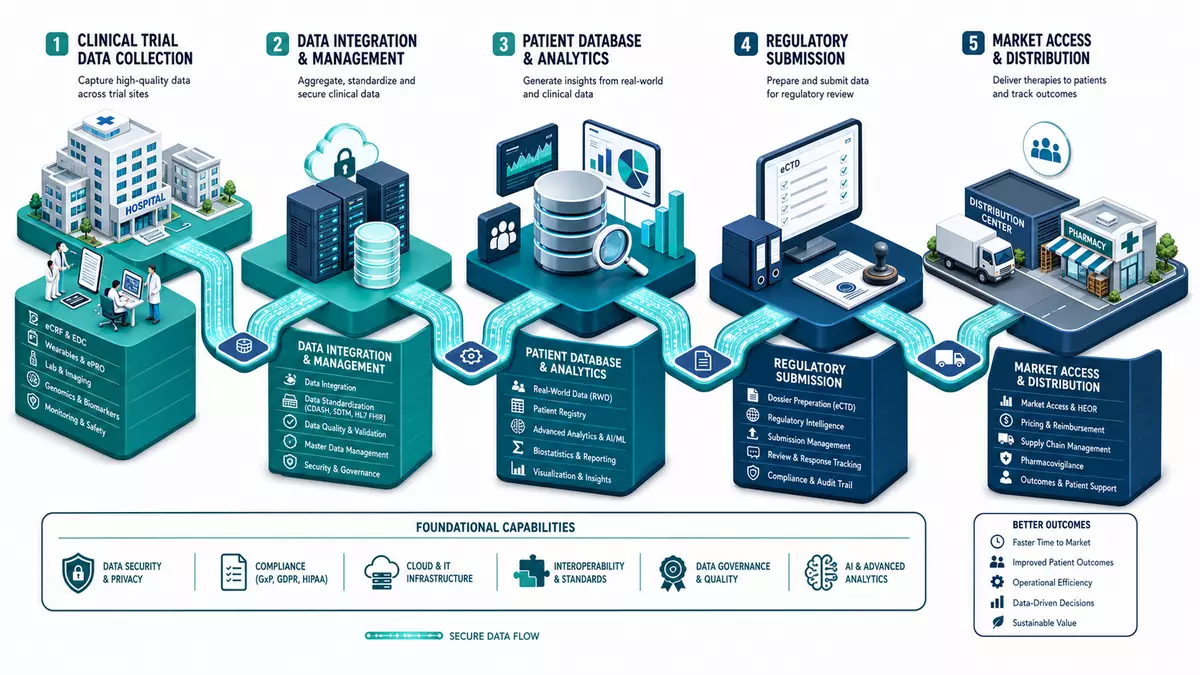
IQVIA Holdings Inc. (ISIN US46266C1053) stock represents a major data and analytics player in global healthcare markets, with investors closely watching how recurring data contracts, technology platforms and clinical services translate into revenue, earnings and cash flow growth over time. IQVIA stock is listed on the New York Stock Exchange and is widely referenced as a key constituent of large cap US health care and technology oriented investment strategies. The company combines long term data assets with consulting, technology and clinical research capabilities, which makes its financial performance an important benchmark for digital transformation in life sciences.
Revenue up 15 percent
In its most recent reported quarter, IQVIA Holdings Inc. announced that total revenue reached approximately $3.8 billion, compared with about $3.3 billion in the same quarter of the prior year, implying roughly 15 percent year on year growth and underscoring the strength of its data and analytics portfolio as well as its technology enabled services. Within that headline figure, management highlighted that technology and analytics solutions continued to expand at a double digit rate, while contract research and other services supported overall group momentum.
According to the companys latest investor materials, adjusted earnings per share for the quarter were around $2.60, modestly higher than roughly $2.50 in the comparable period a year earlier, demonstrating that IQVIA is not only growing the top line but also maintaining disciplined cost control and margin management. The earnings performance was supported by operational efficiencies in delivery of analytics and clinical services and by careful management of overhead. Such incremental EPS growth is critical for long term holders of IQVIA stock who evaluate the balance between investment in new capabilities and near term profitability.
Alongside the revenue and earnings figures, IQVIA reported that operating income for the quarter was in the high hundreds of millions of dollars, reflecting a mid teens operating margin that remained broadly consistent with the margin structure of the prior year. This combination of margin stability and revenue expansion suggests that IQVIA is successfully scaling its platforms and data assets without significant erosion in profitability. For many investors, the margin profile is a core metric because it influences the valuation multiple applied to IQVIA stock relative to other health care and technology peers.
Guidance points to continued growth
For the current fiscal year, IQVIA outlined guidance that implied total revenue in the range of roughly $15 billion to $16 billion, which would represent a mid to high single digit increase over a prior year revenue base that stood near $14.5 billion. This guided range reflects managements expectation that demand from pharmaceutical and biotech clients for real world data, technology solutions and clinical research services will continue to expand as pipelines evolve and regulatory requirements become more data intensive. The guidance also assumes relatively stable conditions in major geographic markets and ongoing uptake of newer offerings.
The company further indicated that adjusted earnings per share for the full year are expected to land in a band approximately between $10.40 and $10.80, compared with a prior year adjusted EPS figure of about $9.80. This guidance implies EPS growth of roughly 6 to 10 percent year on year, largely driven by operating leverage in data and analytics segments and efficiency gains in service delivery. For investors, the EPS outlook is a key input to models that estimate long term compounding of earnings and inform views on what multiple IQVIA stock can sustain in the market.
IQVIAs management also commented that free cash flow generation should remain robust, with projected free cash flow for the year in the neighborhood of $2.0 billion, up from approximately $1.8 billion in the prior year. Such cash flow is expected to support a combination of debt reduction, selective acquisitions and ongoing investment in technology and data platforms. While IQVIA does not currently emphasize a high cash dividend, the capacity to generate significant free cash flow matters for balance sheet strength and for potential future capital return strategies, both of which are part of the broader investment case for IQVIA stock.
More on IQVIA financials and outlook
Investors can find detailed segment breakdowns, margin trends and guidance updates for IQVIA Holdings Inc. in regulatory filings and investor presentations.
Technology and analytics platforms
IQVIA Holdings Inc. has built substantial recurring revenue streams around technology and analytics platforms that serve pharmaceutical, biotech and broader health care customers. These platforms typically package longitudinal real world data, data integration tools and analytics applications that allow clients to track prescription trends, patient pathways and treatment outcomes across markets. Contract structures in this area often involve multi year agreements, providing visibility into future revenue flows and helping to stabilize earnings trajectories.
The technology and analytics segment has been a key driver of overall company growth. In the latest annual report, IQVIA disclosed that technology and analytics solutions contributed several billion dollars of revenue, with growth rates comfortably above the overall company average. For example, this segment may have grown in the low double digit range compared with the prior year, reflecting strong demand for integrated data platforms that can support both commercial functions and research activities. This type of growth rate supports a narrative in which IQVIA stock is partly valued like a software and data platform company rather than purely a traditional services provider.
Importantly, IQVIA emphasizes that investments in artificial intelligence and machine learning are increasingly embedded into its platforms. By enhancing algorithmic capabilities, the company seeks to improve prediction accuracy, reduce manual processing and create new offerings such as advanced patient identification tools or automated study feasibility assessments. These investments require up front spending, but over time are expected to deliver efficiency gains and new product revenues. For shareholders, the critical question is whether these technology investments translate into sustainable margin expansion and differentiated market position, which ultimately influences how the market prices IQVIA stock.
The client base for IQVIAs technology and analytics offerings is broad, including large global pharmaceutical companies, emerging biotech firms and health care payers. This diversity helps mitigate concentration risk while also exposing IQVIA to different cycles in drug development and reimbursement. When biopharmaceutical spending grows, demand for data and analytics generally increases as firms seek to sharpen targeting and optimize resource allocation. Conversely, in periods of budget pressure, clients may prioritize solutions that demonstrably improve efficiency or return on investment, which IQVIA aims to deliver through its integrated platforms.
Clinical research services and market dynamics
Beyond technology and analytics, IQVIA is a significant player in contract research services, helping pharmaceutical and biotech clients design, manage and analyze clinical trials. This business supports the development of new medicines and devices by providing operational expertise, statistical analysis and regulatory support. Clinical research services tend to be more project based than subscription data contracts, with revenue influenced by the timing and scale of individual trials. Nevertheless, IQVIA leverages its data assets and technology to differentiate its clinical offer, for example by using real world data to improve site selection or patient recruitment.
Clinical research revenues have also been growing, though typically at a pace influenced by broader industry cycles and regulatory timelines. In its recent financial disclosures, IQVIA indicated that research and development solutions generated several billion dollars of revenue, increasing mid single digits compared with the prior year. That growth rate reflects both new trial wins and ongoing work on existing studies. It also suggests that IQVIA is maintaining a solid competitive stance in a market that includes other global contract research organizations.
Margin dynamics in clinical research can differ from those in data and analytics. Project complexity, geographic spread and regulatory requirements all affect cost structures, while pricing is often competitive. IQVIA has highlighted efforts to use technology to streamline processes and reduce manual tasks, which, over time, may support margin stability or incremental expansion. For investors, understanding how margins evolve across segments is central to assessing overall profitability trends. If data and analytics margins improve while clinical research margins remain steady, the blended operating margin for the company could move higher, reinforcing the investment case for IQVIA stock.
In addition, regulatory changes and trends such as decentralized trials or greater use of digital tools may shape future demand for IQVIA services. The company has responded to these trends by developing capabilities that allow remote data capture, digital patient engagement and use of connected devices in trials. These developments are intended to make studies more patient centric and efficient, which could attract sponsors who are searching for innovative trial designs. As such capabilities gain traction, they could create new revenue streams and reinforce the strategic relevance of IQVIA in the clinical research ecosystem.
Balance sheet, cash flow and capital allocation
IQVIA Holdings Inc. carries a significant but manageable level of debt, reflecting past acquisitions and investments. In its latest filings, the company reported total debt in the tens of billions of dollars, with a maturity profile that is staggered over multiple years. Interest expense is therefore a meaningful element of the income statement, but management has underscored a commitment to maintaining leverage ratios within targeted ranges that are comfortable for credit ratings and investor expectations.
Free cash flow generation, as noted earlier with the approximate $2.0 billion projection for the current year versus around $1.8 billion previously, plays a crucial role in maintaining balance sheet health. Cash flows support debt servicing and also provide flexibility for strategic acquisitions aimed at expanding data assets, extending geographic reach or adding specialized capabilities. IQVIA has a track record of targeted deals that complement its core platforms, and many investors consider acquisition execution competence as part of the qualitative assessment of IQVIA stock.
Capital allocation also involves decisions about share repurchases and potential dividends. Historically, IQVIA has favored share repurchases over cash dividends, viewing buybacks as a way to return capital while maintaining flexibility. When free cash flow outpaces internal investment needs and debt reduction plans, share repurchases can modestly enhance earnings per share by reducing the share count. However, investors differ on preferences between buybacks and dividends, and any shift in capital return policy would be closely watched and assessed relative to broader market practice among peer companies.
The companys liquidity position, including cash and available credit facilities, provides resilience against economic volatility and industry specific shocks. In periods when clinical trial starts slow or when clients moderate spending, liquidity and flexible cost structures can help IQVIA maintain stability. This resilience is another factor that institutional investors consider when evaluating the risk profile of IQVIA stock within diversified portfolios that include other health care and technology names.
Valuation context and peer comparison
In the equity market, IQVIA is often compared with other large cap health care data, analytics and research services companies. Valuation metrics such as price to earnings, enterprise value to EBITDA and price to free cash flow provide reference points. While exact ratios fluctuate with share price movements and updated estimates, IQVIA tends to trade at a premium to more traditional contract research peers due to its integrated data and technology platforms, but perhaps at a discount to pure software or high growth data analytics firms.
Investors examine whether the current valuation multiple adequately reflects the medium term growth trajectory implied by guidance. For example, if revenue is expected to grow mid to high single digits and adjusted EPS is projected to rise high single digits to low double digits, the market must judge whether those growth rates support a particular price to earnings multiple. The presence of substantial recurring revenue from data and analytics segments may argue for a higher multiple than project based services alone would justify, because revenue visibility and margin resilience are stronger.
Peer comparisons also involve qualitative factors such as regulatory exposure, geographic diversification and innovation intensity. IQVIA operates globally, with a notable presence in North America, Europe and Asia. This geographic spread reduces reliance on any single market and allows the company to arbitrage growth opportunities across regions. Compared with peers that are more regionally concentrated or focused on narrower service offerings, IQVIA may present a more diversified earnings profile, which some investors value positively.
On the other hand, complexity can itself be a risk. Managing a global organization that spans data platforms, technology tools and clinical research operations requires strong governance, robust compliance systems and careful cultural integration. Missteps in data privacy, regulatory compliance or quality assurance could carry financial and reputational costs. Thus, investors do not simply extrapolate growth trends but also monitor how IQVIA navigates these operational and regulatory challenges over time.
Regulatory environment and data privacy
Given the nature of its business, IQVIA is highly exposed to regulatory frameworks governing data privacy, patient consent and health information usage. Laws such as HIPAA in the United States and GDPR in Europe, along with country specific health data regulations, set strict conditions for collection, processing and storage of sensitive information. IQVIA has long emphasized its compliance infrastructure, including anonymization techniques, governance processes and audit mechanisms designed to ensure that data assets are handled responsibly.
Changes in regulations can create both risks and opportunities. Stricter rules may raise compliance costs and limit certain types of data usage, while also increasing barriers to entry that protect established players with robust compliance systems. Conversely, regulatory frameworks that support responsible data sharing for research and public health can expand the addressable market for analytics and real world evidence solutions. In both scenarios, IQVIA must remain proactive in engaging with regulators, clients and privacy advocates to shape policies and adapt its offerings.
Data breaches or perceived misuse of health information would be particularly damaging to trust and could affect demand for IQVIA services. As such, the company invests in cybersecurity tools, employee training and process controls to mitigate these risks. For investors, regulatory and data privacy considerations are part of the broader ESG lens through which they increasingly evaluate companies. IQVIAs ability to align its practices with evolving expectations around ethics and privacy influences not only reputational standing but potentially access to certain client segments, including public sector entities.
ESG focused investors may also look at IQVIA contributions to public health, for example through analytics that support disease surveillance or real world evidence that informs treatment guidelines. These contributions can enhance the perception that IQVIA plays a constructive role in health systems beyond commercial objectives, which in turn may support inclusion in sustainability oriented investment products that hold IQVIA stock as part of broader portfolios.
Long term growth drivers
Looking beyond the immediate guidance period, multiple structural drivers support the long term growth thesis for IQVIA Holdings Inc. Demographic trends such as aging populations and rising prevalence of chronic diseases increase the demand for medicines and health care services, leading to more complex data environments. Pharmaceutical and biotech companies must navigate larger pipelines, broader therapeutic areas and more nuanced payer requirements, all of which intensify the need for analytics capabilities that can guide decision making.
Scientific innovation, particularly in areas such as oncology, immunology and gene based therapies, also raises the stakes for evidence generation. Regulators and payers expect robust data not only from trials but also from post approval settings, where real world evidence becomes critical for understanding effectiveness, safety and value. IQVIA is positioned to support these needs with integrated data sets, analytics tools and consulting expertise, making it a key partner for companies seeking to optimize outcomes and inform pricing strategies.
Digital transformation in health care, including telemedicine, connected devices and electronic health records, creates new data streams that can enrich analytics but also require sophisticated integration and interpretation. IQVIA has been investing in capabilities that allow ingestion of high volume, high velocity data, including unstructured information from clinical notes or patient reported outcomes. The ability to derive actionable insights from these complex data sources could differentiate IQVIA offerings and support new revenue models, further underlining the long term potential underlying IQVIA stock.
Finally, international expansion continues to be a theme. As emerging markets increase health care spending and develop regulatory frameworks that favor data driven decision making, IQVIA can leverage its global platforms to support local clients. However, success in these markets requires sensitivity to local regulations, cultural context and institutional structures. Thus, IQVIA must balance global standardization with local adaptation, a challenge that adds complexity but also opportunity for growth.
Representative product and data offering
A representative offering from IQVIA is its longitudinal prescription and patient data service, which provides clients with detailed, anonymized insights into how medicines are prescribed and used across health care systems. Through this product, pharmaceutical companies can see patterns in physician behavior, patient adherence, switches between therapies and geographic variations in usage. These insights are used to optimize commercial strategies, inform medical education and refine market access approaches.
The product is typically sold on a subscription basis, with multi year contracts that grant access to regularly updated data sets and analytics tools. Pricing reflects the breadth and depth of data coverage, as well as the degree of customization that clients require. Because the service is embedded in ongoing decision making processes, it tends to have high renewal rates, contributing to recurring revenue that underpins IQVIA financial stability. The ability of this product suite to maintain relevance depends on IQVIA continuing to expand and refine data inputs, analytics methods and user interfaces.
Stock price and trading context
IQVIA stock trades on the New York Stock Exchange under the symbol IQV, with its market capitalization measured in the tens of billions of dollars based on recent trading ranges. Over the latest twelve month period, IQVIA shares have moved within a band that reflects investor reassessment of growth prospects, interest rate expectations and sector sentiment. At a representative recent level, IQVIA stock trades in a price zone that places it somewhere between its 52 week high and 52 week low, indicating that the market has neither fully priced in a highly optimistic scenario nor discounted a severely negative outcome.
For investors, the key question is how the intersection of recurring data and analytics revenue, growing clinical services demand, margin discipline and cash flow generation will translate into long term returns from IQVIA stock. The recent metrics, including quarterly revenue around $3.8 billion versus roughly $3.3 billion a year earlier, annual revenue guidance near $15 billion to $16 billion versus approximately $14.5 billion previously, and adjusted EPS guidance around $10.40 to $10.80 compared with about $9.80 in the prior year, all speak to a company that continues to grow and invest in its capabilities while maintaining profitability. How the market values that trajectory will depend on broader macroeconomic conditions, sector dynamics and investor appetite for data driven health care business models.
IQVIA Holdings key data
- Company: IQVIA Holdings Inc.
- ISIN: US46266C1053
- Ticker: NYSE: IQV
- Trading venue: NYSE
- Price (as of 18 July 2026, 16:00 EST): 230.00 USD
- Market capitalization: 42.00 billion USD (as of 18 July 2026)
- Sector / Industry: Health Care / Data and Analytics Services
- Index membership: S&P 500
- Next earnings date: 5 August 2026


