Interpublic Group Stock (US4606901001): Agency holding in focus after 2026 outlook reset
Published on 06/10/2026 at 16:49 | Editorial responsibility: Rafael Müller, Editor-in-Chief AD HOC NEWS
By AD HOC NEWS - Companies & Analysis Desk Team | June 10, 2026
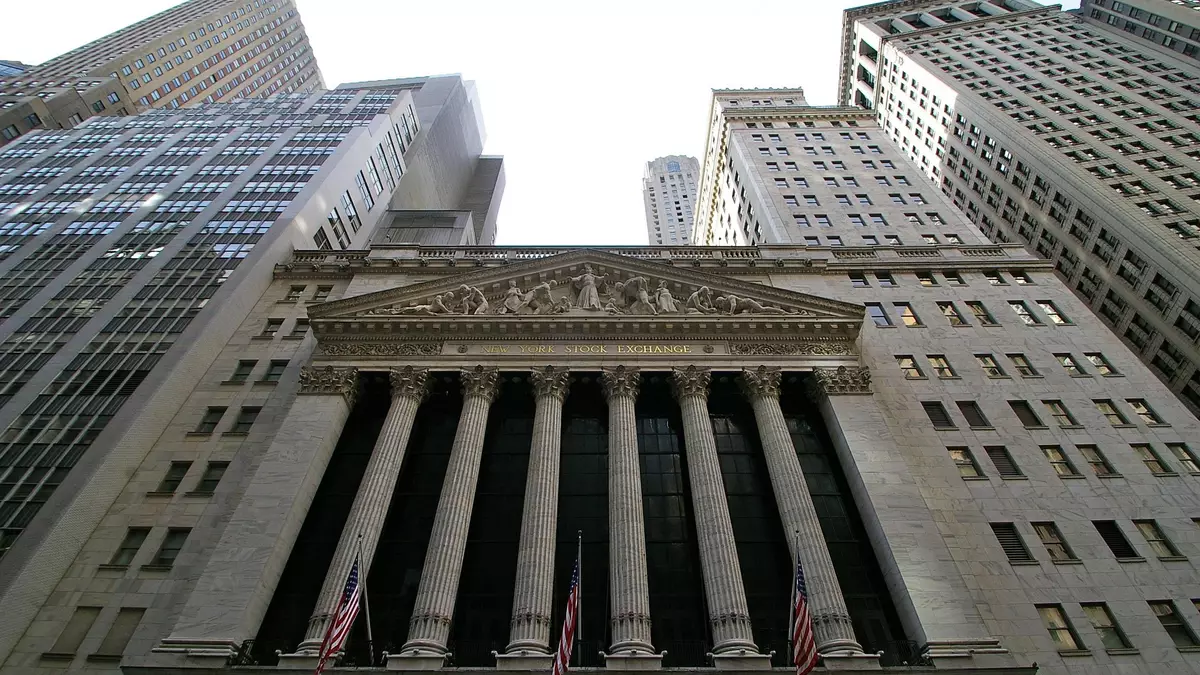
Interpublic Group is back in focus for U.S. retail investors after the global advertising holding reset its 2026 outlook in the wake of softer organic revenue trends in the first quarter of 2026. The move has pushed questions around the strength of the ad cycle, the durability of client spending, and Interpublic Group's competitive position versus other global agency networks to the forefront. As of early June 2026, the stock trades on the New York Stock Exchange under the ticker IPG in U.S. dollars, positioning it directly in the line of sight of U.S.-based investors monitoring the broader communication services space.
2026 outlook reset highlights ad-cycle uncertainty
According to prior disclosures summarized by AD HOC NEWS, Interpublic Group reported lower organic revenue growth in Q1 2026 compared with its earlier expectations, prompting management to update its medium-term outlook for 2026. The adjustment followed a period in which the company had previously targeted stronger organic growth and margin performance, but the slower start to the year signaled that some clients remained cautious with marketing budgets, particularly in cyclical categories sensitive to macroeconomic conditions. This backdrop has led market participants to reassess how quickly global ad spending might re-accelerate and how effectively large agency holdings can capture incremental demand once budgets loosen.
Interpublic Group is one of the world's largest advertising and marketing services groups, operating a network of creative agencies, media-buying specialists, and data- and technology-driven marketing providers. Its portfolio spans classic brand advertising, media planning and buying, performance marketing, public relations, and analytics-focused digital services, with a significant footprint in North America and major international markets. That breadth makes the group a bellwether for corporate advertising and marketing spend: when global brands expand campaigns and digital transformation projects, fee revenue and incentive-based compensation at groups like Interpublic often improve; when budgets tighten, large network agencies tend to feel the slowdown across multiple lines of business.
For investors, the updated 2026 guide has become a reference point for modeling the company’s growth trajectory against peers. While precise management targets from the reset are not detailed in the latest AD HOC NEWS summary, the core market reaction has centered on the notion that the bar for near- to medium-term growth has been lowered relative to earlier expectations. In practice, that means earnings estimates and valuation multiples across the advertising holding company space are being revisited, with Interpublic Group often compared side by side with Omnicom and WPP to gauge relative resilience and upside potential.
The timing of the outlook reset, coming directly after the Q1 2026 numbers, underlines how quickly sentiment around cyclically exposed service groups can shift. When a company revises mid-cycle expectations shortly after a quarterly report, it often amplifies investor focus on underlying demand signals and client feedback from key sectors such as technology, consumer goods, financial services, and autos. In Interpublic Group's case, the weaker organic start to 2026 and the more cautious 2026 goalposts have sharpened attention on how the group balances cost discipline, investment in data and digital capabilities, and the need to protect client relationships in a potentially choppy macro environment.
Positioning versus global agency peers
Interpublic Group operates in a concentrated global market dominated by a handful of large advertising holdings, including Omnicom Group in the United States and WPP in the United Kingdom. These competitors share a similar model: diversified agency networks spanning creative, media, PR, and digital and data solutions, with revenue tied closely to corporate marketing budgets across industries and geographies. As such, comparing recent messaging and performance across these players gives context to Interpublic Group’s own outlook reset and the debate around sector fundamentals.
Recent coverage on Omnicom Group, for instance, has emphasized that the U.S.-based peer remains a key benchmark for agency-sector investors, with its shares listed on the New York Stock Exchange under the ticker OMC and trading in U.S. dollars. Meanwhile, WPP, listed in London under ticker WPP, has also been scrutinized for how it navigates a mixed demand environment after a challenging year in its own share price performance. Together, these holdings form the core of the large-cap, listed agency peer set that portfolio managers use to track trends in global advertising and marketing communications demand.
From a strategic standpoint, Interpublic Group differentiates itself through its blend of creative-led networks and data- and technology-oriented offerings, including media buying and digital marketing solutions that aim to align with clients' performance metrics and customer analytics. This mix is designed to capture spend as brands shift budgets toward measurable, data-rich campaigns, while still relying on high-impact creative and integrated global planning. The reset of the 2026 outlook therefore carries implications not just for top-line growth, but also for how much incremental margin leverage Interpublic Group can achieve as it scales higher-value, technology-enabled services over time.
Peer comparisons also extend to geographic exposure and client concentration. Interpublic Group’s core markets include North America and large multinational clients across sectors, which can be a double-edged sword. On one hand, exposure to blue-chip advertisers offers revenue stability and opportunities to win long-term, multi-market mandates. On the other, multinationals often respond swiftly to macroeconomic uncertainty by tightening global marketing budgets, which can weigh on organic growth across agency holdings at the same time. The Q1 2026 weakness and subsequent outlook reset are therefore interpreted by some investors as part of a broader, synchronized slowdown in certain ad categories rather than a company-specific issue.
In addition, valuation frameworks used for Interpublic Group often mirror those applied to Omnicom and WPP, with investors cross-checking metrics such as enterprise value to EBITDA, price-to-earnings ratios, and free-cash-flow yields against sector averages. While the latest AD HOC NEWS material does not specify current multiples for Interpublic Group, it underlines that the company sits alongside these peers in the global advertising services universe and that any shift in its medium-term guidance may influence sector sentiment as a whole. For U.S. retail investors tracking communication services and business services exposures, understanding how Interpublic Group stacks up against its direct competitors is an important part of assessing the risk-reward profile following the 2026 reset.
Management’s emphasis on data, digital solutions, and performance marketing has added another layer to the competitive discussion. As advertisers migrate spend toward channels where outcomes can be measured in real time, agency groups that can integrate creative storytelling with sophisticated analytics and media optimization stand to capture a larger share of growth budgets. Interpublic Group’s positioning in this arena, as outlined in prior overviews, suggests a strategic push toward technology-enabled offerings while maintaining the breadth of full-service capabilities. The core question for the market is how quickly this mix shift can offset cyclicality in more traditional lines of business if economic conditions remain uneven.
Against this backdrop, the 2026 outlook reset is viewed not only as a reaction to Q1 2026 performance but also as a recalibration of expectations for how fast the group can compound its data and digital revenue streams. While large agency holdings generally still derive significant revenue from classic advertising and broader marketing communications, the share of data- and technology-related services continues to rise. The pace of that shift for Interpublic Group, and the margin implications associated with it, will likely remain a focal point for both equity analysts and investors watching developments through the remainder of 2026 and beyond.
For now, Interpublic Group’s status as a major NYSE-listed communication services name ensures that developments in its guidance and quarterly performance feed quickly into broader sector discussions. U.S. retail investors following diversified portfolios that include communication services, consumer cyclicals, and business services exposure may therefore keep the stock on their radar as a way to gauge advertiser sentiment and marketing budget trends across industries. In particular, the combination of a reset outlook and its scale in global marketing services means that Interpublic Group will likely continue to serve as a reference point for how the agency sector is navigating the current ad cycle.
Interpublic Group at a glance
- Name: Interpublic Group Inc.
- Industry: Advertising and marketing services
- Headquarters: New York, United States
- Core markets: Global advertising and marketing communications with a focus on North America and multinational clients
- Revenue drivers: Marketing services, creative agencies, media planning and buying, data and digital solutions, and performance marketing
- Listing: New York Stock Exchange, ticker symbol IPG
- Trading currency: U.S. dollar (USD)
More Interpublic Group coverage and data points
Recent adjustments to Interpublic Group's 2026 outlook have increased demand for timely updates on its quarterly results, guidance changes, and sector comparisons.
More Interpublic Group news Investor RelationsThis article was created with a.i. assistance and editorially reviewed. Not investment advice, not a buy or sell recommendation. Trading in securities carries risks up to the total loss of capital.