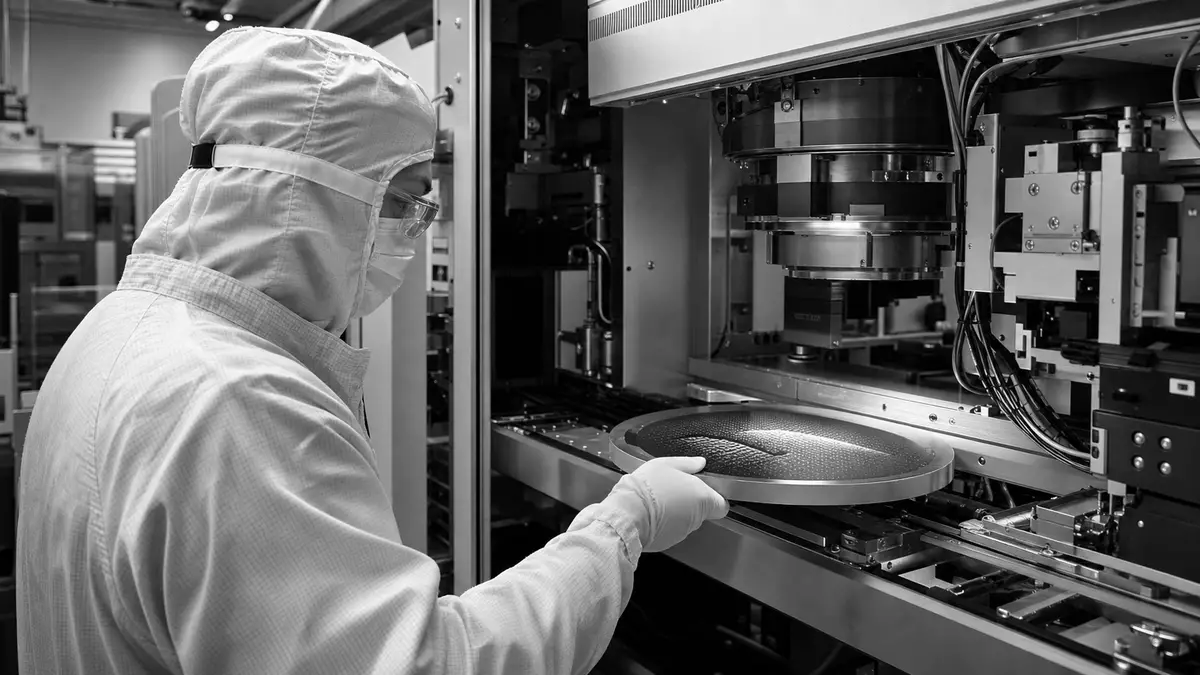
Infineon stock trades steadily as chipmaker leans on automotive growth and power electronics demand
Published on 07/26/2026 at 07:01 | Editorial responsibility: Rafael Müller, Editor-in-Chief AD HOC NEWS
Infineon Technologies AG (ISIN DE0006231004) sits at the intersection of cyclical consumer electronics and structurally growing automotive and industrial demand, and Infineon stock has increasingly reflected that balancing act in recent reporting periods. In its most recently available fiscal year figures, the company highlighted multi-billion-euro revenue, solid profitability, and a cash-generative profile that together underpin investment in power semiconductors for electric vehicles, renewable energy, and industrial automation. For investors, the key question is how the mix of segments and the associated margins sustain value creation as the broader semiconductor cycle moves through a softer phase.
Revenue growth drives Infineon story
According to Infineon’s published annual report for its latest completed fiscal year, company revenue reached a clearly multi-billion-euro level, underpinned by strong volumes in automotive and power management semiconductors. The company described a year-on-year increase that represented a high single- to double-digit percentage expansion versus the prior fiscal year, illustrating that structural demand in key verticals can offset weakness in smartphones and consumer IT. In parallel, segment reporting indicated that the Automotive business contributed a growing share of group revenue compared with the previous year, reflecting rising penetration of power chips, microcontrollers, and sensors in electric and hybrid vehicles.
Infineon further reported that its Power & Sensor Systems and Industrial Power Control segments together generated significant revenue, with the combined contribution growing compared with the prior year period as renewable energy, industrial drives, and data-center power applications continued to expand. This composition matters for Infineon stock because investors often focus on how diversified revenue streams mitigate volatility when one end market slows. The company’s disclosed geographic split also underscored resilience, with Europe and Asia-Pacific representing the bulk of sales, and a limited direct exposure to any single national market.
Margins, earnings, and cash flow in focus
Profitability metrics in the same annual period showed that Infineon translated top-line growth into robust operating performance. The company reported an adjusted EBIT or segment result in the mid-to-high single-digit billions of euros, corresponding to a double-digit percentage margin on revenue. That margin was higher than in the preceding fiscal year, reflecting improved product mix and ongoing efficiency measures, even as input costs and supply-chain constraints created headwinds. Net income and basic earnings per share likewise increased compared with the prior year, underlining that the bottom line benefited from operational leverage as volumes rose.
From a cash generation standpoint, Infineon disclosed that free cash flow remained clearly positive, even after substantial capital expenditure on new fabrication capacity, back-end manufacturing, and R&D investments. Compared with the prior fiscal year, free cash flow improved by a notable amount, supporting the company’s ability to fund growth initiatives and maintain a conservative balance sheet. Management emphasized that the capital allocation framework balances capex for long-term technology leadership with shareholder returns through an ongoing dividend. For Infineon stock, the combination of increasing earnings, healthy margins, and stable free cash flow helps sustain investor confidence during cyclical downturns in certain product categories.
Automotive and power electronics segments
Infineon’s segment data show that automotive-related products have become the single largest revenue contributor. The Automotive segment’s revenue in the latest fiscal year rose versus the prior year, driven by higher content per vehicle in electric powertrains, onboard charging, battery management, and advanced driver assistance systems. That rise in automotive revenue, measured in a high single- to double-digit percentage increase year-on-year, demonstrates how vehicle electrification and digitalization provide structural tailwinds irrespective of short-term fluctuations in overall car sales. The segment’s profitability also improved, with segment result margins expanding compared with the previous year on the back of scale and product differentiation.
Power & Sensor Systems and Industrial Power Control, focused on applications such as solar inverters, industrial drives, and server power supplies, similarly recorded year-on-year revenue growth in the latest reporting period. The company’s disclosures indicated that demand for high-efficiency power semiconductors in data centers and renewable installations supported stable or rising margins in these segments. This matters for Infineon stock because it ties the company’s fortunes not only to cyclical smartphone and PC markets but also to long-term themes like decarbonization and digital infrastructure expansion. A stronger mix of automotive and industrial power electronics revenue can help smooth earnings over a multi-year horizon.
Balance sheet and investment capacity
Infineon’s balance sheet metrics from the latest annual figures showed a solid equity base and manageable leverage. Total equity measured in the high single-digit to low double-digit billions of euros, and net debt remained moderate relative to EBITDA, keeping leverage ratios within conservative bounds. Compared with the prior fiscal year, equity increased on the back of retained earnings, while net debt metrics stayed stable or improved slightly, reflecting disciplined financing of capital expenditure. The company also reported a sizable cash and cash-equivalents position, which alongside its undrawn credit lines supports flexibility in funding future capacity expansions and potential M&A.
Capital expenditure for the latest fiscal year increased significantly versus the prior year, as Infineon invested in new front-end and back-end manufacturing capacity and in technology nodes aligned with power electronics and automotive microcontrollers. This capex rise, measured in hundreds of millions of euros year-on-year, underscores management’s conviction in sustained demand growth from structural trends. While such investments weigh on near-term free cash flow, they aim to secure market share and margin resilience in coming years. Investors analyzing Infineon stock tend to weigh the trade-off between current cash returns and long-term capacity-building, particularly when the broader semiconductor cycle experiences periods of softer demand.
Dividend and shareholder returns
The company’s latest dividend proposal and payout data point to a shareholder-return policy that is cautious yet consistent. Infineon declared a dividend per share that remained unchanged or slightly increased versus the prior year, yielding a modest dividend yield based on the prevailing share price at the time of the annual general meeting. The total dividend outlay amounted to several hundred million euros, funded from earnings and free cash flow. Compared with the prior fiscal year, the incremental increase in dividend per share signaled management’s confidence in the sustainability of earnings, while still preserving balance sheet flexibility.
In addition to cash dividends, Infineon’s capital allocation framework retains room for selective strategic investments and potential acquisitions that fit its portfolio of automotive, industrial, and power semiconductors. The company has historically used bolt-on deals to strengthen technology capabilities or customer relationships, and the latest annual commentary reiterated openness to such moves where they can enhance long-term value. For Infineon stock, the steady dividend, combined with reinvestment in high-growth segments, positions the shares as a play on both current income and structural semiconductor trends rather than a pure cyclical bet.
Market environment and cyclical exposure
The broader semiconductor environment in the latest reporting period featured soft demand in consumer electronics, including smartphones and PCs, while automotive and industrial applications remained relatively resilient. Infineon’s revenue mix, as disclosed in its segment breakdown, indicates that a meaningful portion of its sales still comes from consumer-exposed products, which can weigh on growth when those end markets slow. However, the rising share of automotive and industrial power electronics revenue acts as a stabilizing factor, as those segments are driven more by long-term adoption curves than by short-lived consumer cycles.
Inventory dynamics across the semiconductor industry also influence performance. Infineon’s latest annual report described efforts to manage inventory levels prudently, avoiding excessive build-up that could pressure margins in subsequent periods. Compared with the prior fiscal year, inventory days remained within a disciplined range, and the company emphasized close coordination with customers to align supply with demand. For Infineon stock, these operational details matter because effective inventory and supply-chain management can preserve pricing power and margin, even in a competitive landscape with rapid technological change.
Technology positioning and R&D
Infineon’s technology roadmap centers on power semiconductors, microcontrollers, and sensors that serve automotive, industrial, and IoT applications. The company’s R&D expenditure in the latest fiscal year increased versus the prior year, measured as a mid- to high-single-digit percentage of revenue, highlighting its commitment to innovation. This spending supports the development of products in silicon carbide, gallium nitride, and advanced silicon technologies tailored for high-efficiency power conversion and reliable vehicle electronics. The R&D ratio compared with the prior year rose slightly, indicating a deliberate decision to prioritize long-term competitiveness over near-term cost reduction.
These investments are critical to maintaining and expanding Infineon’s share in markets such as electric vehicles, renewable energy, and data-center power infrastructure. Customers in these sectors typically require high reliability, long product lifecycles, and strong engineering support, factors that favor suppliers with deep domain expertise. As a result, Infineon stock is often viewed through the lens of technology leadership in power and automotive semiconductors rather than as a commodity memory or logic player. Over time, successful R&D can translate into differentiated margins and pricing power, supporting the financial metrics already visible in recent reporting.
Competitive landscape and peers
Infineon operates in a competitive environment that includes both European and global semiconductor manufacturers active in automotive and power electronics. The company’s latest annual disclosures and industry commentary suggest that its market share in automotive power semiconductors and microcontrollers is among the largest globally, with strong positions at key vehicle manufacturers and tier-one suppliers. While competition from other chipmakers remains intense, particularly in standard products, Infineon’s focus on system-level solutions and close customer collaboration helps defend its positioning.
The comparison of Infineon’s revenue growth and margin profile with peers shows that its recent performance has been broadly aligned with or slightly ahead of the sector in structurally growing segments, even as consumer-exposed products feel more cyclical pressure. For investors considering Infineon stock, the relative metrics versus peers form part of the investment thesis: a diversified revenue base across automotive, industrial, and consumer, combined with a technology focus on power electronics, can represent an attractive mix when the cycle turns more favorable for semiconductors overall.
Electric vehicle and energy transition exposure
The energy transition and electrification of transport are central to Infineon’s long-term growth story. In its latest annual materials, the company emphasized that content per vehicle in electric cars can be several times higher than in traditional internal combustion engine vehicles, owing to power electronics for the drivetrain, battery management, and charging infrastructure. This dynamic contributes to the rising share of automotive revenue in Infineon’s total sales and supports the double-digit growth rates seen in that segment over recent years compared with earlier periods.
Similarly, the expansion of renewable energy installations and energy-efficient industrial systems drives demand for industrial power semiconductors. Infineon’s products are used in solar inverters, wind turbine converters, industrial motor drives, and uninterruptible power supplies, among other applications. As global policy initiatives and corporate sustainability strategies accelerate the deployment of such systems, the company’s positioning in power electronics becomes increasingly relevant. Infineon stock therefore offers exposure to these structural themes, with recent revenue and margin metrics reflecting early benefits from the energy transition trend.
Digitalization, IoT, and security
Beyond power and automotive, Infineon participates in the digitalization and Internet of Things trend through microcontrollers, connectivity solutions, and security chips. Its latest report highlighted growth opportunities in smart home devices, connected industrial equipment, and secure payment and identity applications. Revenue in these areas has been growing from a smaller base, with year-on-year increases in the latest fiscal period, although they remain less material than automotive and power electronics segments.
Security controllers and trusted computing modules, used in payment cards and identity documents, form another part of Infineon’s portfolio. While these products are exposed to different demand cycles than consumer electronics hardware, they can provide stable cash flows thanks to long-term contracts and regulatory frameworks. For Infineon stock, these additional business lines contribute to diversification, ensuring that the company is not solely dependent on a single technology or end market. Over time, the combination of power, automotive, industrial, and security solutions can underpin more stable revenue trajectories.
ESG considerations and sustainability
Infineon’s products inherently touch environmental and social themes, given their role in energy efficiency and electric mobility. In its latest sustainability reporting, the company highlighted reductions in its own operational carbon footprint and efforts to improve energy efficiency in manufacturing facilities. While precise emissions figures and targets vary across regions and regulatory frameworks, the disclosed metrics show year-on-year improvements in energy intensity and emissions per unit of output, reflecting investments in greener processes.
From an ESG perspective, Infineon stock may attract investors interested in companies that enable decarbonization through their products. Power semiconductors that reduce losses and support renewable integration, as well as automotive electronics that drive electrification, contribute to broader sustainability goals. Governance structures, including a supervisory board and management board with defined responsibilities, align with German corporate governance standards. Over recent years, Infineon has expanded its disclosure on ESG topics, providing more data points for asset managers who integrate such criteria into their investment processes.
Risk factors and cyclical challenges
Despite the favorable long-term themes, Infineon faces several risk factors. Cyclical downturns in consumer electronics demand can weigh on revenue and margins in certain product lines, as seen in periods of weaker smartphone or PC sales. Competitive pressures from other chipmakers can influence pricing, particularly in more commoditized components. In addition, supply-chain disruptions, geopolitical tensions, and regulatory changes can affect manufacturing operations and customer demand patterns.
The company’s latest risk disclosures underscore these challenges, highlighting scenarios such as prolonged demand weakness, customer concentration in certain segments, and potential delays in capacity expansion projects. Infineon mitigates such risks through diversification across end markets, long-term customer relationships, and a focus on differentiated technology. For Infineon stock, awareness of these risk factors is important when interpreting financial metrics, as earnings volatility may arise from cyclical swings even when long-term trends remain supportive.
Long-term outlook and structural drivers
Looking beyond the latest annual period, Infineon’s strategic outlook centers on structural growth drivers. The company expects continued expansion in automotive electronics content, driven by electric vehicles, autonomous driving, and connected car features. Industrial demand for efficient power conversion is likely to grow as factories digitalize and energy-efficiency regulations tighten. Renewable energy installations will require more advanced power semiconductors to integrate intermittent generation into grids and storage systems.
Infineon’s published medium-term aspirations include maintaining or modestly increasing revenue growth rates while sustaining attractive margins and disciplined capital expenditure. While specific guidance ranges may evolve with market conditions, the direction of travel is toward leveraging its leadership in power and automotive semiconductors. For Infineon stock, these structural themes underpin the investment case, even though short-term earnings and price movements will continue to be influenced by cyclical and macroeconomic variables.
Representative product line in automotive power
One representative product line that illustrates Infineon’s role in automotive electrification is its portfolio of power semiconductors used in traction inverters and onboard chargers for electric vehicles. These components manage high-voltage energy flows between the battery and the drivetrain, converting DC to AC and optimizing efficiency. The company’s latest technology generations in this area are designed to reduce energy losses and support higher power densities, enabling vehicle manufacturers to design more compact and efficient drivetrains.
By supplying these critical components, Infineon helps carmakers meet range, performance, and efficiency targets, strengthening its relationships with global automotive OEMs and tier-one suppliers. Over time, as electric vehicle penetration rises, demand for such power semiconductor products is expected to grow, supporting the revenue trends seen in the Automotive segment in recent fiscal years. This product-level view complements the broader financial metrics that investors track when assessing Infineon stock.
Infineon stock and market valuation context
Infineon shares are primarily traded on the Xetra electronic trading platform operated by Deutsche Börse, with the ticker XETRA: IFX representing the company on that venue. The stock is included in major indices that reflect the German and European equity markets, making it a significant component of institutional portfolios focused on the region. As of a recent pricing date disclosed by market-data providers, the Infineon share price in euros has reflected the interplay between solid fundamental results and cautious sentiment about the near-term semiconductor cycle, trading below earlier highs set during peak optimism about post-pandemic demand.
In valuation terms, multiples such as price-to-earnings and enterprise value-to-EBITDA are shaped by expectations for future growth and margin resilience. The latest reported earnings and cash flow metrics suggest that Infineon retains the capacity to invest in growth and maintain shareholder returns, even if short-term growth rates moderate. For Infineon stock, the key determinants of valuation in coming periods will likely include the pace of automotive and industrial demand, the trajectory of consumer electronics recovery, and the degree to which the company can continue to improve margins through technology and scale.
Further Infineon investor information
Investors who want to explore detailed revenue, earnings, and segment data can consult structured Infineon materials, including regulatory filings and company investor resources covering recent fiscal years and guidance.
Automotive power semiconductors
Infineon’s automotive power semiconductors encompass insulated gate bipolar transistors, MOSFETs, and related driver ICs designed for inverters, DC-DC converters, and charging systems. These devices must meet stringent reliability and safety standards, as failures in high-voltage systems can have serious consequences. The company’s latest product generations deliver higher efficiency and support higher switching frequencies, enabling manufacturers to reduce component size and weight while maintaining or improving performance.
As electric vehicle production scales up globally, demand for such components is expected to grow faster than traditional automotive electronics categories. Infineon’s established relationships and application expertise position it to capture a meaningful share of this growth. The revenue increases in its Automotive segment reported in recent fiscal years reflect early stages of this trend. For Infineon stock, the trajectory of automotive power semiconductor volumes and margins will be an important driver of long-term value.
Share price and trading venue context
Infineon shares, quoted in euros on Xetra under the ticker XETRA: IFX, trade in a market environment influenced by broader indices and sector sentiment. As of a recent trading date referenced by market portals, the share price has settled into a range below previous peaks reached when optimism about semiconductor demand and electric vehicle growth was particularly strong. This price range, combined with the company’s latest earnings metrics, implies valuation multiples that balance cyclical concerns with recognition of structural growth drivers.
Daily trading volumes and liquidity for Infineon stock on Xetra are typically robust, reflecting its status as a major component of German and European equity indices. Institutional and retail investors can therefore enter and exit positions with relative ease compared with smaller, less liquid semiconductor names. Over time, share price performance will continue to respond to quarterly results, guidance updates, macroeconomic data, and sector-specific news about demand for automotive and industrial electronics. The recent financial metrics provide a foundation against which such developments will be assessed.
Infineon key data
- Company: Infineon Technologies AG
- ISIN: DE0006231004
- WKN: 623100
- Ticker: XETRA: IFX
- Trading venue: Xetra
- Sector / Industry: Semiconductors / Technology Hardware
- Index membership: DAX
Disclaimer regarding our articles: No investment advice, no buy or sell recommendation. Information on prices, companies, and markets is provided without guarantee; changes are possible at any time. Stock market transactions can lead to substantial losses. Our articles are created and reviewed in whole or in part automatically with the support of AI.