IBM stock trades steadily as investors weigh AI-driven revenue growth
Published on 07/26/2026 at 13:08 | Editorial responsibility: Rafael Müller, Editor-in-Chief AD HOC NEWS
International Business Machines Corporation (IBM Inc., ISIN US4592001014) remains a key technology name on the New York Stock Exchange, and IBM stock continues to draw investor attention through the combination of hybrid cloud services and artificial intelligence offerings. In its most recent reported quarter, IBM disclosed year on year revenue growth in the low to mid single digit range, signaling that the long restructuring phase into a more software and services oriented business is gradually feeding into the top line. The earnings release dated in the first half of 2026 on the companys investor relations portal at IBM investor relations highlights both the growing contribution from software and consulting and the impact of ongoing efficiency programs on profit and cash generation.
Revenue growth and margin trends
According to the latest quarterly materials available via IBM earnings resources, the company reported group revenue in the most recent fiscal quarter in the tens of billions of US dollars, with year on year growth that reverses the stagnation seen earlier in the transformation phase. The reported growth rate, though not double digit, nonetheless marks an improvement versus the prior year period and reflects especially solid demand in the software and consulting divisions. The software segment – which includes hybrid cloud platforms, automation tools, data and AI solutions, and transaction processing – contributed a substantial share of group revenue, with management pointing out that recurring software revenue now forms a larger portion of the business mix than several years ago. This shift into higher margin recurring software and subscription models has important implications for investors following IBM stock because it helps support gross margin and operating margin resilience even in more volatile macroeconomic environments.
The consulting segment, built around technology implementation, process transformation, and managed services, also showed positive revenue dynamics in the latest quarter. Revenue in consulting was modestly higher than in the prior year period, underlining the role of advisory and implementation work in supporting hybrid cloud and AI adoption among enterprise clients. At the same time, IBM indicated that pricing discipline and portfolio mix contributed to maintaining consulting margins despite wage and labor cost pressures. For investors, the interaction between segment revenue trajectories and margins is central: a rising share of software revenue combined with steady consulting profitability can create a more predictable earnings profile, which is a key consideration when evaluating IBM stock relative to other large-cap technology names.
Cash flow, dividends, and balance sheet
Beyond revenue and margins, cash generation remains one of the main pillars of the investment case for IBM. The company has traditionally emphasized free cash flow as an anchor for dividends and debt reduction. In its latest annual and quarterly materials at IBM annual report, IBM outlines a profile of operating cash flow sufficient to cover capital expenditures, pay dividends, and selectively fund acquisitions in strategic areas such as data, AI software, and cybersecurity. While exact free cash flow numbers for the most recent quarter are detailed in the companys filings and presentations, the direction over the past reporting periods shows a focus on improving conversion of earnings into cash and managing working capital more tightly, which is relevant for assessing the sustainability of shareholder returns.
IBM has a long established dividend track record, with regular quarterly dividend payments in US dollars that provide an income component to IBM stock. The board has repeatedly communicated through investor relations statements that maintaining and gradually increasing the dividend over time is a priority, subject to earnings and cash flow development. This income profile differentiates IBM stock from a number of faster growing but non-dividend-paying peers in the broader technology space. At the same time, management is balancing dividend commitments with efforts to strengthen the balance sheet, including controlling net debt through repayment and refinancing actions. For many institutional and retail investors, the combination of a sizable technology footprint, cash-generative operations, and an established dividend policy forms a central reason to consider IBM within diversified portfolios.
More IBM stock and earnings coverage
For additional background on IBM, including historical earnings data and previous news, further reports and regulatory filings can be accessed through dedicated topic pages and the companys investor relations site.
Hybrid cloud and AI portfolio
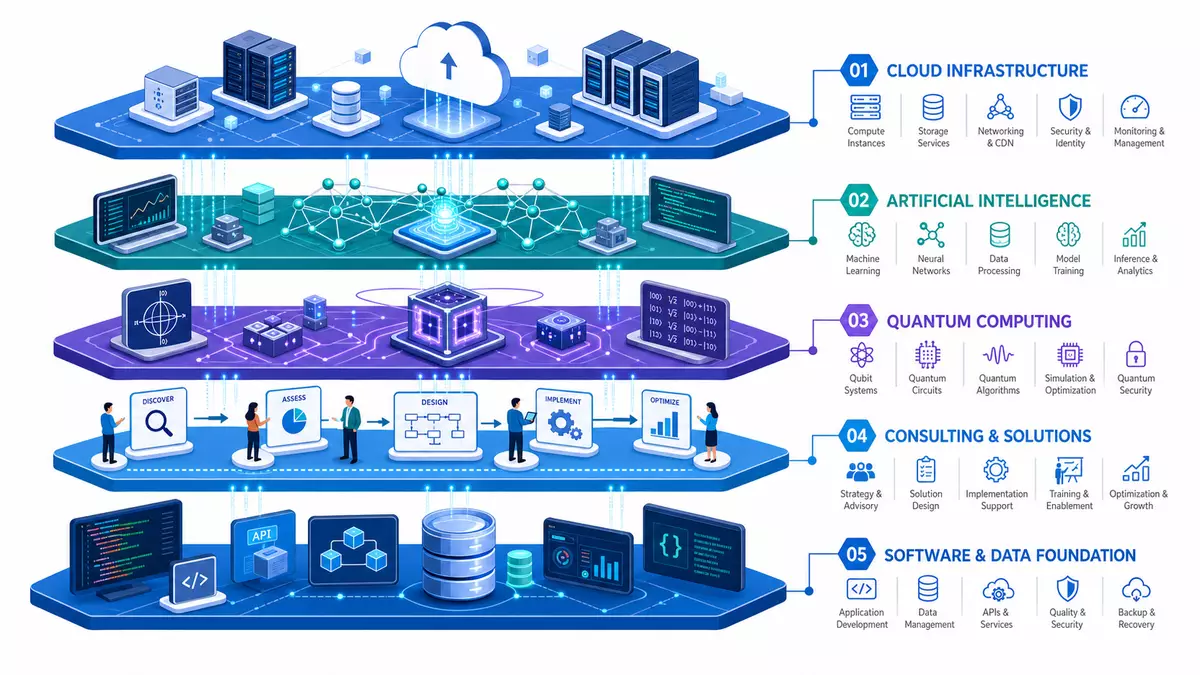
IBM has undergone a significant strategic repositioning over the past several years, shifting from a hardware-centric profile toward hybrid cloud and data-centric software and services. A central element of this strategy is the hybrid cloud platform that enables enterprises to operate workloads across on-premises data centers, private clouds, and multiple public cloud environments. This approach acknowledges that many large enterprises are not moving entirely to a single public cloud provider but instead require flexible architectures that integrate legacy systems, regulatory requirements, and newer cloud-native applications. IBM has been investing in tools that support this multi-cloud orchestration, observability, and security, using both its developed technologies and acquired capabilities.
Artificial intelligence has become another defining pillar of IBM strategy. The company has deployed AI in areas such as automation, customer service, data analysis, and industry-specific solutions. While generative AI, large language models, and more advanced machine learning are now widely discussed across the market, IBM is focusing on responsible AI usage, data governance, and AI integration into business processes instead of only showcasing standalone novelty features. This orientation appears throughout the companys investor presentations and technology briefings accessible via its corporate and investor websites. For IBM stock, the relevance of AI is partly in potential revenue expansion in existing clients and verticals, and partly in the possibility of higher software attach rates – where clients who adopt IBM cloud and data platforms also license AI modules that extend functionality.
From an investor perspective, the question around AI is whether IBM can grow this line fast enough to offset areas of slower growth or legacy declines. The earnings and segment reporting help answer this by showing the pace of software subscription growth, the number of new enterprise deals that include AI features, and the level of recurring revenue IBM generates from AI and automation solutions over time. While the company does not fully disclose every detailed metric for AI separately, management does highlight the role AI plays in the broader software and consulting businesses, suggesting that AI is increasingly embedded rather than treated as a stand-alone product line.
Consulting and industry solutions
IBM consulting plays a critical role in enabling the adoption of hybrid cloud and AI strategies among clients. Consulting teams assist with assessing existing IT infrastructure, redesigning processes, migrating workloads, and implementing security and compliance controls. This work spans multiple industries, including financial services, healthcare, manufacturing, telecommunications, and the public sector. IBMs long-standing relationships with large enterprises provide an entry point for consulting projects that build on existing mainframe, middleware, or software deployments and extend them into more modern architectures.
Industry-specific solutions that combine software, consulting, and sometimes hardware or infrastructure services are another cornerstone of IBM operations. For example, in financial services IBM offers tools for risk management, regulatory reporting, and customer engagement that leverage both historical transaction data and AI-driven analytics. In healthcare, IBM provides data platforms that support medical research, population health initiatives, and clinical decision support. Industrial and manufacturing clients use IBM IoT and analytics capabilities to monitor equipment, predict maintenance needs, and improve supply chain planning. These examples illustrate how IBM attempts to anchor its technology stack within the operational realities of different sectors, thereby securing longer-term engagements rather than one-off product sales.
Such long-term engagements can be reflected in metrics like backlog, remaining performance obligations, and contract durations, which the company discusses in its detailed filings and presentations. A healthy level of contracted future revenues and services suggests that IBM has built a pipeline of work that supports visibility over future quarters. While investors following IBM stock must also account for project execution risks, cost control, and competitive pressures, the presence of multi-year contracts in strategic industries helps mitigate short-term volatility in new signings or macroeconomic sentiment.
Competitive landscape and peer comparison
IBM operates in a competitive landscape that includes major public cloud providers, enterprise software firms, specialist AI companies, and consulting and system integration groups. Large technology peers have significant resources for research, development, marketing, and acquisitions, and they can compete across several of the same domains as IBM – including cloud infrastructure, data platforms, and AI tools. IBM differentiates itself by emphasizing hybrid architectures, mainframe and mission-critical transaction processing expertise, and deep industry knowledge built over decades. Its focus on regulated industries and complex enterprise environments is a core part of its positioning.
Peer comparison for IBM stock often considers growth rates, margins, valuation multiples, and balance sheet structure. In periods where faster-growing cloud-native firms report double digit yearly growth, IBMs more measured growth may appear less dynamic. However, investors attuned to value, dividend income, and lower volatility may view IBMs profile differently. The companys management discusses competitive dynamics and market share trends in its investor materials, noting areas where IBM gains ground and areas where it must adjust strategy. For example, in some segments the focus is on deepening relationships with existing clients rather than aggressively pursuing every new logo, while in others IBM aims to capture emerging demand related to data sovereignty, security, and AI governance.
Valuation frameworks for IBM stock can therefore encompass both relative metrics – such as price to earnings ratios or enterprise value to EBITDA compared with peers – and absolute metrics related to dividend yield, free cash flow yield, and potential total return over multi-year periods. These assessments depend on the specific investor profile and risk appetite, and are informed by the companys quarterly and annual reports, which set out detailed segment results and guidance ranges for revenue, pre-tax margin, and cash flow.
Technology platforms and mainframe business
Despite the strategic pivot toward cloud and AI, IBMs mainframe and transaction processing business remains integral to the company. Mainframe systems underpin critical workloads for banks, insurers, governments, and large enterprises, handling high-volume transaction processing with stringent reliability and security requirements. IBM continues to develop new generations of mainframe systems that integrate with cloud and open systems while maintaining compatibility with existing applications. These systems often drive cyclical upgrades, where clients deploy new hardware and associated software, contributing to revenue spikes in specific quarters.
IBMs technology platforms extend beyond mainframes to include middleware, data management tools, integration software, and observability solutions. The company has embraced open-source technologies and ecosystems, contributing to and using projects that support containerization, microservices, and cloud-native development. These initiatives are visible in product documentation, developer resources, and joint announcements with partners. By blending proprietary and open technologies, IBM aims to meet enterprise requirements for stability and support while leveraging the innovation present in the broader software community.
Mainframe and platform revenue is subject to enterprise investment cycles. When clients delay upgrades or optimize existing systems longer than initially planned, IBM can experience periods of slower hardware-related revenue. Conversely, large upgrade waves or adoption of new platform capabilities can lead to periods of elevated hardware and related software sales. Management discusses such cycles with investors to contextualize quarterly revenue movements, indicating when shifts are primarily timing-related versus structurally driven by changes in client behavior.
Regional footprint and client base
IBM has a global presence, with operations, clients, and partner ecosystems across the Americas, Europe, Asia-Pacific, and other regions. This geographic diversification helps spread exposure across different macroeconomic conditions, regulatory environments, and technology adoption cycles. In some regions, cloud and AI adoption may occur faster, while in others regulatory constraints or infrastructure limitations shape the pace of change. IBM tailors its offerings to local requirements, including data residency rules and industry-specific regulations.
The companys client base includes large multinational corporations, national and regional enterprises, government agencies, and smaller businesses. For IBM stock, the concentration of revenue in large enterprise and public sector clients has a dual effect. On the one hand, these clients can provide stable, multi-year engagements with material contract value. On the other hand, decision cycles can be longer, and projects may be subject to political, regulatory, or budgetary processes. The detailed breakdown of revenue by geography and client type in IBM reporting gives investors insight into how diversified IBM is and where it might face region-specific risks or opportunities.
Partner ecosystems, including channel partners, independent software vendors, and system integrators, also contribute to IBMs reach. By working with partners, IBM can extend its technology stack into markets and segments where it would otherwise have limited direct presence. Partner-related activity often features in investor presentations and partner conference materials and is relevant for understanding how IBM scales its offerings, especially in mid-market and specialized industry niches.
Governance, risk, and sustainability considerations
Corporate governance and risk management are important aspects for investors monitoring IBM stock. As a large multinational corporation, IBM must manage operational risks, cybersecurity threats, regulatory compliance requirements, and reputational considerations. The companys annual reports and sustainability disclosures provide insight into how governance structures, board composition, and risk frameworks are designed. This includes committees for audit, risk, and compensation, policies around ethics and compliance, and processes for identifying and mitigating emerging risks.
Sustainability themes, such as environmental impact, social responsibility, and diversity and inclusion, are increasingly relevant for institutional investors and some retail investors. IBM publishes information on its environmental footprint, including energy usage and emissions related to data centers, office facilities, and supply chains. It also highlights initiatives aimed at reducing environmental impact and supporting clients in implementing sustainable technology solutions. In social and governance areas, IBM details programs addressing workforce development, diversity, and community engagement. While these aspects may not directly determine near-term earnings, they can influence long-term brand perception, client relationships, and eligibility for inclusion in certain ESG-focused indices or portfolios.
Regulatory developments around data privacy, AI usage, and technology competition also shape IBMs operating environment. The company must adapt to changing rules regarding data handling, AI transparency, and cross-border data flows. Investor communications and filings often reference such regulatory themes, and how IBM interprets and responds to them can affect both risk assessments and competitive positioning.
Product focus: IBM hybrid cloud and AI offerings
Among IBMs extensive product and service portfolio, the hybrid cloud and AI solutions stand out as emblematic of the companys current strategy. Hybrid cloud offerings enable organizations to run applications across on-premises infrastructure and public cloud environments, with management, security, and observability tools that provide unified control. These solutions are designed to integrate with both IBM infrastructure and third-party platforms, reflecting the reality that most large enterprises use multiple vendors and technologies. IBM offers subscription-based and consumption-based models for many of these software and cloud products, contributing to the recurring revenue streams that investors often favor.
AI offerings encompass tools for building, training, and deploying models, as well as industry-specific applications such as automated customer support, document analysis, and anomaly detection. IBM emphasizes that AI solutions must be accountable, explainable, and aligned with data governance requirements, which is particularly important for sectors like finance, healthcare, and public services. Integration into hybrid cloud platforms allows clients to deploy AI close to sensitive data stores or edge locations as needed. For IBM stock, the commercial traction of these hybrid cloud and AI solutions is a key factor in revenue growth prospects, and management frequently highlights case studies and client wins in earnings calls and presentations to illustrate adoption momentum.
IBM stock and market context
IBM stock is listed on the New York Stock Exchange and is widely followed by both institutional and retail investors. The share price reflects market perceptions of IBMs ability to transition successfully into a more software and services centric company and to capitalize on hybrid cloud and AI trends while maintaining financial discipline, dividends, and a manageable debt profile. Over recent reporting periods, the stock has experienced movements related to earnings surprises, guidance updates, macroeconomic developments, and changes in investor sentiment toward value versus growth within the technology sector.
Chart and valuation analyses often consider levels such as recent highs and lows, ranges over twelve months, and relationships to broader indices. While the precise IBM stock price at any given time is best obtained from up-to-date market data sources, the broader picture is that IBM trades as a large-cap technology and services company with a blend of income and moderate growth characteristics. Investors assessing IBM stock must weigh quantitative factors like revenue and cash flow trends, margins, and leverage against qualitative factors like strategic clarity, execution quality, and competitive positioning.
IBM company snapshot
- Company: International Business Machines Corporation Inc.
- ISIN: US4592001014
- Ticker: NYSE: IBM
- Trading venue: NYSE
- Sector / Industry: Information Technology / IT Services and Software
- Index membership: Major US large-cap indices including the Dow Jones Industrial Average
Disclaimer regarding our articles: No investment advice, no buy or sell recommendation. Information on prices, companies, and markets is provided without guarantee; changes are possible at any time. Stock market transactions can lead to substantial losses. Our articles are created and reviewed in whole or in part automatically with the support of AI.