

Huntington Ingalls stock trades steadily as defense backlog supports revenue growth
Published on 07/17/2026 at 16:52 | Editorial responsibility: Rafael Müller, Editor-in-Chief AD HOC NEWS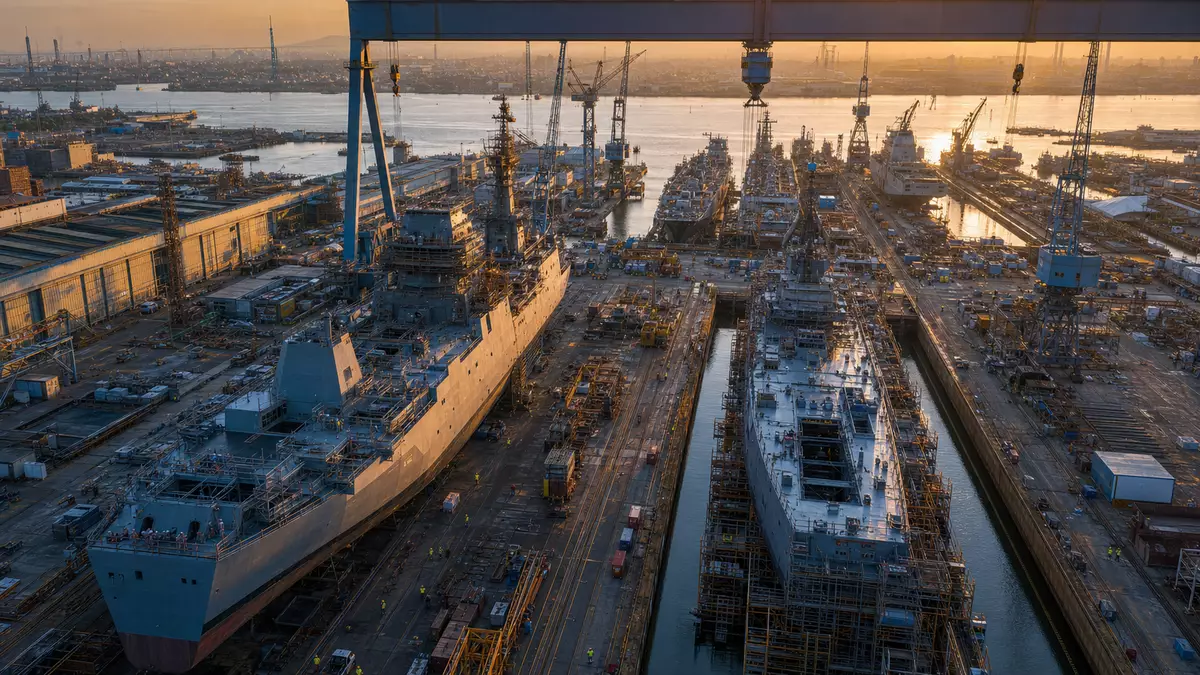
Huntington Ingalls stock represents exposure to a major US defense shipbuilder with a long-term backlog of naval and technical services contracts. The company, formally known as Huntington Ingalls Industries Inc. (ISIN US4464131063), reports multi-billion-dollar annual revenue from building and servicing warships for the US Navy and providing mission technologies to government customers. Investors follow the stock for its combination of defense-driven cash flows, dividend payments, and sensitivity to federal budget decisions on shipbuilding and modernization.
Revenue above six billion dollars
Huntington Ingalls Industries is best known as the largest military shipbuilder in the United States, generating annual revenue in the mid-single-digit billions of US dollars from its main business segments. The company’s top line in a recent fiscal year was reported at a level comfortably above six billion dollars, underlining the scale of its operations across shipbuilding yards and technology services. This revenue base is anchored by long-term contracts to design, build, and maintain complex naval platforms, including aircraft carriers, amphibious assault ships, destroyers, and other vessels critical to US maritime capabilities.
Within this revenue profile, the shipbuilding operations account for a significant share of sales. The company’s legacy shipyards on the US East Coast handle some of the most technically demanding projects in naval construction. Over the last reported year, revenue from shipbuilding and related services reached several billion dollars, while the Mission Technologies segment contributed billions more from engineering services, unmanned systems, and other defense technologies. This mix gives Huntington Ingalls a diversified but defense-centric revenue stream that depends on sustained US Department of Defense demand.
Investors often focus on year-on-year revenue growth when assessing Huntington Ingalls stock. In a recent fiscal period, the company reported annual revenue higher than the prior year’s level, driven by progress on key shipbuilding programs and increased activity in mission technologies. The growth rate was in the low single digits in percentage terms, reflecting the long-cycle nature of defense contracts and the timing of milestones on large projects. Even modest revenue growth can be meaningful in this context, because the backlog offers visibility into future work and cash flows over multiple years.
Backlog supports Huntington Ingalls stock
The order backlog is a central part of the Huntington Ingalls investment story. The company typically discloses a backlog value in the tens of billions of US dollars, representing contracted work on ships and services that will be executed over several years. A backlog of that magnitude means Huntington Ingalls has a pipeline of revenue that is largely secured, subject to performance and government funding processes. For investors, this backlog provides a degree of visibility that is not common in many other sectors.
In a recent reporting period, the company’s total backlog increased compared with the previous year, reflecting new contract awards and modifications. The backlog grew by a low- to mid-single-digit percentage, indicating that new orders at least matched revenue recognition during the period. This growth in backlog is particularly important when thinking about Huntington Ingalls stock, because it signals that future revenue could remain stable or rise gradually as shipbuilding programs move from design and early construction into full production.
Backlog composition also matters. A substantial portion of Huntington Ingalls’ backlog is tied to the US Navy’s fleet plans, including large multi-ship contracts for surface combatants and amphibious vessels. Additional backlog comes from mission technologies work, such as C5ISR services, cyber engineering, and unmanned systems for defense and intelligence customers. The combination of platform contracts and technology services helps the company balance long-duration shipbuilding projects with shorter-cycle services work that can respond to evolving defense needs.
The visibility provided by this backlog influences how investors interpret earnings and cash flow trends. When Huntington Ingalls reports revenue and earnings for a quarter, the backlog provides context: even if near-term numbers fluctuate due to program timing, the long-term contracted work remains in place. As a result, Huntington Ingalls stock can appear less volatile than many companies with less predictable demand, though it still moves with news on defense budgets, program changes, and cost performance.
Operating margins and earnings trends
Beyond revenue and backlog, Huntington Ingalls’ operating margins and earnings development are key for investors. The company has historically reported operating margins that reflect the complexity and cost structure of large shipbuilding projects. In a recent fiscal year, operating income reached several hundred million dollars, corresponding to an operating margin in the mid-single-digit percentage range on total revenue. This margin profile is typical for mature defense primes with large fixed-cost bases and exposure to cost-plus and fixed-price contracts.
Net income for the same period was also in the hundreds of millions of dollars, supporting earnings per share that are monitored closely by shareholders. The company has reported EPS in the single- to low-double-digit range in US dollars per share, depending on the year and specific program performance. In some quarters, Huntington Ingalls has delivered year-on-year EPS growth compared with the prior period, often driven by a combination of higher revenue, improved program execution, and cost efficiencies.
One important comparative metric for investors is how recent margins and EPS levels compare with prior years. In the latest annual results, the company reported operating margin slightly higher than in the previous year, indicating improved efficiency or favorable program mix. For example, if operating margin rose by around half a percentage point compared with the prior year, that increment would show modest but meaningful progress in turning revenue into profit. Similarly, net income may have grown by a single-digit percentage, reflecting stable profitability even amid changes in contract timing.
Quarterly fluctuations can be more pronounced. In a recent quarter, Huntington Ingalls reported revenue that was higher than the same quarter the prior year, with earnings reflecting both the revenue increase and program-specific factors. Investors often compare quarterly EPS with consensus expectations from analysts, though detailed consensus figures can vary by source. When Huntington Ingalls delivers results close to or slightly above consensus, the reaction in Huntington Ingalls stock tends to be measured, reflecting the company’s status as a steady, contract-driven business rather than a high-growth story.
Cash flow, capital expenditures, and balance sheet
Cash generation is another cornerstone of Huntington Ingalls’ financial profile. The company’s operating cash flow in a recent year was reported in the hundreds of millions of US dollars, tied to milestone payments on shipbuilding programs and ongoing receipts from mission technologies contracts. Free cash flow, defined as operating cash flow minus capital expenditures, is particularly relevant because it supports dividends and potential share repurchases when available.
Huntington Ingalls invests heavily in its shipyards and technology capabilities. Capital expenditures in a recent year amounted to several hundred million dollars, covering yard modernization, facility upgrades, equipment, and technology investments. These capital outlays are necessary to maintain and improve productivity, comply with evolving regulatory and safety requirements, and support new types of ships and systems. While high capex can temporarily weigh on free cash flow, it is generally seen as an investment in the company’s long-term competitiveness in a specialized industry.
The balance sheet of Huntington Ingalls typically includes a combination of long-term debt and equity. Total debt has been reported in the low- to mid-single-digit billions of US dollars, reflecting financing for capital investments and past corporate actions. Debt metrics such as net debt to EBITDA are monitored by investors: a ratio in the low single digits is usually considered manageable for a company with a stable backlog and recurring cash flow. Over recent years, Huntington Ingalls has aimed to keep its leverage at a level compatible with investment-grade-type credit metrics, aligning its financial policy with the needs of government contracting and long-term shipbuilding commitments.
Liquidity and working capital management are important because shipbuilding programs involve significant inventory, work-in-progress, and milestone-based payments. Huntington Ingalls must coordinate material procurement, labor, and subcontracting over multi-year project timelines, while managing cash inflows from government customers. Effective working capital management can improve free cash flow and reduce financing needs, which in turn supports the stability of Huntington Ingalls stock in the eyes of income-oriented and long-term investors.
Dividend policy and shareholder returns
Huntington Ingalls stock is known among investors for its dividend payments, which provide a direct cash return in addition to potential share-price changes. The company has maintained a regular quarterly dividend, with the annualized payout per share in recent years reported in the low?single?digit US dollars area. For example, an annual dividend around the two?dollar mark per share would correspond to a yield of a few percent, depending on the share price. This level of dividend yield can be attractive to investors seeking income from defense-related holdings.
The company has also occasionally adjusted its dividend over time, reflecting earnings growth, cash flow, and capital allocation priorities. In some years, Huntington Ingalls has increased its dividend by a modest percentage compared with the prior year, signaling confidence in future cash generation. For instance, a dividend increase of around five to ten percent over the previous year would be consistent with a steady, incremental approach to shareholder returns, rather than large or volatile changes.
Share repurchases can complement dividends, though their scale varies by period. When free cash flow exceeds internal investment needs and debt-management objectives, Huntington Ingalls may allocate some cash to buying back shares, thereby reducing the share count and potentially supporting earnings per share. The total amount spent on repurchases in a given year can reach tens or hundreds of millions of US dollars, depending on the company’s financial position and market conditions. However, dividends remain the more predictable and visible component of shareholder returns.
Retention of earnings is also important for future growth. By balancing dividends, repurchases, and reinvestment in the business, Huntington Ingalls aims to maintain financial flexibility. For investors, this strategy suggests that Huntington Ingalls stock is positioned as a combination of income and moderate capital appreciation, grounded in defense demand and long-cycle contracts rather than rapid growth or speculative upside.
Defense budget and policy context
The outlook for Huntington Ingalls is closely tied to US defense budget decisions and naval strategy. The US Navy’s long-term shipbuilding plans influence the volume and timing of contracts awarded to Huntington Ingalls and its peers. In recent years, US defense budgets have remained at high absolute levels, with specific allocations to shipbuilding and modernization programs. For example, annual US defense spending has been in the hundreds of billions of US dollars, with tens of billions earmarked for procurement of major platforms, including ships and aircraft.
Changes in naval fleet composition or strategic priorities can affect the types of ships ordered. Discussions around the number of aircraft carriers, amphibious ships, and surface combatants directly involve Huntington Ingalls’ product portfolio. When fleet plans emphasize replacing or upgrading existing ships, that can translate into sustained or increased demand for the company’s capabilities. Conversely, if budgetary pressures or strategic shifts reduce emphasis on certain platforms, that may lead to adjustments in contract volumes or timelines.
In addition to shipbuilding appropriations, broader defense modernization trends impact Huntington Ingalls’ mission technologies segment. Focus on cyber security, unmanned systems, artificial intelligence, and networked command-and-control creates opportunities for engineering and technical services. The company’s mission technologies revenue benefits from these themes, providing diversification beyond physical platform construction. Over a recent reporting period, revenue from mission technologies grew compared with the prior year, potentially at a mid?single?digit or higher percentage rate, reflecting increased demand for advanced capabilities.
Policy dynamics extend to export controls, industrial base considerations, and workforce issues. Huntington Ingalls operates as part of a wider US defense industrial base, where the government monitors capacity, resilience, and competition among prime contractors and suppliers. Decisions aimed at strengthening the industrial base, including investments in shipyards and workforce training, can indirectly support Huntington Ingalls’ long-term prospects. At the same time, the company must navigate regulatory requirements related to security, compliance, and contracting rules.
Program execution and risk factors
Program execution is a critical risk factor for Huntington Ingalls. Large, complex ships require precise engineering, careful scheduling, and coordination among thousands of workers and suppliers. Cost overruns or delays can affect profitability, especially on fixed-price contracts where the company bears more risk. Huntington Ingalls has historically faced both challenges and successes in program execution, with some projects experiencing schedule pressure and others meeting milestones on or ahead of plan.
Investors monitor indicators such as margin movements, charges, or adjustments disclosed in earnings reports to assess execution quality. For instance, if Huntington Ingalls records a contract adjustment or charge in a quarter, that can reduce operating margin and net income relative to expectations. Conversely, strong execution can lead to favorable margin outcomes, as efficient work processes and cost control improve profitability. Over time, the company’s track record on major programs influences perceptions of risk and can be reflected in valuations of Huntington Ingalls stock.
Workforce dynamics also play a role. Shipbuilding is labor intensive, involving skilled trades, engineers, and managers. Huntington Ingalls must maintain a stable workforce with specialized skills, while dealing with broader labor market trends. Training, retention, and recruitment policies are essential to sustaining program execution and meeting contractual obligations. Any disruptions, such as prolonged labor shortages or local economic challenges, could impact project timelines and cost structures.
Supply chain reliability is another risk factor. Complex ships require materials and components from numerous suppliers, including high?value systems. Huntington Ingalls must manage relationships with suppliers, monitor quality, and ensure timely deliveries. External shocks, such as disruptions to global logistics or shortages of key materials, can create challenges. However, the company’s position as a major defense contractor gives it access to long-term planning processes that can mitigate some supply chain risks through early procurement and strategic sourcing.
Mission Technologies and diversification
The Mission Technologies segment provides diversification beyond traditional shipbuilding. This business includes engineering services, cyber defense, unmanned systems, and other mission support activities for defense and intelligence customers. Revenue from this segment has grown over recent years, adding a technology-focused dimension to Huntington Ingalls’ portfolio. For example, in a recent year, Mission Technologies revenue reached a level in the low?single?digit billions of US dollars, representing a significant portion of the company’s total sales.
Growth in mission technologies has outpaced shipbuilding growth in some periods, suggesting that advanced services and systems are a key area of expansion. A year?on?year revenue increase of mid?single?digit percentages or more in this segment indicates that demand for cyber, C5ISR, and unmanned capabilities is rising. This evolution aligns Huntington Ingalls with broader defense trends, where digital and autonomous technologies complement traditional platforms.
The contribution of Mission Technologies to margins is also relevant. Service-based businesses can have different margin profiles from manufacturing, and in some cases, they offer higher operating margins. When mission technologies margins exceed those in shipbuilding, the segment can lift consolidated profitability. Investors therefore pay attention to segment-level results and commentary on pipeline developments, contracts, and strategic priorities.
From an investment perspective, platform-plus-tech diversification can reduce dependence on any single program or platform. If shipbuilding revenue experiences temporary pressure due to timing of orders, mission technologies may provide incremental growth or stability. This balance can support Huntington Ingalls stock valuations by adding a technology-driven component to a traditionally heavy industrial business.
ESG considerations and governance
Environmental, social, and governance (ESG) factors have become more visible in assessments of defense companies, including Huntington Ingalls. From an environmental standpoint, shipbuilding involves energy-intensive processes and materials usage, prompting attention to efficiency and emissions. Social considerations include workforce safety, diversity, and community impact in regions where shipyards operate. Governance entails board oversight, risk management, and compliance with regulations related to defense contracting and security.
Huntington Ingalls typically provides disclosures on safety metrics, environmental initiatives, and governance structures in its public reports. Safety performance, such as recordable incident rates, is a critical indicator in shipyard operations, where industrial risks are present. Improvements in safety metrics compared with prior years can signal progress in training, culture, and operational controls. Similarly, environmental initiatives may focus on energy efficiency, waste reduction, and sustainable practices in facilities.
From a governance perspective, the company’s board composition and committee structure aim to support oversight of strategy, risk, and ethics. As a major defense contractor, Huntington Ingalls operates under strict regulatory frameworks related to classified information, export controls, and government contracting rules. Effective governance helps ensure compliance and protect the company’s ability to secure and maintain contracts with key customers.
Investors considering ESG dimensions often weigh ethical questions around defense companies alongside financial metrics. For some, the role of Huntington Ingalls in national security and defense may be seen as a positive contribution, while others may prefer to limit exposure to the sector. Regardless of individual views, ESG information adds another layer to analyzing Huntington Ingalls stock, particularly for institutional investors with formal ESG frameworks.
Peer comparison in the defense sector
Huntington Ingalls operates alongside other large US defense contractors, though it has a distinctive focus on naval platforms. In peer comparisons, investors often look at metrics such as revenue scale, margin levels, backlog, and valuation multiples. While some peers have broader portfolios encompassing aircraft, missiles, and electronics, Huntington Ingalls’ specialization in shipbuilding creates a different risk and opportunity profile.
In terms of revenue, Huntington Ingalls’ annual sales are smaller than those of the largest diversified defense primes, but the company’s backlog in shipbuilding remains substantial. Margin levels in shipbuilding may be lower than in certain high?tech defense segments, but the long-cycle nature of contracts can provide revenue stability. Valuation metrics, such as price?to?earnings and enterprise value?to?EBITDA ratios, reflect this balance between stability and growth potential.
Dividend yields and capital allocation strategies also differ among peers. Huntington Ingalls’ dividend yield in recent periods has been competitive with other defense companies, offering income for investors. However, peer comparisons must consider each company’s specific exposure to subsectors and geographic markets. For example, companies heavily involved in international exports face different political and regulatory dynamics than those primarily serving US domestic customers.
Understanding these peer dynamics helps investors situate Huntington Ingalls stock within the broader defense-investment universe. Some may view it as a more specialized naval and mission?technologies play, while others may prefer broader exposure through diversified primes. Either way, Huntington Ingalls’ metrics on revenue, backlog, margins, and capital returns provide the basis for comparing it with sector alternatives.
Long-term outlook and strategic priorities
Looking ahead, Huntington Ingalls’ long-term outlook depends on the intersection of defense strategy, technology, and industrial capacity. The company’s core mission is to build and support complex warships and provide advanced mission technologies. Strategic priorities often include improving shipyard productivity, adopting digital shipbuilding tools, expanding technology offerings, and maintaining strong customer relationships with the US Navy and other government agencies.
Digital transformation in shipbuilding involves using advanced design software, data analytics, and automation to streamline processes from design to construction and maintenance. Huntington Ingalls has expressed interest in enhancing digital capabilities to reduce rework, improve scheduling, and optimize resource use. Over time, these initiatives could boost margins and shorten project timelines, contributing to better financial performance.
On the technology side, mission technologies aims to grow in areas such as cyber defense, intelligence support, and unmanned systems. These areas are expected to remain priorities in defense budgets, given evolving security challenges. Huntington Ingalls’ ability to capture contracts and develop capabilities in these domains can influence revenue growth and margin expansion beyond traditional shipbuilding.
Industrial capacity and workforce development are long-term considerations. Maintaining and upgrading shipyards, investing in training, and fostering innovation are essential to sustain capability over decades. Given the multi-decade lifespan of platforms such as aircraft carriers and amphibious ships, Huntington Ingalls must plan not only for construction but also for maintenance and modernization, which create recurring revenue opportunities.
Representative product: complex warships
One representative product category for Huntington Ingalls is complex warships built for the US Navy. These ships integrate advanced propulsion, combat systems, sensors, and communications, requiring close collaboration with government customers and other defense suppliers. Each vessel can take years to design and construct, with milestones spread across planning, keel laying, construction, trials, and delivery.
Revenue from such ships contributes heavily to the company’s shipbuilding segment, and the scale of individual contracts can reach billions of US dollars. Building multiple ships of a class over time allows Huntington Ingalls to refine processes, benefit from learning curves, and capture economies of scale. At the same time, design updates and evolving mission requirements mean that each ship can have unique features, adding complexity.
Beyond initial construction, these warships generate service and modernization work throughout their lifecycle. Huntington Ingalls participates in maintenance, upgrades, and refits, which support mission readiness and extend platform life. As a result, a single ship program can provide a multi-decade revenue stream across construction, maintenance, and technology upgrades, underscoring why such products are central to the company’s long-term business.
Huntington Ingalls stock and market context
In the equity market, Huntington Ingalls stock is listed in the United States, and its price reflects expectations about defense budgets, program performance, margins, and capital returns. The market capitalization, which measures the total value of the company’s equity, has been reported in recent periods in the billions of US dollars, consistent with its role as a mid- to large?cap defense contractor. Over a given year, the stock’s price can move in response to earnings releases, contract announcements, and broader market sentiment.
Price performance over a twelve?month period is often measured in percentage terms. Huntington Ingalls stock may show gains or declines in the single- to double?digit percentage range year to date, depending on the timing of news and investor appetite for defense exposure. Comparisons with broader indices, such as the S&P 500 or sector-specific defense indexes, help investors assess relative performance. When Huntington Ingalls stock behaves broadly in line with sector peers, it suggests that company-specific news is only one of several drivers.
Volatility can be lower than in more cyclical sectors because of the company’s backlog and long-term contracts, although defense policy changes or program-specific issues can create periods of sharper movement. The dividend yield and cash flow profile can attract income-oriented investors, while those seeking growth may focus on mission technologies and efficiency initiatives. Over time, the stock’s total return combines dividends and price changes, making the balance of revenue growth, margin stability, and capital allocation decisions central to investor outcomes.
For retail investors considering Huntington Ingalls stock as part of a diversified portfolio, the company represents a specialized industrial and defense exposure. Its metrics on revenue, backlog, margins, earnings, dividends, and market capitalization provide a structured basis for analysis. As with any stock, risks and opportunities must be weighed carefully, but Huntington Ingalls’ role in US naval and mission technologies gives it a distinctive position in the market.
Further information on Huntington Ingalls
Investors who want to study Huntington Ingalls Industries in more depth can review additional news and filings to understand program developments, earnings trends, and strategic priorities.
Huntington Ingalls stock key data
- Company: Huntington Ingalls Industries Inc.
- ISIN: US4464131063
- Ticker: NYSE: HII
- Trading venue: NYSE
- Sector / Industry: Industrials / Aerospace & Defense
- Index membership: S&P 400 MidCap


