HSE Authorises Criminal Charges Over Avonmouth Explosion That Killed Four Workers
Veröffentlicht: 15.07.2026 um 17:10 Uhr, Redaktion boerse-global.de
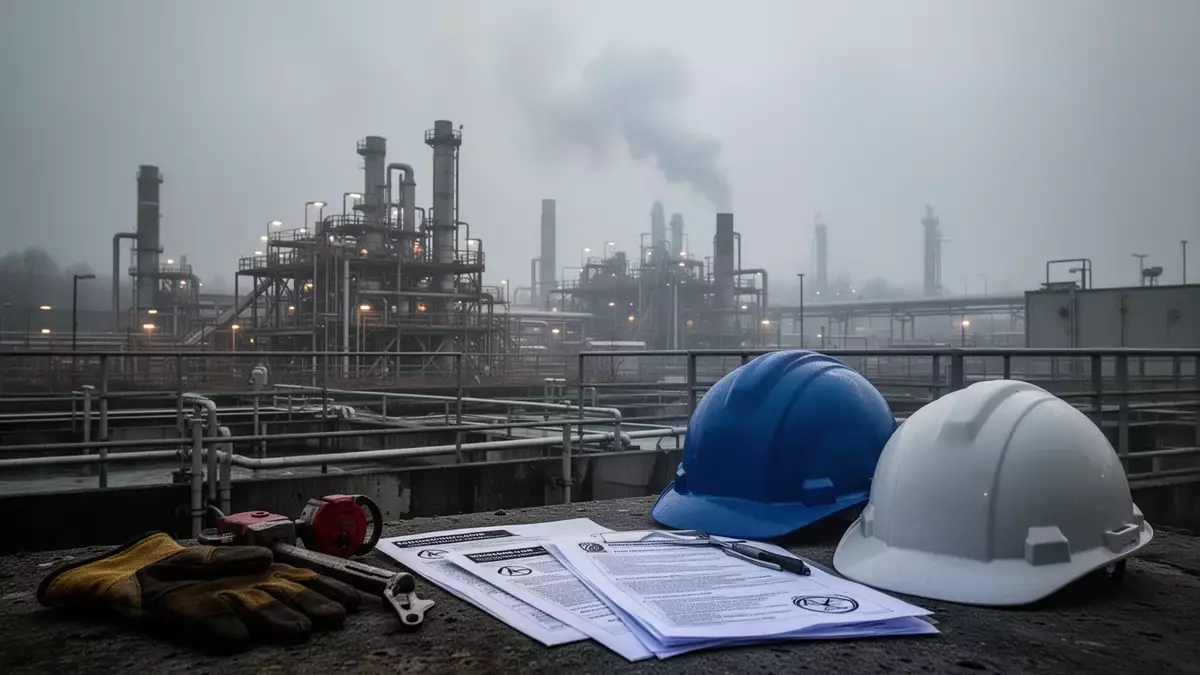
The Health and Safety Executive has authorised criminal charges against Wessex Water following a 2020 explosion at a facility in Avonmouth that killed four workers. The case marks a significant escalation in enforcement action against a major utility and serves as a stark reminder to UK employers of their duties under the Health and Safety at Work Act.
The blast claimed the lives of Luke Wheaton, 16; Ray White, 57; Brian Vickery, 63; and Mike James, 64. The decision to pursue charges comes after a police investigation into the incident was dropped in July 2024. Prior to this development, the HSE had already issued an improvement notice to the company in January 2024.
Prosecutions like this one are a sharp reminder that UK employers must take their legal duties seriously. Are you certain your own risk assessments and safety documentation are fully compliant? A free toolkit covers the essentials, including a director liability guide and 8 other ready-to-use tools to help you stay on the right side of the Health and Safety at Work Act. Download the free Health & Safety at Work Act 1974 Toolkit
US Safety Board Flags Failures at Maine Paper Mill
On July 14, the US Chemical Safety Board (CSB) released a preliminary report detailing safety failures at the Woodland Pulp mill in Baileyville, Maine. The report focuses on a hydrogen sulfide gas leak in late January that killed a 20-year-old co-op student and a 26-year-old engineer.
The CSB investigation found the mill lacked hydrogen sulfide detectors or personal monitors in the area where the leak occurred. The incident was triggered by a shutdown initiated to save costs due to high natural gas prices. During this shutdown, a scrubber fan was turned off, allowing toxic gas to accumulate. Victims were likely exposed to concentrations exceeding 500 parts per million.
The investigation also revealed that a backup acid system was in use because the primary system was damaged, and gas escaped through holes and a gash in a vent pipe. The company did not track the location of its workers, and the victims were not discovered for several hours. Total property damage is estimated at more than $16 million, and an investigation by the US Occupational Safety and Health Administration (OSHA) remains pending.
Fatal Industrial Accidents in India and Ukraine
Multiple fatal incidents were reported at international industrial sites on July 14. In Tamil Nadu, India, a boiler explosion at a metal smelting factory in Gummidipoondi killed a 24-year-old worker and injured eight others. On the same day, a separate furnace explosion at Jain Resource Recycling, also in Tamil Nadu, claimed the life of a 32-year-old worker. Local authorities have launched investigations into safety compliance at both facilities.
In Ukraine, the general director of Ukroboronprom, Herman Smetanin, resigned on July 14 following a July 6 strike that detonated an ammunition depot in Vyshneve. The explosion resulted in nine deaths and the evacuation of more than 600 people. Two other state enterprise heads were dismissed following reports of storage violations at the site.
The tragedy in Maine highlights how quickly a hazardous substance incident can turn deadly. In the UK, COSHH regulations require employers to assess and control risks from dangerous substances like hydrogen sulfide. Yet many businesses lack up-to-date risk assessments. A free COSHH toolkit provides 43 ready-to-use templates and checklists to help you identify hazards, document controls, and protect your team. Get the free COSHH Risk Assessment Toolkit
Ongoing Investigations and Legislative Responses
In Greece, an investigation continues into an explosion and fire at the Violanta biscuit factory in Trikala that killed five workers. Families of the victims have reported that a smell of gas was present at the site for more than a month before the incident, though management has denied these claims.
In Canada, labour advocates continue to seek accountability five years after the July 12, 2021, crane collapse in Kelowna that killed five men. Although the Royal Canadian Mounted Police recommended charges in February 2024, none have been approved to date. In response to safety concerns, British Columbia plans to implement new crane operator certifications and company licensing requirements by July 2027.
Disclaimer zu unseren Artikeln: Keine Anlageberatung, keine Kauf oder Verkaufsempfehlung. Angaben zu Kursen, Unternehmen und Märkten ohne Gewähr; Änderungen jederzeit möglich. Börsengeschäfte können zu hohen Verlusten führen. Unsere Beiträge werden ganz oder teilweise automatisiert mit Unterstützung von AI erstellt und geprüft.