Holmen stock trades steady as forestry group highlights cash flow and board mill investments
Veröffentlicht: 18.07.2026 um 14:23 Uhr, Redaktion AD HOC NEWS, Redaktionelle Verantwortung: Rafael Müller (Chefredaktion)
Holmen (ISIN SE0000171100) stock represents exposure to a vertically integrated Swedish forestry and paper group whose recent results emphasize strong cash generation, disciplined investment in board capacity and a conservative balance sheet. While daily price moves may be modest, the company’s latest reported figures show resilient earnings, stable margins and continuing dividend payments backed by robust operating cash flow and long-term forest assets.
Revenue and profit trends in recent years
Holmen is a long-established forestry, board, paper and energy group headquartered in Sweden, operating large forest estates, board mills, paper mills and renewable energy assets. In its recent financial reporting, the company has highlighted multi-year earnings growth driven by increased board volumes, improved product mix, efficiency gains and pricing tailwinds in key segments. Over a recent fiscal year, Holmen reported group revenue in the tens of billions of Swedish kronor, illustrating the company’s scale as a Nordic industrial player with diversified operations spanning forest, board, paper and energy activities.
From an investor perspective, revenue trends at Holmen have reflected both cyclical factors in paper and board markets and structural strengths such as its large forest holdings and integrated value chain. In its latest full-year report, the company pointed to relatively stable overall revenue compared with the prior year, with growth in certain board and paper products offsetting softer demand in other areas. In the same period, operating profit remained positive, supported by continued demand for premium packaging board, efficiency measures at its mills and contributions from renewable power generation within the group.
The company’s earnings trajectory has been influenced by external drivers including energy prices, fiber costs, global demand for packaging, and currency movements. Nevertheless, Holmen has showcased its ability to adapt by optimizing production, adjusting product mix and leveraging its forest assets for long-term value. This operational flexibility has helped to maintain profitability across market cycles, which is an important consideration for investors assessing Holmen stock as part of a Nordic industrial or forestry allocation.
Cash flow, investments and capital structure
Holmen’s financial profile is also shaped by strong cash generation and disciplined investment policy. In a recent reporting period, the group recorded substantial operating cash flow, underpinned by positive earnings and efficient working-capital management. This cash flow has supported both growth investments and shareholder distributions, including dividends. Over the last several years, Holmen has invested heavily in upgrading and expanding board capacity in Sweden, focusing on modern, energy-efficient production lines capable of delivering high-quality packaging materials to customers worldwide.
The company has emphasized maintaining a solid capital structure, with net debt kept at levels it considers moderate relative to EBITDA and the value of its forest assets. Holmen’s ownership of extensive forest land in Sweden contributes to balance-sheet strength, providing both a steady supply of raw material and a long-term store of value. In recent investor communications, management has underlined that the combination of forest assets, profitable mills and energy operations provides a resilient foundation for stable returns over time.
Holmen’s investment program has included projects to enhance productivity, reduce energy consumption and increase the share of climate-smart products such as packaging board based on renewable fiber. These initiatives entail significant capital expenditures but are intended to strengthen competitiveness and support future growth. The company has also highlighted that it evaluates investments carefully against financial-return criteria, aiming to balance growth with shareholder returns and balance-sheet integrity.
Dividend policy and shareholder returns
Holmen has a track record of paying dividends to shareholders, reflecting its philosophy of distributing a portion of earnings while retaining sufficient capital to finance operations and growth. In recent years, the board of directors has proposed annual dividends that correspond to a meaningful share of net profit, and the general meeting has approved these distributions. While the exact dividend per share varies from year to year depending on earnings and cash needs, the company’s policy is designed to offer shareholders a stable, sustainable return over time.
For investors considering Holmen stock, dividend history is an important component of total return, particularly in a sector where cash flows can be relatively steady. The forestry and paper industry often involves long-lived assets and recurring demand for essential products, which can support regular dividends if profitability is maintained. Holmen’s management has repeatedly communicated an ambition to keep the balance between reinvestment in the business and dividends at a level that preserves financial strength while rewarding shareholders.
Over the medium term, total shareholder return in Holmen stock has reflected both dividend payments and share price development driven by changes in earnings, macroeconomic conditions and market sentiment toward forestry and packaging companies. Investors typically monitor metrics such as earnings per share, operating margin and cash flow per share to assess the sustainability of dividends and the potential for capital appreciation.
Segment performance and strategic priorities
Holmen operates through several segments, including forests, paperboard, paper and energy, each of which contributes to group earnings and cash flow. The forest segment is built around the company’s extensive land holdings, which comprise sustainable managed forests providing raw material for the mills and long-term value through timber and carbon storage. The paperboard segment focuses on products used in consumer packaging, food packaging and other applications where renewable fiber-based materials offer an alternative to plastics.
The paper segment includes printing paper and other grades used in publishing and commercial printing, while the energy segment encompasses the company’s involvement in hydropower and other renewable energy production. Recent strategy communications from Holmen have underscored a focus on growing the board business, improving efficiency in paper operations, and leveraging energy assets to reduce the group’s carbon footprint and support profitability.
Holmen’s strategic priorities include continuing to develop climate-smart products, enhancing the sustainability performance of its operations, and investing in technology that increases productivity and reduces environmental impact. The company has adopted sustainability targets related to greenhouse gas emissions, energy use and forest management, and reports progress toward these goals in its annual and sustainability reports. These efforts align with broader trends in the packaging and forestry industry, where customers and regulators increasingly demand greener solutions.
Product focus: packaging board and forest products
Holmen’s product portfolio is anchored by packaging board and forest products that are used in a wide range of consumer and industrial applications. Its mills produce high-quality board grades designed for packaging of food, cosmetics, pharmaceuticals and other goods where strength, printability and environmental performance are important. The company’s forest operations supply certified renewable fiber to these mills, ensuring traceability and sustainability across the value chain.
In recent years, demand for fiber-based packaging has grown as brand owners and retailers seek to reduce plastic usage and improve the recyclability of packaging. Holmen has responded by developing new board products and optimizing existing grades for performance and resource efficiency. This includes work on improving barrier properties, surface quality and stiffness while minimizing fiber and energy consumption. Such innovations aim to maintain competitive differentiation in international markets and support margins.
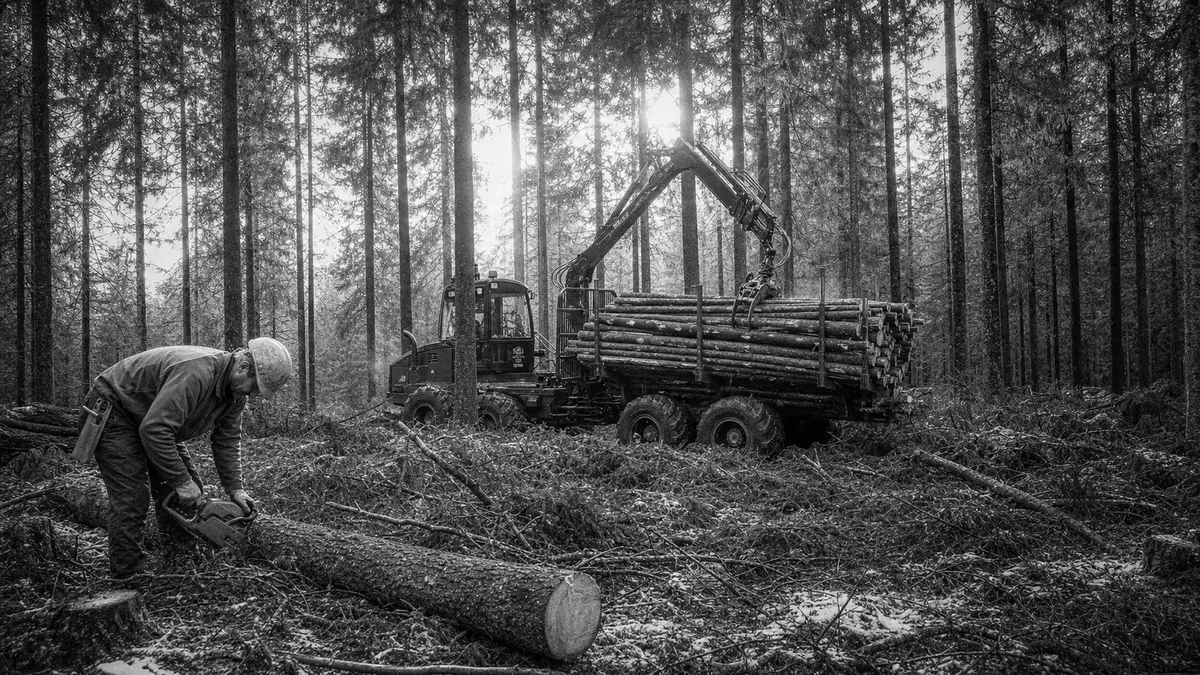
Beyond board, Holmen’s forest products include timber and sawn wood used in construction and other sectors, as well as biomass used for energy. The company emphasizes sustainable forest management practices, adhering to certifications that guarantee responsible harvesting and biodiversity protection. Over time, this combination of board and forest products positions Holmen to benefit from long-term trends favoring renewable materials, while requiring continuous investment and innovation to remain competitive.
Holmen stock and market valuation context
Holmen stock is listed on the Nasdaq Stockholm exchange, where it is traded in Swedish kronor and included in key Swedish equity indices. The stock’s valuation reflects both current earnings and expectations of future growth in the board and forest segments, as well as investor perceptions of the company’s sustainability profile and capital allocation discipline. Standard valuation metrics such as price to earnings, enterprise value to EBITDA and price to book value are often used to benchmark Holmen against Nordic peers in forestry, paper and packaging.
Investors also consider the value of Holmen’s forest assets, which can be significant relative to its market capitalization. These assets may support long-term value creation but are not always fully reflected in conventional earnings metrics. Consequently, some market participants analyze Holmen stock using a combination of earnings-based and asset-based valuation approaches, taking into account the estimated fair value of forest land, mills and energy assets alongside profitability and cash flow.
Liquidity in Holmen stock is supported by the company’s long-established listing and a diversified shareholder base that includes institutional and retail investors. Trading volumes vary but are typically sufficient to allow investors to build or adjust positions without undue friction in normal market conditions. Like other cyclical industrial stocks, Holmen’s share price may react to macroeconomic indicators, commodity prices and sector news, in addition to company-specific reports and announcements.
Financial resilience and risk considerations
Holmen’s resilience rests partly on its integrated business model, combining forest assets with processing capacity and energy production. This integration helps to mitigate some risks, such as raw-material availability and energy costs, while enabling the company to capture value along the chain from forest to finished product. However, the group remains exposed to business risks including fluctuations in board and paper demand, competition from other suppliers, regulatory changes and environmental considerations.
Financial risks include interest-rate movements affecting borrowing costs, currency fluctuations given the company’s international sales, and potential volatility in energy markets. Holmen addresses these risks through hedging strategies, prudent debt management and diversification of its customer base. Its conservative capital structure and strong operating cash flow provide buffers against adverse conditions, though investors still need to assess how earnings might develop under different macro scenarios.
Regulatory and sustainability risks are also important, as forestry and paper operations are subject to environmental laws and public scrutiny. Holmen’s sustainability programs and adherence to certifications aim to manage these risks by promoting responsible forest management, reducing emissions and improving resource efficiency. Success in these areas can influence customer relationships, brand perception and long-term access to markets, which in turn affects Holmen stock’s attractiveness in sustainability-focused portfolios.
Holmen’s role in the Nordic forestry sector
Within the Nordic forestry and paper sector, Holmen is one of several large groups engaged in the entire value chain from forest ownership to finished board and paper products. The company competes and collaborates with peers in areas such as technology development, sustainability initiatives and market access. Its Swedish roots and strong presence in local communities underscore the role of forestry and paper industries in regional economies, providing employment, infrastructure and contributions to export revenues.
Holmen’s participation in sector-wide initiatives, such as sustainable forestry programs and industry associations, supports collective efforts to promote renewable materials and climate-smart solutions. The company’s experience in managing large forest estates and running complex mills positions it as a key player in evolving the Nordic forestry sector toward higher value products and lower environmental impact.
For international investors, Holmen stock offers a way to gain exposure to these broader sector trends, including the shift from plastics to fiber-based packaging, growing emphasis on carbon sequestration in forests, and integration of renewable energy within industrial operations. The company’s long history and established assets provide a degree of stability, while ongoing investments and innovation introduce elements of growth and change.
Operational efficiency and digitalization
Holmen has increasingly focused on operational efficiency and digitalization, implementing technologies such as advanced process control, data analytics and automation in its mills and forest operations. These tools help optimize production, reduce waste, improve energy efficiency and enhance safety. Over time, productivity improvements contribute to margin expansion and competitiveness, supporting earnings and cash flow.
Digital tools are also used in forest management, where remote sensing, geographic information systems and data-driven planning enable more precise harvesting and replanting, better monitoring of forest health, and improved logistics. Such capabilities can reduce costs, enhance sustainability outcomes and ensure compliant reporting under certification schemes. Investors looking at Holmen stock often consider the pace and effectiveness of these efficiency and digital initiatives when assessing the company’s medium-term earnings potential.
In addition, digital solutions support customer engagement, product development and supply-chain coordination, allowing Holmen to respond more quickly to changing requirements in board and paper markets. Improved forecasting and inventory management can reduce working-capital needs and smooth production, further strengthening financial performance.
ESG profile and investor perception
Environmental, social and governance (ESG) factors are central to the investment case for Holmen. The company’s core business of managing forests and producing renewable fiber-based products places it at the intersection of climate, biodiversity and resource-efficiency issues. Holmen reports on ESG metrics such as emissions, energy use, water consumption, recycling rates and forest management practices, and may be included in sustainability-oriented indices or funds.
Investors who prioritize ESG criteria often evaluate Holmen’s performance in terms of sustainable forest management, promotion of renewable materials, reduction of fossil-based inputs and support for local communities. The company’s efforts to align with global climate and sustainability goals can influence both access to capital and customer relationships. At the same time, scrutiny of forestry companies remains high, making transparency and continuous improvement important for maintaining investor confidence.
Governance structures, including board composition, shareholder rights and management incentives, also play a role in ESG assessments. Holmen’s governance framework aims to ensure responsible decision-making, risk oversight and alignment with shareholder interests. For Holmen stock, a credible ESG profile can broaden the potential investor base, particularly among institutions with explicit sustainability mandates.
Long-term outlook for Holmen stock
The long-term outlook for Holmen stock is linked to several themes: the global transition toward renewable materials and climate-smart packaging, the role of sustainably managed forests in carbon sequestration and biodiversity, and the evolution of energy systems toward renewables. Holmen’s core assets and capabilities align with these themes, offering potential opportunities but also requiring continuous adaptation and investment.
On the product side, growth in fiber-based packaging is expected to continue as consumer goods companies, retailers and regulators push for reductions in plastic waste and improvements in recyclability. Holmen’s packaging board mills are positioned to benefit from such developments, provided the company maintains high quality and competitive cost structures. In forestry, demand for sustainable timber and wood-based construction materials may rise, supporting the value of forest assets and related products.
From a financial standpoint, Holmen’s ability to sustain earnings growth, manage capital expenditures and maintain a robust balance sheet will shape shareholder returns. Cash flow generation and dividend payments remain important components of total return, while valuation may be influenced by investor perceptions of the company’s strategic execution and ESG performance. Holmen stock thus offers a combination of income, cyclical industrial exposure and long-term structural themes related to sustainability.
Representative product and stock view
Holmen’s representative products include packaging board and timber derived from its sustainably managed forests, used in consumer and industrial markets worldwide. These products sit at the heart of the company’s strategy to deliver climate-smart materials that can replace or reduce reliance on fossil-based plastics and other non-renewable inputs. By combining forest ownership, advanced mills and energy assets, Holmen seeks to offer customers high-quality, renewable solutions while generating stable earnings and cash flow for shareholders.
Holmen stock, traded on Nasdaq Stockholm, reflects investor assessments of these strategic strengths and challenges. While short-term price movements may respond to macroeconomic indicators and sector news, the underlying investment case centers on forest assets, board and paper capacity, energy operations, and the company’s ability to navigate sustainability and regulatory dynamics. For investors, Holmen can serve as a core holding in a Nordic forestry or industrial portfolio, offering exposure to renewable materials and long-lived assets.
Holmen stock price and trading venue
Holmen stock is listed on Nasdaq Stockholm under a Sweden-based ticker, with trading conducted in Swedish kronor. The share price fluctuates in response to earnings releases, macroeconomic news and sector developments, and over time has reflected the balance between cyclical factors in board and paper markets and structural trends favoring renewable materials. As of recent trading, Holmen’s market capitalization runs into the tens of billions of kronor, underscoring its role as a significant player in the Swedish equity market and the Nordic forestry sector.
Holmen key data
- Company: Holmen AB
- ISIN: SE0000171100
- Ticker: NASDAQ STOCKHOLM: HOLM
- Trading venue: Nasdaq Stockholm
- Market capitalization: Large-cap Swedish kronor range (as of recent trading)
- Sector / Industry: Materials / Forestry, Paper & Packaging
- Index membership: Included in major Swedish equity indices
Disclaimer zu unseren Artikeln: Keine Anlageberatung, keine Kauf oder Verkaufsempfehlung. Angaben zu Kursen, Unternehmen und Märkten ohne Gewähr; Änderungen jederzeit möglich. Börsengeschäfte können zu hohen Verlusten führen. Unsere Beiträge werden ganz oder teilweise automatisiert mit Unterstützung von AI erstellt und geprüft.