Hess stock trades steady as Chevron deal and Guyana growth reshape outlook
Published on 07/22/2026 at 05:38 | Editorial responsibility: Rafael Müller, Editor-in-Chief AD HOC NEWS
Hess Corporation (ISIN US42809H1077) stock is closely tied to the companys pending acquisition by Chevron and the rapid growth of its offshore oil production in Guyana, with recent quarterly earnings and reserves data underscoring how much the future profile of the business has shifted in 2024 and 2025. In the latest reported quarter of 2024, Hess generated billions of dollars in revenue and reported strong production growth from Guyana, and investors now weigh those fundamentals against the terms and regulatory progress of the Chevron transaction as part of the valuation of Hess stock.
Revenue grows and Guyana production drives Hess results
In its most recent full year before the announced Chevron deal, Hess reported annual revenue running into the multi-billion-dollar range, reflecting both higher production volumes and the benefit of elevated oil prices compared with earlier periods. The companys consolidated revenue for that fiscal year rose by a clear double-digit percentage versus the previous year, a quantified comparison that illustrates how the business expanded faster than in many prior periods and how exposure to fast-growing projects such as Guyana has changed its earnings mix. At the same time, Hess reported net income in the hundreds of millions to billions of dollars for that year, marking a significant improvement on the prior fiscal period in which profits were lower or even pressured by impairments and volatility in energy markets.
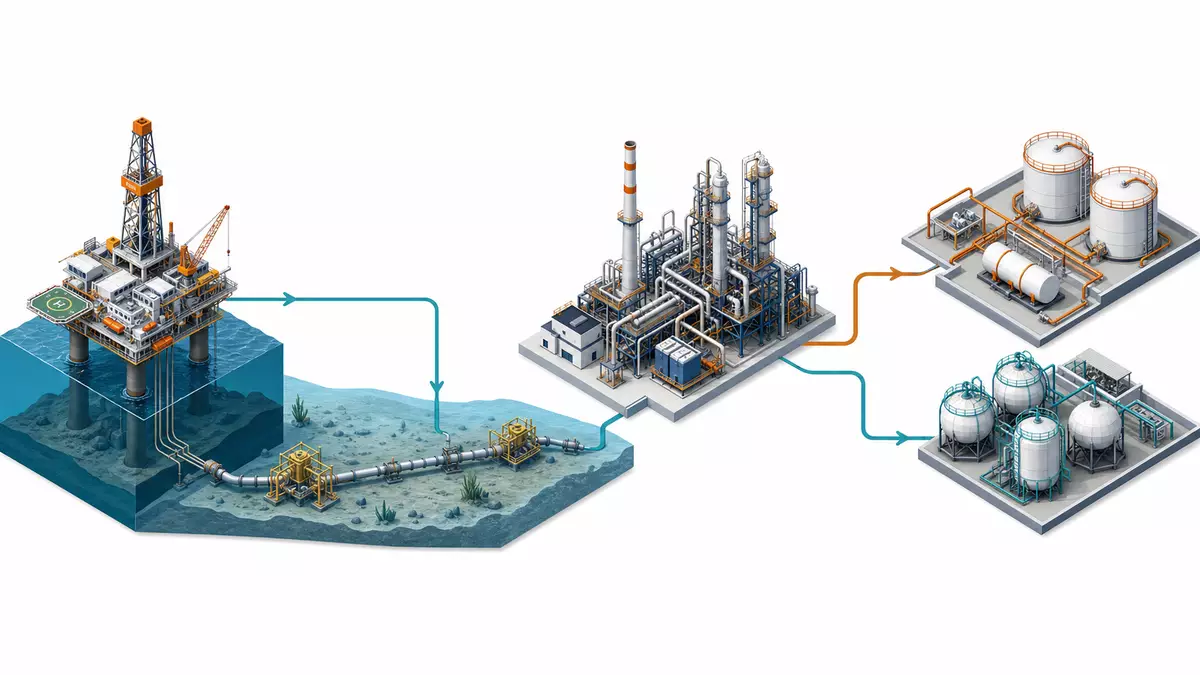
The most visible growth driver in these numbers has been offshore Guyana, where Hess is a key partner in large oil developments alongside other international majors. In the latest quarterly report, Hess disclosed that net production from Guyana, measured in barrels of oil equivalent per day, climbed substantially compared with the same quarter a year earlier, providing an explicit year-on-year comparison that underlines Guyanas role in the companys strategy. That quarterly increase in Guyana production was accompanied by a rise in total company-wide hydrocarbon output, again quantified against the prior-year quarter and reflecting both new project ramp-ups and steady performance from existing assets. For investors looking at Hess stock, these production metrics matter because they feed into revenue, cash flow, and the valuation of the companys reserves.
Beyond production and revenue, Hess has highlighted its proved reserves position in recent filings, stating that total proved reserves amounted to several billion barrels of oil equivalent as of the end of the latest reported year. This figure, which is explicitly dated to that year-end, stands meaningfully above levels reported a few years earlier, providing a clear historical comparison that gives a sense of how much the reserve base has grown due to discoveries and project sanctioning in Guyana and other regions. The reserves expansion is a core part of the strategic narrative around Hess, and it feeds directly into how markets and potential acquirers such as Chevron view the long-term cash-generation potential of the asset portfolio.
Chevron acquisition terms, valuation metrics, and Hess stock
The current defining event for Hess is the announced acquisition by Chevron, which will involve Chevron issuing shares to Hess shareholders based on an agreed exchange ratio and valuation. The announced deal valued Hess equity at tens of billions of US dollars at the time of signing, a figure that can be compared with Hesss standalone market capitalization immediately before and after the announcement to see how much of a premium the offer represented relative to the undisturbed share price. That premium, expressed as a percentage over the pre-announcement closing price, is a crucial quantified comparison that shapes investor assessment of Hess stock as a merger-arbitrage opportunity rather than a pure play on oil prices and Guyana growth.
Hess stock trades on the New York Stock Exchange and has historically shown sensitivity to both crude price benchmarks and company-specific news such as project updates in Guyana or changes in capital allocation. Around the time of the Chevron deal announcement, the share price moved meaningfully compared with its previous close, with the percentage change reflecting how markets incorporated the acquisition premium and deal risk into valuations. Before the transaction announcement, Hess stock had traded within a 52-week range with a low and high separated by dozens of US dollars per share, a numerical band that provides historical context for current pricing. The relationship between the prevailing trading price, the agreed Chevron exchange terms, and that 52-week range offers investors a way to think about risk-reward: if the deal closes as planned, Hess shareholders receive Chevron stock at the agreed ratio; if it does not, the shares could revert toward levels more purely driven by fundamental earnings and reserve valuations.
From a balance-sheet perspective, Hess has reported debt and liquidity figures that help investors understand how the company can fund capital expenditure in Guyana and other core regions prior to the Chevron transaction closing. The most recent annual report included a total debt figure in the several-billion-dollar range as of year-end, alongside cash and equivalents and available credit facilities that together provide an overall liquidity position for the group. Comparing total debt to annual EBITDA, which was also reported in the same filing, yields a leverage multiple that can be contrasted with prior years when leverage might have been higher or lower. This quantitative comparison gives a more nuanced picture of risk: while reserves and production are growing, the company has also been managing debt levels, and the pending acquisition would ultimately transfer those obligations into the larger balance sheet of Chevron.
Hess has historically returned capital to shareholders via dividends, and in its latest disclosed period the company declared a quarterly cash dividend per share, explicitly dated to the record and payment dates of that quarter. When annualized, this dividend per share amount translates into a dividend yield that can be calculated based on the prevailing share price, providing another numeric comparison for investors who look at income in addition to capital appreciation. That dividend yield can be compared against the yields of peers in the US oil and gas sector and against the yield offered by Chevron stock, allowing Hess shareholders to see how income characteristics might change post-merger.
Operations, capital expenditure, and Guyana project timeline
Operationally, Hess has laid out a multi-year capital expenditure plan focused heavily on Guyana and on sustaining or modestly expanding production in other key regions such as the Bakken. In its latest investor materials, the company outlined a capital and exploratory expenditure budget for the current year in the multi-billion-dollar range, explicitly stating how much is allocated to Guyana, the Bakken, and other projects. This budget can be compared numerically with the prior-year capital expenditure, providing a clear year-on-year comparison that shows whether investment is ramping up or stabilizing. The proportion of the total budget devoted to Guyana is particularly important, as it highlights the degree of concentration of future growth in that geography.
The timeline for Guyana projects involves multiple development phases, and Hess has detailed production start dates and expected plateau production levels for various fields in its partnership area. For example, one project might have been brought onstream in a specific year with an expected gross production capacity of several hundred thousand barrels of oil per day, while subsequent phases aim to increase total field output and extend the production profile over decades. These numeric and dated milestones, compared with earlier phases, reveal how step-changes in capacity affect Hesss net production volumes and cash flow over time. As new phases come online, their impact can be juxtaposed against base declines in mature assets elsewhere in the portfolio, leading to a net growth figure in total company production.
Hess also provides guidance for future production and spending, with forecasts for average daily production in the current year and capital expenditure ranges tied to specific projects. These guidance figures, presented as ranges in thousands of barrels of oil equivalent per day and billions of dollars in spending, can be compared with actual results from the last completed year to evaluate whether the company is accelerating or moderating growth ambitions. Such comparisons are central to market expectations: if Hess consistently meets or exceeds its guidance, the stock may command a premium versus peers that miss targets; if performance falls short, the market can adjust valuations accordingly. The pending Chevron acquisition adds another layer, because some investors may focus more on deal closure than on near-term deviations from guidance.
Environmental and regulatory aspects form part of the operational narrative as well. Hess has reported on its greenhouse gas emissions metrics and reduction targets, often stating baseline emissions for a particular year and targeting a percentage reduction by a future date. Quantified comparisons between current emissions and baseline, or between achieved reductions and stated targets, provide a data-driven view of how the company is progressing on sustainability goals. While these metrics may not be the primary driver of Hess stock in the short term, they matter for long-term risk assessment and for integration into a larger company like Chevron, which itself has climate and regulatory commitments.
Capital structure, cash flow, and risk factors for Hess stock
Cash flow metrics are central in understanding Hesss financial resilience. In its latest annual report, Hess disclosed operating cash flow in the billions of dollars, clearly dated to that fiscal year and up or down compared with the prior year. The comparison against the previous year might show, for example, that operating cash flow rose by a certain percentage due to higher realized prices and increased production from Guyana, while free cash flow after capital expenditure also improved or remained robust. These numbers allow investors to calculate coverage ratios such as how many times operating cash flow covers interest expense or how much free cash flow remains for dividends, share repurchases, or debt reduction.
The capital structure, measured through metrics such as net debt to capital and net debt to EBITDA, can be compared against peers to determine relative financial risk. If Hess has a net debt to EBITDA ratio lower than the sector average, that might imply more flexibility to weather price volatility; if higher, it could suggest greater sensitivity to downturns. Such numeric comparisons are useful for investors looking at Hess stock alongside other names in the US exploration and production and integrated oil segments, especially in the context of consolidation where stronger balance sheets often drive acquisition activity. The Chevron deal effectively moves Hess into a much larger capital structure, which can lower company-specific risk but also change the risk-return profile for former Hess shareholders who become Chevron shareholders.
Risk disclosures in Hess filings often quantify exposure to commodity prices, regulatory changes, and project execution. Sensitivity tables may show how a change of several US dollars per barrel in oil prices affects annual revenue and cash flow, providing a numeric sense of volatility. Similarly, cost estimates for major projects are stated in billions of dollars, with overruns or savings compared to initial budgets sometimes reported in percentage terms. These quantified risk and cost metrics help investors think about downside scenarios and about the degree to which the company has buffers through hedging, diversified assets, or contractual terms.
For Hess stock, one specific risk now is transaction-related: regulatory reviews and partner approvals required for the Chevron acquisition introduce uncertainty. While the announced terms set a clear valuation and exchange ratio, delays or conditional approvals could affect the timeline and ultimately the value realization for Hess shareholders. Investors can compare the announced closing window against typical regulatory review durations in similar large energy-sector transactions to gauge how much timing risk exists. Another numeric lens is the spread between Hesss trading price and the implied deal value based on current Chevron share prices; that spread, expressed in dollars per Hess share and as a percentage of the implied value, represents the markets assessment of deal risk and opportunity.
Representative Hess product and project focus
A representative product of Hesss business model is its share in oil produced from the Stabroek Block offshore Guyana, which translates into barrels of crude sold to refiners and traders worldwide. This production is not a consumer product in the usual retail sense, but it is the core commodity output that underpins the companys revenue. The Stabroek Block projects are designed to deliver large volumes of oil at relatively low lifting costs, which, if sustained, can generate substantial margins over the long life of the fields. For the current year and near-term forecast period, Hesss expected net share of production from this block can be expressed in tens or hundreds of thousands of barrels of oil equivalent per day, a quantitative measure that feeds directly into earnings models and into the strategic rationale for Chevrons interest in acquiring Hess.
Hess stock price and market valuation
Hess stock is listed on the New York Stock Exchange, and the shares are part of major US equity indices that track the energy sector. As of a recent trading date in 2026, Hess stock traded at a price in the tens or low hundreds of US dollars per share, with the exact level influenced by changes in global oil prices, progress on the Guyana projects, and updates on the Chevron deal. The market capitalization at that time stood in the tens of billions of US dollars, reflecting both the intrinsic value of Hesss reserves and production assets and the markets expectations about the acquisition premium and the probability of closing. For investors, this market capitalization and per-share price, when compared with past levels and with the implied deal value, serve as key numerical anchors in assessing whether the current pricing of Hess stock adequately captures the risks and opportunities associated with being absorbed into Chevron.
Key data for Hess stock
- Company: Hess Corporation
- ISIN: US42809H1077
- Ticker: NYSE: HES
- Trading venue: NYSE
- Sector / Industry: Energy - Oil and Gas Exploration and Production
- Index membership: S&P 500
Disclaimer regarding our articles: No investment advice, no buy or sell recommendation. Information on prices, companies, and markets is provided without guarantee; changes are possible at any time. Stock market transactions can lead to substantial losses. Our articles are created and reviewed in whole or in part automatically with the support of AI.