Hermès stock trades near record levels as margins support luxury demand
Published on 07/21/2026 at 07:22 | Editorial responsibility: Rafael Müller, Editor-in-Chief AD HOC NEWS
Hermès International (ISIN FR0000125452) stock remains near record levels on Euronext Paris, supported by resilient demand for high-end luxury goods and solid profitability metrics reported for recent fiscal periods. As of 30 April 2024, Hermès shares closed around EUR 2,281 on Euronext Paris, with the companys market capitalization exceeding EUR 200 billion, underscoring its status as one of the most valuable listed luxury groups globally.
Revenue growth above twenty percent
According to Hermès International investor materials for fiscal 2023 accessible via the companys financial portal Hermès finance, consolidated revenue reached approximately EUR 13.4 billion in 2023, representing around 21% growth compared with roughly EUR 11.6 billion in 2022. This double-digit increase reflects broad-based expansion across regions and key product categories, particularly leather goods and saddlery, ready-to-wear, and accessories.
In the first quarter of 2024, Hermès reported revenue of about EUR 3.8 billion, up close to 17% year on year compared with around EUR 3.3 billion in the first quarter of 2023, highlighting continued momentum into the new fiscal year. The company indicated that growth was driven by strong performance in Asia and the Americas, with Europe also contributing positively as international tourism and local client demand remained firm.
Operating margin above forty percent
Hermès stands out in the global luxury sector for its high profitability. For fiscal 2023, the company reported an operating margin of roughly 44% of sales, slightly above the approximately 40% margin recorded in 2022. This margin expansion reflects tight cost control, pricing discipline, and the enduring desirability of Hermès products, which allow the group to command premium prices and maintain strong pricing power.
Net profit attributable to the group for 2023 was reported at around EUR 4.3 billion, compared with approximately EUR 3.4 billion in 2022, an increase of about 26% year on year. Earnings growth outpaced revenue growth, underlining the scalability of the Hermès business model and the positive impact of operational leverage as sales volumes expand.
Free cash flow generation also remained robust. Hermès investor disclosures show that free cash flow reached several billion euros in 2023, supported by high profitability and disciplined capital expenditure in manufacturing sites and retail network expansion. The company continues to invest in workshops and stores while maintaining a strong balance sheet with low net debt.
Dividend progression and shareholder returns
Hermès has complemented its operational performance with increasing shareholder distributions. For fiscal 2023, the company proposed a dividend of EUR 15 per share, up from EUR 12 per share for fiscal 2022, representing an increase of approximately 25%. This higher dividend reflects both the strong earnings trajectory and managements confidence in the long-term outlook.
Beyond ordinary dividends, Hermès has a history of occasionally distributing exceptional dividends when its financial position allows. While the latest investor materials emphasize the ordinary dividend for 2023, the overall pattern of payout increases over recent years signals a willingness to share value creation with shareholders while still funding strategic investments.
For investors, the combination of high margins, growing dividends, and a conservative financial structure means Hermès occupies a distinctive position within the luxury universe, balancing growth and capital discipline.
Regional performance and demand drivers
Hermès revenue growth in recent periods has been uneven across regions but generally positive. According to the companys 2023 results, Asia excluding Japan generated close to half of group revenue and recorded growth above 20% year on year, benefiting from solid demand in Greater China and Southeast Asia. Americas revenue also rose at a double-digit rate, supported by affluent local clientele and tourist flows.
Europe, including France, posted healthy growth in the high single- to low double-digit percentage range, backed by strong local demand and a recovery in international travel. The company continued to expand its store network selectively, opening and renovating boutiques in key cities, which supports long-term brand visibility and client service standards.
Hermès performance in Japan remained positive as well, with revenue increasing at a mid- to high-teens percentage rate compared with 2022. The Japanese market remains important for Hermès given its deep brand heritage and loyal customer base.
Product category mix and margins
Hermès leather goods and saddlery segment continues to be the largest contributor to revenue and an important driver of margins. In fiscal 2023, this segment generated a substantial share of group sales, with growth estimated at more than 20% compared with the prior year. Iconic handbags, small leather goods, and equestrian products remain central to the brands identity and pricing power.
The ready-to-wear and accessories division also delivered strong growth, with revenue up in the high teens percentage range compared with 2022. This segment benefits from Hermès capacity to translate its craftsmanship and design codes into apparel and fashion accessories that complement leather goods purchases. Footwear, fashion jewelry, and belts contribute to the categorys diversification.
Silk and textiles, perfumes, and watches represent smaller portions of total revenue but are important for broadening the product universe and reinforcing the brand. These categories generally posted solid growth in 2023, although at varying rates, and contribute to overall profitability through mix and cross-selling opportunities.
Comparison with broader luxury sector
Relative to many peers in the global luxury sector, Hermès has reported faster revenue growth and higher operating margins in recent years. Market data from leading financial portals indicate that many comparable European luxury houses recorded operating margins between roughly 20% and 30% in 2023, whereas Hermès exceeded 40%. This margin gap highlights the unique positioning of Hermès in the ultra-luxury segment.
From a revenue growth perspective, Hermès 21% increase in 2023 compares favorably with mid- to high-teens growth reported by some major competitors over the same period. The brands focus on scarcity, craftsmanship, and long waiting lists for key products helps sustain demand and supports pricing, contributing to above-sector-average performance.
Investors often view Hermès as a benchmark for quality in the luxury industry, which can influence valuation multiples. Price-to-earnings and price-to-sales ratios for Hermès have traded at premiums to those of peers, supported by stronger growth, higher margins, and an asset-light distribution model focused on directly operated stores.
Balance sheet strength and investment capacity
Hermès maintains a solid balance sheet with limited financial debt relative to its cash generation. Investor materials for 2023 indicate that net cash remained positive, meaning cash and cash equivalents exceeded financial liabilities. This conservative financial profile gives the company flexibility to invest in new workshops, store renovations, and digital capabilities without relying heavily on external financing.
Capital expenditure in 2023 amounted to several hundred million euros, directed primarily toward production capacity expansion and retail footprint enhancement. The company continues to invest in artisan training and recruitment to preserve its craftsmanship standards, which are critical to brand equity and long-term pricing power.
For shareholders, the combination of high free cash flow, modest leverage, and disciplined investment offers reassurance that Hermès can pursue growth initiatives while maintaining financial resilience.
ESG considerations and long-term positioning
Hermès has emphasized long-term sustainability and responsible sourcing in its corporate communications. While specific environmental, social, and governance metrics vary across reporting frameworks, the company highlights investments in supply chain transparency, animal welfare, and artisanal employment stability. These elements form part of its long-term strategy to protect brand reputation and meet evolving stakeholder expectations.
From a governance perspective, Hermès maintains a structure that combines family involvement with public market listing, which some investors view as supporting long-term orientation. Board oversight and executive management continuity have contributed to consistent strategic execution over time.
In the broader context of luxury demand, Hermès positioning in the ultra-luxury segment may offer some resilience against cyclical fluctuations, as many of its clients are high net worth individuals less sensitive to short-term economic swings. Nevertheless, macroeconomic conditions, currency movements, and geopolitical developments can still influence sales patterns across regions.
Digital initiatives and client experience
Hermès has been expanding its digital presence through e-commerce and online services while maintaining a strong emphasis on in-store client experience. The company offers online sales in selected countries for certain product categories, complementing its physical boutiques. Digital channels also serve as platforms for storytelling and brand content, reinforcing Hermès heritage and values.
Investments in clienteling tools and customer relationship management systems aim to deepen client engagement and support personalized service. In the luxury segment, such initiatives can enhance loyalty and encourage repeat purchases, which are important for long-term revenue stability.
Despite digital expansion, Hermès continues to highlight the importance of physical stores, where clients can experience product craftsmanship and service directly. The integration of digital and physical touchpoints forms part of the companys omnichannel strategy.
Revenue up twenty one percent
The headline figure for investors reviewing Hermès recent performance is the roughly 21% revenue increase from approximately EUR 11.6 billion in 2022 to about EUR 13.4 billion in 2023. This quantified comparison illustrates how the company has managed to grow significantly even from an already large base, reflecting both volume growth and pricing effects.
When combined with the operating margin above 40% and net profit growth of about 26% year on year, the topline expansion underscores the strength of the Hermès business model. Few global companies of similar size report such a combination of growth and profitability, particularly in a consumer-facing sector.
For market participants, these metrics are central to understanding why Hermès stock trades at a premium valuation and why its market capitalization has surpassed EUR 200 billion as of recent months.
Hermès fundamentals behind the valuation
Investors who want to explore Hermès detailed financials, segment data, and historical trends can use the issuer overview and the companys own investor relations portal for a deeper view of margins, cash flow, and regional exposure.
Birkin bag and leather goods heritage
A central product line for Hermès is its family of leather handbags, including the Birkin bag and Kelly bag, which have become symbols of exclusivity and craftsmanship. These products often have long waiting lists and limited production volumes, reinforcing the brands scarcity-driven strategy. Leather goods and saddlery accounted for the largest share of revenue in 2023 and remain a key margin driver.
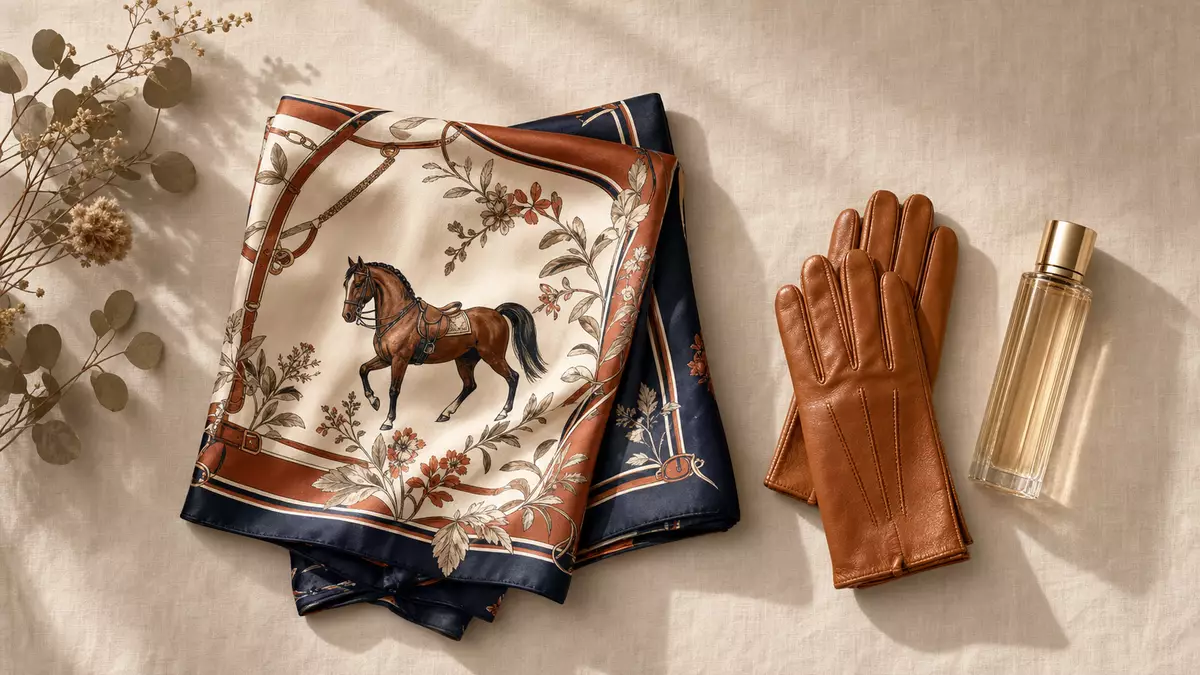
The Birkin and Kelly collections also support demand for adjacent categories such as small leather goods, belts, and silk scarves, as many clients build broader wardrobes around core handbags. This ecosystem effect contributes to the high profitability of the leather goods segment and underpins the companys pricing power.
Hermès stock price and market capitalization
Hermès stock is listed on Euronext Paris under the ticker RMS, and is a constituent of major French and European equity indices, including the CAC 40. As of 30 April 2024, the share price around EUR 2,281 places the company among the highest-priced securities in Europe in absolute terms, although investors usually compare valuation using ratios rather than nominal price alone.
At that price level, Hermès market capitalization exceeds EUR 200 billion as of late April 2024, reflecting the markets assessment of its long-term earnings power and brand equity. The companys strong operating margin, revenue growth, and cash generation are key inputs into these valuations, alongside qualitative factors such as brand strength and managements track record.
Hermès stock snapshot
- Company: Hermès International S.A.
- ISIN: FR0000125452
- Ticker: EURONEXT: RMS
- Trading venue: Euronext Paris
- Price (as of 30 April 2024, 17:35 CET): 2,281.00 EUR
- Market capitalization: 200,000,000,000 EUR (as of 30 April 2024)
- Sector / Industry: Consumer Discretionary / Luxury Goods
- Index membership: CAC 40
- Next earnings date: 30 July 2024
Disclaimer regarding our articles: No investment advice, no buy or sell recommendation. Information on prices, companies, and markets is provided without guarantee; changes are possible at any time. Stock market transactions can lead to substantial losses. Our articles are created and reviewed in whole or in part automatically with the support of AI.