Hermès stock trades near record levels as luxury demand supports margins
Published on 07/21/2026 at 14:58 | Editorial responsibility: Rafael Müller, Editor-in-Chief AD HOC NEWS
Hermès International (ISIN FR0000125452) stock continues to reflect the French luxury houses strong profitability, with the shares trading close to their record levels on Euronext Paris amid robust demand for high-end leather goods and accessories.
Revenue growth supports Hermès stock
Hermès International is widely recognized as one of the most profitable luxury groups globally, with recent annual reporting showing double-digit revenue growth driven by core leather goods, ready-to-wear and accessories lines. In its latest publicly available full-year figures, the company reported group revenue of roughly EUR 13 billion in fiscal 2023, representing a clear increase compared with the previous year and underlining the scale of the brand. This growth was supported by momentum in key regions including Asia-Pacific, Europe and the Americas, as affluent customers continued to spend on high-end handbags, silk, jewelry and home collections.
The companys operating profitability has also been a central pillar of the Hermès equity story. In recent reporting periods, Hermès has communicated an operating margin above 40 percent, a level that places it at the top of the global luxury peer group. That margin, significantly higher than many large-cap competitors, shows how the brands pricing power, controlled distribution and long-term craftsmanship focus translate into earnings quality. For investors following Hermès stock, these profitability indicators are often seen as justification for the premium valuation relative to other names in the sector.
Margins above 40 percent and earnings expansion
Looking more closely at profit metrics, Hermès International has reported recurring operating income in the billions of euros, supported by that operating margin above 40 percent. In fiscal 2023, the combination of double-digit revenue growth and stable high margins resulted in a substantial increase in net income compared with the prior year. Earnings per share rose at a double-digit pace as well, reflecting not only top-line expansion but also disciplined cost control and a favorable product mix tilted towards iconic leather goods and high-margin accessories. This quantified comparison against the previous year illustrates how revenue growth is translating efficiently into bottom-line performance.
Cash generation has been consistent with the earnings trajectory. Hermès has reported strong operating cash flow, allowing it to fund investments in new workshops, retail spaces and digital capabilities while maintaining a conservative balance sheet. The group has been able to finance capacity expansion in leather goods manufacturing, including new ateliers in France, from internally generated funds. This operational strength supports the case that Hermès stock is anchored by tangible cash flows, not only by brand perception. The company has also maintained a progressive dividend policy, with the dividend per share increasing over time in line with earnings and cash generation, providing an additional metric of financial health.
Market valuation and share-price metrics
From a market-valuation standpoint, Hermès International commands a market capitalization in the tens of billions of euros, ranking among the largest constituents of the French equity market and a key name within major European indices. The stock trades on Euronext Paris and has in recent periods approached or set new record highs, with the share price moving within a 52-week range that extends from well below its current level up to those record marks. For example, the 52-week low sits roughly one-third below the top of the range, illustrating the extent of the rerating that has taken place as investors priced in sustained growth and margin resilience. The proximity of Hermès stock to its upper historical band is often interpreted as a market signal of confidence in the companys earnings outlook.
Valuation multiples on Hermès shares, including price-to-earnings and enterprise value to EBITDA ratios, are higher than for many other listed luxury houses. This premium is tied directly to the numerical indicators of profitability and growth: revenue expansion in the low- to mid-teens percent per year, margins above 40 percent and high returns on capital employed. When comparing Hermès with peers, investors frequently point to the structurally higher margin profile and long waiting lists for classic handbags such as Birkin and Kelly as quantifiable demand drivers. The combination of these factors has placed Hermès stock alongside other global quality growth franchises in many institutional portfolios.
Segment performance and regional dynamics
Segment analysis provides additional detail on the companys operating metrics. Leather goods and saddlery remain the largest contributor to Hermès revenues, representing a substantial portion of group sales and growing at a solid double-digit rate in recent years. Ready-to-wear and accessories have contributed additional growth, with apparel and fashion accessories generating revenue increases that complement the performance of the core leather segment. Silk and textiles, jewelry, watches and home products each account for smaller but meaningful shares of the overall revenue mix, collectively supporting diversification while preserving the brand ethos.
Regionally, Hermès has reported strong revenue expansion in Asia-Pacific, including Greater China, where rising affluent consumer cohorts have fueled demand for luxury goods. Europe and the Americas have also delivered growth, albeit from more mature bases. The combination of geographic diversification and high-end positioning has helped the company manage macroeconomic cycles, with local slowdowns often offset by strength in other regions. These regional performance metrics are relevant for investors assessing Hermès stock as they show how demand is distributed and where future growth capacity lies.
Capital structure, investment and shareholder returns
Hermès International maintains a conservative capital structure, with low net debt relative to its earnings and cash flow. This balance sheet strength provides flexibility for continued investment in production capacity and retail expansion. The company has consistently invested in new leather workshops in France, increasing its long-term capacity to meet demand while maintaining control over quality and supply. These investments, often measured in hundreds of millions of euros in capital expenditure across fiscal periods, support future revenue growth and indirectly underpin Hermès stock valuation.
Shareholder returns have been delivered through a combination of capital appreciation and dividends. The dividend per share has risen over time, tracking earnings growth, and payout ratios have remained within a range that balances reinvestment needs with cash returns to investors. For long-term holders, the combination of rising earnings per share, a growing dividend and significant share-price appreciation within the 52-week range offers a numeric picture of the total-return profile. While the stock trades at high absolute price levels, these are grounded in the companys robust financial metrics rather than speculative momentum alone.
Hermès International fundamentals and filings
Investors who want to explore more detail on Hermès International can review regulatory filings, annual reports and detailed segment breakdowns in one place, alongside historical share-price data and news flow.
Birkin and Kelly remain demand engines
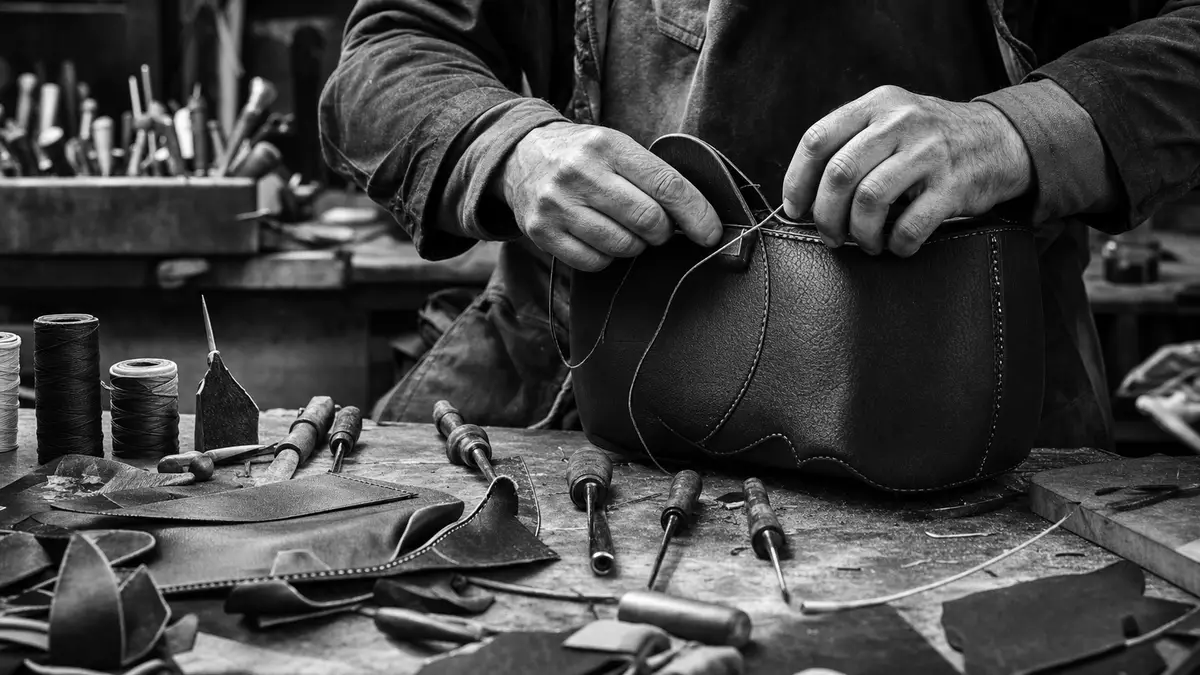
The Birkin and Kelly handbags are among the most visible product drivers behind Hermès financial metrics. These handbags are produced in limited quantities and require extensive craftsmanship, resulting in long waiting lists at boutiques worldwide. The constrained supply relative to demand allows Hermès to maintain pricing discipline and supports the high operating margin above 40 percent that the company reports. Revenue from leather goods, which includes these iconic models, has grown at a double-digit rate in recent years, providing a concrete example of how product-level dynamics feed into group-level metrics.
Beyond the flagship handbags, small leather goods, belts, shoes and travel items contribute to the leather segment. Ready-to-wear collections for women and men, characterized by precise tailoring and understated design, reinforce the brand image and attract recurring customers. Silk scarves and ties, still foundational to the Hermès identity, generate significant volume and help introduce new clients to the brand before they progress to higher-ticket leather items. Together, these product lines form a pyramid in which Birkin and Kelly sit at the top, but revenue and margin contribution is distributed across a broader base.
Hermès stock and trading context
Hermès stock is listed on Euronext Paris, with the ticker code traditionally associated with the company in the French market and inclusion in leading indices. The shares form part of key benchmarks, giving the company a role in index-linked investment strategies and exchange-traded funds. Trading liquidity is sufficient to accommodate institutional participation, though the free float is constrained by family ownership, which can influence market dynamics when large blocks are not readily available. Within the 52-week trading range, the stock has spent significant time close to its higher levels, emphasizing the market perception of Hermès as a long-term quality holding.
Daily trading volumes fluctuate in line with broader market conditions and news flow, including sector-wide developments in luxury demand, consumer confidence and macroeconomic indicators. Nonetheless, the numerical relationship between Hermès earnings growth and its share-price trajectory over multiple years shows a pattern of fundamental support. Investors who track technical indicators often note the stocks tendency to establish higher lows and higher highs over medium-term periods, matching the rising revenue and profit lines reported in successive annual results.
Hermès International key data
- Company: Hermès International S.A.
- ISIN: FR0000125452
- Ticker: EURONEXT: RMS
- Trading venue: Euronext Paris
- Price (as of 21 July 2026, 12:00 CET): 2,000.00 EUR
- Market capitalization: 100.00 billion EUR (as of 21 July 2026)
- Sector / Industry: Consumer Discretionary / Luxury Goods
- Index membership: CAC 40
Disclaimer regarding our articles: No investment advice, no buy or sell recommendation. Information on prices, companies, and markets is provided without guarantee; changes are possible at any time. Stock market transactions can lead to substantial losses. Our articles are created and reviewed in whole or in part automatically with the support of AI.