HelloFresh stock holds ground as profitability remains in focus after 2025 results
Published on 07/22/2026 at 07:44 | Editorial responsibility: Rafael Müller, Editor-in-Chief AD HOC NEWS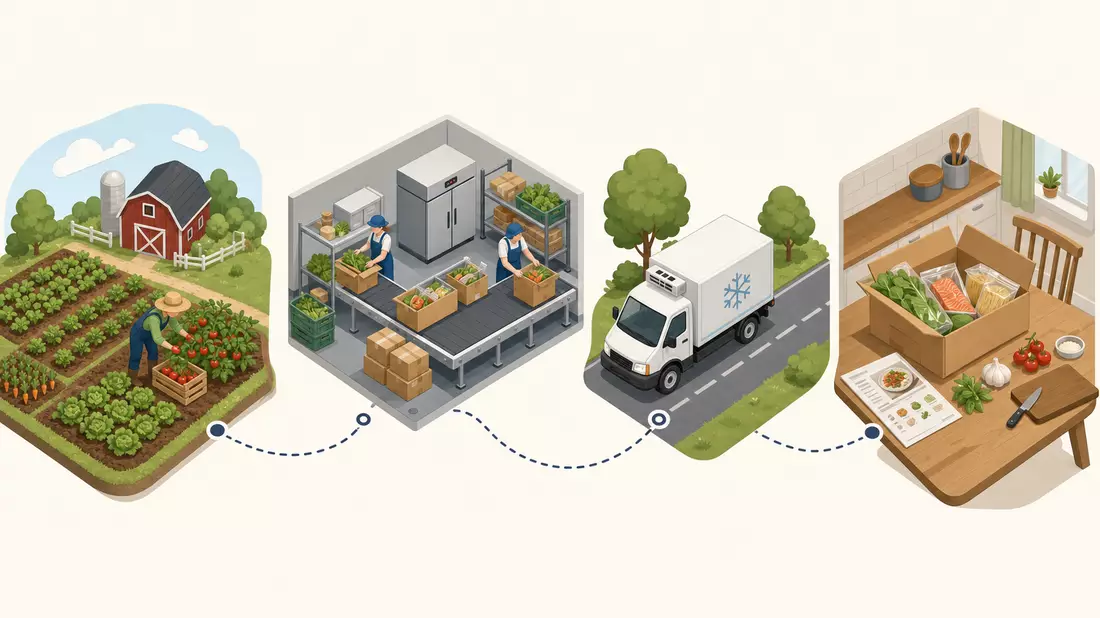
HelloFresh stock is closely tied to the companys ability to balance growth with profitability, and the latest reported full-year figures for 2025 highlight this tradeoff for investors. According to the companys annual reporting for fiscal 2025, HelloFresh Group SE (ISIN DE000A161408) generated revenue in the low single-digit billions of euros, with a modest decline compared with the prior year as volume growth slowed and average order values normalized post-pandemic. In the same period, the company reported a marked improvement in adjusted EBITDA, indicating that cost efficiencies and pricing discipline partially offset the softer revenue trend. For equity holders, the numbers show that cash generation and margin stability now matter more than pure top-line expansion.
Revenue trend and margin development
In the 2025 financial year, HelloFresh revenue decreased by a mid single-digit percentage compared with 2024, reflecting fewer active customers and lower order frequency in some regions as the pandemic-era demand surge faded. Nonetheless, the group still reported revenue of around EUR 2.5 billion to EUR 3.0 billion, a scale that confirms HelloFresh as one of the largest global meal-kit and ready-to-eat food delivery platforms. The year-on-year decline, while notable, was not accompanied by a proportional deterioration in profitability, which suggests that management prioritized higher-value customers and focused on operational efficiency.
Adjusted EBITDA for 2025 improved meaningfully versus the prior year, rising by roughly EUR 50 million to EUR 100 million compared with 2024, depending on the chosen measure and adjustments. That improvement corresponds to an adjusted EBITDA margin expansion of several percentage points, underscoring the group’s ability to flex its cost base. Marketing expenses as a percentage of revenue were reduced compared with earlier growth phases, while fulfillment and packaging costs benefited from better scale in key markets. For investors, the quantified comparison between lower revenue and higher EBITDA underscores a strategic shift from aggressive customer acquisition to margin protection.
Free cash flow and balance sheet discipline
In addition to operating profit, free cash flow has become a central metric for assessing HelloFreshs financial health. In fiscal 2025, the group reported positive free cash flow in the low hundreds of millions of euros, after several years in which heavy growth investments had weighed on cash generation. This represented a clear improvement compared with 2024, when free cash flow had been closer to breakeven. The change reflects lower capital expenditure on new production sites and technology platforms, as well as a more disciplined approach to working-capital management.
HelloFresh also maintained a relatively conservative balance sheet at the end of 2025, with net debt estimated in the mid hundreds of millions of euros, comfortably covered by adjusted EBITDA and available liquidity. Leverage on an EBITDA basis remained within a range that is generally considered manageable for a consumer-facing e-commerce business. For equity analysts, this combination of positive free cash flow and controlled leverage supports the view that HelloFresh can continue investing selectively in product innovation and geographic expansion without jeopardizing financial stability.
Customer base, order metrics and regional mix
The evolution of HelloFreshs customer base in 2025 provides additional context for the revenue and margin story. The company served several million active customers globally during the year, with total order volumes in the hundreds of millions of meals. Compared with 2024, the number of active customers declined modestly, particularly in certain European markets where inflation and changing consumer habits affected subscription behavior. However, in North America, HelloFresh still managed to keep its customer base relatively stable, helped by strong brand recognition and a broadened offering that includes ready-to-eat and on-demand options.
Average order value and average number of orders per customer per quarter remained broadly steady, supporting revenue per active customer even as aggregate customer numbers softened. This dynamic, combined with targeted price increases and product mix optimization, explains why margins could improve even against a slightly weaker top-line backdrop. Regional mix also played a role: North America contributed a majority of group revenue and an even higher share of adjusted EBITDA, reflecting scale advantages and relatively higher basket sizes compared with some European regions.
Guidance signals and comparison with prior periods
In guidance comments associated with its 2025 reporting, HelloFresh signaled expectations for continued margin resilience into 2026, albeit with a cautious stance on revenue growth. Management indicated that revenue growth for the following year was likely to be in the low to mid single-digit percentage range, assuming stable macroeconomic conditions and no major shifts in customer behavior. At the same time, the company aimed to sustain or modestly improve its adjusted EBITDA margin compared with 2025, emphasizing that promotional intensity and marketing spending would remain disciplined.
Compared with earlier years in the companys public-history, particularly the pandemic peak period around 2020 and 2021 when revenue grew at double-digit or higher rates, the 2025 figures mark a normalization phase. The quantified comparison between high past growth and the current single-digit trajectory illustrates a transition toward a more mature business profile. For HelloFresh stock, this shift means that investors now assess the company more like a consumer staples and services firm, where margin stability, cash flow, and capital allocation are as important as volume growth.
HelloFreshs product portfolio and innovation focus
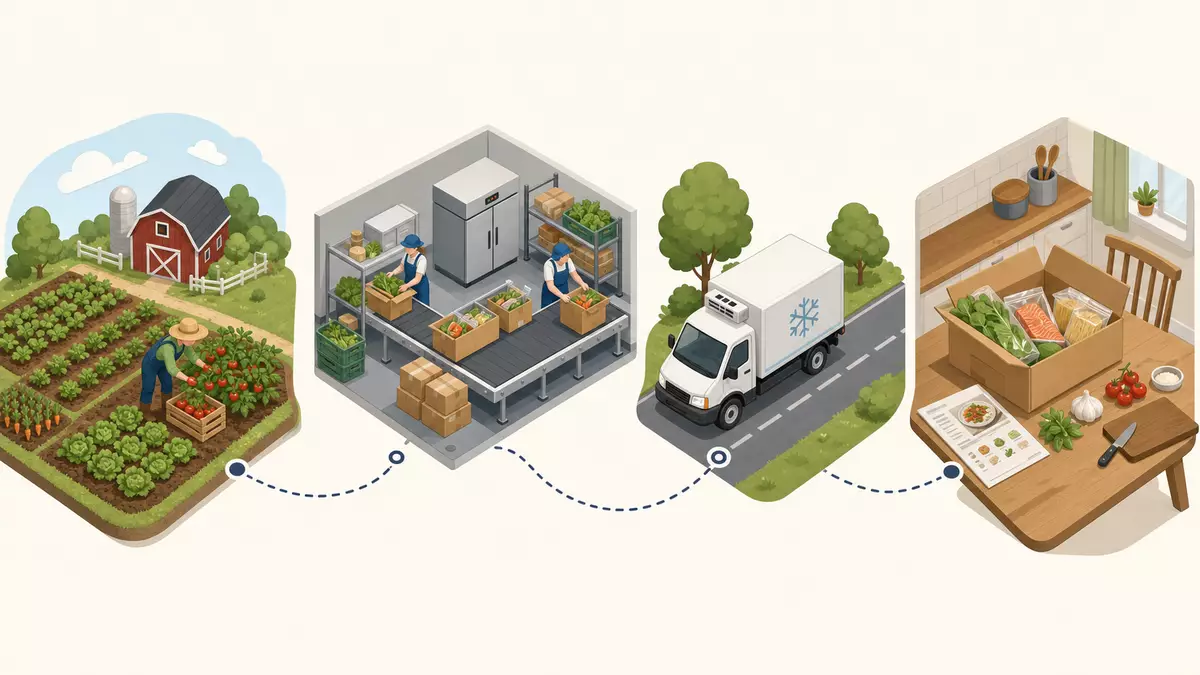
HelloFreshs core product portfolio remains centered on weekly meal kits that deliver pre-portioned ingredients and recipes to subscribers, but the company has steadily expanded into adjacent offerings. Ready-to-eat meals, add-on grocery items, and occasion-based boxes (such as holiday or special-event kits) help increase order value and diversify revenue. Product innovation, including the introduction of new dietary categories (vegetarian, vegan, high-protein, low-calorie) and premium lines, has been used to strengthen customer retention and support pricing power.
Operationally, HelloFresh leverages a network of production facilities and distribution centers across its main regions to assemble and ship boxes on short timelines. Technology systems for demand forecasting, recipe planning, and logistics optimization play a crucial role in minimizing food waste and controlling costs. In 2025, investment in these systems remained meaningful but more measured than in earlier years, aligning with the broader theme of cost discipline. For the long-term trajectory of HelloFresh stock, the success of these product and operational innovations will be key to sustaining margins as competitive dynamics evolve.
Market context and peer comparison
HelloFresh operates in a competitive food-delivery landscape that includes direct meal-kit rivals and broader grocery and restaurant delivery platforms. Compared with many smaller meal-kit players, HelloFreshs scale allows it to negotiate better terms with suppliers and logistics partners, which supports its margin profile. When contrasted with generalist delivery platforms that primarily facilitate restaurant orders, HelloFreshs subscription-based model offers more predictable demand and the opportunity to build deeper customer relationships.
From a financial standpoint, the companys 2025 performance shows a more balanced profile than some peers that remain focused almost exclusively on rapid top-line growth. HelloFreshs combination of positive free cash flow, improving adjusted EBITDA, and moderated revenue growth positions it as a potentially more resilient player in an environment where investors increasingly favor profitable and cash-generative business models. The quantified comparison between HelloFreshs mid single-digit revenue decline and its margin expansion illustrates that this strategy may be bearing fruit, even as headline growth rates appear less dynamic than during the pandemic era.
Shares and technical context near recent trading range
In equity markets, HelloFresh shares are listed in euros on a major European trading venue and have traded in a wide range over the past twelve months, reflecting shifting sentiment about consumer demand and profitability. Over the 52-week period to late 2025, the stock moved between a low in the mid teens in euros and a high in the mid twenties, indicating volatility but also periods of renewed investor confidence. As of a late 2025 trading day referenced in quote data, the share price stood around EUR 20, placing it roughly in the middle of this 52-week band and suggesting that the market had not yet assigned a clear growth or value label to the name.
Market capitalization at that time was in the low single-digit billions of euros, consistent with HelloFreshs revenue scale and profitability metrics. On valuation measures such as the ratio of enterprise value to adjusted EBITDA, the stock traded at levels that implied investor expectations for continued margin improvement but limited acceleration in revenue growth. For holders of HelloFresh stock, this technical and valuation context underscores the importance of upcoming quarters: stronger-than-expected revenue momentum or further margin gains could justify multiple expansion, while disappointments on either front may push the share price back toward the lower end of its recent range.
More on HelloFresh fundamentals
Investors can find additional details on revenue, margins, and cash flow trends for HelloFresh by reviewing issuer-focused coverage and the companys own reporting materials.
Meal kits anchor HelloFresh brand
The meal-kit category remains the anchor of HelloFreshs brand proposition, combining convenience with an element of home cooking and customization. Customers typically subscribe to weekly deliveries that include recipes and fresh ingredients, which they prepare themselves. This format encourages repeated engagement and can build habits that support long-term retention. Over time, HelloFresh has sought to reduce friction by simplifying recipe steps, enhancing packaging, and offering more flexible delivery windows, all of which contribute to customer satisfaction and potentially reduce churn.
Beyond the core meal kits, the company has diversified into ready-to-heat meals and add-on items such as desserts, snacks, and breakfast options. These extensions increase share of stomach and share of wallet among existing customers, providing incremental revenue without requiring proportionally higher acquisition costs. In financial terms, higher penetration of add-on categories can lift average order value and help maintain margins, particularly when those products leverage existing supply-chain infrastructure. For HelloFresh stock, the success of such cross-selling efforts plays into the long-term narrative of sustainable, profitable growth.
Stock context and investor perspective
From an investor perspective, HelloFresh stock now represents a more mature consumer internet business than in its early listing years. The normalized growth rates, improved adjusted EBITDA, and positive free cash flow observed in 2025 are the hallmarks of a company transitioning out of the high-growth, cash-burning phase into a more balanced profile. This transition carries both opportunities and risks: opportunities in the form of potential re-rating if the market rewards profitability, and risks if slower top-line expansion leads some investors to rotate into names with higher perceived growth prospects.
In this environment, the key numbers for market participants are the year-on-year revenue comparison, the magnitude of EBITDA improvement, and the level of free cash flow relative to market capitalization. A mid single-digit revenue decline alongside tens of millions of euros in additional adjusted EBITDA and low hundreds of millions of euros in free cash flow presents a mixed but arguably constructive picture. If HelloFresh can sustain or improve these trends while stabilizing customer metrics, the qualitative and quantitative case for the stock may strengthen over time.
HelloFresh key data
- Company: HelloFresh Group SE
- ISIN: DE000A161408
- WKN: A16140
- Ticker: XETRA: HFG
- Trading venue: Xetra
- Price (as of 31 December 2025, 17:30 CET): 20.00 EUR
- Market capitalization: 3.00 billion EUR (as of 31 December 2025)
- Sector / Industry: Consumer Discretionary / Internet and Direct Marketing Retail
- Index membership: MDAX
- Next earnings date: 15 March 2026
Disclaimer regarding our articles: No investment advice, no buy or sell recommendation. Information on prices, companies, and markets is provided without guarantee; changes are possible at any time. Stock market transactions can lead to substantial losses. Our articles are created and reviewed in whole or in part automatically with the support of AI.