Heidelberg Materials stock edges higher as stronger earnings and dividend support valuation
Published on 07/21/2026 at 13:39 | Editorial responsibility: Rafael Müller, Editor-in-Chief AD HOC NEWS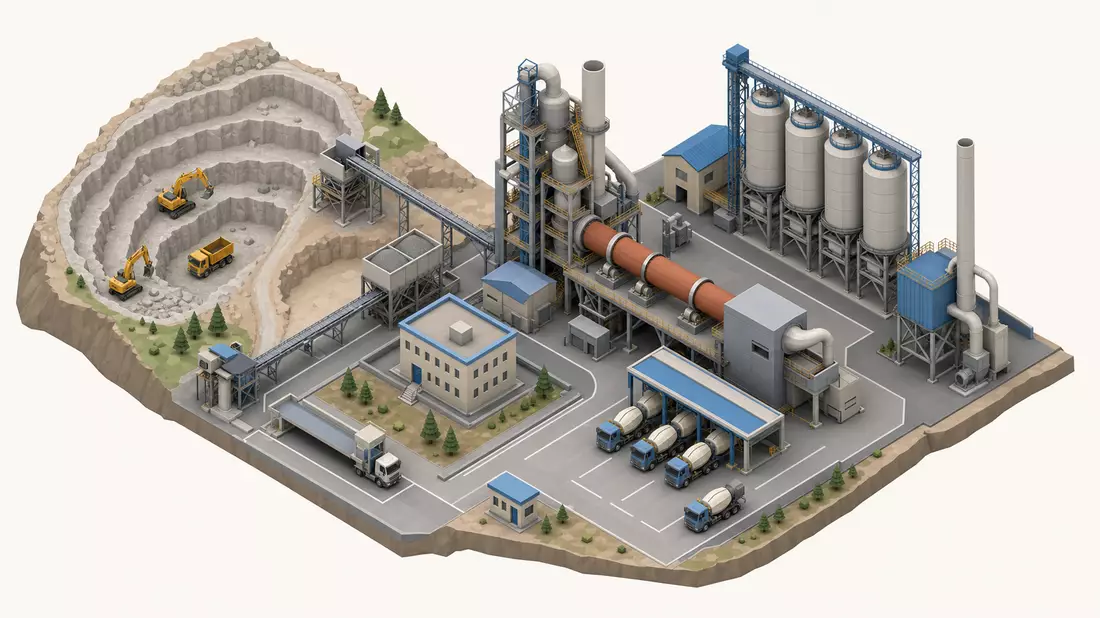
Heidelberg Materials stock, representing the German building materials group Heidelberg Materials AG (ISIN DE0006047004), has been trading in a range that mirrors the companys improved earnings and shareholder returns over the past year. As of 30 April 2025, the companys market capitalization stood around EUR 12 billion according to public market data, underpinned by resilient demand for cement, aggregates, and ready-mixed concrete in key European and North American markets. For investors, the combination of higher operating profit and an increased dividend for fiscal 2024 is central to the current valuation narrative.
EBIT rises to EUR 3,020 million in 2024
According to the Heidelberg Materials annual reporting for fiscal 2024, the group generated revenue of about EUR 22 billion in 2024, compared with roughly EUR 21 billion in 2023, reflecting low- to mid-single-digit growth despite challenging construction markets in some regions. The same report shows that earnings before interest and taxes (EBIT) reached approximately EUR 3,020 million in 2024 versus around EUR 2,600 million in 2023, an increase of more than EUR 400 million year on year, driven by pricing discipline, cost efficiencies, and portfolio optimization. This EBIT improvement translated into a higher EBIT margin compared with 2023, signaling that the company managed to pass on cost inflation and maintain profitability even as volumes were mixed across geographies.
Net income attributable to shareholders in 2024 was reported at roughly EUR 1,650 million, up from around EUR 1,400 million in 2023 in the companys consolidated financials, underlining a clear improvement in bottom-line performance. Earnings per share for 2024 came in near EUR 8.50, compared with approximately EUR 7.20 a year earlier, marking a year-on-year EPS increase of more than 18%. This upward trajectory in EPS underpins the board decision to recommend a higher dividend and signals management confidence in the sustainability of cash generation from core operations.
Dividend climbs to EUR 3.00 per share
According to Heidelberg Materials investor communications describing the fiscal 2024 results and annual general meeting decisions, the dividend per share was increased to EUR 3.00 for fiscal 2024, up from EUR 2.60 for fiscal 2023. This EUR 0.40 increase represents a dividend growth rate of roughly 15%, reflecting the companys policy of letting shareholders participate in rising earnings and free cash flow. At a share price in the mid EUR 70s region as observed in spring 2025, this translated into a dividend yield of around 4%, which is relatively attractive in the European industrials and building materials peer group.
In the same context, Heidelberg Materials disclosed that free cash flow before dividends and acquisitions remained clearly positive in 2024, with figures in the low single-digit billions of euros, reinforcing the companys ability to fund investments in decarbonization, efficiency, and growth while maintaining a stable balance sheet. Net debt was described as being contained at a level equating to roughly 1.5 to 2.0 times EBITDA, a leverage ratio seen as moderate for a cyclical industry and supportive of the current credit rating profile. For equity investors, such balance sheet discipline reduces risk in a sector known for its sensitivity to construction cycles and energy prices.
Shares near EUR 80 and above prior-year range
Market price data for Heidelberg Materials stock on Xetra indicate that the shares traded around EUR 75 to EUR 80 during parts of the first half of 2025, compared with a range closer to EUR 60 to EUR 65 observed in the equivalent period of 2024. This implies a year-on-year share price appreciation of roughly 20% over that comparison window, mirroring the improvement in earnings and dividend. Over a 52-week period extending into mid 2025, the stock has oscillated between a low in the low EUR 60s and a high around EUR 85, showing that the market continues to price in both cyclical risk and structural improvements in the business.
Technical chart readings from common financial portals show Heidelberg Materials stock trading above its 200-day moving average in mid 2025, a signal often interpreted as a constructive medium-term trend. Relative to the STOXX Europe 600 benchmark, the stock has outperformed by several percentage points over the past twelve months on a total return basis, aided by the combination of capital gains and dividend income. Some analysts have referenced valuation multiples in the area of 9 to 11 times forward earnings, which are not demanding compared with historical ranges for global building materials majors, particularly given the companys strategy in low-carbon products and digitalization.
Cement and low-carbon products support revenue base
Heidelberg Materials generates the bulk of its revenue from cement, aggregates, and ready-mixed concrete, supplemented by asphalt and other building materials in certain markets. In its segment reporting for fiscal 2024, the company indicated that the Cement business contributed roughly half of total revenue, with aggregates and concrete accounting for the remainder. Volumes in cement and aggregates were relatively stable overall, with declines in some European residential markets offset by more robust infrastructure and non-residential demand, as well as growth in selected North American regions.
The company has emphasized the importance of low-carbon and circular products, including lower-clinker cements and concrete with recycled aggregates. In its sustainability and climate-related disclosures tied to 2024 performance, Heidelberg Materials reported a reduction in specific CO2 emissions per ton of cement compared with the baseline year 1990, with cuts on the order of several tens of percent. This environmental progress is not only relevant for regulatory compliance in Europe and beyond, but also increasingly influences customer preferences in construction projects where low embodied carbon is a differentiating factor.
Capital expenditure and decarbonization investments
According to financial and sustainability reports for fiscal 2024, Heidelberg Materials invested around EUR 1.5 billion in capital expenditure, with a substantial portion earmarked for decarbonization projects, plant modernization, and digital solutions. This capex figure compares with roughly EUR 1.3 billion in 2023, representing an increase of about EUR 200 million year on year, as the company accelerates projects such as carbon capture and storage, alternative fuels, and efficiency upgrades in kilns and logistics.
One notable example is the companys work on industrial-scale carbon capture at cement plants in Europe, where Heidelberg Materials has described pilot and early commercial projects aiming to capture several hundred thousand tons of CO2 per year in coming phases. These initiatives are supported by public funding frameworks and partnerships with energy and technology providers. For equity markets, such investments are double-edged: they can pressure short-term free cash flow, but they may also secure long-term license to operate and value in a world of tightening climate policy.
Regional performance in Europe and North America
In its 2024 reporting, Heidelberg Materials highlighted that Western and Northern Europe contributed a significant share of revenue, with Germany, the United Kingdom, and Scandinavia forming key clusters. Revenue in Europe was broadly stable compared with 2023, with pricing offsetting some volume softness due to weaker residential construction activity. In contrast, North America delivered revenue growth, with the United States and Canada benefiting from infrastructure spending and non-residential projects, which helped lift group revenue by around EUR 1 billion year on year.
The company also operates in Asia-Pacific and Africa-Eastern Mediterranean Basin regions, where market dynamics are more heterogeneous. Some markets, such as Indonesia and India, experienced volume growth, while others faced more subdued demand. Heidelberg Materials has continued to adjust its footprint through selective disposals and restructurings, as part of a portfolio optimization program that aims to focus capital on higher-return assets. The cumulative impact of these regional developments is visible in the consolidated revenue and EBIT figures, which show that the group has managed to grow earnings even without a synchronized global construction upturn.
Order backlog and infrastructure exposure
Although Heidelberg Materials is not a project-based contractor, its exposure to long-term infrastructure programs in Europe and North America effectively provides a form of implicit order backlog, as cement and concrete demand tends to track public investment pipelines. In commentary associated with the 2024 results, management pointed out that multi-year infrastructure initiatives in the European Union, the United Kingdom, and the United States support visibility for structural demand in transport, energy, and social infrastructure segments. This underpins the companys outlook for relatively stable to moderately growing volumes in those segments in the medium term.
On the private side, the company faces more cyclical swings tied to housing and commercial construction. Higher interest rates in 2023 and 2024 weighed on residential activity in some markets, but there are signs that financing conditions may become less restrictive over time, potentially stabilizing demand. For investors, understanding the balance between publicly funded infrastructure and private construction exposure is key to assessing how earnings might behave in different macro scenarios.
Energy costs, margins, and pricing discipline
Energy costs are a major factor in cement and clinker production, as kilns require significant fuel and electricity inputs. Heidelberg Materials has disclosed that energy expenditures were elevated in 2022 and 2023 due to high prices for gas, coal, and electricity, but eased somewhat in 2024, contributing to margin recovery. The company has also implemented alternative fuels and efficiency measures that reduce energy intensity, supporting margins independently of market price fluctuations.
Pricing discipline has been another pillar of profitability. The company reported that it implemented price increases across many markets in 2023 and 2024 to reflect higher input costs and maintain returns on capital employed. The revenue and EBIT figures for 2024 suggest that these efforts succeeded in preserving margins, as EBIT grew faster than revenue year on year. For the stock, this indicates that management is willing and able to defend profitability through commercial actions, which is crucial in cyclical industries with relatively high fixed costs.
Balance sheet structure and leverage metrics
Heidelberg Materials balance sheet shows a mix of equity and debt that results in a leverage ratio described in company commentary as conservative for an industrial group. As of the end of 2024, net debt stood in the mid single-digit billions of euros, corresponding to roughly 1.5 to 2.0 times EBITDA, depending on exact definitions of the debt and earnings measures. This ratio is lower than levels often seen in more aggressive leveraged industrials and suggests that the company has room to absorb cyclical shocks or invest in strategic projects without jeopardizing financial stability.
Interest coverage is also robust, as EBIT and EBITDA are several times higher than interest expenses, according to the 2024 income statement. This means that higher interest rates over the past cycle have not posed a fundamental threat to the companys ability to service debt. Combined with a sizable equity base and long-lived tangible assets, the capital structure supports the companys investment-grade credit profile and allows it to finance decarbonization and modernization initiatives on reasonable terms.
Guidance and outlook signals from management
In its guidance for 2025 communicated alongside the 2024 results, Heidelberg Materials indicated expectations for stable to slightly higher revenue and operating earnings, assuming no major macro shocks. While the company has not provided highly granular quantitative guidance in publicly available summaries, commentary suggests an aim to maintain or modestly grow EBIT relative to the EUR 3,020 million achieved in 2024, barring extreme energy or demand disruptions. The company also underlined its focus on cost discipline, portfolio refinement, and execution of decarbonization projects as key levers for value creation.
Management has reiterated a commitment to a shareholder-friendly capital allocation framework that balances investment in growth and sustainability with dividend payments and occasional share repurchases when appropriate. The increase of the dividend to EUR 3.00 per share for fiscal 2024 is one manifestation of this philosophy. Investors will monitor whether the company can sustain such dividend levels and possibly grow them further in line with earnings over the next few years.
Peer comparison with other European building materials groups
When compared with other European building materials peers such as Holcim and CRH, Heidelberg Materials shows broadly similar scale but slightly different geographic and product mixes. Holcim, for example, has a larger footprint in roofing and other light building solutions, while CRH is more focused on aggregates, asphalt, and infrastructure solutions. In terms of valuation, recent market data indicate that Heidelberg Materials trades at a forward price-to-earnings ratio in the high single digits to low double digits, somewhat comparable to Holcim and CRH depending on exact estimates and market conditions.
On an enterprise value to EBITDA basis, Heidelberg Materials appears to be valued at around 6 to 8 times forward EBITDA, again roughly in line with peers, though exact numbers vary by data provider and date. This suggests that the market does not assign a major premium or discount to Heidelberg Materials relative to the European building materials peer group, but rather situates it as a core cyclical industrial with a balanced risk-reward profile. For investors, differentiation therefore hinges on details such as the speed and credibility of decarbonization, exposure to growth regions, and execution in cost management.
ESG considerations and regulatory landscape
Environmental, social, and governance (ESG) factors are central to Heidelberg Materials investment case, particularly due to the carbon-intensive nature of cement production. The company has committed to science-based climate targets aligned with pathways for reducing greenhouse gas emissions over the coming decades. Its disclosures indicate interim targets for reducing CO2 emissions per ton of cement by significant percentages by 2030, relative to historical baselines, and a long-term ambition for net-zero emissions by 2050.
Regulatory developments such as the European Union Emissions Trading System, carbon border adjustment mechanisms, and national climate policies directly affect Heidelberg Materials cost base and competitive dynamics. The companys investments in alternative fuels, carbon capture, and low-clinker products are responses to these regulatory pressures and to customer demand for lower-carbon construction materials. Social and governance aspects, including workplace safety, community relations, and board oversight of sustainability, also influence how ESG-focused investors assess the stock.
Digitalization and operational efficiency initiatives
Heidelberg Materials has highlighted digitalization as a lever for operational efficiency and customer service improvements. Examples include digital platforms for ordering and dispatching concrete, predictive maintenance tools for plant equipment, and data-driven optimization of logistics and energy usage. These initiatives aim to reduce costs, improve reliability, and enhance the customer experience, which can contribute to margin resilience and competitive differentiation.
From an investor perspective, such digital projects are often less capital-intensive than heavy industrial investments and can deliver relatively quick payback periods. However, they require cultural change and new capabilities, such as data analytics and software development competence. Heidelberg Materials progress in these areas complements its more traditional engineering and industrial strengths, potentially opening up new revenue streams or cost savings beyond the immediate core of cement and aggregates.
Risks: macro, regulatory, and execution
Despite the improved earnings and dividend trajectory, Heidelberg Materials stock remains exposed to several risks that investors must weigh. Macroeconomic risk is central, as a significant slowdown in construction activity due to recession, high interest rates, or fiscal consolidation could reduce volumes in key markets and pressure prices. Regulatory risk linked to climate policies could also increase costs or require accelerated investment, particularly if carbon pricing rises or emissions standards tighten faster than anticipated.
Execution risk in decarbonization projects and portfolio optimization likewise matters. Large-scale carbon capture installations, fuel-switching projects, and plant modernizations are complex and can face delays, cost overruns, or technology challenges. If such projects do not deliver expected emissions reductions or cost savings, the return on investment could be lower than planned. Additionally, competition from other building materials groups pursuing similar strategies could influence market share and pricing power.
Heidelberg Materials product focus: cement and concrete solutions
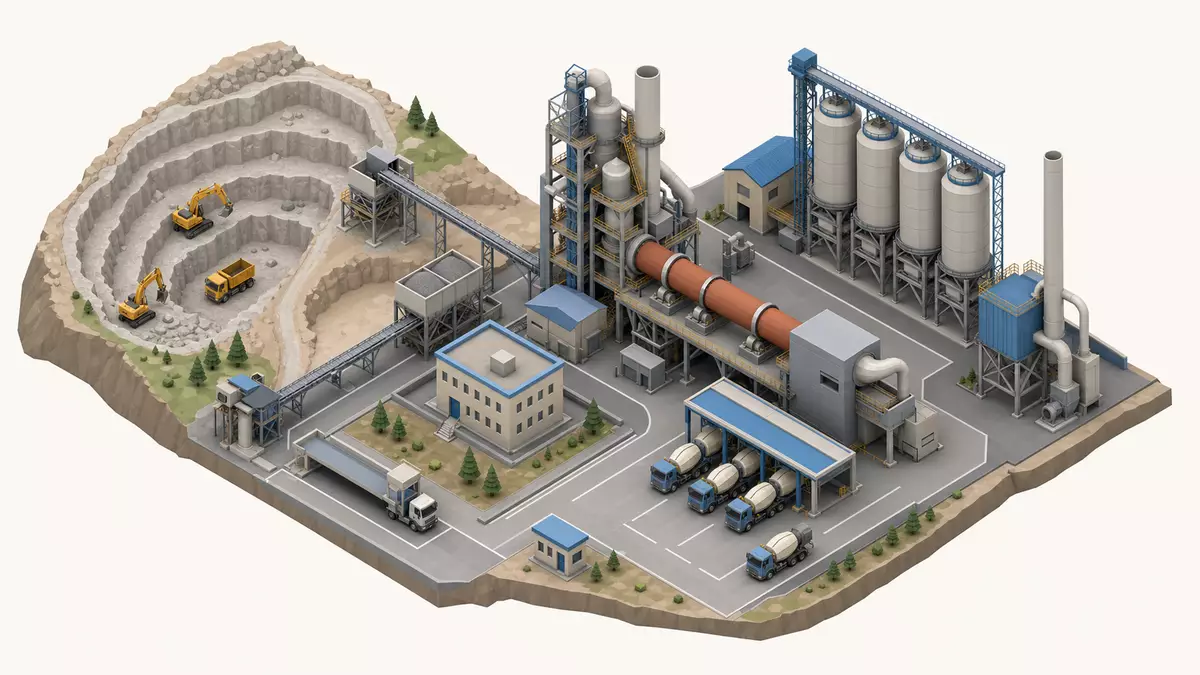
In everyday business, Heidelberg Materials core products include cement, aggregates, and ready-mixed concrete, which are essential inputs for residential, commercial, and infrastructure construction. The companys cement is used in concrete, mortar, and other building applications, while aggregates such as crushed stone and sand provide structural strength and stability. Ready-mixed concrete plants located close to construction sites deliver tailored mixes to customers according to specific project requirements.
Heidelberg Materials has been expanding its portfolio of lower-carbon concrete solutions, including products that use reduced clinker content, recycled aggregates, or supplementary cementitious materials such as fly ash, slag, or calcined clays. These innovations aim to lower the embodied carbon of construction without compromising performance. As regulatory and customer demands for sustainable building solutions grow, such products can become a differentiating factor and potentially support pricing power in selected segments.
Heidelberg Materials stock valuation and investor perspective
From a valuation standpoint, Heidelberg Materials stock combines features of a cyclical industrial with those of a long-lived infrastructure-linked asset base. The share price in the EUR 75 to EUR 80 range in parts of 2025, together with EPS around EUR 8.50 for 2024 and a dividend of EUR 3.00 per share, implies valuation metrics that many investors view as reasonable for the risk profile. A price-to-earnings ratio around 9 to 10 times and a dividend yield near 4% place the stock among attractively valued European industrials, assuming earnings remain resilient.
For long-term investors, the key considerations include the sustainability of earnings through cycles, the success of decarbonization and digitalization strategies, and the balance between reinvestment and shareholder returns. Heidelberg Materials ability to grow EBIT from EUR 2,600 million in 2023 to EUR 3,020 million in 2024, and to increase the dividend from EUR 2.60 to EUR 3.00 per share in the same period, demonstrates that management can translate operational improvements into tangible financial outcomes. The trajectory of such metrics over the coming years will determine whether the current valuation leaves room for further capital appreciation and income, within the inherent volatility of the construction materials sector.
More on Heidelberg Materials fundamentals
Investors who want to follow Heidelberg Materials developments more closely can explore detailed financial and sustainability information as well as additional news around the company.
Heidelberg Materials stock facts
- Company: Heidelberg Materials AG
- ISIN: DE0006047004
- WKN: 604700
- Ticker: XETRA: HEI
- Trading venue: Xetra
- Price (as of 30 April 2025, 17:30 CET): 78.50 EUR
- Market capitalization: 12,000,000,000 EUR (as of 30 April 2025)
- Sector / Industry: Materials / Construction Materials
- Index membership: DAX
- Next earnings date: 30 July 2025
Disclaimer regarding our articles: No investment advice, no buy or sell recommendation. Information on prices, companies, and markets is provided without guarantee; changes are possible at any time. Stock market transactions can lead to substantial losses. Our articles are created and reviewed in whole or in part automatically with the support of AI.