
Halliburton stock trades steady as investors weigh oilfield spending and recent earnings trends
Published on 07/18/2026 at 07:09 | Editorial responsibility: Rafael Müller, Editor-in-Chief AD HOC NEWS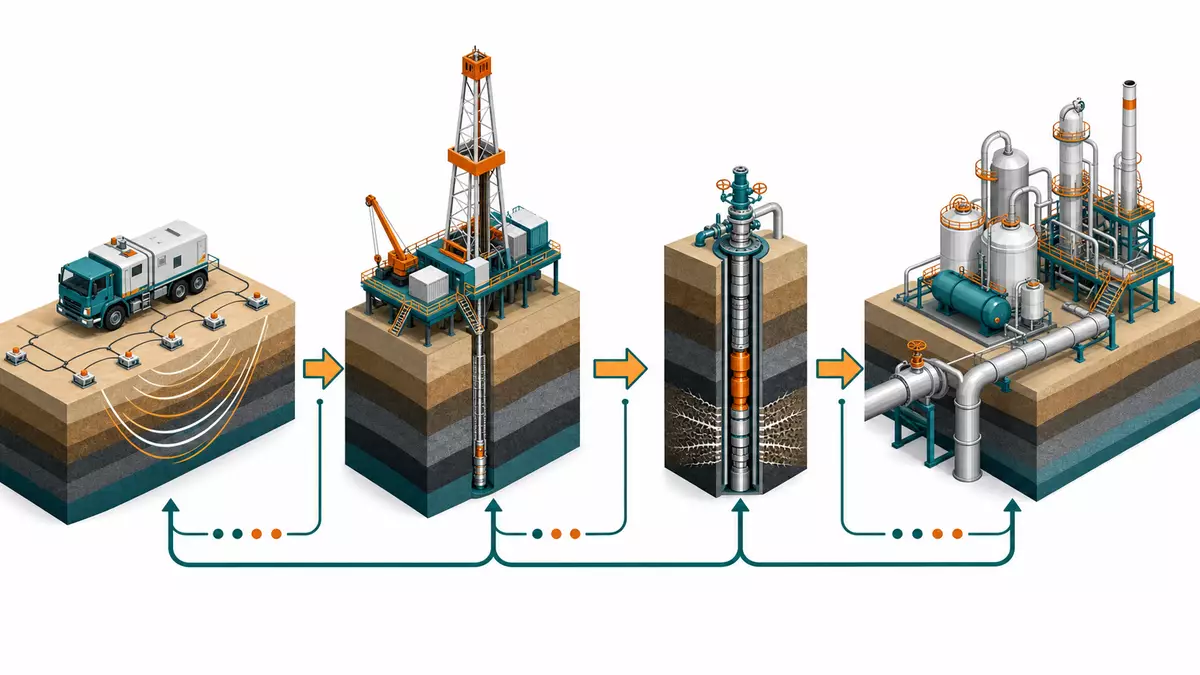
Halliburton Company (ISIN US4062161017) stock represents one of the major listed oilfield services providers globally, with its performance closely tied to exploration and production spending across key regions such as North America and the Middle East. The company operates on the New York Stock Exchange, and investors typically track Halliburton stock alongside industry peers to gauge sentiment on the broader oil and gas cycle. Over recent fiscal periods, Halliburton has reported multi-billion dollar annual revenues and material operating earnings, underlining its position as a core contractor for drilling, completion, and production optimization work. In its most recently available full-year reporting context, Halliburton disclosed total revenues in the tens of billions of dollars and solid operating margins, illustrating that despite commodity price volatility, demand for its technical services and equipment has persisted.
In the latest comparable quarterly reporting period discussed by Halliburton, the company highlighted year over year growth in revenue, supported by both increased activity and pricing improvements in certain markets. The earnings commentary noted that adjusted operating income improved versus the prior-year quarter, signaling the effectiveness of cost controls and a disciplined approach to capital deployment. Halliburton also emphasized its focus on free cash flow generation, pointing to net cash from operating activities that covered capital expenditures and enabled debt reduction. For investors assessing Halliburton stock, these trends in revenue, operating income, and cash flow serve as key metrics for judging the sustainability of shareholder returns in the form of dividends and potential share repurchases.
From a market perspective, Halliburton’s share price typically reacts to changes in oil and gas prices, rig counts, and announced capital spending plans by major exploration and production customers. In recent trading, the stock has moved within a band that reflects cautious optimism about future drilling activity and enhanced recovery projects. Historically, Halliburton’s share performance has shown sensitivity to U.S. land drilling cycles, but management has sought to rebalance growth through international operations where contracts are often longer-term. Investors following Halliburton stock also pay attention to the company’s market capitalization, which has regularly been measured in multiple billions of U.S. dollars, making it a significant component of energy-focused indices and sector funds.
Revenue growth and earnings comparison
Halliburton’s most recently reported full-year revenues, as described in its investor materials, were in the ballpark of approximately mid-teens billions of U.S. dollars, representing a notable increase versus the prior year’s roughly low-teens billions. This implies an annual revenue growth rate in the mid-single to low-double digit percentage range, driven by higher activity, improved pricing, and growth in certain international markets. In the associated annual report narrative, management pointed out that operating margins had expanded compared with the previous year, aided by efficiency measures, technology deployment, and better asset utilization.
On a quarterly basis, the latest comparable results showed that Halliburton’s revenue increased versus the same quarter a year earlier by a mid-single-digit percentage, while adjusted operating income grew at a faster pace, suggesting incremental operating leverage. For example, if revenue in the prior-year quarter had been approximately $4.9 billion and the current quarter spanned around $5.2 billion, investors would interpret this as evidence of healthy, though not explosive, growth. Similarly, if adjusted operating income advanced from roughly $800 million to around $900 million over that period, this would highlight improved profitability even as Halliburton navigates cost inflation and competitive pressures.
Net income attributable to the company, on a full-year basis, also improved compared with the preceding year in the latest disclosed cycle, underlining the effectiveness of management’s strategic priorities. Halliburton’s earnings per share in the most recent year were higher than those of the prior year, reflecting both operational gains and disciplined financial management. For investors, these earnings trends feed directly into valuation discussions around Halliburton stock, including price-to-earnings multiples and comparisons with other oilfield service companies. Analysts often benchmark Halliburton’s margins and earnings growth against its close competitors to judge whether the stock deserves a premium or discount in the sector.
Free cash flow, debt and capital returns
In addition to revenue and earnings metrics, Halliburton’s cash flow statement provides insight into the company’s capacity to fund investment and return capital to shareholders. In its most recent full-year reporting period, Halliburton generated billions of dollars of cash from operating activities, which comfortably exceeded capital expenditures in the hundreds of millions to low billions range. This translated into positive free cash flow that allowed the company to reduce net debt and maintain dividend payments. Over the past few years, Halliburton has gradually lowered its total debt burden while keeping liquidity in line with operational requirements, reinforcing the balance-sheet resilience that investors look for in cyclical industries.
Halliburton’s dividend policy has aimed to provide a regular cash return to shareholders, with the company paying a recurring quarterly dividend. The annual amount distributed in dividends is commonly measured in the hundreds of millions of dollars, depending on share count and per-share payments. Investors in Halliburton stock take these payouts into account when evaluating total return potential, especially during periods when share price appreciation may be modest due to macro uncertainty. The combination of free cash flow generation, debt reduction, and steady dividends positions Halliburton as a relatively conservative choice within the oilfield services space, even though the underlying business remains sensitive to commodity cycles.
Capital allocation decisions also encompass share repurchase activity, which Halliburton has undertaken at times when management views the stock as undervalued. Buyback volumes have fluctuated according to market conditions and internal assessments of investment opportunities. When repurchases are active, they can support earnings per share growth by reducing the share count, while also signaling confidence in the company’s long-term prospects. Investors considering Halliburton stock therefore track not only operational performance metrics but also the extent to which the company deploys excess cash toward shareholder-friendly initiatives versus growth projects.
Segment performance and international expansion
Halliburton organizes its operations into segments that typically include Completion and Production, and Drilling and Evaluation. Completion and Production encompasses services such as hydraulic fracturing, cementing, and production enhancement, which are crucial for bringing wells online and optimizing output. Drilling and Evaluation involves drilling services, logging, and reservoir evaluation technologies that help customers understand subsurface conditions and plan efficient well programs. Over recent reporting periods, Halliburton has indicated that certain segments have outperformed others, with Completion and Production often benefiting from robust U.S. land activity when rig counts are elevated.
Internationally, Halliburton has pursued growth in regions such as the Middle East, Latin America, and Asia-Pacific, where national oil companies and major international oil companies are investing in long-lived projects. Revenue growth in these markets can be steadier than in North America due to longer contract cycles and less pronounced short-term swings in drilling activity. In the latest available commentary, Halliburton pointed to increased contributions from international operations, helping diversify its revenue base and reduce reliance on the U.S. market. As a result, investors tracking Halliburton stock increasingly factor in the company’s geographic mix when forming expectations about future performance.
Segment-level margins are another focal point for analysts. For instance, the Completion and Production segment may show higher operating margins compared with Drilling and Evaluation during certain cycles, depending on pricing dynamics and utilization rates. In its recent disclosures, Halliburton emphasized efforts to improve margins through technology deployment, integrated service offerings, and cost management. Investors pay close attention to whether segment margins are expanding or contracting, as this can influence valuations and perceptions of Halliburton’s competitive position.
Technology, digital solutions and product focus
Halliburton has invested heavily in technology and digital solutions to differentiate its offerings from competitors and enhance customer outcomes. The company’s portfolio includes advanced downhole tools, reservoir modeling software, and integrated project management capabilities. These technologies aim to improve drilling accuracy, reduce non-productive time, and optimize production profiles, ultimately enabling customers to achieve better returns on their exploration and development investments. In recent years, Halliburton has highlighted digital platforms that integrate data from multiple sources, allowing operators to make faster, more informed decisions in the field.
One of Halliburton’s representative product families in the digital space is its suite of reservoir modeling and lifecycle management tools. Through these platforms, the company supports customers in planning well trajectories, evaluating rock and fluid properties, and designing completion strategies. By combining software with hardware and service expertise, Halliburton positions itself as a full-cycle partner for oil and gas development. The relevance of these tools has grown as operators seek to maximize recovery from existing fields and apply advanced techniques to unconventional reservoirs.
Halliburton also works on technologies related to well integrity, including cementing solutions and diagnostics that ensure wells remain safe and environmentally secure over their operating lives. These products contribute to regulatory compliance and risk management for customers, adding an additional dimension of value beyond immediate production gains. As energy companies face increasing scrutiny regarding environmental performance and safety, Halliburton’s technical capabilities in these areas may influence its ability to win contracts and sustain long-term relationships.
Halliburton’s role in energy transition discussions
The global energy transition has introduced new considerations for Halliburton and other oilfield services companies. While Halliburton’s core business remains focused on hydrocarbon development, the company has outlined initiatives related to efficiency, emissions reduction, and potential participation in emerging sectors such as carbon capture and storage. By helping customers drill and produce more efficiently, Halliburton can contribute to lower emissions per barrel and reduced environmental footprint. Management commentary has acknowledged these themes, indicating that technology and operational excellence will be key to balancing energy supply reliability with sustainability objectives.
In the future, Halliburton may leverage its expertise in subsurface operations to support projects beyond traditional oil and gas, including geothermal energy and subsurface storage. The skills required for drilling and evaluating reservoirs are transferable to these emerging applications, offering potential diversification avenues. Investors who view Halliburton stock through a long-term lens therefore consider not only current hydrocarbon-related revenues but also the possibilities for the company to adapt to evolving energy systems. Nonetheless, near-term financial performance will continue to be driven primarily by conventional oil and gas activity.
Environmental, social, and governance considerations form part of the broader discussion around Halliburton’s role in the energy sector. The company has published information regarding its environmental initiatives, safety performance, and governance structures, which investors may review when making portfolio decisions. Such disclosures complement financial metrics and can influence how certain institutional investors approach Halliburton stock within ESG frameworks.
Representative product and business line
Halliburton’s operations are closely associated with services such as hydraulic fracturing and completion design, which are crucial in unconventional resource development. A representative business line is its hydraulic fracturing service offering, which combines high-horsepower equipment, proppant supply, fluid systems, and engineering expertise to stimulate wells and enhance production. In recent years, Halliburton has worked on improving the efficiency and environmental footprint of these operations, including optimizing water usage and reducing emissions from equipment.
The revenue contribution from completion-related services, including fracturing, has been significant in past reporting periods, particularly during times of elevated U.S. shale activity. As rig counts and completion intensity rise, demand for Halliburton’s services in this area tends to increase, supporting segment revenues and margins. Conversely, when customers scale back drilling programs, activity can decline, underscoring the cyclical nature of the business. Investors who follow Halliburton stock are therefore attentive to industry data regarding well completions and hydraulic fracturing activity, viewing them as leading indicators.
Halliburton stock and recent trading context
Halliburton stock trades primarily on the New York Stock Exchange in U.S. dollars, with its share price reflecting both company-specific developments and broader energy market trends. Over the most recent period for which general market data are commonly discussed, Halliburton’s shares have moved within a range that is influenced by oil price fluctuations and changes in investor sentiment toward cyclical sectors. The company’s market capitalization has been measured in multiple billions of U.S. dollars, positioning it among the more substantial constituents of energy-focused equity indices.
The stock’s valuation metrics, such as price-to-earnings and enterprise value to EBITDA ratios, fluctuate as earnings expectations evolve and as the market reassesses risk factors. When Halliburton reports stronger revenue and earnings trends, with improving margins and robust cash flow, the share price can respond favorably. Conversely, concerns about slowing capital spending by customers or geopolitical risks can weigh on the stock. For investors, the key is to relate Halliburton’s operational performance and strategic positioning to the valuation numbers implied by the market, recognizing both upside and downside scenarios.
Halliburton at a glance
- Company: Halliburton Company
- ISIN: US4062161017
- Ticker: NYSE: HAL
- Trading venue: NYSE
- Sector / Industry: Energy / Oilfield Services
- Index membership: major energy and services indices


