Goldman Sachs Group Stock (US38141G1040): Technical picture near multi-year highs in a quiet news phase
14.06.2026 - 19:19:06 | ad-hoc-news.de
Responsible: ad hoc news Technical Analysis Desk. Reviewed prior to publication on June 14, 2026 at 7:17 PM ET. Details in the imprint.
Goldman Sachs Group stock remains in focus for U.S. investors as the shares trade close to a three-year high in U.S. dollars during a quiet news phase around the company itself. While there have been broader sector and macro headlines mentioning the bank, there is no fresh company-specific earnings or analyst-rating catalyst today. With fundamentals and guidance unchanged in recent days, the key short-term driver is the technical picture, including the proximity to a major resistance zone outlined by recent chart analysis. In this environment, market participants are paying attention to how the stock behaves around that resistance and whether the prevailing uptrend can continue without a new fundamental trigger.
Goldman Sachs near its three-year high: what the charts are signaling
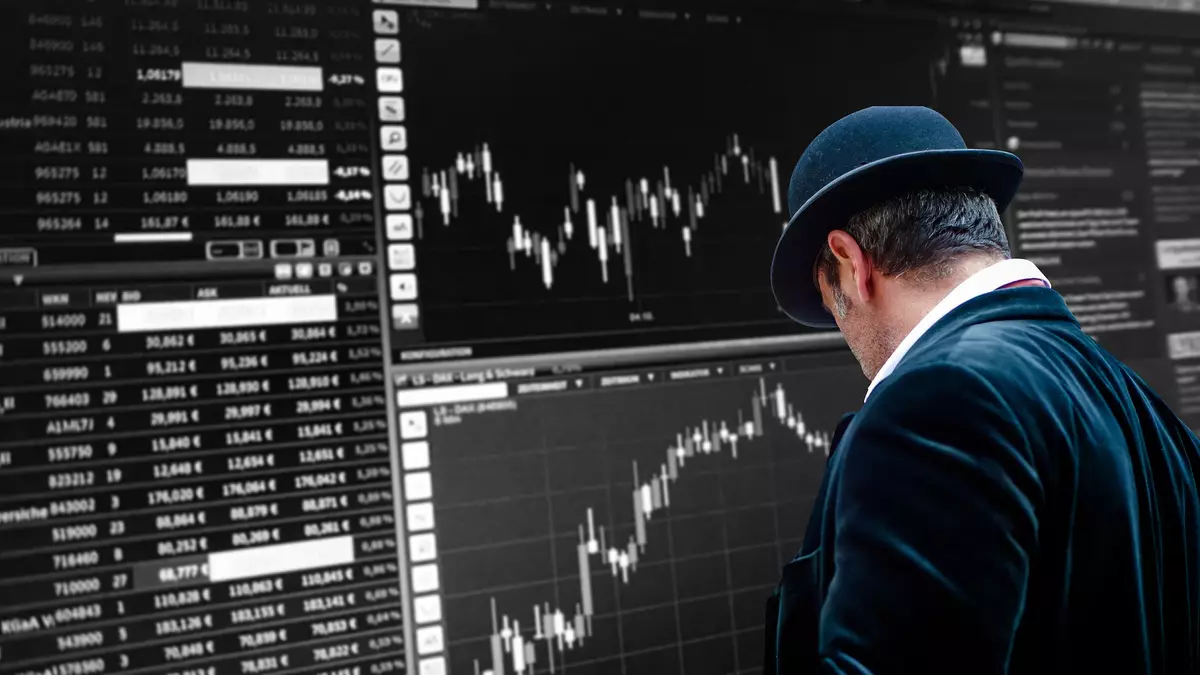
Recent technical commentary highlights that Goldman Sachs shares have undergone a strong re-rating over the past three years and now trade not far below a three-year high in U.S. dollars. According to this chart analysis, the most recent three-year peak is around $940.80, which is identified as a central resistance level on the upside for the stock. The same analysis notes that the latest closing price quoted in U.S. dollars was just shy of this level, reinforcing the impression that the shares are testing the upper end of their multi-year range. Although intraday prices can differ between trading venues and time zones, the U.S.-dollar figures confirm that the stock is operating in a region where previous rallies have stalled.
Finanzen.net data show that Goldman Sachs is actively traded in U.S. dollars, with a parallel listing and quotation in euros for European investors. In the U.S. market, Goldman Sachs is listed on the New York Stock Exchange under the ticker GS, and the stock is a long-standing component of the Dow Jones Industrial Average and the S&P 500 financials segment. This blue-chip status means that price moves in the shares can influence major U.S. indices and sector benchmarks, even on days without company-specific news. Because of this, technicians and index traders often track Goldman Sachs closely when assessing broader sentiment towards large U.S. banks.
The chart-focused commentary describes the current phase as a mature bull market for the stock, with the uptrend having progressed significantly since earlier lows in the last three years. In technical terms, the stock has established a series of higher highs and higher lows, a classic pattern that indicates sustained buying interest over time. The move toward the $940.80 resistance zone is framed as a test of how much momentum remains in the trend and whether buyers are still willing to add exposure at elevated valuation levels relative to the recent past. If the stock were to break decisively above that resistance on strong volume, many chart readers would interpret this as a potential continuation signal for the bull phase.
At the same time, the analysis emphasizes that resistance levels like $940.80 can also act as ceilings where profit-taking emerges after a strong multi-year run. In this scenario, traders who bought earlier in the trend might use rallies close to the high to lock in gains, leading to increased selling pressure just below the prior peak. Such behavior is common in technical trading and can result in sideways consolidation or a pullback if fresh fundamental catalysts are lacking. The current quiet period in terms of new earnings guidance or major company announcements increases the likelihood that the battle around resistance is shaped mainly by positioning and risk management decisions rather than by new information.
Another element of the technical setup is the presence of support zones below the current price that were created during previous consolidation phases in the uptrend. Although the cited analysis focuses primarily on the upside resistance, the historical chart implies that prior breakout levels and former local highs can serve as support if the stock retraces. For many short-term traders, these areas are potential entry points if the broader trend remains intact but the price experiences a normal correction. Conversely, a break below key support levels would signal that the bull phase is losing strength, prompting a reassessment of risk.
Beyond pure price levels, technicians often monitor indicators such as moving averages, momentum oscillators, and relative strength for large-cap financial stocks like Goldman Sachs. While the available commentary does not enumerate specific indicator values, the description of a strong re-rating and an intact uptrend implies that longer-term moving averages are currently sloping upward and that the stock has outperformed parts of the financial sector in recent periods. In such situations, any divergence between price making new highs and momentum indicators failing to confirm those highs would be watched closely as a possible early warning signal. That type of divergence is typical when a trend becomes extended, even if it does not automatically imply a reversal.
The broader backdrop for Goldman Sachs also includes references in financial press coverage to the bank's analytical work on themes like artificial intelligence spending and capital markets trends. According to one recent article, Goldman Sachs has been assessing the effects of the AI investment wave on various industries, underscoring the group's role as a key voice in global capital markets. While such research helps shape sentiment toward the bank's franchise and long-term positioning, there has not been a specific new disclosure in the past day that would materially change earnings expectations or regulatory risk perceptions for the company. As a result, the near-term pricing dynamics remain more a function of technical levels and overall market risk appetite than of discrete news about Goldman Sachs itself.
From a fixed-income perspective, instruments such as Goldman Sachs Group bonds continue to trade in line with broader credit market conditions and interest-rate expectations. For example, a particular Goldman Sachs bond with maturity in July 2027 is quoted around 100 percent of nominal value, signaling that credit markets view the issuer as fundamentally solid at present. While bond pricing is influenced by different factors than equity valuation, stable credit spreads can provide an additional layer of comfort for equity investors when they evaluate the risk profile of a large financial institution. This relatively steady credit backdrop fits with the notion that today's focus for the stock lies mainly on technical chart considerations rather than on stress signals in funding markets.
One aspect often discussed in the context of large U.S. banks is the sensitivity of their results to interest-rate cycles and capital-markets activity, both of which feed into investor expectations for future earnings. Higher or more volatile interest rates can influence net interest income and trading revenues, while equity and debt issuance volumes affect investment banking fees. Even though there is no fresh Goldman Sachs-specific earnings release to dissect today, market participants remain aware that shifts in macro expectations can quickly change the narrative for bank stocks. In periods where fundamental news flow is light, such macro shifts may show up first in the charts, as investors reposition based on their outlook for rates, credit conditions, and deal flow.
For now, the key short-term storyline for Goldman Sachs Group stock is its positioning close to a three-year high and an important resistance band, with the underlying bull market described as advanced but still intact. Traders who rely on technical analysis will be watching how the price behaves if it makes another run at the $940.80 level and whether any breakout is supported by strong turnover. Long-term investors, by contrast, may focus less on day-to-day resistance levels and more on whether the firm continues to deliver on profitability, risk management, and capital-return priorities highlighted in past results and investor presentations. Overall, the absence of a fresh company-specific trigger shifts the spotlight onto these chart dynamics and the broader market environment as the main factors behind Goldman Sachs' current trading range.
Goldman Sachs Group at a glance
- Name: The Goldman Sachs Group Inc.
- Industry: Global investment banking and financial services
- Headquarters: New York, New York, United States
- Core markets: Investment banking, trading and markets, asset and wealth management, institutional and corporate clients
- Revenue drivers: Advisory and underwriting fees, trading and principal investments, asset and wealth management fees, net interest income
- Listing: New York Stock Exchange (NYSE), ticker GS, component of major U.S. indices including the Dow Jones Industrial Average and S&P 500
- Trading currency: U.S. dollar ($)
Stay on top of Goldman Sachs Group moves
Follow additional coverage and background reports on Goldman Sachs Group stock directly on ad hoc news.
More Goldman Sachs Group news Investor RelationsThis article was created with a.i. assistance and editorially reviewed. Not investment advice, not a buy or sell recommendation. Trading in securities carries risks up to the total loss of capital.