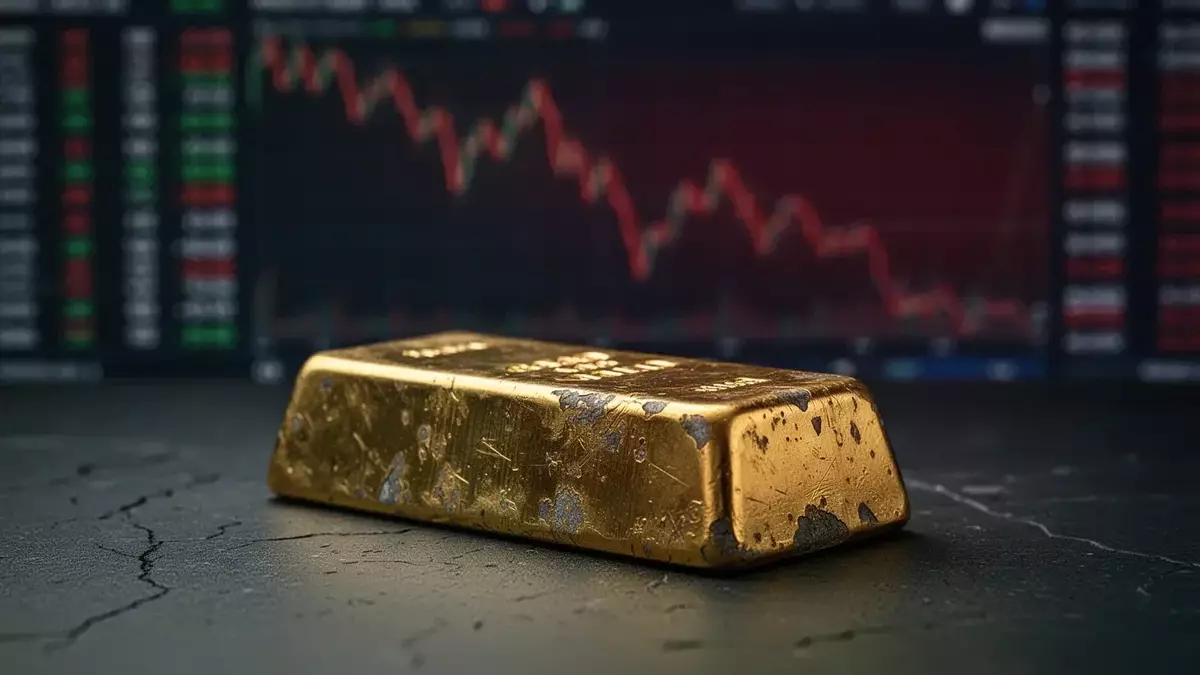
Gold's Decline Enters Third Week as Hawkish Fed and Geopolitical Thaw Weigh on Prices
21.06.2026 - 18:05:42 | boerse-global.de
Gold closed Friday at $4,172.90 per ounce, wrapping up its third consecutive weekly loss and a nearly 8% monthly slide. The precious metal has shed roughly four percent since the start of the year, with the latest leg lower triggered by a potent mix of Federal Reserve hawkishness, a strengthening dollar, and fading geopolitical tensions.
The new Fed chair, Kevin Warsh, has struck an unmistakably hawkish tone, and markets are now pricing in a rate hike as early as September. That repricing has pushed the dollar to an eight-week high, making dollar-denominated bullion more expensive for overseas buyers. For a zero-yielding asset like gold, rising rates also raise the opportunity cost of holding it — a dynamic that has prompted a broad rotation into yield-bearing alternatives.
Goldman Sachs moved decisively in response. The bank slashed its year-end gold target by $500, arguing that the prospect of Fed rate cuts in 2026 has now evaporated. The revision underscores a dramatic shift in macroeconomic expectations: as recently as a few months ago, markets were pricing in multiple cuts this year.
Compounding the pressure is a sharp decline in the geopolitical risk premium. On June 19, the United States and Iran signed a framework agreement that has calmed energy markets and lowered short-term inflation expectations. With the Strait of Hormuz likely to reopen and supply chains stabilizing, investors no longer see the need to hold gold as a hedge against Middle East disruptions. That has stripped away a key support that had underpinned the metal’s rally earlier this year.
Should investors sell immediately? Or is it worth buying Gold?
Technically, the picture has deteriorated. Gold has dropped decisively below its 50-day moving average near $4,553, and the relative strength index has fallen to 35.4 — flirting with oversold territory, though a meaningful bounce has yet to materialize. All eyes are now on the psychologically important $4,000 level. A break below it could trigger further technical selling, with the next major support at the recent low of $3,901.
Central banks in emerging markets continue to accumulate bullion, according to the World Gold Council, offering a long-term anchor for prices. But in the near term, that buying has been insufficient to counter the weight of the dollar and the Fed’s pivot. If the $4,000 support holds, a recovery would still face stiff resistance between $4,330 and $4,355.
The week ahead is packed with data that could tip the balance. The US releases first-quarter GDP on Thursday, followed by the core PCE price index on Friday — the Fed’s preferred inflation gauge. Meanwhile, purchasing managers’ indices for manufacturing and services will offer fresh reads on economic momentum. Any upside surprise in these figures would reinforce the hawkish narrative and pile further pressure on gold.
Gold at a turning point? This analysis reveals what investors need to know now.
For now, the metal is caught in a bearish momentum driven by three forces that show no immediate sign of reversing: a resolute Fed, a rising dollar, and a quietening of the geopolitical storm that once fueled its safe-haven appeal.
Ad
Gold Stock: New Analysis - 21 June
Fresh Gold information released. What's the impact for investors? Our latest independent report examines recent figures and market trends.