Gold's $4,050 Paradox: Why a Red-Hot Labor Market Is Outmuscling Geopolitical Turmoil
Published on 07/25/2026 at 10:31 | Redaktion boerse-global.de
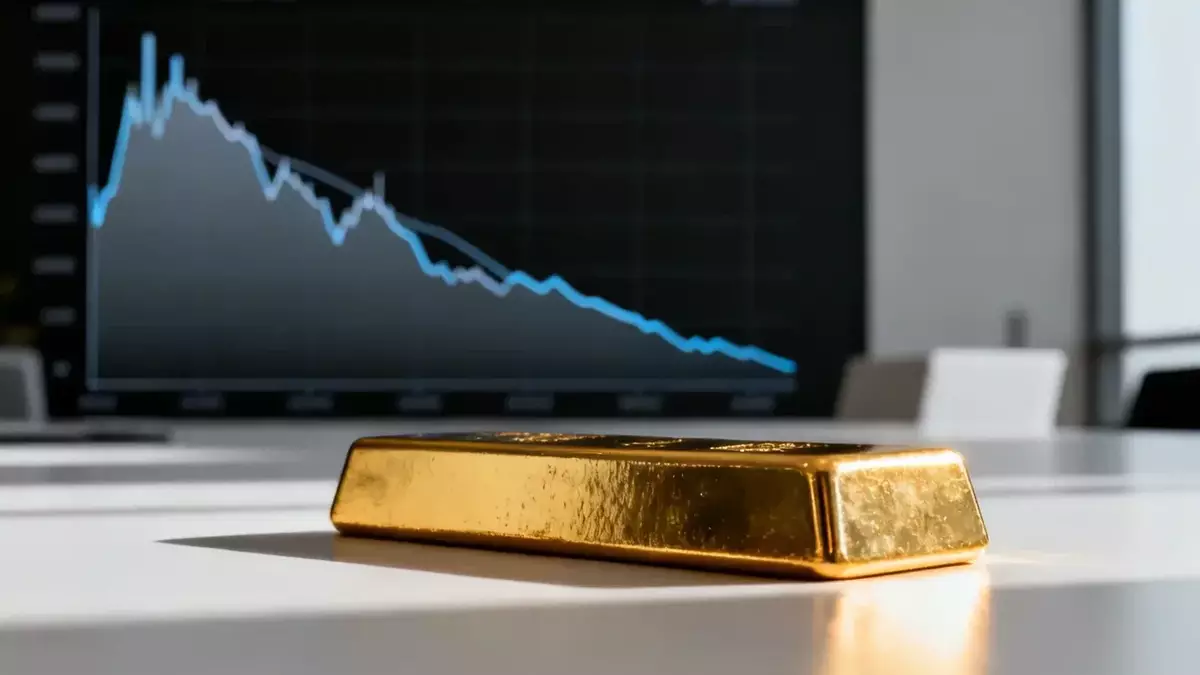
The gold market closed the week at $4,052.30 per ounce, down 2 percent on the final trading day, as a confluence of forces that historically would have propelled the metal higher instead conspired to keep it pinned near critical support. At $4,055.70 on a weekly settlement basis, the yellow metal has managed a modest gain for the week, but the real test arrives Wednesday when the Federal Reserve delivers its interest-rate decision and, more importantly, Chairman Kevin Warsh steps before the press.
What makes the current environment so unusual is the way traditional safe-haven catalysts are backfiring. The Houthi attacks on Saudi tankers in the Red Sea have pushed Brent crude above $100 a barrel for the first time since May, and President Trump has threatened to expand military operations against Iran while warning of consequences for future maritime disruptions. Yet rather than triggering a flight into gold, the oil shock is feeding inflation expectations that keep the Fed on a hawkish path — the classic "higher for longer" scenario that erodes the appeal of a non-yielding asset.
The Labor Market Complicates Everything
The U.S. economy delivered a fresh surprise last week that further muddied the outlook. Initial jobless claims tumbled to 187,000, the lowest reading since 1969, crushing any lingering hopes that softening labor conditions might push the Fed toward easier policy. Markets now assign roughly 82 percent probability to a rate hike in September, and ten-year Treasury yields have climbed to approximately 4.71 percent — levels not seen in 18 months. For gold, which generates no income, each incremental rise in bond yields raises the opportunity cost of holding bullion, prompting institutional investors to rotate into fixed income.
The FOMC meeting on July 28-29 is widely expected to leave rates unchanged at 3.50 to 3.75 percent, where they have sat since June when the Fed held steady for the fourth consecutive meeting. But the projections released at that June meeting struck an unexpectedly restrictive tone, with a majority of members anticipating no further cuts and some even flagging the possibility of increases. Chairman Warsh's press conference at 8:30 p.m. MESZ on Wednesday will therefore carry more weight than the rate decision itself, as markets parse whether the hawkish tilt has hardened further.
Should investors sell immediately? Or is it worth buying Gold?
Dollar Strength Compounds the Headwind
Market observers caution against interpreting gold's recent decline as a loss of intrinsic value. Instead, they frame it as the flip side of a strengthening dollar, which has been buoyed by the Trump administration's shifting trade rhetoric and Warsh's stability-oriented approach at the Fed. The president announced new tariffs ranging from 10 to 12.5 percent on numerous trading partners in response to the Red Sea blockade, adding another layer of dollar support. A firm greenback makes gold more expensive for buyers outside the dollar zone, dampening global demand.
The dollar's resilience helps explain why gold has failed to capitalize on geopolitical tension. In previous cycles, an oil shock combined with Middle Eastern conflict would have triggered a stampede into bullion. This time, the mechanism runs in reverse: energy-driven inflation fears reinforce tight monetary policy, which strengthens the dollar, which in turn weighs on gold.
Central Banks Buy, ETFs Sell
Beneath the short-term price action, the structural demand picture tells a different story. Central banks added a net 244 tonnes of gold in the first quarter, marking the strongest quarterly buying in over a year and exceeding the five-year average. The People's Bank of China extended its purchasing streak to 19 consecutive months, underscoring the divergence between Eastern official-sector demand and Western investor behavior. ETF holders, by contrast, have registered net outflows — the financial investor in the West is selling while the central bank is buying.
That divergence is visible in the chart pattern. The $4,000 level has held as a critical anchor, with the price approaching that threshold multiple times without a sustained breach. The current quote sits just 3.87 percent above the 52-week low of $3,901.30 from October 2025, a reminder of how far the correction has already run. Physical buyers and central banks appear to be using the lower levels for accumulation, and early signs of a base formation are emerging. But the metal remains 4.72 percent below its 50-day moving average — reclaiming that line would mark a genuine improvement in the technical picture.
Gold at a turning point? This analysis reveals what investors need to know now.
Big Bank Forecasts vs. Near-Term Reality
Despite the consolidation, major investment houses maintain constructive outlooks for the second half. JPMorgan sees gold reaching roughly $4,500 by the fourth quarter, while Goldman Sachs targets $4,900 by year-end. For the week ahead, however, those long-term projections take a back seat to two variables: how Warsh frames the rate path in his Wednesday remarks, and whether the oil price continues its ascent as the Iran situation evolves.
The coming U.S. inflation data will determine whether the "higher for longer" narrative becomes further entrenched. If price pressures prove sticky, the interest-rate headwind on gold is likely to persist through August, keeping the metal locked in its battle between geopolitical fear and monetary reality.
Ad
Gold Stock: New Analysis - 25 July
Fresh Gold information released. What's the impact for investors? Our latest independent report examines recent figures and market trends.
Disclaimer regarding our articles: No investment advice, no buy or sell recommendation. Information on prices, companies, and markets is provided without guarantee; changes are possible at any time. Stock market transactions can lead to substantial losses. Our articles are created and reviewed in whole or in part automatically with the support of AI.