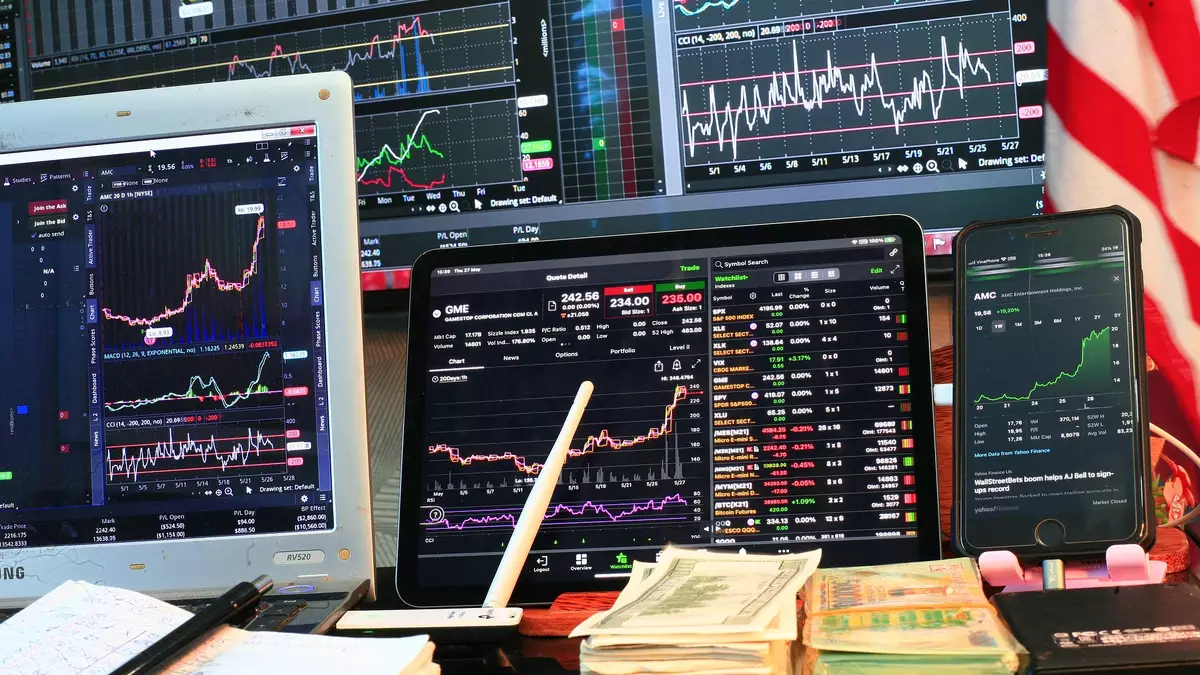
GME stock holds steady as investors weigh turnaround prospects
Veröffentlicht: 11.07.2026 um 22:37 Uhr, Redaktion AD HOC NEWS, Redaktionelle Verantwortung: Rafael Müller (Chefredaktion)
GameStop Corp. (ISIN US36467W1099), best known to many investors under the ticker GME, remains a focal point in the video game retail space as the company continues working on a multi-year turnaround that leans heavily on e-commerce expansion and tighter cost control. The stock has become synonymous with high volatility and retail investor interest, yet the core story increasingly centers on how the business adapts to a market dominated by digital downloads and online marketplaces.
From mall retailer to omnichannel platform
GameStop started as a brick-and-mortar video game retailer focused on selling new and used console games, hardware, and accessories in physical stores across North America, Europe, and other regions. Over time, the traditional model of boxed games sold in malls and shopping centers has come under pressure as more game publishers and platform owners push direct digital distribution, reducing the foot traffic and trade-in volume that historically supported the company’s margins.
In recent years, GameStop has been reshaping its business into an omnichannel platform that integrates physical stores with a more robust e-commerce offering. This shift aims to keep the company relevant as consumers increasingly buy consoles, accessories, collectibles, and even pre-paid digital content online rather than in-store. For investors, the fundamental question is whether the company can reposition fast enough to stabilize revenue and eventually return to sustainable profitability, particularly as legacy store leases roll off and the cost base adjusts.
Turnaround strategy and cost discipline
The company’s turnaround approach generally emphasizes a smaller, more efficient store base, a stronger online sales experience, and tighter control over operating expenses. Reducing underperforming locations can lower rent and labor costs, which helps offset the structural decline in physical game sales. At the same time, management has been seeking to use remaining stores as fulfillment hubs and service points that complement the online channel rather than stand alone as purely transactional outlets.
Investors tend to focus on metrics such as comparable-store sales, gross margin, and selling, general and administrative (SG&A) expenses to gauge whether the strategic changes are gaining traction. When SG&A grows slower than revenue or is cut meaningfully while sales hold steady, the company’s operating leverage improves, and even modest revenue growth can translate into outsized gains in operating income. Conversely, if sales decline faster than costs can be reduced, margin pressure remains intense, and the risk of further restructuring charges rises.
Learn more about GME stock and the company’s investor updates
For a fuller view of GameStop’s financial history, corporate actions, and recent filings, investors often consult dedicated news pages and the company’s own investor communications.
Business model in a changing gaming industry
GameStop’s business model historically relied on several pillars: selling new game releases at relatively low margins, earning higher margins on pre-owned games and hardware, and driving repeat visits through trade-ins and loyalty programs. Pre-owned products were particularly important because they could be acquired at a discount from customers and resold at a spread that helped offset slimmer margins on new titles. The steady cadence of console refresh cycles, such as new generations of PlayStation and Xbox hardware, also brought bursts of demand for systems and accessories.
As more game content moves online, the mix of what GameStop sells has shifted. Hardware, accessories, and collectibles make up a larger share of revenue compared with physical game discs. Collectibles, including figures, apparel, and branded merchandise linked to popular game franchises, can appeal to a broad audience and often carry healthier margins than standard boxed games. Accessories such as controllers, headsets, and storage devices remain relevant even when games are downloaded rather than purchased in disc form, giving the company a role in the ecosystem beyond packaged software.
GameStop’s digital initiatives include offering customers online ordering with in-store pickup, home delivery, and a curated selection of gaming-related merchandise that extends beyond pure software. For investors, the appeal of this model lies in the potential to maintain relevance and drive traffic even if customers are no longer visiting primarily to buy physical games on release day. The challenge is ensuring that the online experience is competitive against larger e-commerce platforms and that the product assortment remains differentiated.
Investor focus on cash, debt, and liquidity
Given the company’s history of operational ups and downs, cash generation and liquidity are central to the investment thesis. Investors look closely at cash balances, outstanding debt, and lease obligations to assess how much flexibility the company has to pursue restructuring, invest in technology, and weather cyclical downturns in game releases. A stronger balance sheet, with manageable liabilities and a reasonable cash cushion, can support a longer runway for strategic changes to take hold.
In contrast, a weaker balance sheet would raise questions about the company’s ability to sustain its store footprint, invest in online capabilities, and absorb potential disappointments in sales without needing to raise additional capital. For a retailer that has faced significant market scrutiny and periods of intense volatility in its stock price, maintaining adequate liquidity can be a key factor in retaining investor confidence through the highs and lows of the gaming cycle.
Another area of interest is capital allocation. Decisions around capital returns, such as whether to repurchase shares or retain cash for operational needs, signal management’s view of the company’s valuation and risk profile. Investors typically prefer a clear, consistent capital allocation framework, especially in a business undergoing transformation, because it helps frame expectations for future returns and reduces uncertainty around how excess cash might be deployed.
Structural volatility and retail investor participation
GME stock has attracted an unusually high level of attention from retail investors compared with many other specialty retailers. That presence can contribute to sharp swings in the share price that are sometimes more closely tied to sentiment and trading dynamics than to incremental changes in fundamentals. For long-term investors, this volatility can be both an opportunity and a risk. Short-term price spikes can be beneficial if they reflect improving fundamentals or renewed confidence, but they can also complicate valuation judgments if moves are driven primarily by technical factors.
In such an environment, fundamental analysis plays a key role in distinguishing between price moves that reflect genuine changes in the company’s earnings power and those that are more momentum-driven. Tracking revenue trends, margin shifts, cost-saving progress, and strategic milestones can help investors contextualize market swings and make more informed decisions about position sizes and holding periods. It also underscores the importance of diversification, as concentrating heavily in highly volatile names can amplify portfolio risk.
From a structural perspective, GameStop sits at the intersection of traditional retail, digital commerce, and entertainment consumption. That positioning can be attractive if the company successfully leverages its brand recognition and customer relationships to bridge physical and digital experiences. However, it also exposes the business to rapid changes in consumer behavior, technology, and competition from both large online platforms and platform-native digital storefronts operated by console makers and publishers.
Representative product: consoles and accessories
A representative product category for GameStop is modern video game consoles and their related accessories, such as controllers, headsets, charging stations, and storage devices. These products exemplify the company’s role as a specialized retailer serving gamers who want hardware and peripherals that complement digital and physical game purchases. Consoles remain central to the gaming experience for many consumers, even as cloud gaming and mobile platforms grow, and accessories provide incremental revenue streams with relatively steady demand.
By offering a wide range of console models and accessories, GameStop can position itself as a one-stop shop for households upgrading their systems or adding equipment for multiplayer play. Bundles that combine consoles with select games or subscription cards for online services can also help capture higher transaction values per visit. For investors, the accessory and hardware category provides insight into how the company is adapting its product mix to remain relevant even as the software side shifts toward downloads, since players typically still require physical devices and peripherals to access content.
GME stock and trading venue
GME stock is listed on a major US exchange and trades in US dollars, which anchors the company firmly within the US equity market landscape that many retail investors follow closely. This listing framework provides access to a broad base of institutional and retail capital, supports liquidity, and makes it easier for the stock to be included in various portfolios and trading strategies.
Because of the company’s transformation efforts and the evolving nature of the gaming industry, investors often track the share price alongside indicators such as volume, short interest, and implied volatility to understand how market participants are positioning themselves. While movement in GME stock can be pronounced over short periods, many long-term holders look past the day-to-day fluctuations to focus on whether the underlying business is improving and whether the company’s strategic initiatives are translating into more stable or growing earnings over time.
Key facts on GameStop
- Company: GameStop Corp.
- ISIN: US36467W1099
- Ticker: GME
- Exchange: Major US stock exchange
- Sector / Industry: Consumer discretionary - specialty retail, video game and entertainment products
- Index membership: Not formally disclosed here
- Next earnings date: Not yet officially scheduled
Disclaimer zu unseren Artikeln: Keine Anlageberatung, keine Kauf oder Verkaufsempfehlung. Angaben zu Kursen, Unternehmen und Märkten ohne Gewähr; Änderungen jederzeit möglich. Börsengeschäfte können zu hohen Verlusten führen. Unsere Beiträge werden ganz oder teilweise automatisiert mit Unterstützung von AI erstellt und geprüft.