
Global Warehouse Fires Expose Critical Gaps in Chemical Safety Regulations
Published on 07/10/2026 at 08:38 | Editorial boerse-global.de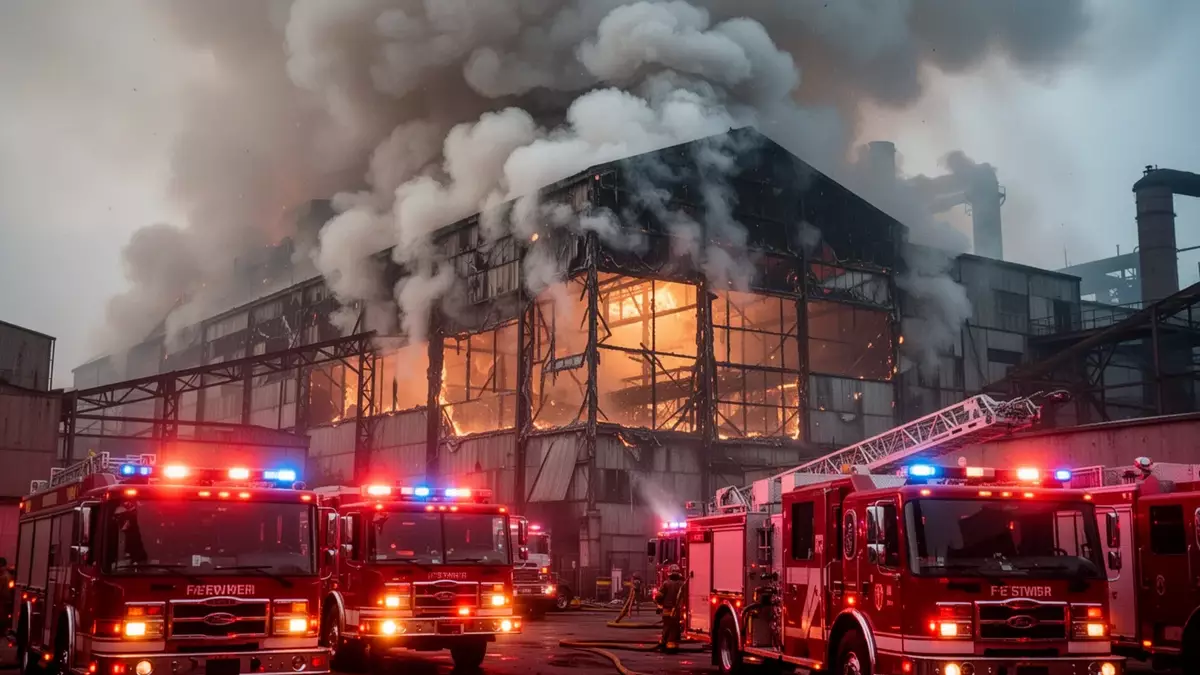
A wave of major industrial fires across China and the United States this week has highlighted persistent failures in workplace safety protocols and the dangerous absence of mandatory chemical disclosure requirements in storage facilities. The incidents, which have caused mass casualties and widespread environmental concerns, are prompting urgent regulatory reviews on both sides of the Pacific.
Mass Casualties at Chinese Footwear Factory
A devastating fire at the Huiteng Shoe Industry Co., Ltd. in Jinjiang, Fujian province, killed 28 people on July 9. The blaze started at approximately 12:04 p.m. in a ground-floor punching workshop containing highly flammable shoe components and materials. Despite a major emergency response involving 183 firefighters, 35 vehicles, and a helicopter deployed for rooftop evacuations, the fire caused heavy casualties.
Chinese President Xi Jinping expressed deep concern over workplace safety and ordered a comprehensive search-and-rescue operation alongside a strict accountability investigation. Premier Li Qiang also called for more rigorous safety measures across the industrial sector, following other recent deadly incidents including a coal mine blast and a fireworks factory explosion. The factory's head has been detained and company accounts frozen as the investigation continues.
Advertisements: These devastating incidents from China to the US underscore why a proactive fire safety plan is critical for every workplace. A free Fire Safety Toolkit provides UK businesses with ready-to-use risk assessments, evacuation templates, and fire extinguisher checklists to help meet current regulatory standards and protect employees. Get the free Fire Safety Toolkit
Jinjiang is a critical hub for global footwear production, accounting for approximately 20% of global output in 2024 — making the safety failures particularly significant for international supply chains.
Regulatory Gaps Exposed in West Virginia
In Parkersburg, West Virginia, a fire at a Peoples Cartage warehouse that began on July 5 has reignited a decade-old debate over chemical disclosure laws. The blaze burned for three days amid high heat indexes, prompting Governor Patrick Morrisey to declare a state of emergency. The fire occurred on the same street as a massive 2017 warehouse blaze that burned for eight days — and similarly lacked chemical disclosure requirements.
While the State Fire Marshal removed a grandfather clause for storage facilities in 2020, West Virginia law still does not require companies to provide comprehensive chemical safety data sheets to emergency responders. Records indicate that although certain lawmakers vowed action after the 2017 fire, no specific legislation was introduced in the following years.
On July 9, the West Virginia Department of Environmental Protection ordered Peoples Cartage to submit detailed cleanup and remediation plans, including debris removal and runoff controls. Preliminary air and water tests showed contaminants below health standards, but the West Virginia Department of Agriculture continues to monitor potential impacts on nearby farms.
Chemical Risks and Emergency Declarations in Los Angeles
Los Angeles Mayor Karen Bass declared a local emergency on July 9 following a fire at a Lineage Inc. cold storage warehouse in Boyle Heights. The facility spans nearly 500,000 square feet and holds an estimated 85 million pounds of food, presenting significant hazards due to its use of anhydrous ammonia for refrigeration — a toxic chemical that can be deadly if released.
The hazards posed by anhydrous ammonia and other workplace chemicals highlight why proper risk assessment is essential. A free COSHH Risk Assessment Toolkit helps UK businesses evaluate dangerous substances, create compliant safety data sheets, and ensure they meet all regulatory requirements. Download the free COSHH Risk Assessment Toolkit
The Los Angeles Fire Department reported that the fire stopped burning after more than a week, though officials noted the difficulty of extinguishing blazes in "giant cooler" structures containing foam insulation. Investigators are currently examining whether solar panel testing contributed to the origin of the fire.
Fire Door Standards Lagging in UK Buildings
Amid these global industrial incidents, a new report from the BWF Fire Door Alliance released on July 9 highlighted ongoing challenges in building safety standards closer to home. The report, which analysed the impact of the Building Safety Act 2022, found that only 54% of fire doors currently hold third-party certification.
The cost of high-standard specifications is becoming less of a barrier — dropping from 42% in 2023 to 29% in 2026. However, the report noted that certain sectors lag significantly: only 7% of fire door specifications for hospitals and university halls of residence currently require third-party certification, despite rising industry demand for proof of performance and traceability.


