
Global Push for Tougher Workplace Safety After Deadly Industrial Fires
Published on 07/10/2026 at 23:24 | Editorial boerse-global.de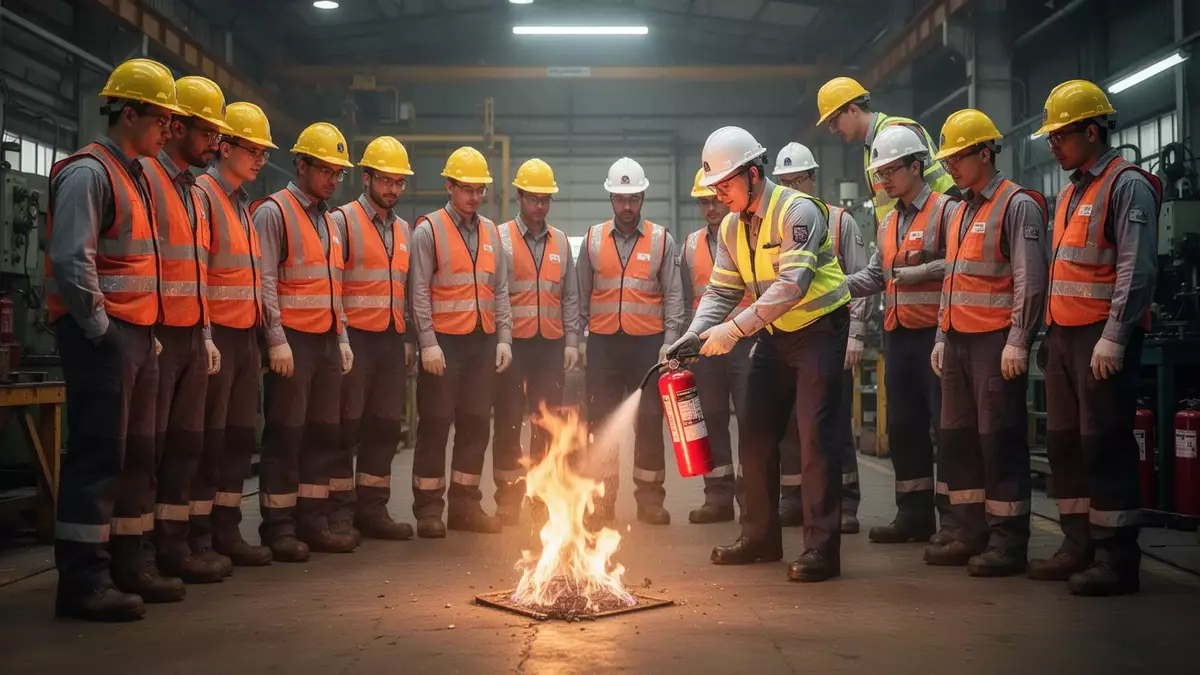
A series of catastrophic industrial fires across Asia and the US has triggered an international crackdown on workplace safety, with regulators tightening rules on emergency preparedness and companies turning to new technologies to protect workers.
Jinjiang Factory Fire Sparks Chinese Safety Overhaul
A devastating fire at a shoe factory in Jinjiang, Fujian province, killed 28 people on 9 July 2026. In the wake of the disaster, Chinese President Xi Jinping called for a comprehensive overhaul of workplace safety measures and strict accountability for factory leadership. Authorities have since detained factory officials and frozen corporate accounts while the Ministry of Emergency Management conducts a full investigation.
The tragedy follows other major industrial accidents in the region this year, including a coal mine blast that claimed 82 lives and a fireworks factory explosion that killed 37. Premier Li Qiang has stressed the urgent need to prevent major accidents through rigorous safety inspections and improved rescue readiness.
With devastating industrial fires making headlines globally, the question is not if your workplace will face scrutiny, but when. A comprehensive fire safety plan is your first line of defence. The free Fire Safety Toolkit provides ready-to-use risk assessments, evacuation plans, and fire extinguisher training materials — everything you need to stay compliant with UK regulations. Download the free Fire Safety Toolkit
US Warehouse Blaze Exposes Legislative Gaps
In the United States, a warehouse fire at Peoples Cartage in Parkersburg, West Virginia, on 5 July highlighted ongoing regulatory shortcomings. Although the state's fire code was updated in 2020, officials noted there is still no legal requirement for facilities to maintain public chemical inventory sheets. The fire — the third at the same site within a year — prompted the Governor to declare a state of emergency.
Patchwork of Training Standards Across Jurisdictions
Workplace safety training requirements continue to vary significantly by country. In Ireland, fire safety training remains a legal requirement under the Safety, Health and Welfare at Work Act 2005. Standard certification typically remains valid for three years and covers fire prevention, evacuation procedures, and the "fire triangle" principles.
Regulations in the United Arab Emirates demand more frequent updates. Compliance with Dubai Civil Defence mandates annual recertification for fire wardens, including training on hazard identification and direct communication with emergency services.
In Massachusetts, officials finalised new safety rules for assisted living facilities following a fatal fire a year ago. Effective 31 July 2026, these regulations require annual fire inspections, quarterly evacuation drills, and the presence of automated external defibrillators (AEDs) and emergency medication on site.
Industry Turns to AI and Specialist Training
Some industrial leaders are moving beyond minimum compliance by adopting advanced technologies. On 9 and 10 July, Dongkuk Steel Mill conducted an advanced safety and environment training programme focused on AI-based management systems. The company used its proprietary D-SaFe system to train staff on serious accident prevention and ISO audit readiness, with plans to extend these digital safety protocols to its contractors.
New specialist training is also emerging in the maritime sector. The UK recently approved its first electric boat training course at South Shields Marine School. The programme addresses the specific fire risks associated with lithium-ion batteries and battery management systems on vessels under 24 metres.
HSE Fines and the Cost of Non-Compliance
The Health and Safety Executive (HSE) reported 126 worker fatalities in Great Britain for the 2025/26 period. While falls from height remained the leading cause of death, fatalities involving moving vehicles increased by 71% to 24 deaths.
Recent HSE fines show that failing to document risks properly can cost thousands. A proper risk assessment is the foundation of workplace safety. The free Risk Assessment Toolkit gives you 41 templates and checklists covering manual handling, lone working, first aid — all ready to adapt to your workplace. Download the free Risk Assessment Toolkit
Recent legal actions underline the financial consequences of safety failures:
- Samson Containers Ltd: Fined £30,000 for exposing workers to carcinogenic welding fumes without proper ventilation or protective equipment.
- Varcity Living: Fined £50,000 plus costs after a student worker was killed by falling plasterboard in 2023. A company director also received a 26-week suspended sentence due to systemic failures in risk assessment.
Extreme Heat Adds to Fire Risks
The urgency for updated fire safety protocols is further driven by extreme weather. During the first week of July 2026, firefighters in Essex responded to six separate field fires within a 52-hour window. The region has experienced a heatwave with temperatures exceeding 30°C, and meteorologists have recorded eight days surpassing 34°C this summer. Fire chiefs have warned that even a single spark can trigger massive wildfires in these conditions, as seen in a 2025 blaze at Langdale Moor that took 150 hours to investigate and destroyed 10 square miles of land.


