
Global Defence Spending Surge Propels DroneShield Amid Record Volatility and Regulatory Scrutiny
Published on 07/04/2026 at 08:24 | Redaktion boerse-global.de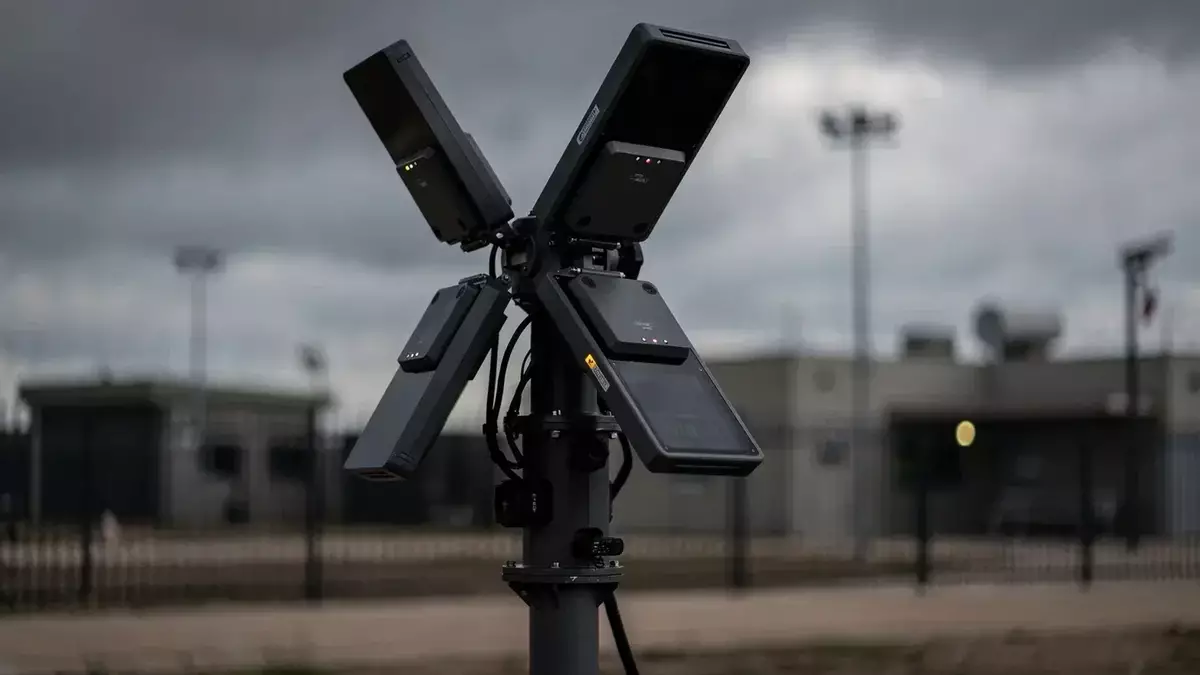
A week that brought a $24.9 million Pentagon contract, a retired rear admiral joining the board, and coordinated defence investment announcements from Washington, London and Canberra should be a clear catalyst for any anti-drone specialist. For DroneShield, it has been a mixed bag: the stock bounced 16.41% over five days to close at €1.49, yet remains nearly 60% below its October high and weighed down by an active ASIC investigation.
The Australian counter-UAS firm is caught between a structural tailwind that few in the defence sector can match and a set of home-grown headwinds that continue to test investor patience. The global market for anti-drone technology is forecast to expand from $4.48 billion in 2025 to $14.51 billion by 2030, representing a compound annual growth rate of 26.5%. Some estimates even stretch to $19.8 billion by 2033. Drones have become one of the leading causes of battlefield casualties in modern conflicts, forcing governments to fast-track spending on electronic warfare and kinetic countermeasures alike.
Leadership Overhaul and a Pentagon Win
DroneShield has moved to strengthen its institutional credibility. Former CEO Oleg Vornik handed the reins to Angus Bean in April, an insider who joined the company in 2016 and served on the executive team from 2018. Then, effective 1 July 2026, Rear Admiral Lee Goddard CSC took a seat as an independent non-executive director, a hire explicitly designed to deepen the company’s relationships with government and military buyers.
That appointment coincided with the announcement of a five-year contract worth $24.9 million from a US Department of Defense joint task force. The deal covers mobile and stationary counter-drone systems, software subscriptions and support. DroneShield expects at least $10 million of the initial $19.3 million base value to be recognised as revenue in fiscal 2026, with the remainder flowing into 2027. An additional $5.6 million in customer options are available, and payments are scheduled to begin in the second half of 2026 and run through the first half of 2027.
Should investors sell immediately? Or is it worth buying DroneShield?
A Wave of State Funding Reshapes the Sector
The contract is just one piece of a much larger puzzle. In the past week alone, the Pentagon established the Direct Reporting Portfolio Manager for Unmanned Systems (DRPM-UxS), a new office consolidating almost all drone and counter-drone programmes under one roof. The UK unveiled a defence investment plan directing more than £5 billion toward autonomous systems, including targeted drone spending. Australia launched its Defence Industry Development Strategy 2026, which includes a $3 billion export facility for local defence firms — a structural advantage for DroneShield as a homegrown manufacturer.
The scale of the opportunity was underscored when rival AeroVironment secured a contract of up to $500 million for commercial counter-drone technology on 1 July. While that order went to a competitor, it signals the volume of capital now flowing into the space.
Price Recovery Masks Deep Volatility
On a 30-day view, DroneShield shares have lost 21.43%, and year-to-date they are down 24.82%. The stock trades 19.74% below its 50-day moving average of €1.86 and 26.78% below its 200-day average of €2.03. The 14-day relative strength index sits at 39.8, indicating neither oversold nor overbought conditions. At €1.49, the stock is a world away from its 52-week high of €3.65 set on 6 October 2025, but also a full 81.04% above the November trough of €0.82.
DroneShield at a turning point? This analysis reveals what investors need to know now.
Annualised 30-day volatility stands at 70.74%, a figure more typical of a cryptocurrency than a defence contractor. The ASIC probe, launched in May over company disclosures and trading activity from November 2025, remains unresolved. DroneShield has pledged full cooperation, but the regulatory cloud has kept many institutional buyers on the sidelines.
What Comes Next
The next six months will provide concrete milestones. First payments from the Pentagon deal are due in the second half of 2026, and Goddard’s board tenure begins on 1 July. Whether these developments can restore confidence after the steep slide from October’s peak will depend as much on the outcome of the ASIC investigation as on the flow of new contracts. DroneShield has a market capitalisation of €1.35 billion and a growing industrial footprint — it debuted its first European-made counter-UAS system at Eurosatory 2026 in Paris. The defence budgets are there. The question is whether the company can capture enough of them to outrun the volatility.
Ad
DroneShield Stock: New Analysis - 4 July
Fresh DroneShield information released. What's the impact for investors? Our latest independent report examines recent figures and market trends.


