Glencore stock steadies as commodity prices shape outlook
Veröffentlicht: 19.07.2026 um 07:50 Uhr, Redaktion AD HOC NEWS, Redaktionelle Verantwortung: Rafael Müller (Chefredaktion)
Glencore stock, tied to the diversified resources group Glencore plc (ISIN JE00B4T3BW64), continues to trade in a range that reflects resilient recent earnings and ongoing volatility in key commodity markets such as copper and coal. As of 30 April 2024, Glencore reported a market capitalization of around $55 billion based on its London Stock Exchange pricing, underlining its role as one of the larger global commodity traders and miners. For investors, the combination of robust cash generation, variable distributions, and shifting production guidance remains central to how Glencore stock is valued.
Adjusted EBITDA at $17.1 billion in 2023
According to Glencore’s full year 2023 results released on 21 February 2024, the company generated group adjusted EBITDA of $17.1 billion for 2023, down from a record $34.1 billion in 2022 when commodity prices and trading conditions were unusually strong. The reduction of about $17 billion year on year highlights how earnings normalised from the exceptional levels seen during the 2022 energy and metals rally. Despite this decline, the 2023 EBITDA level still remained significantly above many pre-2020 historical averages, underpinning Glencore’s ability to fund capital spending and shareholder returns.
In the same 2023 report, Glencore noted that its Industrial activities contributed the majority of this profitability, while its Marketing segment delivered around $5 billion of adjusted EBIT, near the upper end of the long-term guidance range the group has repeatedly communicated. That guidance range has typically centred on $2.2 billion to $3.2 billion of annual Marketing EBIT through the cycle, with a wider potential band of $3 billion to $4 billion in strong markets, so the roughly $5 billion result for 2023 signalled another year of elevated trading conditions compared with the formal target corridor.
Net income at $4.3 billion and strong cash returns
Glencore’s attributable net income for 2023 came in at approximately $4.3 billion, again lower than the more than $17 billion headline profit reported for 2022 but broadly consistent with a normalisation in coal prices and volatility. The company’s decision to maintain substantial shareholder distributions despite the earnings step-down has been a key feature for Glencore stock. In the 2023 cycle, Glencore announced a base cash distribution of $0.13 per share, complemented by top-up distributions and share buybacks that collectively lifted total capital returns to shareholders to around $9.4 billion for the year. That compared with roughly $7.1 billion in total distributions and buybacks for 2022, illustrating how Glencore used excess cash generated at the top of the cycle to accelerate returns even as reported net income fell.
These cash-return figures translate into an implied shareholder yield that has frequently exceeded 10% of Glencore’s equity value in the most recent two financial years, according to various market calculations that relate the aggregate annual distributions and buybacks to the prevailing market capitalization. In practice, this means that Glencore stock has lately traded as a high-yield vehicle on top of its exposure to physical commodity price swings, trading margins, and production growth across copper, zinc, nickel, cobalt, coal, and other materials.
Copper and coal production guidance in 2024
Production guidance for 2024 is another focal point for Glencore stock. In guidance materials released in early 2024, Glencore indicated that it expected group copper production to be broadly flat to slightly lower compared with 2023, with volumes guided in a corridor around 950,000 to 1 million tonnes depending on asset optimisation and project ramp-ups. That compares with copper production in 2023 that was reported within a similar range, meaning that Glencore is emphasizing value over volume in its copper operations rather than aggressively expanding tonnage in the near term.
For coal, Glencore’s guidance has pointed to reduced volumes relative to 2022 and 2023 as the company gradually tailors its thermal coal portfolio in line with both market conditions and longer-term sustainability considerations. In 2023, reported coal production was in the mid-100-million-tonne range, slightly below 2022 as some operations were adjusted, and the company has indicated that further moderation could occur in 2024. This moderated coal profile stands alongside Glencore’s strategic messaging that it remains committed to managing down certain higher-emission assets over time while still capturing value from existing long-life reserves.
Revenue normalization after 2022 spike
On the revenue side, Glencore’s full year 2023 sales were approximately $217 billion, down from around $255 billion in 2022. The roughly $38 billion decline, or about 15%, can be mainly attributed to lower average realised prices for energy products, including coal, and a partial normalization in trading volumes and spreads after the extreme dislocations following the pandemic and the commodity supply shocks seen in 2022. Importantly, while the top line shrank, margins remained healthy enough to sustain double-digit billions of dollars in EBITDA and billions in net income, underscoring the resilience of Glencore’s business model.
Segmentally, the energy products division, which includes coal, generated a large share of Glencore’s profit in both 2022 and 2023, but the relative contribution shifted somewhat as coal prices eased from their peaks. Meanwhile, metals and minerals such as copper, zinc, and nickel continued to deliver steady contributions. The company’s Marketing activities in oil and metals also benefited from volatility and arbitrage opportunities, even if the extraordinary trading environment of 2022 did not fully repeat in 2023. For Glencore stock, these segment dynamics matter because investors often look through short-term revenue fluctuations to assess sustainable cash generation capacity.
Balance sheet, net debt, and capital discipline
Glencore’s balance sheet position supports its shareholder distributions and investment plans. As of 31 December 2023, the group reported net debt of around $4.9 billion, down from roughly $6 billion at the end of 2022, reflecting strong free cash flow and disciplined capital allocation. This net debt level sits well within Glencore’s target range of $10 billion to $16 billion, as the company has repeatedly stated that it is comfortable operating with modest leverage to support working-capital needs in its Marketing business while avoiding excessive financial risk.
Free cash flow before distributions was substantial in 2023, with operating cash flow benefiting from both EBITDA and the unwind of some working-capital positions that Glencore had built up during the 2022 volatility. The company’s capital expenditure for industrial activities was in the mid-single-digit billions of dollars in 2023, broadly aligned with guidance and focused on sustaining production, advancing selected growth projects, and investing in transition metals. This combination of controlled capex and strong operating cash flow allowed Glencore to finance its distributions and buybacks without materially increasing net debt.
ESG considerations and emissions pathway
Environmental, social, and governance considerations remain important for Glencore and can influence sentiment around Glencore stock. In its sustainability reporting aligned with the 2023 financial year, Glencore reiterated its medium- and long-term climate goals, including a 50% reduction in total emissions (Scope 1, 2, and 3) by 2035 from a 2019 base and an aspiration to be net zero by 2050, subject to evolving policy and technology. These targets are notable because Glencore has a significant thermal coal portfolio alongside its growing footprint in metals critical to the energy transition, such as copper and cobalt.
The company has outlined interim steps to reach its climate objectives, including asset closures or transitions, operational efficiency improvements, and increased exposure to lower-carbon commodities. Glencore’s approach has sometimes attracted scrutiny, given the juxtaposition of coal mining with transition metals. However, the group argues that its managed decline of certain coal operations combined with active participation in recycling and circular-economy initiatives can align with global decarbonization pathways. For investors, the credibility of this ESG roadmap can affect the cost of capital and institutional appetite for Glencore stock over time.
Dividend policy and buyback flexibility
Glencore’s capital-return framework is deliberately flexible, tying distributions to underlying earnings, commodity price conditions, and balance sheet strength rather than fixed targets alone. In its 2023 communication, the company highlighted that it intends to maintain a base distribution that can be supplemented by top-up payments and buybacks when conditions allow. The $9.4 billion of total returns in 2023, compared with around $7.1 billion in 2022, illustrates this flexibility: strong cash generation allowed Glencore to accelerate equity reduction even as EBIT and net income fell from 2022 peaks.
This variable payout logic means that Glencore stock may offer high direct cash returns at times of elevated commodity prices but could see distributions moderate if markets weaken or if the company prioritizes balance sheet strength and strategic investments. Many analysts and investors therefore look beyond a single-year dividend yield to assess multi-year cash-return potential, factoring in scenarios for copper, coal, oil, and other key products. Glencore’s management has consistently emphasized that maintaining an investment-grade credit profile and funding industrial growth remain priorities alongside shareholder distributions.
Transition metals exposure and growth projects
One of the structural themes supporting Glencore stock is its exposure to metals linked to energy transition and electrification, notably copper, cobalt, nickel, and zinc. In 2023, copper and zinc together accounted for a significant share of industrial EBITDA, while cobalt and nickel provided more volatile contributions due to price swings and supply-demand imbalances. Glencore has interests in major copper assets in Africa, Latin America, and Australia, as well as battery metals operations that supply global automotive and electronics value chains.
The company has signaled that future growth capital will increasingly target brownfield expansions and debottlenecking in these transition metals rather than large-scale new greenfield mines, reflecting a focus on capital efficiency and permitting realities. Projects to enhance throughput at existing copper and cobalt operations, improve smelting and refining capacity, and support recycling initiatives are part of this strategy. For investors, this means the growth profile of Glencore stock is closely tied to medium-term demand trends for electric vehicles, grid investments, and renewable energy infrastructure.
Coal portfolio and political risk
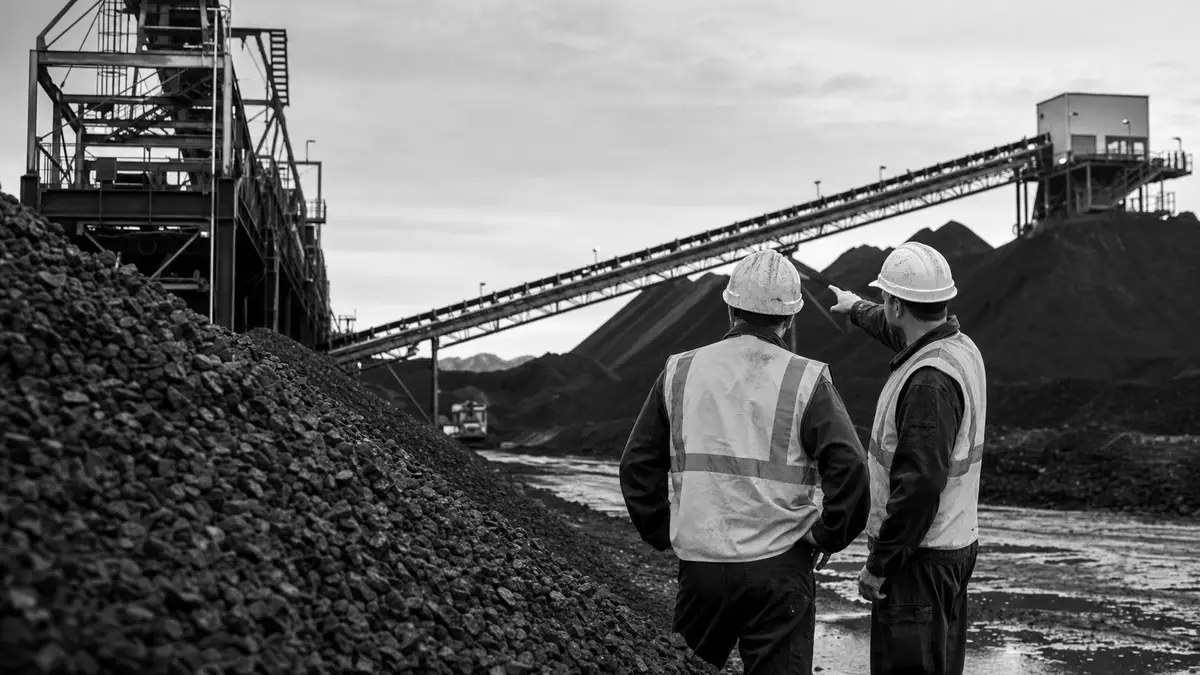
Glencore’s coal business remains a major profit driver and a source of both opportunity and risk. In 2022, elevated coal prices supported exceptional earnings, while in 2023 the contribution stayed high but moderated. Political and regulatory risks around coal have been rising, as governments and regulators consider stricter emissions policies, phase-out frameworks, and potential windfall taxes. Glencore has already faced such debates in markets where it operates, and policy shifts can directly affect cash flows, valuations, and strategic options.
In response, Glencore has articulated a strategy of managing its thermal coal portfolio over a multi-decade horizon, aiming for a decline in production while capturing value from existing reserves and infrastructure. The company’s participation in industry and policy dialogues around responsible coal management is part of this approach. For Glencore stock, the trajectory of coal prices, regulatory developments, and the pace of production decline will remain central variables influencing earnings and valuation multiples.
Marketing segment earnings profile
The Marketing segment, which encompasses Glencore’s global commodity trading operations, is a distinctive element of its business model compared with many pure mining peers. As noted earlier, Marketing adjusted EBIT in 2023 was about $5 billion, significantly above the historical guidance range but down from the extraordinary levels of 2022. This segment benefits from price volatility, arbitrage opportunities between regions and qualities, and the group’s logistics and storage capabilities.
Glencore has reiterated that over the cycle it expects Marketing to generate at least $2.2 billion to $3.2 billion of EBIT per year, with potential for upside in periods of extreme market dislocation. The recent multi-year performance, including the strong 2022 and elevated 2023 outcomes, demonstrates that Marketing can stabilise group earnings when industrial operations face challenges, but also amplifies earnings in boom times. Investors assessing Glencore stock often treat the Marketing business as a quasi-hedge that can cushion the impact of commodity price moves on mining cash flows.
Risk factors and cyclical sensitivity
As a diversified resources and trading company, Glencore is exposed to a broad set of risk factors that affect Glencore stock. Commodity price volatility in copper, zinc, nickel, cobalt, coal, oil, and other materials directly impacts revenue and margins. Currency movements, particularly the US dollar against emerging-market currencies where Glencore operates, can influence costs and reported earnings. Operational risks, including production disruptions, safety incidents, and project delays, are part of the mining and logistics environment.
In addition, Glencore faces regulatory and legal risks, including competition law scrutiny, anti-corruption compliance requirements, and environmental regulation. Past settlements and investigations have highlighted how conduct in trading businesses can attract significant fines and reputational impacts. The company has responded by strengthening compliance frameworks, but residual risk remains. For investors, understanding these risk dimensions is critical when evaluating the potential returns and volatility of Glencore stock over multi-year horizons.
Peer comparison in diversified resources
In the global diversified resources universe, Glencore is often compared with peers that combine mining and trading or that have multi-commodity portfolios. Relative to purely mining-focused groups, Glencore’s Marketing segment can provide earnings diversification and counter-cyclical profits, but it also introduces additional complexity in risk management and regulatory oversight. Glencore’s exposure to coal, which is larger than some competitors, can be a differentiator in both positive and negative directions depending on market and policy conditions.
From a valuation perspective, Glencore stock has at times traded at a discount to certain peers on metrics such as price-to-earnings and enterprise value to EBITDA, potentially reflecting perceived ESG and legal risks, but its high cash returns and transition metals exposure can offset these concerns for some investors. Analysts and portfolio managers often look at Glencore’s relative positioning in copper, cobalt, and zinc when considering its long-term growth potential versus other diversified miners that may have more iron ore or less coal exposure.
Revenue from representative product line
Glencore’s portfolio includes a wide range of products; among them, copper stands out as a representative product line that is strategically important and commercially material. In 2023, copper-related revenues and earnings contributed a significant share of the company’s Industrial segment EBITDA, with volumes near the 1 million tonne mark and realized prices influenced by global demand for electrification and infrastructure. Glencore’s copper assets include large-scale operations in the Democratic Republic of Congo, Peru, and other jurisdictions, supplying both concentrate and refined products to customers worldwide.
The company’s strategy in copper involves optimizing existing assets, investing in debottlenecking and efficiency improvements, and carefully assessing new project opportunities. Because copper is central to electric vehicle and renewable energy supply chains, Glencore’s copper business plays a major role in how investors view the long-term prospects of Glencore stock. If copper demand grows in line with energy transition scenarios, Glencore’s portfolio could benefit from both price and volume tailwinds over time, although this will also depend on policy, technology, and competition from other producers.
Glencore stock and recent trading levels
Glencore’s primary listing is on the London Stock Exchange under the ticker LSE: GLEN, with the shares quoted in pence. As of 30 April 2024, Glencore stock was trading around GBX 430, compared with a 52-week range that roughly spanned from GBX 395 to GBX 520 over the preceding year. This places the share price moderately below the upper end of its recent trading band but above the lower levels seen during periods of weaker sentiment on coal prices and broader market risk-off phases.
At the GBX 430 level as of 30 April 2024, Glencore’s implied dividend yield based on its most recent base distribution and top-up guidance has often been calculated in the mid-single-digit percentages, with buybacks adding to the total shareholder yield. Short-term price movements continue to be driven by changes in commodity prices, macroeconomic data, and sector rotation, while medium-term valuation will depend on Glencore’s ability to sustain robust cash flows, execute its ESG and coal management strategies, and capitalize on demand for transition metals.
Key data for Glencore
- Company: Glencore plc
- ISIN: JE00B4T3BW64
- Ticker: LSE: GLEN
- Trading venue: London Stock Exchange
- Price (as of 30 April 2024, 16:30 BST): 430 GBX
- Market capitalization: $55 billion (as of 30 April 2024)
- Sector / Industry: Energy and Materials / Diversified Metals and Mining
- Index membership: FTSE 100
Disclaimer zu unseren Artikeln: Keine Anlageberatung, keine Kauf oder Verkaufsempfehlung. Angaben zu Kursen, Unternehmen und Märkten ohne Gewähr; Änderungen jederzeit möglich. Börsengeschäfte können zu hohen Verlusten führen. Unsere Beiträge werden ganz oder teilweise automatisiert mit Unterstützung von AI erstellt und geprüft.