German Building Safety in Free Fall as TÜV Report Shows Record Technical Defects and Scaffolding Inspections Intensify
07.06.2026 - 02:33:19 | boerse-global.de
One in four inspected building systems is now completely free of faults — a figure that has never been lower. The TÜV Building Regulations Report 2026, released this week, documents that 35.9 percent of all checked installations have major defects, an increase of nine percentage points compared to 2024. For ventilation systems the failure rate rises to 44.2 percent; fire extinguishing systems trail at 40.6 percent. Emergency power supply (35.2 percent) and emergency lighting (35.0 percent) also show significant shortcomings. In response, the TÜV Association is calling for stricter testing and maintenance standards across the industry.
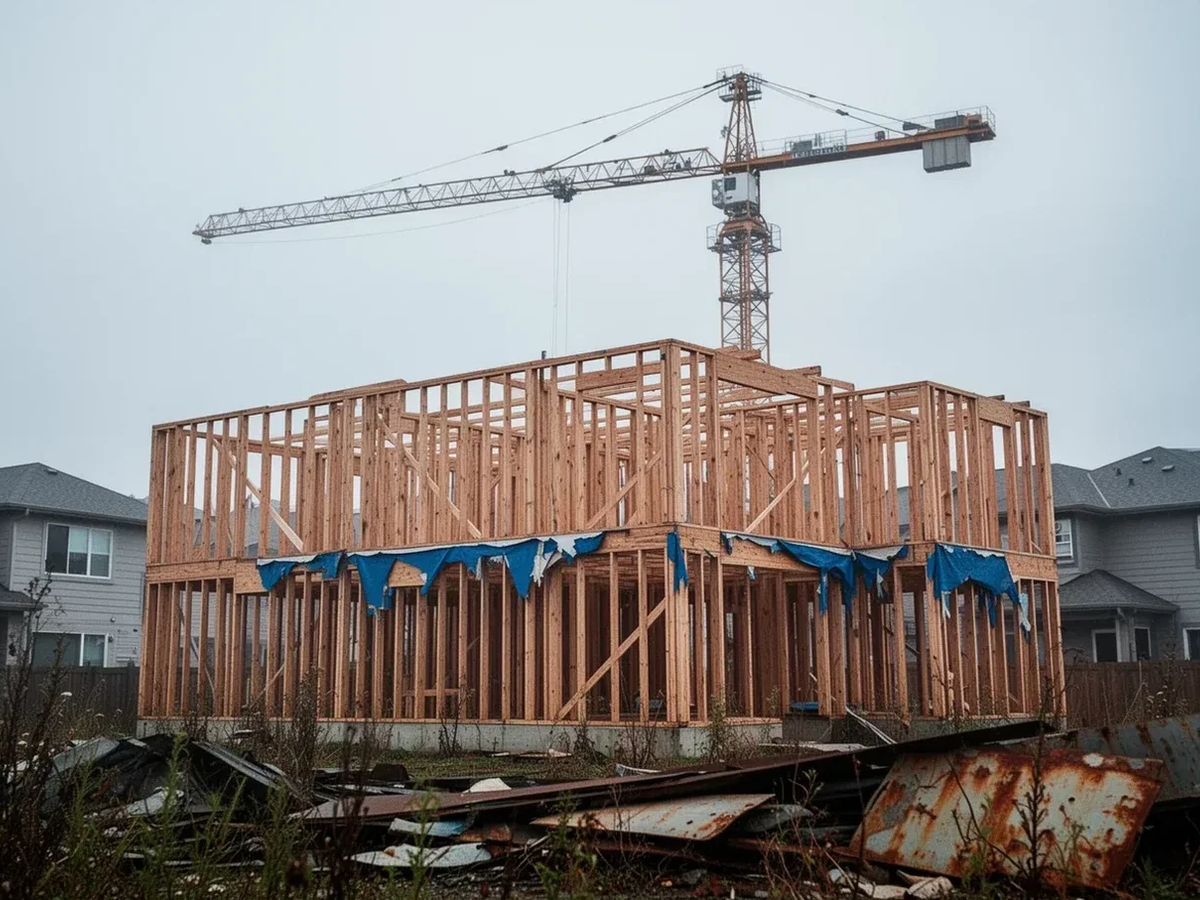
The deteriorating state of building technology coincides with a separate push to improve safety on construction sites. From Monday to Friday this week, Hesse's regional administrative authorities are conducting a statewide inspection blitz focused on scaffolding. The campaign, anchored in the Joint German Occupational Safety and Health Strategy (GDA), targets a grim statistic: between 2009 and 2023, falls from height accounted for roughly 31 percent of all severe and fatal occupational accidents. Earlier checks revealed that only 21 percent of construction sites completely complied with scaffolding protection measures. Regulators aim to drive that figure sharply upward.
When regulators spotlight compliance gaps, many employers realise their own risk documentation isn't as watertight as it should be. A free Risk Assessment Toolkit provides 41 ready?to?use templates, checklists and training materials that help you systematically identify and record workplace hazards — from fire safety to lone working. Download the free Risk Assessment Toolkit
Beyond structural safety, the construction sector continues to grapple with an invisible hazard: respirable crystalline silica dust (quartz dust). The workplace exposure limit is 0.05 mg/m³ averaged over eight hours. Inhalation can trigger silicosis, chronic obstructive pulmonary disease (COPD), or lung cancer. Since quartz-containing materials are difficult to replace, the industry follows the (S)TOP principle enshrined in Germany's Hazardous Substances Ordinance: technical protective measures take precedence over organizational or personal solutions. Since October 2016, an action program to minimize dust — backed by the German Construction Industry Association (ZDB), the IG BAU trade union, and the Construction Berufsgenossenschaft — has been helping companies adopt low-emission methods.
Meanwhile, a cornerstone of German construction law marked its centenary. The German Construction Contract Procedures (VOB) celebrated 100 years on May 6, 2026. Felix Pakleppa, managing director of the ZDB, called the set of rules fundamental for fair bidding procedures and a bulwark against corruption. In April 2026, the ZDB also updated its standard subcontractor contract. Penalty clauses now calculate based on the final settlement sum instead of the original contract value, and the penalty percentage has been lowered from 0.3 percent.
The construction sector's labor challenges are pushing it to look beyond Europe. In North Rhine-Westphalia, building associations are using the "WE-Fair" alliance, run in cooperation with the Federal Ministry for Economic Cooperation and Development (BMZ), to recruit apprentices from Ghana and Senegal. Since 2022, 65 young people have been placed, and the target is to reach 100 placements by the end of 2026. Stakeholders stress the importance of transparent and ethical recruitment standards in the process.
So schätzen die Börsenprofis Aktien ein!

Für. Immer. Kostenlos.