German Blue-Chip Index Faces Dual Headwinds
18.03.2026 - 04:58:03 | boerse-global.de
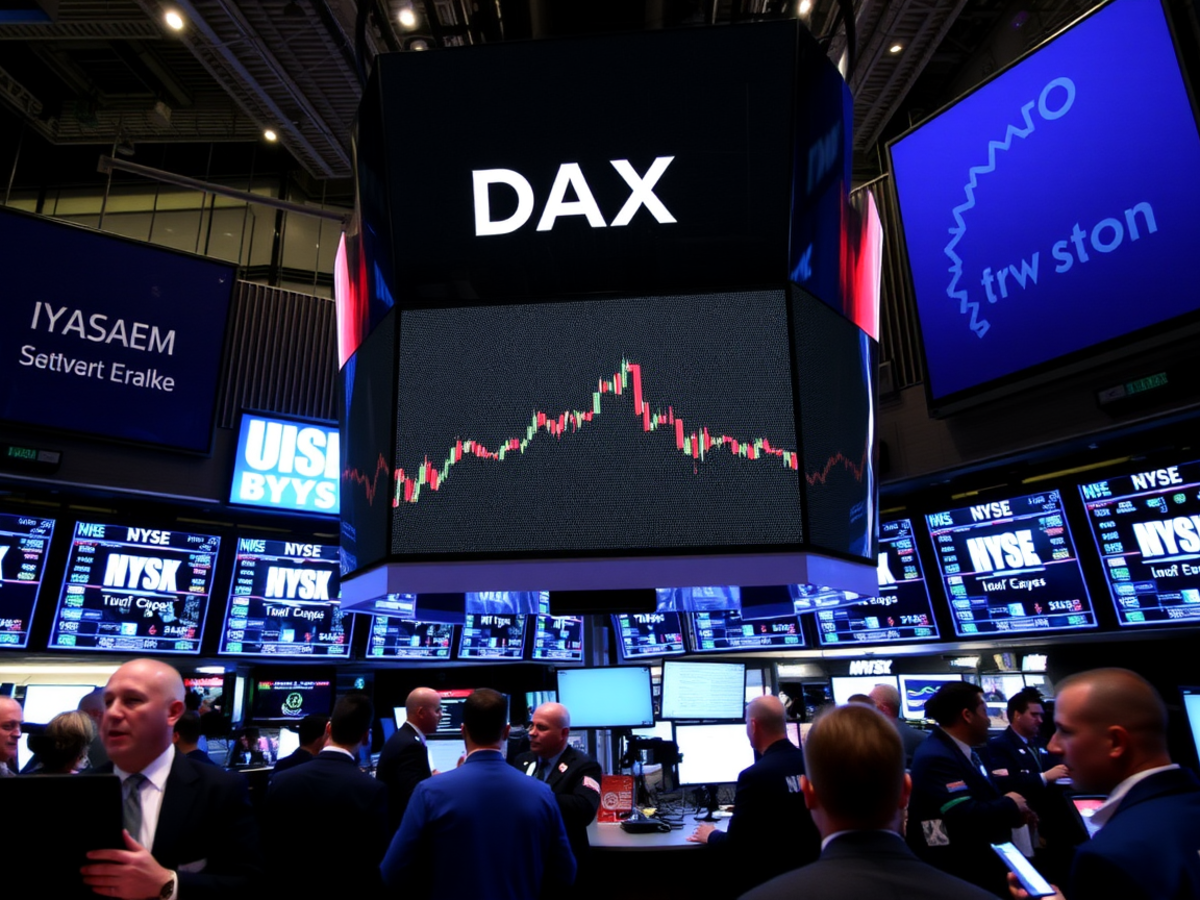
Germany's benchmark DAX index is grappling with a confluence of pressures from two distinct fronts. A sharp escalation in oil prices, triggered by Middle East tensions, coincides with one of the most significant monetary policy days of the year, creating a challenging environment for equities.
During the trading session, the index briefly dipped below the psychologically significant 23,000-point threshold before recovering some ground. Since the outbreak of the Iran conflict approximately two weeks ago, the DAX has shed roughly seven percent of its value. The primary catalyst for this decline is the energy market. Following the blockade of the Strait of Hormuz—a critical chokepoint for about one-fifth of global oil shipments—the price of Brent crude oil surged to $120 per barrel. It has since settled around the $100 mark, representing a weekly increase exceeding eleven percent.
Monetary Policy in the Spotlight
The immediate directional catalyst will emerge within the next 24 hours. The U.S. Federal Reserve announces its interest rate decision at 8:00 PM CET. While rate cuts are considered unlikely, market participants are focused on the updated "dot plot" projections and the commentary from Fed Chair Jerome Powell. The European Central Bank (ECB), the Bank of England, and the Swiss National Bank will follow with their own policy announcements on Thursday.
The ECB finds itself in a particularly difficult position. Inflation in the eurozone currently runs below the bank's target. However, the recent oil price shock threatens to introduce fresh inflationary pressures, potentially limiting the scope for near-term interest rate reductions. According to ECB calculations, a ten percent rise in oil prices can reduce medium-term potential growth by 0.2 percent. Leading economic research institutes, including the Ifo Institute and the Kiel Institute, have already revised their growth forecasts downward.
Sector Performance Diverges Sharply
Market movements revealed a clear split between winners and losers. Energy and travel-related stocks faced substantial selling pressure. Airlines and tourism companies are suffering a dual impact: operational disruptions from airspace closures and thousands of flight cancellations are compounded by rising jet fuel costs, which erode profit margins. The automotive sector is also under strain. Porsche recently reported a 91 percent plunge in profits, while Volkswagen has outlined plans to reduce its workforce by 50,000 positions by 2030.
Should investors sell immediately? Or is it worth buying DAX?
In contrast, a strategic partnership in the semiconductor sector provided a positive catalyst. Infineon, STMicroelectronics, and NXP have joined forces with NVIDIA to target the market for humanoid robots. The European chipmakers will supply hardware for sensors, motion control, and power management, with NVIDIA contributing the AI processors. Infineon estimates the potential revenue at approximately $500 per robot. Analysis from TrendForce indicates that unit sales in this category are expected to surpass 50,000 for the first time this year.
From a technical analysis perspective, the DAX is currently trading within a rectangular formation. The support zone is identified around 22,987 points, with resistance situated near 24,664. The imminent central bank decisions will likely determine whether the 23,000 level holds as a floor or if the index will break below it once more.
Ad
DAX Stock: New Analysis - 18 March
Fresh DAX information released. What's the impact for investors? Our latest independent report examines recent figures and market trends.
So schätzen die Börsenprofis German Aktien ein!

Für. Immer. Kostenlos.