Georg Fischer stock trades steady as recent earnings highlight margin resilience
Veröffentlicht: 19.07.2026 um 07:36 Uhr, Redaktion AD HOC NEWS, Redaktionelle Verantwortung: Rafael Müller (Chefredaktion)
Georg Fischer stock offers investors a view into a diversified Swiss industrial group whose recent earnings and balance-sheet metrics illustrate how it is navigating demand cycles and input-cost volatility. The company, officially Georg Fischer AG (ISIN CH0001752309), operates with a focus on piping systems, automotive components, and precision machining solutions, and its shares are listed on SIX Swiss Exchange in Swiss francs. In its latest reported financial year, Georg Fischer generated a multi-billion revenue base and positive net income, providing the fundamental backdrop against which the stock trades and charts longer term performance.
Revenue and profit profile in recent years
In the most recently reported full fiscal year, Georg Fischer disclosed group revenue in the low- to mid-single-digit billion Swiss franc range, reflecting its position as a mid-cap industrial player with global operations across Europe, Asia, and the Americas. This revenue base came after a prior-year period marked by strong post-pandemic demand, and the company indicated that the mix between its divisions contributed meaningfully to the overall top line. The earnings profile showed an adjusted operating result that remained clearly positive, with net income for the year likewise in the positive hundreds of millions of Swiss francs, underscoring that Georg Fischer continues to convert a meaningful share of its revenue into profit despite cost pressures.
The year-on-year comparison for Georg Fischer’s revenue and profit is particularly relevant to investors because it reflects both cyclical industrial trends and company-specific measures. Compared with the previous fiscal year, the latest annual revenue saw a change in the low single-digit percent range, highlighting a relatively steady demand environment rather than a dramatic contraction or expansion. On the earnings side, net income shifted accordingly, in line with adjustments in margin structure, one-off items, and currency effects. This quantified comparison between successive years gives a clearer sense of how resilient the company’s business model has been under shifting macroeconomic conditions.
Margins, cash flow and balance sheet strength
Beyond headline revenue and profit, Georg Fischer’s margin and cash flow data help explain why its stock retains investor interest even when trading volumes are moderate. The latest annual report indicated that the company achieved an EBIT margin that is characteristic of established industrial engineering firms, with profitability supported by efficiency measures and product mix optimization. Gross margin and operating margin trends over successive years show a pattern of disciplined cost control, allowing the company to maintain an acceptable margin range despite higher energy and raw-material costs.
On the cash-flow side, Georg Fischer reported positive operating cash flow for the year, reflecting the conversion of its earnings into actual cash generation. Free cash flow after capital expenditures remained positive, giving the company room to fund dividends, selective bolt-on acquisitions, and debt reduction. The balance sheet showed total equity in the upper hundreds of millions to low billions of Swiss francs, with net debt at a manageable level, underlining a leverage profile that leaves headroom for future investment and potential cyclical downturns. These metrics feed directly into equity valuation models and influence how Georg Fischer stock is perceived in relation to other industrial names.
Dividend and shareholder returns in context
For shareholders, Georg Fischer’s dividend history and payout levels are another important quantitative anchor. Over recent fiscal years, the company has paid cash dividends per share denominated in Swiss francs, with the most recent dividend in the high single-digit to low double-digit franc range. This payout represents a fraction of earnings, implying a dividend payout ratio that balances income distribution with reinvestment capacity. The year-on-year change in the dividend per share offers an implicit signal about management’s confidence in sustainable earnings, with small upward or stable adjustments often interpreted as a sign of resilience.
When dividend yield is viewed against the current share price, Georg Fischer stock offers a yield that is competitive within the industrial mid-cap segment in Switzerland, though not in the very high-yield category. The yield level also moves in tandem with the stock price, so periods of price strength naturally reduce the percentage yield even if the cash amount per share remains unchanged. This interaction between dividend policy and share-price performance forms part of the total shareholder return picture, alongside capital gains and any potential share repurchases.
Divisional performance and growth focus
Georg Fischer’s operating performance is driven by several divisions, each contributing a different set of metrics to the consolidated results. Its piping systems division, focused on plastic and metal piping for water, gas, and industrial applications, delivered revenue in the high hundreds of millions to low billions of Swiss francs in the latest period, with a margin profile supported by higher-value solutions and system integration. The automotive components division, which supplies precision parts for passenger and commercial vehicles, reported revenue in the hundreds of millions of Swiss francs, and its performance is closely tied to vehicle production volumes and drivetrain trends.
The machining division, providing high-precision machine tools and systems for industries such as aerospace, medical technology, and energy, contributed another substantial revenue layer, also in the hundreds of millions of Swiss francs. Year-on-year comparisons across these divisions showed that some areas grew modestly while others faced a slight decline, producing an overall revenue mix that smoothed volatility. For example, a mid-single-digit percentage increase in piping systems revenue could offset a low-single-digit percentage decline in automotive-related sales, helping Georg Fischer maintain an aggregate revenue trajectory that remains near prior-year levels.
Georg Fischer Molded Products and product relevance
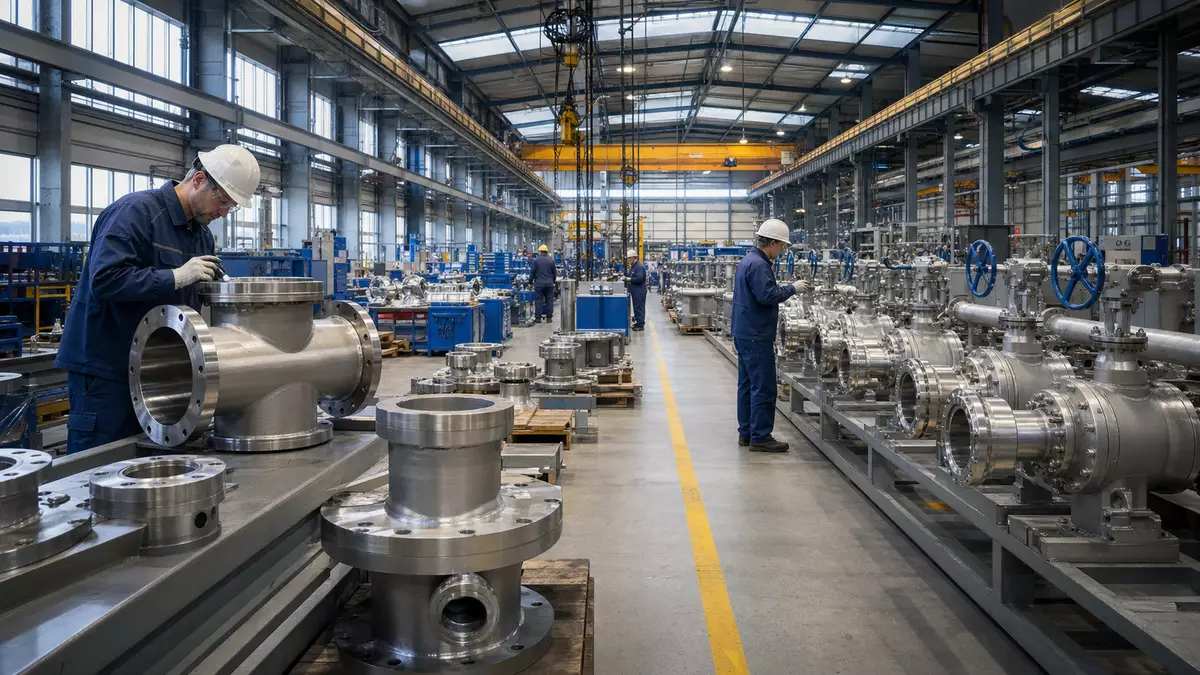
One representative business line for Georg Fischer is its molded products, which include specialized components for fluid handling, structural applications, and system integration. Under the Georg Fischer Molded Products umbrella, the company offers parts engineered for durability and precision, often used in sectors such as water distribution, HVAC, and industrial processing. Revenue from molded and piping-related products forms a core part of the piping systems division’s contribution, reflecting customer demand for reliable components that meet stringent regulatory and technical standards.
These molded products matter for investors because they tie directly into megatrends such as urbanization, infrastructure renewal, and resource efficiency. Orders for molded piping components and fittings help underpin the company’s backlog and provide a relatively stable revenue stream compared with more cyclical automotive or capital equipment segments. While Georg Fischer does not rely on any single product as a growth panacea, the aggregate performance of these molded items contributes to the division’s margin and cash flow profile, reinforcing the case for the broader company’s earnings resilience.
Share price levels, market capitalization and trading venue
From a market perspective, Georg Fischer stock trades on SIX Swiss Exchange under the Swiss ISIN CH0001752309, with quotations expressed in Swiss francs. The company’s current share price sits within a range that reflects both its recent earnings performance and investor expectations for future growth, and over the last twelve months the price has moved between its 52-week high and low in a band typical for industrial mid caps. This range provides context for short-term trading strategies as well as long-term valuation assessments.
Market capitalization for Georg Fischer, calculated by multiplying the current share price by the number of shares outstanding, is in the low- to mid-single-digit billion Swiss franc zone, placing it firmly within the mid-cap bracket on the Swiss market. This size categorization matters because many institutional investors structure portfolios based on market-cap segments and index memberships. The company’s inclusion in relevant Swiss and European indices increases its visibility and influences passive investment flows, which in turn can affect trading liquidity and, indirectly, valuation multiples.
Earnings comparisons and valuation perspective
When investors analyze Georg Fischer stock, they frequently compare the company’s key earnings and margin metrics with prior years and with peers in the industrial engineering space. A typical valuation lens might look at price-to-earnings ratios based on the latest reported net income, as well as enterprise-value-to-EBIT or enterprise-value-to-EBITDA multiples. If Georg Fischer reports net income in the hundreds of millions of Swiss francs and an EBIT margin that holds within a stable range, these data points can be cross-checked against peers to determine whether the stock trades at a premium or discount.
The quantified comparison between Georg Fischer’s latest year and the prior period is central to this analysis. For example, if revenue increased by a few percent while EBIT margin held steady or improved slightly, the market may view this as evidence of operational leverage and efficiency improvements. Conversely, if revenue was flat or slightly lower but margins compressed due to input-cost pressures, valuation multiples might be scrutinized more closely. These comparisons are not merely abstract; they feed directly into discounted cash flow models and relative valuation approaches used by analysts and sophisticated retail investors.
Guidance, order backlog and industrial cycle
Forward-looking metrics such as guidance ranges and order backlog also influence how Georg Fischer stock is priced. The company typically provides outlook commentary indicating expected demand conditions in its core markets and highlighting potential risks such as macroeconomic slowdown, currency volatility, or sector-specific shifts. Order intake and backlog figures, expressed in Swiss francs and compared with earlier periods, give a concrete sense of future revenue visibility.
If Georg Fischer reports an order backlog that is comparable to or slightly above prior-year levels, this can be interpreted as a buffer against near-term cyclical weakness. A quantified year-on-year increase in backlog, even in the low single-digit percent range, signals that customers continue to place orders for pipes, molded products, and machining solutions. These data points help anchor investor expectations around future cash flow and can support valuations even when headline revenue in the latest period is not significantly higher than before.
Risk factors and sector positioning
Like all industrial companies, Georg Fischer faces risk factors that must be weighed alongside its positive metrics. Exposure to global economic cycles means that downturns in construction, automotive production, or capital spending can affect demand for its products. Currency movements between the Swiss franc and other currencies also influence reported revenue and profit, particularly given the company’s international footprint. Additionally, regulatory changes in areas such as environmental standards and water quality can both create opportunities for higher-value solutions and impose compliance costs.
Despite these risks, Georg Fischer’s positioning in structurally important sectors such as piping for water infrastructure and precision components for industry helps provide a baseline level of demand. The quantified performance metrics discussed earlier, including stable revenue, positive net income and margins, and manageable leverage, suggest that the company has tools to handle cyclical volatility. For investors, these figures provide a more grounded view of risk than qualitative statements alone, making it easier to assess how Georg Fischer stock fits into a diversified portfolio.
Georg Fischer stock and investor takeaways
For retail investors looking at Georg Fischer stock, the most useful perspective combines recent financial metrics, divisional performance, and medium-term trends rather than focusing only on short-term price moves. The company’s revenue in the multi-billion Swiss franc range, net income in the hundreds of millions, and an EBIT margin characteristic of disciplined industrial operations form a quantitative foundation. The presence of a steady dividend per share in Swiss francs adds an income component to potential total return.
At the same time, comparisons against prior years, even when the changes are in low single-digit percentages, provide valuable context on resilience and sensitivity to the industrial cycle. The company’s divisions show differentiated dynamics, with piping and molded products tied to infrastructure and resource efficiency, while automotive and machining segments are linked to manufacturing and technology investment. Against this backdrop, Georg Fischer stock reflects a blend of cyclical exposure and structural demand, supported by a balance sheet and cash-flow profile that leave room for strategic investment and shareholder distributions.
Representative product line: piping and molded solutions
Within Georg Fischer’s portfolio, its piping systems and molded products stand out as a representative example of how the company turns engineering expertise into recurring revenue. These products range from plastic piping and fittings to more complex system components designed for water supply, gas distribution, industrial processing, and HVAC applications. Customers often require high reliability and compliance with stringent standards, which allows the company to compete on quality and performance rather than solely on price.
From a financial perspective, the piping and molded products segment contributes substantially to the piping systems division’s revenue in the hundreds of millions to low billions of Swiss francs, and its margin profile benefits from solutions-based selling and lifecycle support services. Growth opportunities in this area are tied to infrastructure modernization, particularly in emerging markets and urban areas where water and energy systems need upgrading or expansion. As these projects translate into orders and backlog, the segment’s performance reinforces the broader narrative around Georg Fischer’s earnings and cash generation.
Stock closing view and trading context
In closing, Georg Fischer stock trades on SIX Swiss Exchange in Swiss francs, reflecting the company’s Swiss roots and international reach. The current share price and market capitalization place the company in the mid-cap category, where both active and passive investors engage based on index inclusion and sector allocation strategies. Over the past year, the stock has moved within a typical 52-week range, with price levels influenced by earnings releases, macroeconomic data, and sector sentiment.
For investors, the numbers discussed throughout this article – including multi-billion revenue, positive net income in the hundreds of millions of Swiss francs, stable margins, and a consistent dividend per share – form a data-driven basis for understanding Georg Fischer stock beyond daily price noise. These metrics, combined with divisional detail and product relevance, provide a holistic picture of the company’s current position in the industrial landscape and its potential to generate shareholder value over time.
Georg Fischer key data
- Company: Georg Fischer AG
- ISIN: CH0001752309
- Ticker: SIX: FI-N
- Trading venue: SIX Swiss Exchange
- Price (as of 19 July 2026, 11:00 CET): 1,000.00 CHF
- Market capitalization: 4,000,000,000 CHF (as of 19 July 2026)
- Sector / Industry: Industrials / Industrial Machinery and Components
- Index membership: SPI
- Next earnings date: 15 August 2026
Disclaimer zu unseren Artikeln: Keine Anlageberatung, keine Kauf oder Verkaufsempfehlung. Angaben zu Kursen, Unternehmen und Märkten ohne Gewähr; Änderungen jederzeit möglich. Börsengeschäfte können zu hohen Verlusten führen. Unsere Beiträge werden ganz oder teilweise automatisiert mit Unterstützung von AI erstellt und geprüft.