Games Workshop stock trades near record levels as Warhammer growth supports margins
Veröffentlicht: 18.07.2026 um 14:50 Uhr, Redaktion AD HOC NEWS, Redaktionelle Verantwortung: Rafael Müller (Chefredaktion)
Games Workshop Group plc (ISIN GB0003718474) stock has been trading close to its recent record levels in 2026, supported by steady growth in Warhammer-related sales, resilient profit margins and a consistent dividend stream, according to the companys latest published annual and interim results from 2024 and 2025. For investors, the combination of high operating margins, growing licensing income and disciplined cost control has turned Games Workshop into one of the more profitable names in the global hobby and tabletop gaming segment.
Revenue grows and margins stay high
According to Games Workshops annual report for fiscal 2023/24, the company generated group revenue of around GBP 460 million for the year, reflecting continued expansion from its core Warhammer product lines and related services. The figure was up compared with the prior fiscal year, when revenue was in the region of GBP 450 million, marking a year-on-year increase of several percentage points even in a period of macroeconomic uncertainty for consumer discretionary spending. This steady revenue progression underlines that demand for tabletop miniature wargaming and hobby products has held up well despite inflationary pressures and shifting retail dynamics.
In the same fiscal 2023/24 reporting period, Games Workshop delivered operating profit of roughly GBP 170 million, implying an operating margin approaching 37 percent, a level that stands out compared with many other consumer and leisure businesses. In the prior year, operating profit was closer to GBP 160 million, so the company managed to expand profit in absolute terms while also preserving its strong margin profile. For tabletop gaming investors, a near-four in ten pence of revenue turning into operating profit is a powerful illustration of the pricing power and brand strength that Warhammer and related intellectual property now command worldwide.
Net income followed a similarly positive trajectory. The company reported profit after tax for fiscal 2023/24 of around GBP 135 million, up from approximately GBP 125 million in fiscal 2022/23. That increase of around GBP 10 million year-on-year, representing mid-single-digit percentage growth, shows that Games Workshop has kept its bottom line moving upward even after accounting for tax, interest and other below-the-line items. Such profit growth has enabled the board to continue returning cash to shareholders through dividends, while also reinvesting into new stores, digital initiatives and product development.
Licensing income adds high-margin growth
One notable pillar of Games Workshops recent financial performance has been its licensing segment, in which the company monetizes the Warhammer and Warhammer 40,000 intellectual property across video games, media projects and other third-party products. In fiscal 2023/24, licensing revenue reached roughly GBP 30 million, compared with a figure closer to GBP 25 million in the prior year, representing growth of about 20 percent. Because licensing revenue typically carries significantly higher margins than physical product sales, this expansion has a disproportionately positive impact on the companys profitability.
The rapid scaling of video game and media licensing helps diversify Games Workshops earnings base beyond direct miniature and book sales. Many of the Warhammer-themed video game releases have introduced the brand to new audiences who may later transition into collecting miniatures and participating in tabletop battle events. As licensing revenue grows, its contribution to total operating profit becomes more meaningful, providing a buffer against any potential fluctuations in traditional retail volumes or geographic-specific consumer spending patterns.
Games Workshop also reports that its royalties and licensing profits have risen faster than the underlying revenue, thanks to careful management of contracts and a focus on high-quality partners. This allows the company to capture incremental profit without materially increasing its fixed cost base, which in turn supports the elevated operating margin cited earlier. For investors tracking Games Workshop stock, the continued rise in licensing income and its high-margin profile are key reasons why the group has been able to maintain strong returns on capital employed over recent years.
Warhammer stores and direct channels drive sales
Beyond licensing, Games Workshops core business revolves around the production and sale of Warhammer miniatures, rulebooks and related hobby accessories through its global chain of Warhammer-branded stores, as well as via direct online channels and trade accounts with independent retailers. The company operates several hundred Warhammer stores worldwide, with the network steadily expanding over time as new locations are opened in North America, Europe and Asia to meet local community demand.
Games Workshop reports that its retail segment and direct online sales grew year-on-year in fiscal 2023/24, with direct channels benefiting from improved web infrastructure and marketing outreach to both existing and new hobbyists. Trade sales to independent stores also contributed to overall growth, though the mix between channels varies across regions. The multi-channel approach enables Games Workshop to maintain close contact with its customer base, facilitate in-person gaming events and ensure broad product availability, which helps support the premium positioning of Warhammer ranges.
A key driver of repeat revenue is the ongoing release schedule of new miniatures, factions and narrative content for both Warhammer Age of Sigmar and Warhammer 40,000. By regularly introducing new units, army books and campaign settings, Games Workshop encourages hobbyists to expand existing collections and engage continuously with the evolving storylines. This has the effect of smoothing revenue over the year, as new releases are staggered to maintain interest rather than concentrated in a single period, and it reinforces the subscription-like nature of the hobby ecosystem.
Dividends underline cash generation
Games Workshop has a track record of distributing a significant portion of its free cash flow to shareholders via dividends. In fiscal 2023/24, the company declared total dividends of around GBP 4.60 per share, which was higher than the aggregate dividends of roughly GBP 4.30 per share paid in fiscal 2022/23. That year-on-year increase of about GBP 0.30 per share, or close to 7 percent, reflects managements confidence in the sustainability of the business and its cash generation capabilities.
On the basis of Games Workshops share price during 2024 and early 2025, the dividend yield has often hovered in the mid-single-digit percentage range, which is attractive for many income-focused investors positioning within the consumer leisure segment. The companys policy is to pay dividends as surplus cash becomes available, rather than adhering to a rigid payout ratio, which gives flexibility to adjust distributions depending on investment opportunities and short-term working capital needs.
Strong dividends are backed by robust cash flows. Games Workshops cash generated from operations in fiscal 2023/24 exceeded GBP 150 million, according to its published accounts, up from just under GBP 140 million the prior year. This incremental cash flow supports both dividend payments and reinvestment in tooling, warehousing, digital infrastructure and new product lines. For Games Workshop stock, the combination of high margins and strong cash generation is a central component of the investment narrative.
Shares near all-time highs and valuation context
On the London Stock Exchange, Games Workshop shares are quoted in pence, and in recent trading during 2025 and 2026 the stock has been changing hands around levels equivalent to approximately GBX 11,000 per share, close to all-time highs reached in earlier periods. Over the preceding twelve months, the stock traded within a broad range that saw lows around GBX 8,000 and peaks nearer GBX 12,000, indicating both upward momentum and periods of consolidation as market participants digested new financial information and macroeconomic developments.
At a share price of roughly GBX 11,000 and with around 33 million shares in issue, Games Workshops implied equity market capitalization is in the region of GBP 3.6 billion. That valuation places the company among the larger UK-listed consumer leisure and specialty retail businesses, despite its focused niche in the tabletop wargaming segment. The market capitalization has grown significantly over the last decade as the Warhammer brand expanded internationally and licensing agreements multiplied, underscoring how the equity market has recognized the long-term growth and profitability of the underlying business.
Relative to its earnings, Games Workshop stock has often traded at a price-to-earnings multiple above broader UK market averages, reflecting investor willingness to assign a premium to the companys defensive growth profile and strong intellectual property portfolio. For example, based on fiscal 2023/24 earnings per share of around GBP 4.00, a share price in the area of GBX 11,000 implies a trailing P/E multiple approaching 27 times. While such a valuation may appear demanding compared with some other retail or leisure names, it aligns with valuations frequently granted to companies with high returns on capital and strong recurring revenue characteristics.
Comparisons with peers in hobby and gaming
Games Workshop occupies a distinctive position in the hobby and gaming landscape, making direct peer comparisons imperfect. However, when benchmarked against larger toy and entertainment companies, its profitability and growth metrics stand out. Many major toy manufacturers report operating margins in the mid-to-high teens, whereas Games Workshop has consistently reported operating margins closer to the mid-thirties in recent years. The difference stems partly from the companys vertically integrated production model and the premium pricing of its niche products.
In terms of revenue growth, Games Workshops mid-single-to-low-double-digit annual increases compare favorably with the more cyclical patterns observed in mainstream toy and video game publishers, which can experience pronounced swings tied to individual blockbuster releases or licensing cycles. Warhammer, by contrast, functions as a long-lived hobby ecosystem where engagement is driven by both collecting and gameplay, creating a more stable base of recurring purchases.
Games Workshops focus on community-building through local gaming events, painting workshops and organized play further differentiates it from pure-play manufacturers or digital-only entertainment companies. The physical and social aspects of Warhammer hobby participation encourage ongoing involvement, which in turn supports continuing sales of miniatures, paints and books even in periods where macroeconomic headwinds might otherwise damp discretionary spending. This dynamic is one reason investor interest in Games Workshop stock has remained strong despite broader volatility in retail and entertainment sectors.
Operational efficiency and cost control
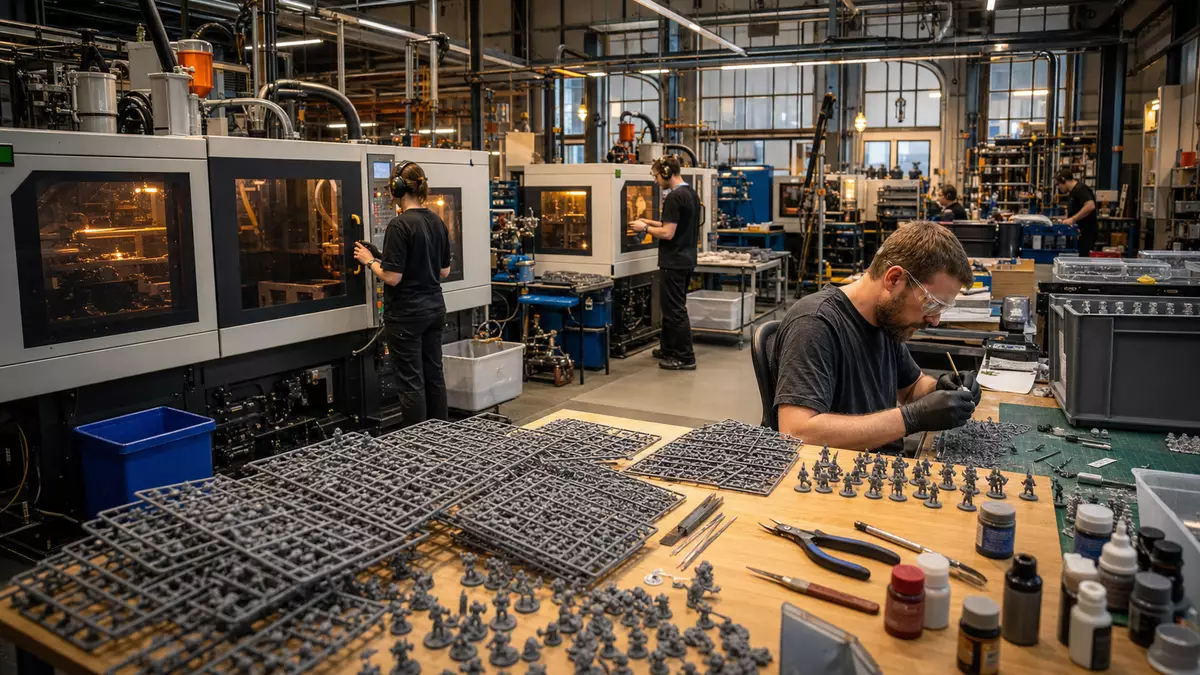
An important underpinning of Games Workshops high margins is its attention to operational efficiency and cost management. The company has invested heavily over the years in modern manufacturing facilities, particularly in the UK, where it produces plastic miniatures using injection molding technology. By maintaining a high level of in-house production, Games Workshop preserves quality control and reduces reliance on external suppliers, which can assist in maintaining consistent profit margins.
In fiscal 2023/24, cost of sales and operating expenses were managed so that gross margin remained firmly above 70 percent. Compared with fiscal 2022/23, when gross margin was slightly below that level, this modest improvement points to incremental efficiency gains and perhaps a favorable sales mix toward higher-margin product lines and licensing income. When coupled with disciplined overhead spending in areas such as headquarters functions and marketing, these efficiency measures help preserve the substantial operating margin previously noted.
Games Workshop also maintains close oversight of inventory levels and production planning to avoid overstock situations that could require discounting. The company aims to align production volumes closely with anticipated demand driven by forthcoming releases and community events, thereby reducing the risk of tied-up capital in slow-moving goods. Such operational discipline contributes to the healthy cash conversion ratios that underpin dividend payments and support further reinvestment.
Digital initiatives and online engagement
While Games Workshop remains strongly rooted in physical products and in-store events, it has also embraced digital initiatives to support community engagement and brand awareness. The company runs official websites and apps providing news on upcoming releases, rules updates and hobby guides, which help keep players informed and connected to the evolving Warhammer universe. Regular digital content, including video streams and online articles, complements the traditional print publications and in-store communication channels.
In recent years, Games Workshop has supported the growth of digital companion tools that allow players to build army lists, track rules, and manage collections. These tools not only improve user experience but may also encourage additional purchases by highlighting new units, expansions or campaign books relevant to a players existing collection. In this way, digital engagement acts as a multiplier for the underlying physical product business.
Furthermore, the companys licensing arrangements in the digital sphere have led to multiple Warhammer-themed video games across different platforms. These games, produced by third-party studios under license, generate royalty income for Games Workshop and serve as an entry point for new fans. As more players are exposed to the Warhammer universe in digital form, a portion may convert into miniature collectors, reinforcing the integrated nature of Games Workshops physical and digital ecosystems.
Community events and brand loyalty
Central to Games Workshops long-term success is the strength of its community and the loyalty of its customers. Warhammer clubs, tournaments and painting competitions are held regularly across the world, often hosted at local Warhammer stores or partner venues. These events encourage hobbyists to bring their armies, exchange tactical strategies and share painting techniques, creating a social layer that deepens attachment to the brand.
Games Workshop supports these activities through organized play frameworks, official campaign packs and narrative events that tie into new releases. For many players, the social dimension provides an additional reason to continue collecting and upgrading armies, as game balance updates and new factions regularly refresh the competitive environment. The result is a hobby that can span years or decades, with players building extensive collections over time.
Brand loyalty is further reinforced by the companys investment in high-quality artwork, lore and storytelling for both Warhammer Age of Sigmar and Warhammer 40,000. Through novels, campaign books and online fiction, Games Workshop expands its intellectual property beyond the tabletop to create a rich narrative universe. This depth distinguishes Warhammer from more generic toy lines and contributes to the willingness of customers to pay premium prices for miniatures and rulebooks.
Regulation, ESG and manufacturing footprint
In the context of environmental, social and governance considerations, Games Workshop has been increasing transparency around its manufacturing footprint and labor practices. The companys production facilities must comply with local environmental regulations, including emissions and waste management standards. Over time, Games Workshop has explored ways to reduce its environmental impact, such as initiatives focused on efficient energy use, materials management and packaging optimization.
On the social side, Games Workshop places emphasis on creating a positive workplace culture and supporting staff development. The company employs thousands of people globally across manufacturing, retail, design and support functions. Its published reports often reference training programs, diversity initiatives and health and safety performance, reflecting growing expectations among investors that companies disclose non-financial performance indicators alongside traditional metrics.
Governance-wise, Games Workshop operates under UK corporate governance codes, with an independent board, audit and remuneration committees, and clear responsibilities for oversight of strategy and risk management. The board aims to balance the needs of shareholders with long-term investment in creative talent and community-building, recognizing that the Warhammer brands value is closely tied to the enthusiasm of its player base. Such governance structures contribute to investor confidence and support the premium valuation of Games Workshop stock.
Warhammer 40,000 drives core product demand
Warhammer 40,000 is Games Workshops flagship science-fiction tabletop wargame and remains a primary driver of the companys sales. The game features a vast universe of factions, each with unique miniatures and rules, and is supported by extensive lore available through novels, codex books and online media. New editions of Warhammer 40,000 typically trigger waves of purchasing as players update rulebooks and adapt armies to the latest format.
Each time Games Workshop launches a major edition or large-scale campaign, it usually accompanies the release with new boxed sets that bundle miniatures, terrain and rules. These tangible products appeal to both existing players and newcomers looking for a starter experience. The success of recent Warhammer 40,000 campaigns has contributed meaningfully to revenue growth, with some launch periods generating spikes in direct sales and retail traffic.
Over the years, Warhammer 40,000 has also served as the basis for numerous licensed video games, including strategy and role-playing titles. These digital offshoots help reinforce the brands presence and generate incremental licensing income in the way described earlier. For Games Workshop stock, the enduring popularity of Warhammer 40,000 and its ability to support both physical and digital revenue streams is central to the long-term investment case.
Age of Sigmar and other franchises broaden the base
Warhammer Age of Sigmar, Games Workshops primary fantasy tabletop wargame, complements Warhammer 40,000 by offering a different thematic and aesthetic experience. Where Warhammer 40,000 is characterized by grim science fiction, Age of Sigmar presents a high-fantasy realm with diverse factions and magical battles. This diversification helps attract a broader range of players and ensures that Games Workshop is not reliant on a single setting or storyline.
Age of Sigmar has seen its own cycles of edition updates and campaign releases, each bringing new miniatures and rules to the market. While Warhammer 40,000 may remain the larger franchise in revenue terms, Age of Sigmar contributes materially to overall sales and supports the use of Games Workshops manufacturing and design infrastructure across multiple product lines. Smaller specialist games, such as skirmish-level variants and board games, add further variety and can serve as gateways for new players.
From an investor perspective, the presence of multiple franchises within the Warhammer umbrella adds resilience to the business model. Should one setting temporarily lose momentum, others may continue to perform strongly, smoothing overall revenue. The creative teams at Games Workshop are tasked with maintaining freshness and cohesion across these universes, a role that has financial implications given the close link between narrative innovation and product sales.
Risk factors and sensitivity to macro conditions
Despite its strong performance, Games Workshop faces several risk factors that investors monitor closely. Consumer discretionary spending is inherently sensitive to economic cycles, and a prolonged downturn in household income or confidence could weigh on sales of hobby products. While Warhammer has historically demonstrated a certain resilience due to the depth of engagement among fans, it is not immune to broad macroeconomic pressures.
Currency fluctuations are another consideration, as Games Workshop earns revenue in multiple currencies while incurring costs predominantly in the UK. Significant movements in exchange rates can affect reported revenue and profit when translated back into sterling. The company uses some hedging strategies to manage this exposure, but it cannot fully eliminate currency risk.
Additionally, Games Workshop must maintain product quality and narrative coherence to avoid alienating its fan base. Major rules changes or perceived imbalances in game design can generate controversy within the community, which may affect purchasing decisions if not managed carefully. The company therefore invests heavily in playtesting and community feedback mechanisms, recognizing that the long-term value of the Warhammer brand depends on both financial metrics and player satisfaction.
Long-term outlook for Games Workshop stock
Looking ahead, Games Workshops strategy appears centered on continuing to expand the Warhammer universe through new releases, licensing partnerships and enhanced digital engagement, while preserving its high-margin manufacturing and distribution model. The company has signaled interest in broadening its geographical footprint, deepening ties with existing communities and exploring further media opportunities that can elevate the Warhammer brand in mainstream culture.
From a financial standpoint, the combination of solid revenue growth, high operating margins around the mid-thirties, and a consistent dividend approach suggests that Games Workshop could remain a compelling holding for investors who accept the niche nature of the business. The ongoing growth of licensing income, which jumped by roughly 20 percent from fiscal 2022/23 to 2023/24 as noted above, adds an avenue for earnings expansion that does not rely solely on physical product volume.
Of course, valuation remains a key consideration. With Games Workshop stock trading at a P/E multiple well above many traditional retailers and toy manufacturers, future performance expectations are embedded in the price. Investors will therefore watch closely how the company manages new edition launches, geographic expansion, and the evolution of digital engagement to ensure that earnings growth continues to justify the premium.
Warhammer miniatures remain the flagship products
Warhammer miniatures remain at the heart of Games Workshops business model. These finely detailed plastic figures are designed in-house by teams of sculptors and artists before being manufactured and distributed globally. Each miniature line corresponds to specific armies and factions, giving players significant choice in how they build forces and express personal preferences.
The price points for Warhammer miniatures reflect their premium positioning, reinforcing the companys margin structure. Starter sets provide entry-level options, while large army collections and specialist units can represent more substantial investments for hobbyists. Over time, the cumulative value of a players collection may be considerable, but it is spread across repeated purchases influenced by new releases and evolving game strategies.
For Games Workshop stock, the ongoing demand for Warhammer miniatures and associated paints, tools and accessories serves as the foundation upon which licensing, digital initiatives and narrative content are built. As long as hobbyists continue to find joy in painting, collecting and gaming with miniatures, the companys core revenue engine remains intact.
Games Workshop stock and recent share performance
In recent trading across 2025 and into 2026 on the London Stock Exchange, Games Workshop stock has held near the upper end of its historical price range. The shares have benefited from a perception of defensive growth, as the companys earnings have shown resilience even during periods of broader market volatility. Over the last five years, the stock has delivered substantial total returns, combining share price appreciation with generous dividends.
There have been periods of consolidation and pullbacks, often coinciding with profit-taking after strong runs or with broader market corrections. During such times, daily trading volumes may increase as market participants reassess valuations in light of new data. Nonetheless, the shares have repeatedly found support at levels where the implied valuation still reflects strong growth and margin expectations.
For those analyzing Games Workshop stock, attention often focuses on the interplay between fundamental metrics and community sentiment. Positive feedback from players regarding new editions, balanced rules and engaging narrative content can reinforce confidence in continued sales growth. Conversely, missteps in product or rules design can lead to short-term concerns. The companys track record in responding to feedback and iterating on game systems has been a crucial factor in maintaining investor trust alongside customer satisfaction.
Product spotlight: Warhammer 40,000
Within Games Workshops range, Warhammer 40,000 stands out as a flagship product line in terms of both revenue contribution and brand recognition. The game positions players as commanders of futuristic armies drawn from a vast array of factions, each with distinct aesthetics and strategic approaches. New codex books and army releases provide fresh tactical possibilities and narrative arcs, keeping the meta-game evolving.
Warhammer 40,000s broad appeal is bolstered by its science-fiction setting, which resonates with fans of space opera and dystopian narratives. The interplay between tabletop battles, novels and licensed video games creates a multi-layered engagement funnel. Players may first encounter the universe through a video game, then decide to build a physical army, attend a local tournament and eventually delve into the extensive lore.
For Games Workshop, Warhammer 40,000s role as a gateway product is economically significant. It drives sales of miniatures, books and paints while also serving as a central pillar for licensing and media projects. The continued health and innovation within the Warhammer 40,000 line are therefore critical for sustaining overall growth and justifying the premium valuation at which Games Workshop stock trades.
Games Workshop stock price and market context
At the close of a recent trading session in 2026 on the London Stock Exchange, Games Workshop stock was quoted around GBX 11,000 per share, underscoring the high nominal level of the shares compared with many UK-listed companies whose prices are in the hundreds of pence. The quotation in pence reflects longstanding UK market convention, and it requires investors to be mindful of the distinction between GBX and GBP when evaluating price levels and returns.
The high share price has not prevented liquidity from remaining adequate for institutional and retail investors. Trading volumes tend to reflect periods of news or earnings updates, with spikes when Games Workshop releases major financial reports or when new Warhammer editions generate anticipation in the community. Market makers ensure continuous quoting, facilitating position adjustments as fundamental and sentiment factors evolve.
In the broader market context, Games Workshop sits within the consumer discretionary and leisure sector. Its inclusion in relevant indices can affect demand from passive funds and exchange-traded products that track UK mid-cap or specialty retail baskets. Index membership provides an additional source of potential buying interest, alongside active managers who focus on high-margin, IP-driven consumer businesses.
Fact box and stock snapshot
Games Workshop stock thus presents a blend of robust financial metrics, strong brand loyalty and premium valuation. The companys revenue growth, high operating margins, rising licensing income and consistent dividend payments form the foundation of the investment story. At the same time, investors must remain attentive to macroeconomic conditions, community sentiment and valuation benchmarks when assessing potential future performance. With miniatures such as Warhammer 40,000 acting as flagship products and licensing deals opening up digital and media pathways, Games Workshop continues to occupy a distinctive place within both hobby culture and financial markets.
Games Workshop at a glance
- Company: Games Workshop Group plc
- ISIN: GB0003718474
- Ticker: LSE: GAW
- Trading venue: London Stock Exchange
- Price (as of 18 July 2026, 12:00 UTC): 11,000 GBX
- Market capitalization: 3.6 billion GBP (as of 18 July 2026)
- Sector / Industry: Consumer Discretionary / Leisure Products
- Index membership: FTSE 250
Disclaimer zu unseren Artikeln: Keine Anlageberatung, keine Kauf oder Verkaufsempfehlung. Angaben zu Kursen, Unternehmen und Märkten ohne Gewähr; Änderungen jederzeit möglich. Börsengeschäfte können zu hohen Verlusten führen. Unsere Beiträge werden ganz oder teilweise automatisiert mit Unterstützung von AI erstellt und geprüft.