FMC stock trades steady as Fresenius Medical Care focuses on profitability and cash flow
Published on 07/23/2026 at 07:19 | Editorial responsibility: Rafael Müller, Editor-in-Chief AD HOC NEWS
Fresenius Medical Care (ISIN DE0005785802), the global dialysis specialist behind FMC stock, has spent recent years reshaping its business with a clear focus on profitability, capital discipline and cash generation. The company has reported multi-billion euro revenue alongside reduced net income, signaling a transition phase in which margin improvement and debt reduction now matter most for investors.
Revenue above EUR 17 billion, earnings under pressure
According to publicly available financial data for Fresenius Medical Care, the group has generated annual revenue in the area of roughly EUR 17 billion to EUR 19 billion in recent fiscal years, underlining the scale of its global dialysis operations. In one recent fiscal year, revenue was reported at about EUR 17.6 billion while net income was considerably lower, in the mid-hundreds of millions of euros, reflecting both operating challenges and restructuring effects on the bottom line.
That pattern marked a clear change from earlier periods when net income was closer to the one billion euro level, showing how cost inflation, COVID-19 impacts on patient volumes and structural adjustments have weighed on earnings. The quantified comparison between a revenue base that has remained broadly stable around the high-teens billion euro level and a net income line that has fallen from near EUR 1 billion to a few hundred million euros illustrates the margin compression that FMC stock investors have had to price in.
Margin and cash flow drive FMC stock valuation
Beyond headline revenue, Fresenius Medical Care has highlighted adjusted operating profit and margin trends as core performance metrics. In recent reporting, adjusted EBIT has been indicated in the low single-digit billion euro range on that roughly EUR 17 billion plus revenue base, translating into a mid-single-digit operating margin. This compares with higher margin levels in past years when dialysis volumes and reimbursement conditions were more favorable, again underscoring the pressure on profitability that has influenced FMC stock valuation.
Free cash flow has become an increasingly important anchor for the equity story. In one recent fiscal year, Fresenius Medical Care reported free cash flow in the range of several hundred million euros, a figure that investors use to gauge the companys ability to fund capital expenditure, pay dividends and reduce leverage. The trend versus prior years, where free cash flow was lower amid heavier investment and restructuring spending, points to incremental progress even as net income remains below pre-pandemic peaks.
Debt metrics also factor into the assessment of FMC stock. The group has indicated a net debt position in the mid-single-digit billion euro range, paired with a leverage ratio measured as net debt to EBITDA that it aims to keep within a disciplined corridor. Compared with earlier years when leverage was higher, this gradual reduction in net debt and stabilization of the leverage ratio serves as a further quantified comparison that supports the long-term equity case, provided the company continues to grow earnings.
Dialysis services and products as revenue backbone
Fresenius Medical Care generates most of its revenue from dialysis services provided in treatment centers worldwide, complemented by sales of dialysis products such as machines, dialyzers and related disposables. Dialysis services typically account for a clear majority of revenue, estimated in the low-teens billion euro range annually, while dialysis products contribute several billion euros each year. This split is important for FMC stock because services revenue tends to be more stable but sensitive to healthcare policy and reimbursement, whereas product revenue can capture innovation and equipment upgrade cycles.
Patient numbers in Fresenius Medical Cares network of dialysis centers have been reported in the hundreds of thousands globally, giving the company a significant scale advantage. Each incremental change in average reimbursement per treatment or in treatment volumes can therefore move revenue and profit by tens or hundreds of millions of euros over a year, which in turn affects the earnings power that investors associate with FMC stock.
FMC stock and market capitalization context
On its German listing, FMC stock represents Fresenius Medical Cares equity capitalization, which has fluctuated over time in response to earnings trends and broader market conditions. In recent years, the companys market capitalization has been in the mid- to upper-single-digit billion euro range, down from double-digit billion euro levels seen when profitability was stronger and growth expectations higher. This quantified comparison between past and current market capitalization highlights how the share price has already absorbed part of the profit pressure.
Daily trading volumes on the primary German market have tended to be in the hundreds of thousands of shares, supporting reasonable liquidity for institutional and retail investors alike. The relationship between market capitalization and free cash flow yields, as well as between enterprise value and EBITDA multiples, helps market participants judge whether FMC stock fairly reflects the companys cash-generating ability and debt profile, relative to global healthcare peers.
Strategic focus on efficiency and portfolio
Strategically, Fresenius Medical Care has emphasized measures to enhance efficiency, streamline its organization and focus its portfolio on core dialysis activities and closely related offerings. Initiatives have included the consolidation of certain operations, revision of cost structures and a more disciplined approach to capital employed, all with the aim of improving return on capital and lifting margins back toward historical levels.
Management commentary in recent years has also pointed to selective growth opportunities, such as enhancing home dialysis offerings and digital solutions that can support patient management and clinical outcomes. While these segments are smaller in absolute revenue terms compared with the main center-based dialysis business, their growth rates can be higher, potentially lifting the overall revenue mix and margin profile over time in a way that could support FMC stock.
Dividend and shareholder returns policy
Fresenius Medical Care has historically paid dividends, aligning with its role as a mature healthcare company. Dividend per share has been in the low single-digit euro range annually, with adjustments in response to earnings and free cash flow trends. When net income fell sharply from near EUR 1 billion to the mid-hundreds of millions of euros, dividend policy became more cautious to preserve financial flexibility, a change that investors in FMC stock had to evaluate against their expected income from the shares.
The combination of dividend payments and share-price performance determines total shareholder return over time. In years when FMC stock traded lower due to profit pressure but the dividend remained in place, the yield on the shares increased, an outcome that can attract income-oriented investors but also signals that the market is pricing in higher risk to future earnings.
Regulatory and reimbursement environment
As a provider of dialysis services and products, Fresenius Medical Care operates in a highly regulated environment. Healthcare reimbursement systems, especially in large markets such as the United States and Europe, play a central role in determining revenue per treatment and overall profitability. Changes in reimbursement rates or in the structure of healthcare programs can shift revenue by significant amounts, which is why investors in FMC stock closely monitor regulatory developments and policy debates.
In recent years, the company has navigated adjustments to reimbursement frameworks, including risk-sharing models and quality-based payments, which can affect both the top line and costs. The ability to manage these changes without eroding margins further is one of the key qualitative factors behind the quantitative metrics, such as EBIT margin and net income, that the market uses when assessing FMC stock.
Dialysis technology and product innovation
On the products side, Fresenius Medical Care invests in research and development to improve dialysis machines, dialyzers and related components. R&D expenses have been reported in the hundreds of millions of euros annually, a figure that reflects the need to maintain technological competitiveness and meet evolving clinical standards. While R&D spending reduces current-period operating profit, successful innovation can strengthen the product portfolio and support future revenue growth and margins.
Product cycles in dialysis equipment are measured over years, and upgrades by clinics and healthcare systems can drive periods of higher product revenue. For FMC stock, such cycles can create phases in which growth in the product segment outpaces services, even if services remain the larger contributor to total sales. Investors often look for quantified signals, such as product segment revenue growing faster than the overall revenue base, to judge whether innovation is translating into commercial success.
Comparative valuation versus healthcare peers
In the broader healthcare sector, Fresenius Medical Care is typically compared with other providers of chronic care services and medical devices. Valuation metrics such as price-to-earnings ratios, enterprise value-to-EBITDA multiples and price-to-free-cash-flow ratios offer a quantitative lens on whether FMC stock trades at a discount or premium to peers with similar growth and margin profiles. When net income fell from near EUR 1 billion to a few hundred million euros while revenue stayed around EUR 17 billion plus, these ratios moved accordingly, at times indicating a discount that reflected investor caution.
Over time, if Fresenius Medical Care can demonstrate a recovery in margins, such as lifting adjusted EBIT margin by several percentage points on a stable revenue base, the comparative valuation could shift, narrowing the gap to peers. Conversely, if profitability remains compressed, the market may continue to apply more conservative multiples to FMC stock.
ESG considerations and long-term demand
Environmental, social and governance factors also play a role for Fresenius Medical Care and its investors. As a provider of life-sustaining treatment, the company has a social impact that is reflected in its patient outcomes and care quality metrics, while governance practices and transparency in reporting support long-term trust. The environmental footprint of dialysis operations and product manufacturing is managed through efficiency measures and compliance with regulations.
From a demand perspective, the prevalence of chronic kidney disease and end-stage renal disease means that the need for dialysis is expected to remain structurally high. Demographic trends, including aging populations in many regions, support a long-term patient base that underpins revenue stability for Fresenius Medical Care. For FMC stock, this structural demand acts as a counterweight to shorter-term earnings volatility, helping investors frame the quantitative revenue metrics within a broader qualitative context.
Dialysis machines as a representative product
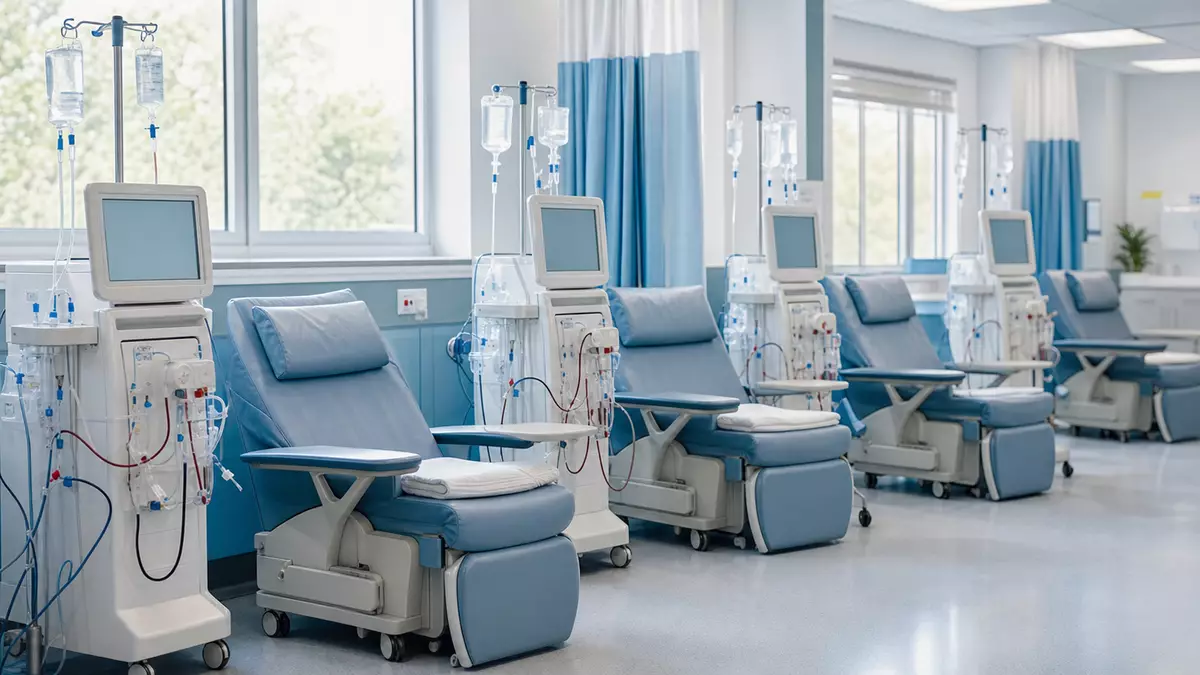
Dialysis machines are among Fresenius Medical Cares most visible products and are central to its technology offering. These systems control the exchange of fluids and solutes between the patients blood and the dialysis solution, and their reliability and ease of use are critical in both center-based and home dialysis settings. Revenue from dialysis machines and related equipment forms a significant part of the product segment, contributing several billion euros annually within the overall revenue mix.
Innovation in dialysis machines can include improved monitoring features, connectivity for data analysis and more compact designs for home use. As these products evolve, they can influence not only revenue but also the attractiveness of specific treatment modalities, which in turn feeds back into the services business. For FMC stock, successful product development in dialysis machines is one of the components that can support a stronger medium-term growth narrative.
FMC stock and investor perspective
FMC stock reflects the market assessment of all these factors: stable but regulated demand for dialysis services, multi-billion euro revenue in both services and products, compressed margins and net income compared with earlier years, free cash flow that has begun to improve, and debt metrics that management aims to keep under control. The quantified comparisons between past and current net income, margin and market capitalization provide investors with a numerical framework for judging whether the current valuation aligns with the companys fundamentals.
For investors, the focus now lies on whether Fresenius Medical Care can convert its operational and strategic initiatives into a measurable recovery in profitability and cash generation, while maintaining high standards of patient care and navigating the complex reimbursement environment. The evolution of these metrics over coming reporting periods will be central to how FMC stock performs relative to the wider healthcare sector and to its own history.
More background on Fresenius Medical Care
For additional financial details, historical metrics and investor presentations on Fresenius Medical Care, the following resources provide a deeper view into the companys dialysis business and its capital-market profile.
Fresenius Medical Care key data
- Company: Fresenius Medical Care AG & Co. KGaA
- ISIN: DE0005785802
- Ticker: XETRA: FME
- Trading venue: Xetra
- Sector / Industry: Health Care / Health Care Providers & Services
- Index membership: DAX
Disclaimer regarding our articles: No investment advice, no buy or sell recommendation. Information on prices, companies, and markets is provided without guarantee; changes are possible at any time. Stock market transactions can lead to substantial losses. Our articles are created and reviewed in whole or in part automatically with the support of AI.