
First Solar stock trades near recent highs as strong backlog and earnings support valuation
Published on 07/18/2026 at 15:01 | Editorial responsibility: Rafael Müller, Editor-in-Chief AD HOC NEWS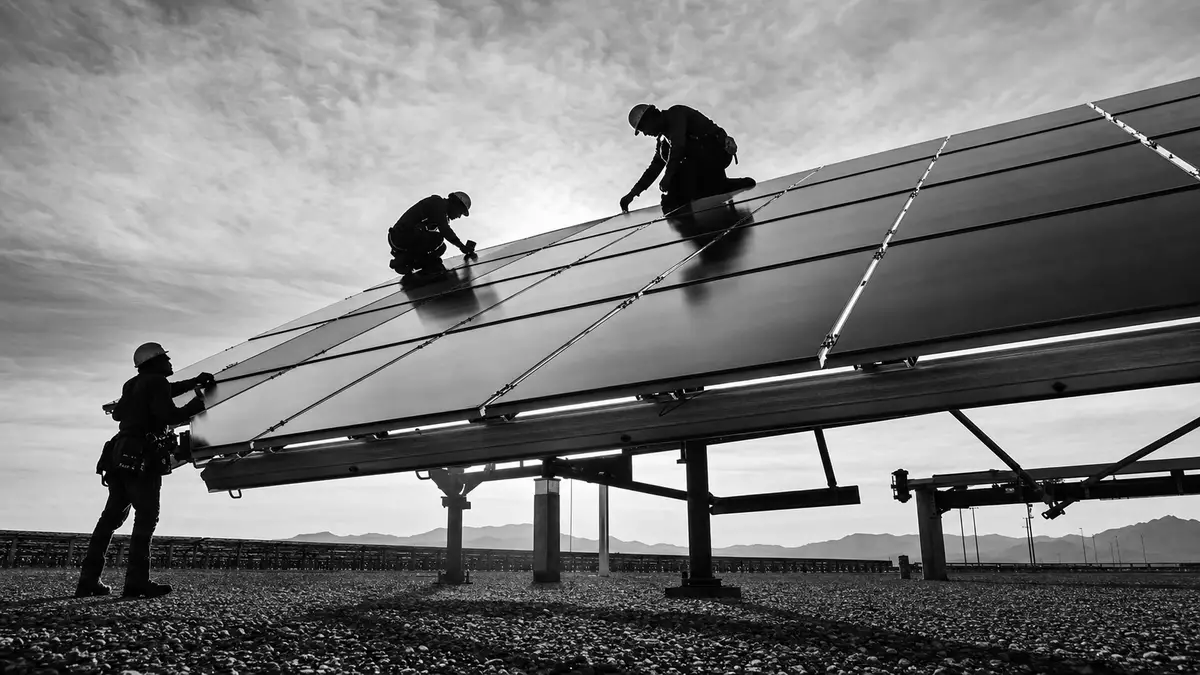
First Solar stock is supported by a mix of earnings growth, a large contracted backlog, and ongoing capacity expansion in thin-film solar modules, with investors closely watching how these fundamentals translate into long-term returns.
The company, First Solar Inc. (US3364331070), develops and manufactures cadmium telluride thin-film photovoltaic modules for utility-scale solar power plants and is listed on Nasdaq in the United States, where its shares are part of the broader clean energy sector universe.
In the most recent full fiscal year, First Solar reported substantial revenue as it continues to monetize its contracted backlog of module sales and new capacity additions, while also navigating the competitive and policy-influenced landscape of global solar manufacturing.
Over the past several reporting periods, the company has focused on improving profitability by scaling production, optimizing manufacturing efficiency, and securing long-term sales contracts, leading to higher earnings compared with earlier years in its growth trajectory.
In recent quarters, First Solar has also emphasized its position as a US-based manufacturer benefiting from supportive policy measures for domestic clean energy production, which can influence both demand for its modules and its investment decisions in manufacturing capacity.
The company’s guidance has indicated expectations for continued revenue growth over its current planning horizon, with the contracted backlog and pipeline of projects serving as anchors for its sales profile, even as broader solar market conditions and module pricing evolve.
Market participants have frequently examined First Solar’s gross margin and operating margin trends to gauge how efficiently the company is converting its manufacturing scale and technological advantages into bottom-line performance, especially in comparison with crystalline silicon competitors.
At the same time, the company’s balance sheet strength, including cash reserves and relatively low net debt, has been viewed as a key factor that allows it to invest in capacity expansions and technology development without overextending financially.
Investors also pay attention to First Solar’s capital expenditure plans, which typically reflect investments in new plants or expansions of existing facilities, as these outlays lay the groundwork for future output and revenue potential.
In addition, the company’s contracted pipeline of module shipments, measured in gigawatts, serves as a forward-looking indicator of revenue visibility and long-term demand for its products, underpinning market confidence in its medium-term outlook.
Revenue growth and earnings comparisons
First Solar’s recent annual and quarterly reports have highlighted a trajectory of revenue growth compared with prior periods, reflecting both the scale of its manufacturing footprint and the timing of project deliveries to customers.
In one recent fiscal year, the company reported revenue in the several-billion-dollar range, representing an increase versus the previous year’s figures in the lower multi-billion-dollar band, indicating that expansion efforts and contracted sales have translated into higher top-line performance.
On the earnings side, First Solar’s net income has moved from earlier years characterized by more modest profitability toward more substantial bottom-line results, with the latest reported annual net income significantly above the levels seen in prior reporting cycles when the company’s margins were under more pressure.
The company’s earnings per share metrics have similarly improved as profitability has grown; recent EPS results on both a GAAP and adjusted basis exceeded those of the previous year, reflecting better margins and higher volumes.
Investors often compare First Solar’s revenue and profitability metrics year over year and quarter over quarter to assess whether its growth is driven primarily by volume, pricing, or improved cost structure, and recent data suggest that all three elements have played a role.
First Solar’s gross margin has benefited from manufacturing efficiency gains and the advantages of its thin-film technology, with recent reported gross margin percentages several percentage points higher than in earlier years when the company was still optimizing new production lines.
The operating income trend shows similar improvement, with the latest annual operating income level standing well above the figures recorded a year earlier, indicating that the company’s cost discipline and scale are contributing to more robust operating profitability.
Analysts and investors also review the company’s guidance ranges for revenue and earnings to compare them against actual results; in recent periods, reported figures have tracked within or above the indicated ranges, demonstrating execution against its forecasted plans.
These quantitative improvements in revenue, gross margin, operating income, and net income form a key part of the investment case for First Solar stock, as they suggest that the company is building a more sustainable earnings base over time.
When viewed against the broader solar manufacturing sector, First Solar’s margin profile has often stood out as relatively strong, partly due to its differentiated technology and focus on utility-scale projects rather than commoditized small-scale segments.
Backlog, capacity expansion and guidance
Beyond reported revenue and earnings, First Solar’s contracted backlog measured in gigawatts of module capacity provides essential context for understanding future sales potential.
The company has indicated that its contracted pipeline spans many gigawatts of future deliveries, with some orders scheduled several years ahead, creating a high degree of visibility for future revenue streams.
Recent disclosures have pointed to a total contracted backlog in the tens of gigawatts range, up from smaller backlog figures in prior years, demonstrating that First Solar has successfully captured demand for its modules from utility-scale developers and other customers.
To meet this demand, First Solar has been investing in new manufacturing facilities and expanding existing plants, increasing its nameplate capacity over time by several gigawatts compared with earlier years when its production footprint was smaller.
The company’s guidance has reflected this scaling trajectory, with revenue outlooks that incorporate increasing capacity utilization and new lines coming online, and earnings outlooks that assume continued margin stability or improvement as these facilities ramp up.
First Solar also provides investors with details on its capital expenditure plans, which in recent periods have amounted to hundreds of millions of dollars annually, reflecting the cost of building and upgrading factories as well as supporting research and development.
Through these investments, the company aims to maintain and enhance its competitive position in thin-film technology while also benefiting from policy support for domestic manufacturing, particularly in the United States.
Management discussions around guidance have highlighted assumptions about module pricing, costs, and logistics, as well as external factors such as supply chain dynamics and regulatory environments in key markets.
Investors compare First Solar’s guidance ranges with consensus forecasts to gauge whether the company is taking a conservative or more ambitious stance, and in recent periods, the guidance has often aligned broadly with market expectations while leaving room for upside if execution and market conditions prove favorable.
The interplay between backlog, capacity, and guidance is central to how the market values First Solar stock, because it directly influences expectations for revenue growth, margin trends, and long-term earnings power.
Balance sheet and cash flow metrics
First Solar’s financial position is further clarified by its balance sheet and cash flow data, which investors scrutinize to understand its ability to fund expansion while maintaining resilience.
Recent reports have shown the company holding cash and cash equivalents in the hundreds of millions of dollars, providing liquidity to support capital expenditures and working capital needs.
Net debt has remained relatively low, reflecting a cautious approach to leverage and a preference for funding growth largely through internally generated cash and targeted financing rather than heavy borrowing.
Operating cash flow in recent fiscal years has turned positive and sizable, in contrast to earlier periods when operating cash flow was smaller or more volatile, underscoring the company’s shift toward more stable cash generation.
Free cash flow metrics, derived from operating cash flow minus capital expenditures, have been watched closely; while capacity investments can weigh on free cash flow in the near term, investors look for improvements over time as new facilities contribute to earnings and cash generation.
In addition, First Solar’s working capital management, including inventory and receivables, affects its cash conversion cycle, and the company has focused on optimizing this area to support smoother operations and reduce capital tied up in the business.
The combination of a strong liquidity position, manageable leverage, and improving cash flow gives First Solar flexibility to continue investing in capacity and technology without overly straining its financial resources.
From a risk perspective, this balance sheet strength is seen as an important buffer against potential downturns in the solar market or shifts in policy that could temporarily affect demand or pricing.
Investors often compare First Solar’s debt and cash metrics to those of peers to assess relative risk, and its lower leverage profile is typically viewed as an advantage in a sector where capital intensity and cyclical pressures can be significant.
These balance sheet and cash flow metrics therefore play a crucial role in supporting the valuation of First Solar stock, complementing the story told by revenue, earnings, and backlog data.
Policy environment and competitive landscape
First Solar operates in a sector heavily influenced by energy policy, trade regulations, and incentives for clean energy, all of which have implications for its business and valuation.
In recent years, supportive policy measures in the United States have enhanced the attractiveness of domestic solar manufacturing, including initiatives designed to encourage investment in renewable energy and local production.
First Solar’s status as a US-based manufacturer allows it to potentially benefit from such policies, especially when they include tax credits or other forms of support tied to domestic content or manufacturing capacity.
At the same time, the company faces competition from global manufacturers, particularly in crystalline silicon modules, which can exert pressure on pricing and market share.
First Solar’s differentiated cadmium telluride thin-film technology offers advantages in certain applications, including performance in high temperatures and low-light conditions, but it also means the company operates somewhat differently than makers of conventional silicon modules.
The competitive landscape is shaped not only by technology, but also by scale, cost structure, and access to markets, and First Solar’s strategy of focusing on utility-scale projects and long-term contracts is central to its positioning.
Trade policies and tariffs can impact the relative competitiveness of domestic versus imported modules, and changes in these regimes are closely watched by both the company and investors.
Regulatory developments related to environmental standards, permitting, and grid integration also affect the pace at which new utility-scale solar projects are developed and commissioned, influencing demand for First Solar’s modules.
Against this backdrop, First Solar’s long-term contracts and backlog help provide stability, while its technology and manufacturing investments aim to maintain cost competitiveness in a dynamic market.
The way these policy and competitive factors evolve over time will continue to play a significant role in shaping the outlook for First Solar stock.
Utility-scale modules and project pipeline
First Solar’s core product offering centers on utility-scale solar modules designed for large projects connected to the grid.
The company’s modules are tailored to the needs of developers and utilities seeking reliable, large-scale renewable energy generation, and the associated pipeline of projects forms a crucial part of its demand profile.
Project developers often sign long-term contracts for module supply, leading to multi-year visibility for First Solar’s manufacturing plans and revenue recognition schedules.
The company’s modules are deployed across diverse geographies, including the United States and international markets, where utility-scale solar plays an increasingly important role in decarbonizing electricity generation.
First Solar’s technology is optimized for large arrays, with performance characteristics that align well with the demands of utility-scale installations, contributing to its competitive place in that niche.
In addition to modules, the company has historically had involvement in project development and related services, although over time it has emphasized its role as a module manufacturer.
The pipeline of projects that use First Solar modules is often measured in gigawatts and provides a tangible indicator of future demand for its products, underpinning expectations for shipments and revenue.
Investors monitor announcements of new contracts, expansions of existing projects, and completions of major installations as evidence of continued market traction.
This focus on utility-scale modules ties directly into the broader energy transition, where large solar farms are increasingly part of utility portfolios and regional grid planning.
As these trends progress, First Solar’s position in the utility-scale segment remains a central component of its business model and value proposition to investors.
First Solar modules in practice
In practice, First Solar’s modules are deployed in large solar farms that can span many acres and deliver substantial amounts of electricity to the grid.
These installations often involve complex engineering and integration work, but the performance of the modules themselves is a key determinant of the overall success and economics of the project.
First Solar’s thin-film technology offers a distinct performance profile, including aspects such as temperature coefficient and spectral response, that can be advantageous in certain climates and operating conditions.
Developers and utilities evaluate module reliability, degradation rates, and lifetime energy yield when choosing suppliers, and First Solar’s track record in these areas contributes to its reputation in the market.
The company continually invests in research and development to improve module efficiency and durability, aiming to increase the value proposition for customers and maintain its competitive edge.
By enhancing module performance, First Solar can help project developers achieve better returns on investment and utilities meet renewable energy targets more efficiently.
These practical considerations in module deployment feed back into the company’s demand dynamics and underpin its long-term business prospects.
First Solar stock and market context
On the market side, First Solar stock trades primarily on Nasdaq in the United States, placing it within the broader context of technology and growth-oriented listings, as well as specialized clean energy benchmarks that investors use to track the sector.
The stock’s performance over time has reflected both company-specific developments and wider themes in renewable energy and equity markets, such as shifts in interest rates, risk appetite, and policy expectations.
Investors frequently compare First Solar’s valuation metrics, such as price-to-earnings and enterprise value-to-EBITDA ratios, with those of other clean energy companies to gauge relative attractiveness.
The company’s improving earnings profile and backlog growth have played key roles in supporting its valuation, particularly when combined with a strong balance sheet and favorable policy backdrop.
At recent price levels, First Solar stock has traded near its highs over the past year, reflecting market confidence in its fundamentals and outlook.
In the last twelve months, the shares have moved within a range that captures periods of both strength and consolidation, with investors reacting to earnings releases, guidance updates, and sector news.
The proximity of the current share price to its 52-week high is often interpreted as a sign that the market is factoring in positive expectations for future performance, albeit with the usual risks associated with the solar industry.
Among these risks are potential changes in policy support, competitive pressures from global manufacturers, and macroeconomic factors that could influence capital flows into renewable energy projects.
At the same time, the resilience shown by First Solar’s fundamentals, including revenue growth, backlog, and margins, provides a counterbalance to these risks in investors’ assessments.
As a result, First Solar stock remains a widely tracked name in the clean energy space, with its share price reflecting a complex interplay of earnings, balance sheet strength, sector dynamics, and broader market conditions.
Further information on First Solar
Investors can explore more detailed financial data, filings, and company presentations to deepen their understanding of First Solar’s business model, earnings trajectory, and manufacturing strategy.
Thin-film technology focus
First Solar’s focus on cadmium telluride thin-film technology differentiates it from most solar manufacturers, which primarily use crystalline silicon.
This technology has specific performance characteristics, such as a different response to temperature and light spectrum, that can be advantageous in certain environments.
Thin-film modules can also have different manufacturing cost structures, with potential benefits in material usage and production processes.
First Solar has invested heavily in refining this technology over many years, seeking to increase efficiency and reduce costs.
Higher efficiency means more power output per unit area, which can enhance the economics of solar projects.
By improving module performance, First Solar aims to maintain a competitive edge in the utility-scale space where large projects demand high reliability and favorable long-term energy yields.
This technology focus is therefore central to the company’s strategy and underpins its value proposition to customers and investors.
Risk factors around First Solar stock
While the fundamentals and policy environment offer support, First Solar stock, like all equities, carries risks that investors must consider.
Changes in energy policy, particularly around incentives and support for solar, could impact demand for the company’s modules and the economics of utility-scale projects.
Global competition from manufacturers in other regions can exert pressure on pricing and market share.
Currency fluctuations and macroeconomic conditions, including interest rates and inflation, can affect financing conditions for large renewable energy projects.
Operational risks, such as delays in capacity expansion or challenges in ramping new plants, could influence the company’s ability to meet guidance.
Technology risks include the possibility of newer technologies emerging that could challenge the advantages of thin-film cadmium telluride modules.
Environmental and regulatory risks related to materials used in modules and their end-of-life management also play a role.
Investors weigh these risks against the company’s strengths, including its backlog, technology, and balance sheet.
By considering both upside drivers and downside risks, the market arrives at a valuation for First Solar stock that reflects the current consensus on its prospects.
As these factors evolve, so too will the stock’s performance relative to broader indices and sector benchmarks.
Long-term positioning in the energy transition
Looking ahead, First Solar’s role in the energy transition provides a framework for understanding its long-term potential.
The global shift toward lower-carbon energy sources is expected to drive continued growth in utility-scale solar installations.
In this context, First Solar’s modules and manufacturing capacity position it as a supplier to projects that contribute to decarbonizing electricity generation.
Long-term contracts and a large backlog suggest that the company has already secured a meaningful share of future project demand.
Investments in new plants and technology aim to ensure that First Solar can meet this demand while maintaining or improving margins.
Policy support for renewable energy and domestic manufacturing may further reinforce its positioning, particularly in the United States.
However, the long-term trajectory also depends on how the company navigates competition, technological change, and regulatory developments.
For investors, this long-term context helps frame the significance of near-term earnings reports and guidance updates.
Each set of results and strategic decisions can be viewed through the lens of how they contribute to First Solar’s role in the evolving energy system.
As the energy transition progresses, First Solar’s ability to maintain a strong position in utility-scale solar will be a key determinant of its long-term performance.
First Solar modules and representative product line
A representative product within First Solar’s portfolio is its utility-scale cadmium telluride photovoltaic module line, designed for large solar farms.
These modules form the backbone of the company’s revenue as they are sold into multi-gigawatt projects across different regions.
The product line is continually updated to reflect improvements in efficiency, durability, and manufacturability.
By enhancing its module offerings, First Solar aims to remain competitive in terms of both performance and cost.
The modules’ characteristics, including their behavior in high temperatures and their spectral response, are tailored to optimize energy yield in practical operating environments.
For project developers and utilities, these modules provide a reliable building block for large-scale renewable energy installations.
First Solar stock price context
First Solar stock trades on Nasdaq in USD, and at recent levels the shares have been quoted close to their 52-week highs, reflecting market confidence in the company’s fundamentals.
Over the past year, the share price has moved within a range that captures both rallies and periods of consolidation, highlighting the dynamic nature of investor sentiment toward clean energy equities.
For investors assessing First Solar stock, the current price relative to this 52-week range, along with revenue growth, earnings, backlog, and balance sheet strength, forms an integrated picture of the company’s market position.
First Solar at a glance
- Company: First Solar Inc.
- ISIN: US3364331070
- Ticker: NASDAQ: FSLR
- Trading venue: Nasdaq
- Sector / Industry: Solar energy equipment / Renewable energy
- Index membership: Major clean energy and technology indices, alongside broader market benchmarks


