Eurex futures and options on DAX - Deutsche Börse leans on an enduring classic
05.07.2026 - 15:16:23 | ad-hoc-news.de
By Julian Reed, ad hoc news Classics & Longsellers Desk. Reviewed July 05, 2026, 9:15 AM ET. Details in the imprint.
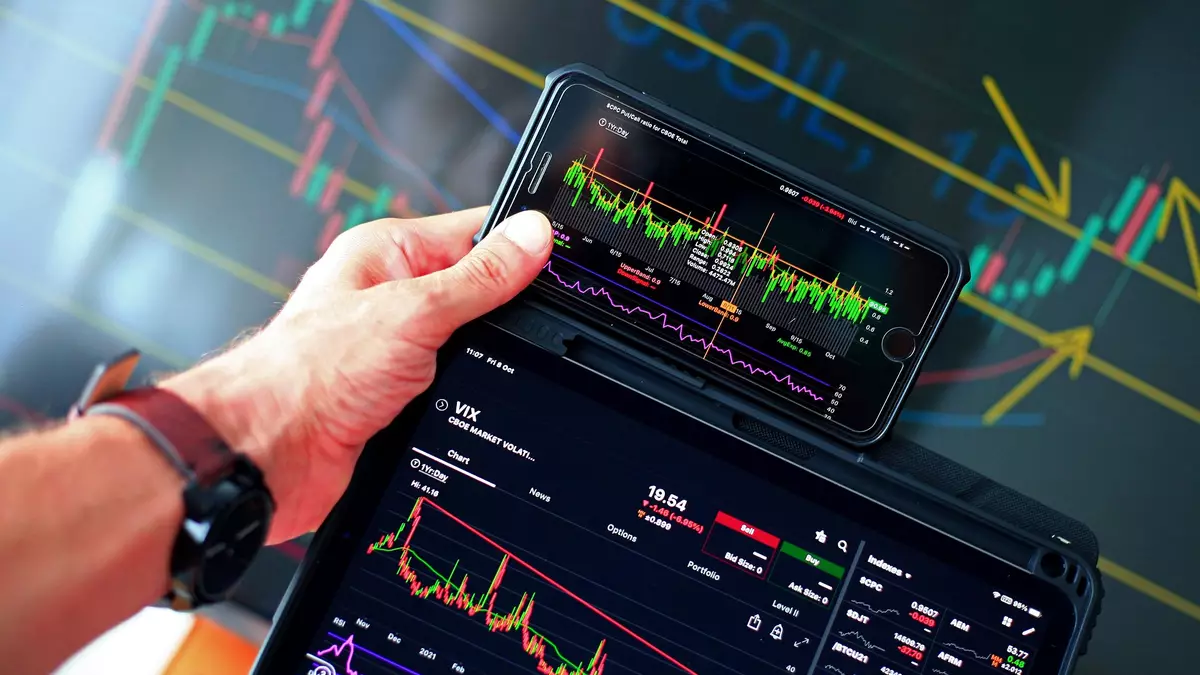
Eurex futures and options on DAX still feel surprisingly tangible when you stand in front of a trader’s screen at 8:00 a.m. in Frankfurt, watching the contracts flicker green and red as liquidity rushes in. These long-running index derivatives have quietly become one of the classic tools for hedging and leveraging exposure to Germany’s blue-chip benchmark, and they remain a core revenue pillar for Deutsche Börse’s derivatives business.
What the DAX derivatives are
DAX futures and options on Eurex are exchange-traded derivatives that reference the DAX index, Germany’s primary large-cap equity benchmark. Each futures contract represents a fixed notional exposure to the performance of the underlying index, with standardized contract specifications, daily marked-to-market settlement, and central clearing through Eurex Clearing. Options on DAX provide the right, but not the obligation, to buy or sell the index at a predefined level until expiration, offering more nuanced strategies for portfolio hedging and volatility trading.
According to Deutsche Börse’s own product overview, Eurex offers multiple variants, including the classic DAX futures (FDAX) and the Mini-DAX futures (FDXM), alongside corresponding options, giving institutional and sophisticated retail investors different sizing choices. The standard DAX future has a contract value of 25 euros per index point, while Mini-DAX futures are set at 5 euros per point, making the latter more accessible for smaller portfolios and active traders who want tighter position granularity. These contracts trade nearly all day on Eurex, with electronic order book matching on the T7 trading system and robust post-trade risk management built into the clearing framework.
Why they matter as a classic product
DAX derivatives sit in an unusual position for a financial product: they are both a legacy instrument and a modern trading workhorse. Eurex lists DAX futures as one of its earliest and longest-running equity index derivatives, first introduced in the early 1990s, and since then they have grown into one of the most widely traded index futures in Europe. Long-term volume data from Deutsche Börse shows consistently high open interest in DAX contracts, with peaks around major macro events or German corporate earnings seasons, underlining their role as a primary risk-transfer vehicle.
Standing behind a desk at a Frankfurt brokerage last month, one could see how traders still rely on the classic FDAX contract during volatile mornings when German industrials or autos surprise the market. The audible click of mechanical keyboards, the muted chatter in German and English, and the quick recalculations of margin requirements as the index jumps a dozen points show that DAX derivatives are not abstract constructs but tools used minute-by-minute. As Dr. Michael Peters, CEO of Eurex, has stressed in several public remarks, the derivatives segment aims to balance innovation with the long-term reliability of its established index contracts, and DAX remains central to that strategy.
More on Deutsche Börse’s derivatives franchise
Learn how Eurex’s DAX futures and options fit into the wider Deutsche Börse trading and clearing ecosystem, and how the segment contributes to long-term earnings.
Contract structure and trading mechanics
Looking at the product specification, DAX futures on Eurex follow a quarterly expiry cycle, with March, June, September, and December contracts dominating the screen. The underlying is the DAX Performance Index, and final settlement is cash-based, using the official index close rather than physical delivery of shares. Margin requirements are set by Eurex Clearing’s Prisma risk model, which calculates portfolio-level exposure across products and dynamically adjusts margin calls. Traders pay attention to tick size: the minimum price movement is 0.5 index points for FDAX, translating to 12.50 euros per tick, while Mini-DAX uses 1 index point increments, equal to 5 euros per tick.
Options on DAX, meanwhile, come in a broad range of strikes and maturities, from short-dated weekly options to longer-dated series that allow for more strategic hedging. Market-makers quote two-sided prices throughout the trading session, helping to keep spreads tight even during busy macro days. Eurex’s market microstructure relies heavily on automated quoting and algorithmic trading, yet from the hallway behind the trading floor one can still hear occasional shouts when the index swings sharply, particularly around ECB press conferences or major German data releases. The combination of transparent order book, central clearing, and extensive post-trade services keeps DAX derivatives firmly in the category of standardized exchange-traded instruments rather than bespoke over-the-counter deals.
Users: from asset managers to active traders
In practice, usage of DAX futures and options spans global asset managers, hedge funds, bank trading desks, and sophisticated individual traders. Large institutional investors often use the contracts for beta management: by buying DAX futures, they can quickly increase exposure to German equities ahead of a big placement; by selling them, they can hedge downside risk around elections or regulatory announcements. Portfolio managers in London or New York who oversee Europe-focused funds often have a DAX futures line permanently in their risk systems, because it serves as a convenient proxy for German market exposure.
Options add a layer of flexibility. For example, a US-based manager who wants to protect gains in German cyclical stocks ahead of an uncertain winter energy outlook might buy DAX put options with strikes around current index levels, limiting downside while keeping upside intact. Conversely, a short-term trader could sell out-of-the-money call options to generate premium income, accepting the risk of capped upside. The Mini-DAX contract has proven popular among active traders and smaller proprietary firms who want the same index exposure at a lower notional size, making risk management more granular. At a recent derivatives conference hosted by Deutsche Börse, a Frankfurt-based portfolio manager, Anna Schneider, described Mini-DAX futures as "a way to tune exposure like a volume knob, not just an on-off switch," underlining that the product helps them avoid oversized single trades.
Risk, margin, and regulation
Because DAX derivatives are leveraged instruments, margin discipline plays a central role. Eurex Clearing requires an initial margin deposit, calculated using its Prisma risk engine, and applies variation margin daily as prices move. This means that even small overnight gaps in the DAX index can result in margin calls for highly leveraged users, especially those holding speculative positions without offsetting cash equities or other hedges. The risk framework is designed to meet stringent European Market Infrastructure Regulation (EMIR) requirements, including stress testing and default management procedures.
Regulators and Deutsche Börse alike emphasize that the standardized nature of the contracts and central clearing reduce counterparty risk compared with unregulated bilateral OTC trades. If a clearing member defaults, Eurex can use its waterfall of margin, default fund contributions, and potentially assessment of surviving members to contain the problem. That said, the economic risk for end users is very real: a sharp drop in German equities can mean substantial losses for traders holding long DAX futures, and the leverage built into the product magnifies those moves. Standing in front of a multi-screen setup during a DAX sell-off, with red numbers cascading down the ladder and audible sighs from traders, makes the abstract notion of risk feel concrete. As Deutsche Börse’s risk management head, Dr. Thomas Book, has noted in several interviews, the group invests heavily in margin models and stress scenarios to keep default risk manageable, but cannot eliminate market volatility itself.
US investor angle and access
For US investors, DAX derivatives are mainly a way to access German equity exposure without holding individual stocks or local ETFs. Many large US banks and brokers are Eurex members or have relationships with firms that are, making it possible for US institutions to trade DAX futures and options during European hours. Some US-based online brokers also offer access to Eurex for qualified clients, although this remains a niche segment relative to domestic CME or Cboe products. In most cases, US retail investors get German equity exposure through US-listed ETFs or ADRs, but sophisticated traders may prefer index derivatives for more precise hedging and leveraged strategies.
Liquidity and tight spreads are crucial for this audience. Eurex publishes regular statistics showing DAX futures and options as among its highest-volume equity index derivatives, with millions of contracts traded monthly and solid open interest. Compared with smaller European indices, DAX tends to enjoy better depth even during quieter sessions, which matters when a US-based market-maker wants to quickly hedge a book of German ADRs or a European ETF. A brief walk through the trading floor at Eurex’s headquarters, with rows of screens showing global time zones and DAX futures quotes alongside US indices, underscores that the product is deeply embedded in cross-border trading flows rather than just a domestic instrument.
Revenue importance for Deutsche Börse
From the perspective of Deutsche Börse investors, DAX derivatives are part of the Eurex segment, which contributes a meaningful share of group revenue and earnings. In recent annual and quarterly reports, Deutsche Börse has highlighted derivatives trading and clearing as a key growth area, driven partly by demand for equity index futures and options. The company points to structural factors such as greater use of derivatives for risk management, regulatory encouragement of central clearing, and ongoing product enhancements as reasons for stable to growing revenue from this line of business.
While Deutsche Börse does not usually break out exact revenue by individual contract, commentary around the Eurex franchise often cites flagship products like DAX, Euro STOXX 50, and interest-rate futures as major contributors. For long-term holders of Deutsche Börse stock, understanding that the group’s earnings stream includes a large, relatively diversified derivatives platform supported by classic index products like DAX is important. In recent trading updates, management has pointed to solid derivatives volumes even when cash equity turnover is more muted, suggesting that DAX derivatives help smooth earnings through different market cycles.
Company context and stock
Deutsche Börse operates a broad portfolio of markets and services, from the Xetra cash equity platform and the Frankfurt Stock Exchange to Eurex derivatives, Clearstream post-trade services, and data and index businesses. Within that ecosystem, Eurex futures and options on DAX stand out as a long-running classic that still anchors the group’s equity index derivatives offering and attracts global risk-transfer flows every day. Deutsche Börse stock (Xetra: DB1, ISIN DE0005810055) gives investors indirect exposure to this enduring product line as part of a diversified market infrastructure business.
Key facts on Eurex DAX derivatives
- Product: Eurex futures and options on DAX (FDAX, FDXM)
- Manufacturer: Deutsche Börse AG
- Category: Classics & long sellers
- Launch: Early 1990s for DAX futures; options and Mini-DAX added later
- MSRP / Price: Exchange-traded derivatives with prices quoted in index points; notional value 25 EUR per point for FDAX, 5 EUR per point for FDXM
- Availability: Listed on Eurex, accessible via member banks and brokers; US investor access primarily via international brokerage relationships
- Target audience: Institutional investors, hedge funds, proprietary trading firms, and sophisticated retail traders seeking leveraged or hedged exposure to German large-cap equities
- Standout / USP: Long-established, highly liquid German equity index derivatives with central clearing and both standard and mini contract sizes
This article was AI-assisted and editorially reviewed. Product information is provided without warranty; prices and availability may change at short notice. Not investment advice and not a buy or sell recommendation. Securities trading carries risks up to total loss.