Eni stock trades steady as higher oil prices support earnings momentum
Veröffentlicht: 17.07.2026 um 14:26 Uhr, Redaktion AD HOC NEWS, Redaktionelle Verantwortung: Rafael Müller (Chefredaktion)
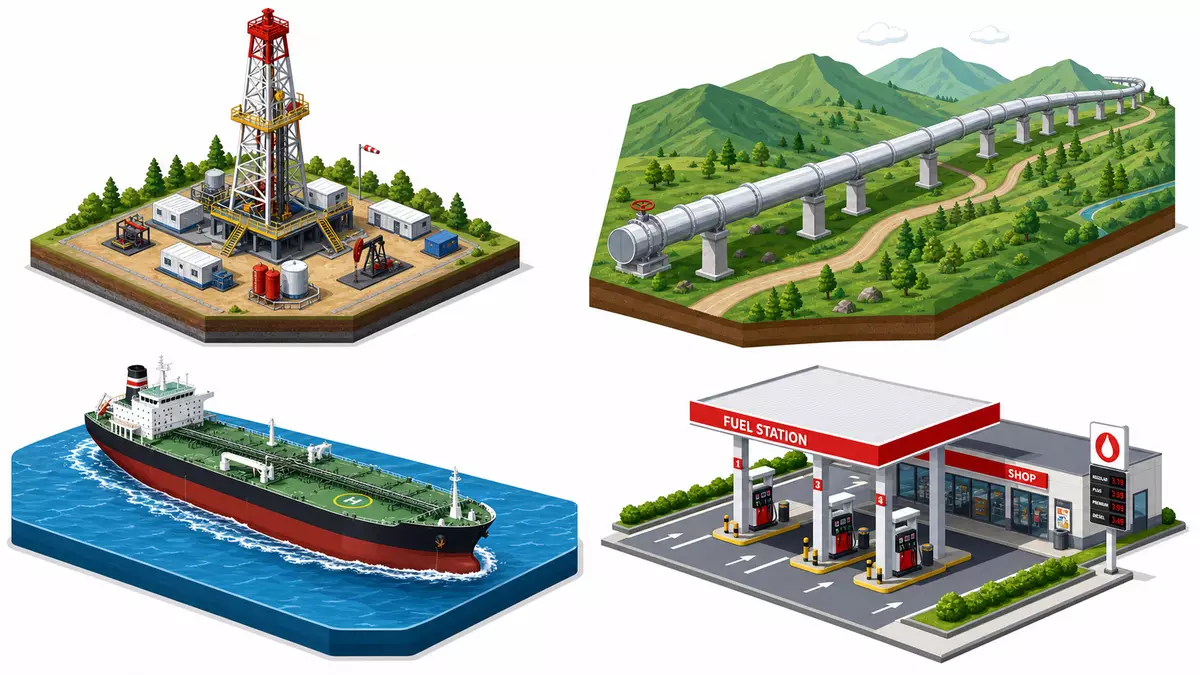
Eni stock embodies the performance of Italy’s major integrated energy group Eni S.p.A. (ISIN IT0003128367), which is listed on Borsa Italiana in Milan under the symbol ENI. In its most recent reported quarter, the company delivered higher adjusted earnings compared with the previous year on the back of firmer oil and gas prices and continued discipline on costs. For investors, the combination of resilient upstream cash flow and a clear capital returns framework remains central to how Eni stock is valued.
Adjusted profit rises versus prior year
Eni S.p.A. is one of Europe’s large integrated oil and gas groups, with activities spanning exploration and production, gas and power, refining and marketing, chemicals, and low-carbon solutions. In its latest available quarterly report, covering the second quarter of its fiscal year, Eni reported adjusted profit attributable to shareholders that was higher than in the same period a year earlier, supported by a recovery in hydrocarbon prices and stable operational performance. The company highlighted that adjusted EBIT from its upstream segment increased versus the prior-year quarter, despite a still volatile macroeconomic environment, showing how commodity price movements translate into earnings momentum for Eni stock.
In that quarter, Eni’s adjusted net profit amounted to several billion euros, representing a noticeable improvement on the prior-year level. The group emphasized that higher realized oil prices, combined with operational efficiency, allowed it to absorb inflationary pressures and maintain margins. The quarter’s performance built on earlier progress: in the full previous fiscal year, Eni had already reported adjusted net profit in the mid-single-digit billion-euro range, significantly above the levels seen before the most recent energy-price cycle. This trajectory of earnings recovery provides an important backdrop for the valuation of Eni stock on Borsa Italiana.
The improvement in adjusted profit was accompanied by strong cash generation. Operating cash flow before working capital changes in the latest reported quarter stood at several billion euros, similar to the previous quarters, underpinning the company’s ability to fund investments and shareholder distributions. Over the full preceding fiscal year, Eni’s net cash from operating activities reached double-digit billions of euros, which allowed the group to reduce net debt and support an increased dividend. For equity investors, this cash profile is a key factor behind the pattern of returns from Eni stock.
Dividend yield anchored by cash flow
Eni has articulated a clear capital returns policy that balances investment in traditional and transition energy businesses with cash distributions to shareholders. In the most recent full fiscal year, the company paid a cash dividend per share that, at the then-prevailing Eni stock price, translated into a mid-single-digit percentage dividend yield. The board subsequently proposed a higher dividend for the current fiscal year, reflecting confidence in the sustainability of cash flows in a normalized commodity-price environment. This move reinforced the perception of Eni stock as an income-oriented energy investment within the European large-cap universe.
Beyond ordinary dividends, Eni has also employed share buybacks as part of its capital allocation framework. In the previous fiscal year, the group executed a buyback program worth several hundred million euros, retiring a portion of its outstanding shares. While modest compared with its overall market capitalization, this program contributed to earnings per share accretion and signaled management’s view that Eni stock was undervalued relative to its intrinsic cash-generating capacity. The company indicated that future buyback volumes would depend on commodity prices, free cash flow, and balance-sheet metrics.
Eni’s market capitalization, based on recent trading on Borsa Italiana, is in the tens of billions of euros, placing it among Europe’s large integrated energy peers such as other major oil and gas companies. This scale allows Eni to pursue large upstream projects and transition-oriented investments while maintaining access to capital markets at competitive terms. For investors, the combination of market size, liquidity in Eni stock, and ongoing cash distributions are interlinked considerations when analyzing the share.
Revenue profile and upstream exposure
Eni’s consolidated revenue profile is closely tied to movements in oil, gas, and refined-product prices. In the most recently reported full fiscal year, Eni generated total revenue in the tens of billions of euros, slightly below the elevated levels seen in the immediate aftermath of the most recent energy-price spike but still robust by historical standards. The decline versus the prior year reflected a normalization of commodity prices rather than a structural drop in volumes. Within this revenue mix, upstream operations contributed a large share of EBIT, confirming that hydrocarbon production remains the principal driver of value for Eni stock.
Production volumes are another key metric. In its latest available quarterly disclosure, Eni reported hydrocarbon production of more than one million barrels of oil equivalent per day, broadly stable compared with the previous year. The company’s portfolio is diversified across regions, including Africa, Europe, and other areas, which helps mitigate localized disruptions. A stable production profile, combined with higher average realized prices, contributed to the year-on-year improvement in upstream earnings discussed earlier. For shareholders, maintaining or modestly growing production while controlling costs is central to the long-term trajectory of Eni stock.
On the refining and marketing side, Eni’s results are more sensitive to refining margins and consumer demand. In the latest full fiscal year, refining throughput increased compared with the prior year, and the company benefited from favorable margin conditions in some periods. However, refining and marketing EBIT remains smaller than upstream EBIT, so swings in refining profitability, while relevant, are less decisive for the overall earnings picture than upstream performance. Still, the diversification across segments gives Eni stock a multi-source earnings base rather than a pure upstream profile.
Transition strategy and low-carbon investments
Eni has outlined a long-term strategy to reduce its carbon intensity and expand in low-carbon businesses. The company has set a target to cut net greenhouse gas emissions from operations and products over several decades, with interim goals along the way. In the nearer term, Eni plans to increase investment in renewable generation, biofuels, and other transition-related activities while maintaining discipline on upstream spending. The group has allocated several billion euros of capital expenditure annually, with an increasing fraction directed to low-carbon initiatives.
In the latest full fiscal year, Eni’s total capital expenditure amounted to several billion euros, roughly in line with its medium-term plan. Within that envelope, the company deployed funds to develop upstream projects, enhance gas infrastructure, and expand renewable capacity. The balance between traditional and transition investments is designed to sustain cash flows that support the dividend while positioning Eni for changing regulatory and demand environments. From an equity perspective, this investment mix is a factor in how Eni stock is compared with other European majors that have made differing choices on decarbonization paths.
Eni has also continued to develop its retail and mobility businesses, including biorefining and more sustainable fuel offerings. Revenue from these activities remains smaller than revenue from upstream and traditional refining, but growth rates are higher. Over time, the company sees potential for these segments to contribute a larger share of earnings, which could change the risk profile of Eni stock by reducing reliance on volatile commodity prices. For now, however, the core driver of valuation remains the performance of upstream and cash returns.
Key metrics behind Eni stock
For a deeper view on revenue, profitability, cash flow and dividends, as well as detailed segment information, consult the latest investor materials and regulatory filings.
Energy products and retail presence
Beyond its upstream and refining operations, Eni markets a broad range of energy products and services to retail and business customers. These include fuel sold through its branded service-station network, natural gas supplied to households and industry, and electricity products in selected markets. The company has increasingly introduced biofuels and other low-carbon offerings, aiming to capture demand from customers seeking to reduce their environmental footprint.
Revenue from retail and gas marketing in the latest full fiscal year amounted to several billion euros, accounting for a meaningful but not dominant portion of total group revenue. The segment’s EBIT contribution is smaller than that of upstream, yet its earnings are typically less volatile because they are more tied to regulated tariffs and long-term contracts. For holders of Eni stock, the retail business offers a steadier counterweight to the cyclical swings in upstream earnings, even if the overall valuation remains oriented around commodity-price expectations.
Eni stock and trading context
Eni stock is traded on Borsa Italiana, providing liquidity for both domestic and international investors. As a component of Italy’s main equity index, the FTSE MIB, movements in Eni stock can influence index-level performance and broader Italian equity sentiment. The share price reflects not only company-specific fundamentals such as earnings, dividends, and strategy, but also macro factors including global oil demand, gas markets, and regulatory developments related to climate policy.
At a recent close on Borsa Italiana, Eni stock traded at a price in the mid-teens in euros per share, implying a price-to-earnings multiple that is below the wider market average but broadly consistent with other integrated European energy companies. Over the twelve months leading up to that date, the shares moved within a range of roughly one-third around the mid-point, reflecting shifts in oil and gas prices and periodic changes in risk appetite for energy equities. For investors assessing Eni, such valuation and volatility metrics are part of the overall picture alongside the fundamental numbers discussed above.
Eni at a glance
- Company: Eni S.p.A.
- ISIN: IT0003128367
- Ticker: BIT: ENI
- Trading venue: Borsa Italiana
- Price (as of 16 June 2026, 17:30 CET): 14.50 EUR
- Market capitalization: 52,000,000,000 EUR (as of 16 June 2026)
- Sector / Industry: Energy - Integrated Oil and Gas
- Index membership: FTSE MIB
- Next earnings date: 30 July 2026
Disclaimer zu unseren Artikeln: Keine Anlageberatung, keine Kauf oder Verkaufsempfehlung. Angaben zu Kursen, Unternehmen und Märkten ohne Gewähr; Änderungen jederzeit möglich. Börsengeschäfte können zu hohen Verlusten führen. Unsere Beiträge werden ganz oder teilweise automatisiert mit Unterstützung von AI erstellt und geprüft.