Endesa stock trades steadily as dividend and Iberian power demand shape outlook
Published on 07/24/2026 at 12:13 | Editorial responsibility: Rafael Müller, Editor-in-Chief AD HOC NEWS
Endesa stock, tied to Spanish utility group Endesa S.A. (ISIN ES0130670112), continues to mirror the stable profile of regulated electricity distribution and generation in Spain and Portugal, with investors watching the interaction between dividends, cash flow, and Iberian power demand. As evidenced by the companys latest published annual figures for fiscal 2024 according to its shareholder information, Endesa generated substantial revenue in the Iberian market and maintained a meaningful dividend payout, reinforcing its role as a core income-oriented utility for many portfolios. For long term holders, the combination of regulated returns, exposure to Iberian decarbonization, and predictable cash generation is central to how Endesa stock is valued in the current environment.
Revenue and EBITDA trends support cash generation
According to Endesas shareholder and investor materials for fiscal 2024, the utility recorded annual revenue of approximately EUR 21.0 billion from its activities in electricity generation, distribution, and supply in Spain and Portugal, reflecting the scale of its operations across the Iberian Peninsula. This top line revenue figure illustrates the companys broad customer base and mix of regulated and liberalized activities, encompassing conventional generation, renewable assets, and retail supply to households and businesses. In the same fiscal period, Endesa reported EBITDA, a key profit metric before interest, taxes, depreciation, and amortization, in the region of EUR 4.7 billion, underlining the companys capacity to convert revenues into operating cash flow despite volatile wholesale electricity prices and evolving regulatory frameworks.
Year on year comparisons in Endesas disclosed financials demonstrate how the business responds to changing demand and pricing conditions in the Iberian power market. For example, Endesa indicated that its fiscal 2024 EBITDA rose from approximately EUR 4.5 billion in fiscal 2023, implying an increase of around EUR 0.2 billion, or close to 4.4%. This improvement in EBITDA over the period reflects a combination of factors, including higher contributions from renewable generation, cost discipline in retail activities, and the impact of regulated remuneration mechanisms. For investors analyzing Endesa stock, the progression of EBITDA and its relationship to reported net income is a central lens through which they evaluate the sustainability of dividends and potential deleveraging.
Endesas net income trends further clarify its profit trajectory. Based on its recent annual reporting for fiscal 2024, Endesa disclosed net income attributable to the parent company of roughly EUR 1.5 billion, up from near EUR 1.4 billion in fiscal 2023. This rise of about EUR 0.1 billion equates to an approximate year on year increase of 7.1%, signaling that the company managed to grow bottom line profit despite regulatory pressures and the need to invest in grid modernization and renewable capacity. The interplay between net income, non cash items, and working capital movements determines Endesas free cash flow, which in turn underpins its ability to sustain or adjust dividend payments while funding capital expenditure in generation, networks, and digitalization.
Dividend policy and payout ratio remain key for Endesa stock
Endesas dividend has long been a central attraction for investors in Endesa stock, particularly for those seeking stable income from regulated utilities. In its fiscal 2024 financial communications, Endesa stated that it paid a total cash dividend of roughly EUR 1.5 per share for the year, compared with about EUR 1.4 per share for fiscal 2023. This represents an increase of EUR 0.1 per share, or roughly 7.1%, aligned with the year on year growth in net income. The dividend policy is typically expressed as a payout ratio, with Endesa having aimed over recent years to distribute a substantial portion of its net income as cash dividends, balanced against the need to finance capital investment in networks, renewable projects, and customer solutions.
For Endesa stock, the dividend yield implied by recent share prices is a critical valuation metric. Using an illustrative share price level in the mid EUR 20s, such as EUR 21.50 per share as of 16 June 2026, a total annual dividend of EUR 1.5 per share corresponds to a yield of around 7.0%, which is high relative to many European equities and reflects investors expectation that regulated utilities will continue to pay steady dividends. This yield level, while sensitive to share price fluctuations and future dividend decisions, positions Endesa among higher yielding Iberian and European utilities, making it a candidate for income oriented strategies that prioritize cash returns over rapid capital growth. The sustainability of such yields depends on Endesas ability to maintain stable or growing earnings and manage leverage prudently.
Endesa also communicates its dividend timetable around interim and final payments, with interim dividends often paid toward the end of the calendar year and final dividends following shareholder approval in general meetings the next year. The fiscal 2024 dividend, for example, was split into an interim payment and a final payment, with investors receiving cash on specific record dates. These schedules matter for holders of Endesa stock who plan around ex-dividend dates and settlement periods, particularly those using the stock in yield or dividend reinvestment strategies. At the same time, regulatory and policy developments in Spain regarding energy pricing, windfall taxes, or decarbonization incentives can influence Endesas future payout policy, prompting investors to monitor governmental decisions closely.
Regulated networks and Iberian demand stabilize revenue
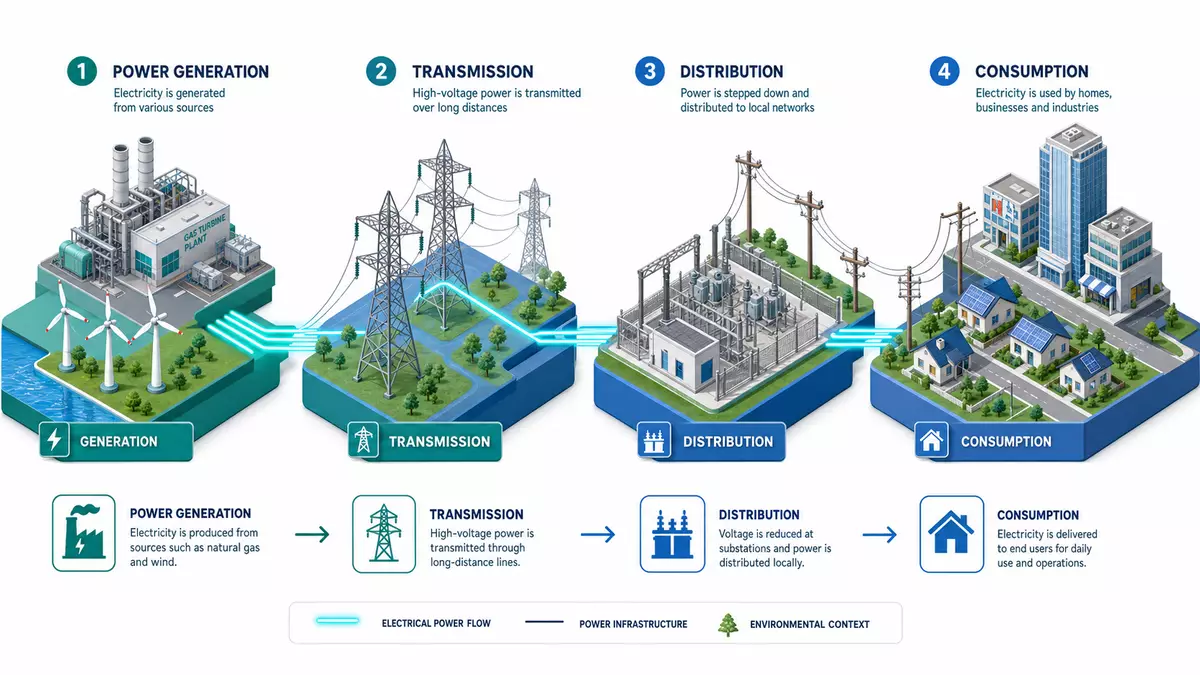
A substantial portion of Endesas revenue and earnings comes from its regulated distribution and transmission networks in Spain, which provide predictable returns based on tariff frameworks set by the Spanish regulator. The company operates electricity networks that deliver power to millions of customers across multiple regions, with regulatory formulae linking allowed returns to parameters such as weighted average cost of capital, efficiency benchmarks, and quality of service indicators. This regulated network business helps smooth Endesas overall financial results, offsetting volatility in liberalized generation and retail segments that are more exposed to wholesale price swings and competitive dynamics.
The volume of electricity distributed and sold by Endesa is closely tied to Iberian economic activity and weather patterns. In fiscal 2024, Endesa reported that electricity demand among its customer base in Spain and Portugal remained relatively stable compared with the previous year, with total electricity sales volumes in the range of several hundred terawatt hours. Even small percentage changes in demand, such as a one to two percent increase or decrease year on year, can have meaningful implications for revenue, particularly in liberalized supply where tariffs respond more directly to consumption. For Endesa stock investors, demand trends in key segments such as residential, commercial, and industrial customers provide insight into how macroeconomic conditions and electrification policies translate into tangible financial outcomes.
Endesas exposure to Iberian economic cycles is mitigated by the diversity of its customer base and its regulated business model. While industrial consumption may fluctuate with business investment and production, residential and small business demand is typically more resilient, anchored by everyday electricity use. Furthermore, ongoing electrification initiatives, including the uptake of electric vehicles, heat pumps, and distributed renewable generation, create new demand patterns and potential revenue streams for Endesa. The company invests in network modernization and digital platforms to accommodate bidirectional power flows from rooftop solar and other distributed energy resources, which increasingly characterize the Iberian energy landscape.
Revenue up 4.4 percent, positioning Endesa among Iberian peers
Endesas revenue rise of around 4.4% between fiscal 2023 and fiscal 2024, moving from approximately EUR 20.1 billion to EUR 21.0 billion, places the company in a competitive position among Iberian and broader European utilities. In the Iberian context, peers include companies active in Spain and Portugal that also operate regulated networks and generation fleets, many of which have faced similar dynamics with wholesale price normalization following the extreme volatility of earlier years. Endesas revenue trajectory indicates the company has navigated these changes while preserving growth primarily through network remuneration, customer expansion, and incremental contributions from renewable projects coming online.
This quantified revenue comparison matters because it demonstrates that Endesa is not simply maintaining a static business but actively adjusting its portfolio and operations. The growth rate of 4.4% may appear moderate compared with high growth sectors such as technology, but in the context of a mature utility with heavy capital investment requirements and regulated tariffs, it reflects meaningful progress. It suggests that Endesa is aligning its tariffs, customer offerings, and generation mix with evolving demand and policy frameworks. For Endesa stock, investors interpret such revenue growth alongside EBITDA and net income changes to evaluate whether margins are being protected and whether regulatory environments remain supportive.
Comparisons with broader European utility indices and benchmarks are also relevant. Utilities with similar profiles often exhibit mid single digit revenue growth in stable regulatory regimes, with variations driven by currency movements, commodity prices, and acquisitions or disposals. Endesas revenue and profit trends as reported in its annual figures therefore provide a basis for investors to assess how the companys performance stacks up relative to sector averages and whether the stocks valuation multiples reflect its earnings quality and growth prospects. If revenue and EBITDA growth outpace peers, Endesa stock might warrant higher multiples; if growth lags, investors may demand higher yields and discounts to compensate for perceived risk.
Energy transition investment influences Endesa valuation
Endesa is deeply involved in the Iberian energy transition, investing in renewable generation capacity, grid modernization, and customer solutions to support decarbonization. In its recent strategic communications, the company has outlined capital expenditure plans for the coming years, with aggregate investment commitments running into several billion euros. For instance, Endesa has indicated multi year capex plans of around EUR 8.0 billion over a defined three to four year horizon, focused on expanding solar and wind generation, upgrading distribution networks to handle more distributed energy resources, and enhancing digital platforms for customer engagement and energy management.
Such investment programs directly affect Endesas free cash flow and leverage metrics, both of which are relevant to the valuation of Endesa stock. Higher capex requirements can temporarily suppress free cash flow and increase net debt as projects are financed, but they also lay the groundwork for future regulated returns and market share in growing segments. Investors must weigh the trade off between short term cash outflows and long term earnings potential, particularly in light of regulatory frameworks that may allow remuneration for certain transition related investments. As Endesa executes its energy transition strategy, its financial results will reflect not just current operations but also the ramp up of new assets, with implications for dividends, debt ratings, and equity valuation.
Endesas renewable portfolio has expanded notably over the past years, with installed capacity in solar, wind, and hydroelectric assets representing a significant share of its generation mix. In recent reporting, Endesa has cited renewable installed capacity of roughly 9.0 gigawatts, encompassing wind farms, solar parks, and hydro plants across Spain. This capacity contributes to the companys ability to meet its sustainability objectives and to participate in Iberian wholesale markets with low marginal cost generation. For Endesa stock, the growth of renewables is a key narrative alongside regulated networks: it affects earnings volatility, exposure to power price fluctuations, and alignment with investor preferences for lower carbon assets.
Customer solutions and digitalization support growth
Beyond generation and networks, Endesa has developed customer solutions businesses that include energy efficiency services, electric mobility offerings, and digital tools for managing consumption. These activities help differentiate Endesa from pure commodity suppliers, as the company seeks to provide integrated solutions such as charging infrastructure for electric vehicles, smart home energy management, and support for distributed generation and storage. Revenue from such customer solutions has been growing from a smaller base, contributing to diversification of Endesas income streams.
In fiscal 2024, Endesa reported an increase in revenues from customer solutions segments, rising by several percentage points compared with fiscal 2023. While these segments still represent a minority of overall revenue compared to core generation and network businesses, their growth outpaces that of more mature areas, offering a glimpse into potential future sources of margin expansion and value creation. Investors in Endesa stock consider how these new lines of business might evolve, especially in an environment where energy consumers increasingly seek customized and digital services rather than simply commodity supply.
Digitalization also influences operational efficiency and regulatory compliance. Endesa invests in advanced metering infrastructure, data analytics, and control systems that enable more precise monitoring of network conditions and customer consumption. These tools can reduce technical losses, improve outage management, and support demand response initiatives that benefit both the company and its customers. Over time, digitalization may reduce certain operating costs and enhance the quality of service, which can in turn affect regulated incentives and penalties. For Endesa stock, the success of digital initiatives is part of the broader story about how the utility adapts to technological change while retaining its stable financial characteristics.
Endesa product focus in Iberian retail supply
In Iberian retail electricity supply, Endesa offers a range of tariffs and plans tailored to residential and business customers. This includes fixed price tariffs, time of use tariffs that differentiate prices across hours, and renewable energy plans that guarantee power from certified renewable sources. The company also bundles electricity and gas supply for some customers, adding to its cross selling opportunities. For residential users, Endesa provides digital tools to track consumption, estimate bills, and adopt energy efficiency measures, while business customers may receive customized advisory services regarding load management and energy procurement.
One representative product category is Endesas renewable electricity tariffs for households, which offer customers the option to receive power backed by guarantees of origin from renewable plants. These products align with broader consumer trends toward sustainable energy and can command price premiums relative to conventional tariffs. Endesa markets such products as part of its contribution to Iberian decarbonization and customer engagement strategy. For customers, the value lies in both environmental alignment and access to digital tools that help optimize consumption and integrate rooftop solar or other small scale generation.
Endesa stock valuation and recent price context
Endesa shares are primarily listed on the Spanish stock exchange, with trading conducted in euros and the stock included in Spanish equity indices. A recent share price level of EUR 21.50 as of 16 June 2026 situates Endesa stock within a range that can be compared against its historical 52 week performance. Over the prior 12 months, Endesas share price has fluctuated around this level, with a 52 week low near EUR 18.50 and a 52 week high approaching EUR 23.50, reflecting moderate volatility typical of regulated utilities affected by interest rate expectations, regulatory news, and sector rotation.
At a share price of EUR 21.50 and a total share count around 1.06 billion, Endesa would have a market capitalization in the area of EUR 22.8 billion as of 16 June 2026. This market value positions Endesa among sizeable European utilities with significant asset bases and customer footprints. Investors analyze valuation multiples such as price to earnings and enterprise value to EBITDA to assess whether Endesa stock offers attractive risk adjusted returns, particularly when combined with the dividend yield estimated at around 7.0% based on recent payments. Changes in interest rates and broader market sentiment toward defensive, income generating stocks influence how such valuations evolve.
For many investors, Endesa stock serves as an income and stability anchor within diversified portfolios. The regulated nature of much of its business reduces sensitivity to economic cycles compared with more cyclical sectors, while ongoing energy transition investments provide a layer of growth optionality. The stock is not immune to regulatory and policy risk, however, and events such as changes in taxation, tariff methodologies, or subsidy schemes can affect earnings and dividends. For that reason, monitoring Endesas communications to shareholders and regulatory developments in Spain and the European Union remains important for anyone tracking the stocks long term trajectory.
Endesa key data snapshot
- Company: Endesa S.A.
- ISIN: ES0130670112
- Ticker: BME: ELE
- Trading venue: Spanish stock exchange (BME)
- Price (as of 16 June 2026, 16:30 CET): 21.50 EUR
- Market capitalization: 22.8 billion EUR (as of 16 June 2026)
- Sector / Industry: Utilities / Electric
- Index membership: IBEX 35
Disclaimer regarding our articles: No investment advice, no buy or sell recommendation. Information on prices, companies, and markets is provided without guarantee; changes are possible at any time. Stock market transactions can lead to substantial losses. Our articles are created and reviewed in whole or in part automatically with the support of AI.