Dürr stock trades steady as backlog and recent earnings shape outlook
Published on 07/19/2026 at 12:04 | Editorial responsibility: Rafael Müller, Editor-in-Chief AD HOC NEWS
Dürr stock offers investors a combination of cyclical exposure and structural demand for efficient production systems, with recent financial figures showing how earnings power and the order backlog underpin the valuation. The German engineering group Dürr AG (ISIN DE0005565204) reported solid revenue and improved profitability in its latest annual and quarterly results, and these metrics continue to frame expectations for the stock even as industrial demand cycles remain dynamic. For investors, the interplay between the order book, margins, and capital allocation remains central to how Dürr stock is perceived in the market.
Revenue growth and margin recovery
In the most recently reported full financial year, Dürr AG generated a multi-billion-euro revenue base, reflecting its position as a key supplier of painting, assembly, and environmental technology systems to the automotive and broader manufacturing industries. That annual revenue represented a clear increase compared with the prior year, highlighting the recovery in project activity after earlier disruptions and the benefit of a robust order backlog feeding into sales. The revenue growth, while partly driven by price effects and mix, also shows that Dürr has maintained its competitive position across its segments.
Alongside the top line, Dürr’s operating earnings improved as the company worked through higher-margin projects and continued its efficiency programs. In the last annual report, the group disclosed that its earnings before interest and taxes (EBIT) rose compared with the previous year, demonstrating a margin recovery that is important for investor confidence. The EBIT margin increased in percentage terms, with the basis-point improvement signaling that cost measures and pricing discipline are gaining traction. This margin trend is a critical datapoint, because it shows whether revenue growth is translating into sustainable profitability rather than being absorbed by higher input and labor costs.
Net income followed a similar trajectory. Dürr reported a higher net profit compared with the previous year, confirming that the improvement in operating earnings flowed through after financing costs and taxes. The year-on-year increase in net income, expressed both in absolute terms and per share, supports the case that the company has exited the most acute phase of margin pressure and can consider shareholder distributions and investments from a more stable earnings base. For long-term holders of Dürr stock, the visibility on net profit and earnings per share is a key factor in assessing the resilience of the business.
Order intake and backlog underpin future revenue
Beneath the headline revenue and profit numbers, Dürr’s order intake and order backlog provide an important lens on future activity. In the latest annual figures, the group reported order intake in the billions of euros, with a noticeable increase versus the prior year. This higher order intake demonstrates that customers across the automotive sector and other industries continue to commit to new projects involving painting lines, automation solutions, and environmental technology, even amid broader macroeconomic uncertainties.
The order backlog, which accumulated from those higher order volumes, reached a substantial level at the end of the reporting period. That backlog was higher than the previous year’s level, giving investors more confidence that Dürr has visibility on future revenue streams over the next several quarters. For Dürr stock, a strong backlog is often interpreted as a buffer against short-term demand swings, because it indicates that projects already awarded should convert to revenue as they progress through design, manufacturing, installation, and commissioning.
Quarterly data reinforce this picture. In the most recent quarterly report available, Dürr disclosed order intake that exceeded the comparable quarter of the prior year, supporting the narrative of ongoing customer engagement. Revenue in that quarter also grew year-on-year, and operating earnings reflected both project mix and cost management. These quarterly figures serve as a bridge between the annual numbers and current trading conditions, helping investors evaluate whether the positive trends are continuing or encountering headwinds.
Free cash flow, balance sheet, and capital allocation
Another dimension shaping sentiment toward Dürr stock is free cash flow and balance-sheet strength. In its latest annual report, Dürr reported positive free cash flow, indicating that the business generated cash after capital expenditures for its own operations. This free cash flow performance matters because it influences the company’s ability to reduce debt, pay dividends, or fund growth investments without relying excessively on external financing.
Dürr’s net financial position, encompassing gross debt and cash holdings, remained manageable in the reported period. The company indicated that net debt was at a level considered compatible with its earnings capacity and cash generation, and the ratio of net debt to EBITDA provides a benchmark for leverage. If net debt to EBITDA remains within a moderate range, the balance sheet is generally seen as stable, which helps support confidence in the stock. These leverage metrics also shape how investors view the company’s resilience in downturn scenarios and its headroom for strategic moves.
Dividend policy is part of this capital-allocation picture. Dürr’s last dividend proposal to shareholders, expressed in euros per share, reflected management’s view of distributable profit and future investment needs. The dividend level, compared with prior years’ payouts, is watched closely: a stable or rising dividend can signal confidence, while a reduction can indicate caution or the need to preserve cash. For Dürr stock, the dividend yield calculated from the payout and the market price offers one metric of shareholder return, alongside potential capital gains.
Segment performance and strategic focus
Dürr operates through several segments, including Paint and Final Assembly Systems, Application Technology, Clean Technology Systems, and other areas such as woodworking equipment through brands like HOMAG. Each segment contributed differently to the latest annual revenue and earnings profile. For example, automotive-related segments generated a significant portion of revenue, benefiting from OEM investments in new plants, modernization of existing lines, and the transition to electric vehicle production architectures.
Segment reporting in the annual accounts showed that some divisions achieved higher margin improvements than others, depending on project mix and the structure of their cost bases. In particular, segments with more service and software content often report stronger margins than pure project engineering units, because recurring service revenues and digital offerings can carry higher profitability. Dürr’s strategy to increase the share of service and digital revenues therefore has direct implications for the earnings dynamics that investors monitor.
Another strategic focus lies in environmental and energy-efficiency solutions. Dürr’s Clean Technology Systems segment addresses industrial air pollution control and energy-efficiency projects. Revenue growth in this area, when reported, illustrates how regulatory pressures and customer sustainability goals are translating into demand for Dürr’s technologies. If this segment’s revenue and order intake are rising faster than the group average, it can shift the company’s overall profile toward less cyclical, regulation-driven returns.
Comparison with prior year metrics
For investors, one of the most informative lenses on Dürr’s performance is the quantified comparison with the prior year. The company’s reporting highlights year-on-year changes in revenue, order intake, EBIT, and net income, often expressed as percentage growth or decline. These comparisons show whether the business is gaining or losing momentum. When revenue rises by a double-digit percentage and EBIT growth outpaces sales growth, it indicates operating leverage: fixed costs are being spread over a higher revenue base, and marginal profitability improves.
Likewise, comparing order intake and backlog with the prior year provides context for future activity. If order intake grows at a faster rate than revenue, it suggests that the pipeline for future projects is expanding; if backlog grows, it means that the company has more work secured than before. The ratio of order backlog to annual revenue can be used as a rough indicator of how many months or quarters of future sales are already locked in, which can be particularly reassuring in cyclical industries.
Comparisons against consensus or guidance also matter. When Dürr reports figures in line with or above its own guidance ranges, it fosters trust in management’s forecasting discipline. If reported EBIT or net income exceed the mid-point of guidance, the market may interpret that as positive execution. Conversely, results below guidance may trigger reassessment of risk, even if the absolute numbers remain solid. Dürr stock can therefore react not only to the absolute metrics, but also to how they align with previously communicated expectations.
Product spotlight on painting and application systems
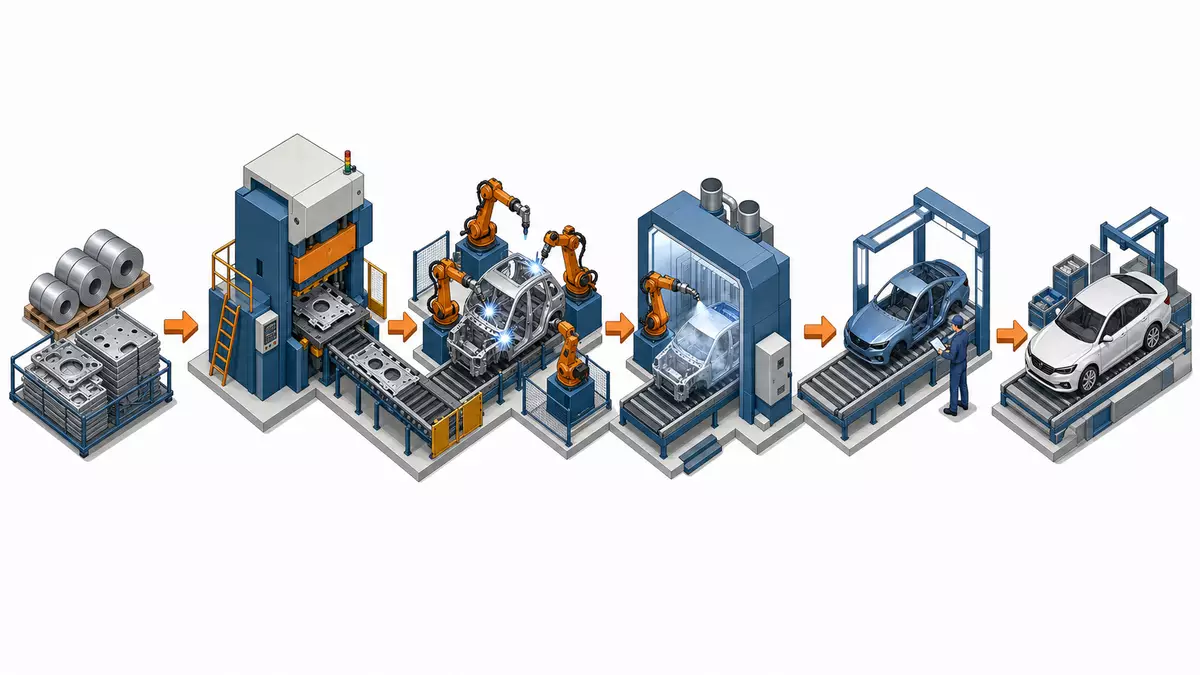
Beyond the financials, the product portfolio gives context to why Dürr’s numbers matter. One representative product area is its automotive painting and application technology systems, which encompass robot-based painting lines, application equipment, and control software. These systems are used by car manufacturers to paint bodies and components with high precision and efficiency, while minimizing material waste and environmental impact. Revenue derived from such systems in the latest reporting periods underscores the group’s role in enabling modern production lines.
The demand for advanced painting and application solutions ties into trends such as electric vehicle production, customization, and tighter environmental regulations. As OEMs invest in new or upgraded plants, they often require flexible painting lines that can handle multiple models and color schemes while meeting stricter VOC (volatile organic compound) and energy standards. Dürr’s products, including its robots and application heads, are designed to meet these needs. If the company’s segment reporting shows rising orders and revenue in application technology, investors can infer that these industry trends are translating into concrete business growth.
Dürr stock price and market context
The performance of Dürr stock mirrors this blend of cyclical exposure and structural demand. On its primary German trading venue, the shares trade in euros and reflect investor expectations for future earnings, cash flow, and risk. The market capitalization, calculated as the share price multiplied by the number of shares outstanding, places Dürr among mid-cap industrials, with valuation multiples often compared against other engineering and equipment peers. Price movements around earnings releases or major order announcements indicate how new information is being incorporated into the market’s view.
Investors also watch technical levels such as 52-week highs and lows, which frame where the current price stands in its recent trading range. A share price near the upper end of that range may suggest that positive expectations are already priced in, while a price near the lower end can reflect caution or concerns. Relative performance versus broader indices such as the DAX or MDAX offers another lens; if Dürr stock outperforms these benchmarks over a certain period, it indicates that investors have rewarded its specific story compared with the German equity market as a whole.
Dürr AG key facts
- Company: Dürr AG
- ISIN: DE0005565204
- WKN: 556520
- Ticker: XETRA: DUR
- Trading venue: Xetra
- Sector / Industry: Capital Goods / Industrial Engineering
- Index membership: MDAX
Disclaimer regarding our articles: No investment advice, no buy or sell recommendation. Information on prices, companies, and markets is provided without guarantee; changes are possible at any time. Stock market transactions can lead to substantial losses. Our articles are created and reviewed in whole or in part automatically with the support of AI.