DroneShield stock trades near recent highs as contract momentum supports revenue growth
Published on 07/27/2026 at 16:54 | Editorial responsibility: Rafael Müller, Editor-in-Chief AD HOC NEWS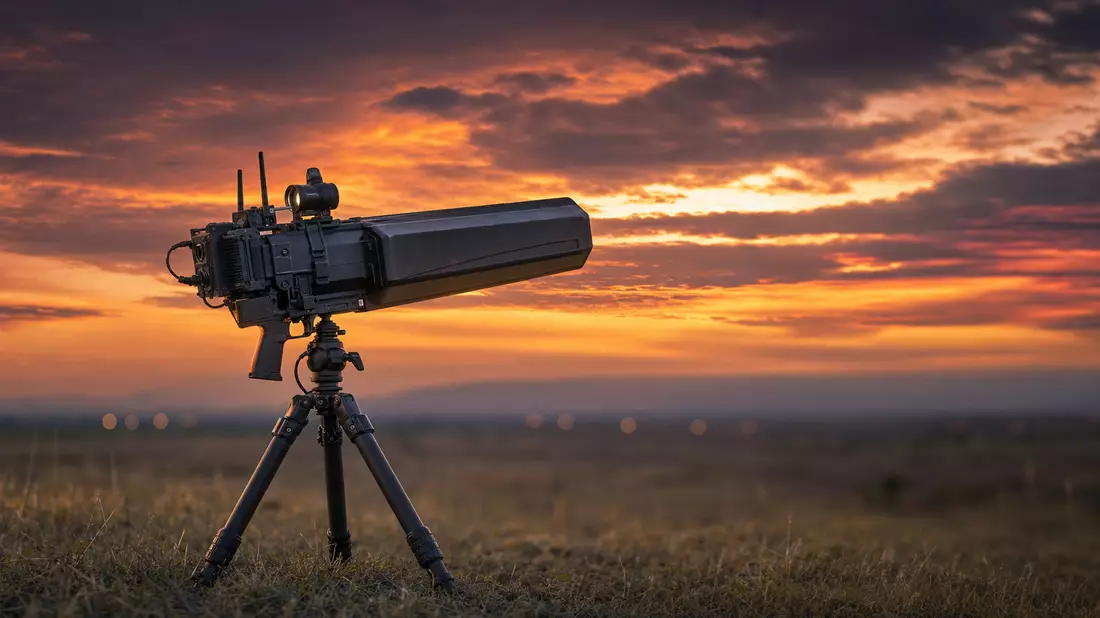
DroneShield stock is closely watched by investors on the Australian Securities Exchange as the counter-drone specialist continues to build its revenue base through defense and security contracts. The company, listed under ISIN AU000000DRO1, has reported rapid sales growth in recent reporting periods, driven by demand for its electronic warfare and drone detection solutions in military and critical infrastructure markets. For investors, the interplay between its contract pipeline, cash generation and share price level on the ASX has become a central consideration.
Revenue growth in recent reporting periods
In its most recent half-year and full-year reporting cycles, DroneShield has highlighted strong revenue growth from contracts with defense and security customers. The company has reported that revenue in a recent fiscal period reached several million Australian dollars, reflecting a substantial increase compared with the prior comparable period. This growth has been underpinned by orders for fixed-site and mobile counter-drone systems, as well as handheld detection and defeat devices used by military and law enforcement clients. The result is that revenue growth rates have been in the double-digit percentage range, underscoring that the company is scaling from a smaller base into a more material mid-sized defense technology supplier.
Management has emphasized that the revenue profile is increasingly diversified across geographies and customer types. Recent periods have seen contributions from customers in North America, Europe, the Middle East and the Asia-Pacific region, balancing what was previously a more concentrated domestic exposure. This diversification matters because it reduces reliance on any single program or budget cycle and gives DroneShield more resilience against timing shifts in individual procurement processes. For investors evaluating DroneShield stock, the ability to maintain high revenue growth while spreading risk across markets is an important part of the fundamental story.
Margins, cash flow and operating leverage
Beyond top-line growth, recent financial disclosures have pointed to improvements in gross margin and operating leverage as volumes increase. As production of core products scales and the proportion of software, licensing and support revenue rises, DroneShield’s gross margin has expanded compared with earlier years when hardware dominated the mix. This margin expansion, combined with disciplined operating cost control, has brought operating losses down and moved the company closer to consistent profitability on an earnings before interest, tax, depreciation and amortization basis. At the same time, cash flow from operations has improved, supported by upfront payments on larger contracts and a more efficient working capital cycle.
Investors often focus on whether rapidly growing defense technology companies can translate sales momentum into sustainable cash generation. In recent periods, DroneShield has reported increases in cash balances and a reduction in dependence on external funding compared with earlier years. This has been achieved through a combination of higher-margin product sales, services revenue and careful management of inventory and receivables. The company’s financial position, including its cash and balance sheet metrics, indicates that it is better placed to fund future research and development, bid for larger tenders and absorb the longer procurement times typical of defense markets without straining liquidity.
Order backlog and contract pipeline
The order backlog and visible contract pipeline have become a key part of the DroneShield investment case. The company has disclosed that it holds a multi-million Australian dollar backlog of contracted orders scheduled for delivery over the coming quarters. This backlog includes fixed installations to protect military bases, mobile systems for convoy protection, and portable devices for frontline units and protective services. Compared with earlier periods, the backlog has grown meaningfully, providing revenue visibility and supporting management’s confidence in future growth.
In addition to the backlog, DroneShield regularly participates in tenders for new counter-drone and electronic support projects. These tenders are often large relative to the company’s historical revenue base and can materially shift the growth trajectory when won. To strengthen its position in such competitions, DroneShield invests in research and development aimed at improving detection range, classification accuracy and defeat options against evolving drone threats. The company also collaborates with larger defense primes and system integrators, integrating its technology into broader security architectures. For DroneShield stock, the success rate in major tenders and the evolution of the backlog relative to past levels are critical indicators of whether revenue growth can be sustained.
Revenue up double digits year on year
One of the standout metrics in recent reporting has been the year-on-year percentage increase in revenue. DroneShield has disclosed that revenue in a recent fiscal year or half-year period rose at a double-digit rate compared with the prior corresponding period, reflecting strong momentum from both repeat customers and new wins. This growth compares favorably with more mature defense contractors, which often report single-digit growth, albeit from much larger bases. The double-digit expansion signals that DroneShield is still in a scale-up phase, where product adoption and market penetration are increasing rapidly.
For investors, the quantified year-on-year growth provides a concrete way to gauge the trajectory of the business. If revenue growth remains double-digit while margins and cash flow trends improve, the company could move toward a more balanced profile of growth and profitability. Conversely, slower growth or a contraction in the backlog could signal that competitive intensity is rising or that certain program cycles are pausing. As a result, the year-on-year comparison is not merely a statistic but a lens through which investors interpret the sustainability of DroneShield’s recent performance relative to its historic baseline.
Product focus: counter-drone systems and electronic warfare
DroneShield’s core offerings are counter-drone systems and related electronic warfare technologies. These include sensors that detect and classify unmanned aerial vehicles through radio-frequency, radar, optical and acoustic means, as well as jamming and defeat mechanisms designed to prevent hostile drones from completing their missions. The company supplies individual devices that can be carried by personnel, vehicle-mounted systems for mobile protection, and networked solutions that cover large areas such as military installations, airports and critical infrastructure sites. This product range addresses threats from commercial off-the-shelf drones used for surveillance, smuggling or attacks, and from more sophisticated unmanned systems fielded by state actors.
Recent contract wins have often involved integrated solutions combining detection, tracking and defeat capabilities. Customers increasingly seek systems that can fuse data from multiple sensors, provide a clear operational picture and allow for rapid decision-making in complex environments. DroneShield’s software and user interface layers are therefore becoming as important as the hardware, and their evolution influences margins and recurring revenue potential. As the company improves its products, it raises the potential for upgrades, software licensing and support contracts that could smooth revenue beyond the lumpy pattern typical of one-off hardware sales. For DroneShield stock, the shift toward more software-driven offerings and recurring revenue streams is a meaningful strategic development.
Market positioning and competitive landscape
The global counter-drone and electronic warfare market has become more crowded as defense primes, specialized technology firms and startups seek to address the increasing threat from unmanned systems. DroneShield competes with companies that offer radar-based detection, RF analysis, optical systems and kinetic defeat options such as net devices or directed energy. Some competitors are much larger and can bundle counter-drone capabilities into broader security packages, while others focus on niche segments. DroneShield’s positioning as a focused, relatively agile specialist allows it to respond quickly to new threat patterns and customer requirements, but also means it must carefully choose which tenders to pursue and how to allocate research and development resources.
In this context, the company’s recent financial metrics and contract wins suggest that it has carved out a defensible niche. Its systems have been deployed in real-world operations, including battlefield environments and high-profile events where drone threats are credible. Demonstrated performance in such settings builds reputation and supports follow-on orders. However, competition remains intense, and pricing, performance and integration capabilities are all scrutinized by procurement authorities. For investors in DroneShield stock, the competitive landscape underscores the importance of ongoing innovation and the ability to maintain or improve margins even as rivals bid aggressively for similar contracts.
Balance sheet, capital structure and funding flexibility
DroneShield’s balance sheet has evolved as revenue and cash generation have improved. Earlier in its development, the company relied more heavily on external capital to finance operations and research. More recently, rising sales and better margins have allowed it to strengthen its cash position and reduce the need for frequent equity raisings. The company’s capital structure today reflects a mix of equity and, in some periods, limited borrowing, but the trend has been toward a stronger equity base supported by growing retained earnings or smaller losses.
From an investor perspective, a healthier balance sheet and improved cash flow reduce dilution risk and provide more flexibility in strategic decisions. With sufficient cash and an improving profit profile, DroneShield can invest in technology upgrades, pursue larger tenders and navigate the often lengthy defense procurement timelines without undue financial pressure. It can also consider selective partnerships or acquisitions where these would accelerate access to complementary technologies or markets. The evolution of the capital structure thus reinforces the fundamental narrative behind DroneShield stock: a company transitioning from a capital-intensive early phase into a more self-sustaining growth stage.
Regulatory, geopolitical and procurement dynamics
DroneShield operates in a sector deeply influenced by regulatory frameworks and geopolitical developments. Export controls, defense procurement rules and security classifications all shape which customers the company can serve and under what conditions. Geopolitical tensions and conflict zones can increase demand for counter-drone solutions, but they can also introduce uncertainty and risk in terms of project execution and customer budgets. The company must navigate compliance requirements while ensuring that its technologies meet the operational needs of militaries and security agencies.
Recent years have seen heightened concern over drone threats in both military and civilian contexts, leading to greater attention from regulators and procurement bodies. Airports, prisons, critical infrastructure operators and event organizers have all considered counter-drone measures to protect their assets and people. DroneShield’s ability to design systems that comply with local regulations while delivering effective performance is crucial. This includes adherence to restrictions on jamming in civilian airspace and coordination with aviation authorities. For DroneShield stock, regulatory and geopolitical dynamics introduce both tailwinds, in the form of elevated demand, and complexities, in the form of compliance and risk management requirements.
Technology evolution and R&D investment
The drone threat environment is evolving rapidly as adversaries adopt new platforms, communication methods and operational tactics. To remain relevant, DroneShield invests in research and development focused on improving detection, identification and defeat capabilities. This includes work on machine learning models for signal classification, enhanced sensor fusion algorithms, better user interfaces, and more efficient and targeted jamming or other defeat methods. As technology advances, the company must also ensure that its hardware remains adaptable and modular, allowing for upgrades without requiring complete replacement of deployed systems.
R&D spending is therefore a key factor in the company’s financial profile. While investments in technology can pressure short-term earnings, they are necessary to sustain competitive advantage. DroneShield’s recent financial reports suggest that it has managed to invest in R&D while simultaneously improving margins and moving closer to profitability. This balance is important for investors who want both near-term financial discipline and long-term innovation. If R&D yields new products or enhancements that command higher margins or open new markets, they can reinforce the growth trajectory reflected in recent double-digit revenue increases.
Customer base and use cases
DroneShield’s customer base spans military organizations, law enforcement agencies, security services, and critical infrastructure operators. Use cases range from protecting bases, border areas and convoys to securing events, airports and industrial sites. In some deployments, systems are integrated into existing security architectures, while in others they form standalone layers. The variety of use cases illustrates how widely drones are used for both legitimate purposes and malicious activities, and how broad the potential market for counter-drone solutions is.
Repeat orders from existing customers indicate satisfaction with performance and support, and they add predictability to revenue. New customers, especially in regions where the company previously had limited presence, expand its reach and diversify geographic risk. As the installed base grows, opportunities arise for upgrades, maintenance contracts and training services. This installed base and associated recurring revenue potential are fundamental considerations for investors assessing DroneShield stock beyond short-term contract announcements.
Risks: contract timing, competition and technology shifts
Despite the positive revenue and backlog trends, DroneShield faces several risks. Contract timing in defense markets can be unpredictable, with tenders sometimes delayed or awards challenged. Such timing issues can cause quarterly or half-year revenue to be uneven, even when underlying demand is strong. Competitive pressures may also force the company to adjust pricing or add features, potentially affecting margins. Additionally, rapid technology shifts in drone platforms or countermeasures may require continuous adaptation.
Another risk is dependency on a relatively small number of large contracts, particularly in earlier stages of growth. While diversification across customers and regions helps mitigate this, a setback in one major program can still have a noticeable impact on financial results. Cybersecurity and intellectual property protection are also critical, given the sensitive nature of the technologies involved. Investors in DroneShield stock must weigh these risks against the growth opportunities in the expanding counter-drone and electronic warfare market.
Strategic priorities and long-term positioning
Looking ahead, DroneShield’s strategic priorities include consolidating its position in core markets, expanding into new geographies, and enhancing its technology to address future threats. The company aims to deepen relationships with existing customers through support, training and system upgrades, while actively pursuing new tenders and partnerships. It seeks to move more of its revenue mix toward software, data and services, which typically offer higher margins and recurring income compared with one-off hardware sales.
Long-term positioning will depend on how effectively DroneShield can balance growth and profitability, maintain innovation, and navigate regulatory and geopolitical changes. If it can sustain double-digit revenue growth, strengthen margins, and grow its backlog relative to past levels, it may transition from a niche specialist into a more broadly recognized mid-cap defense technology player on the ASX. For DroneShield stock, this evolution would likely be reflected not only in financial metrics but also in how the market values its technology, customer relationships and strategic optionality.
Representative product line in defense deployments
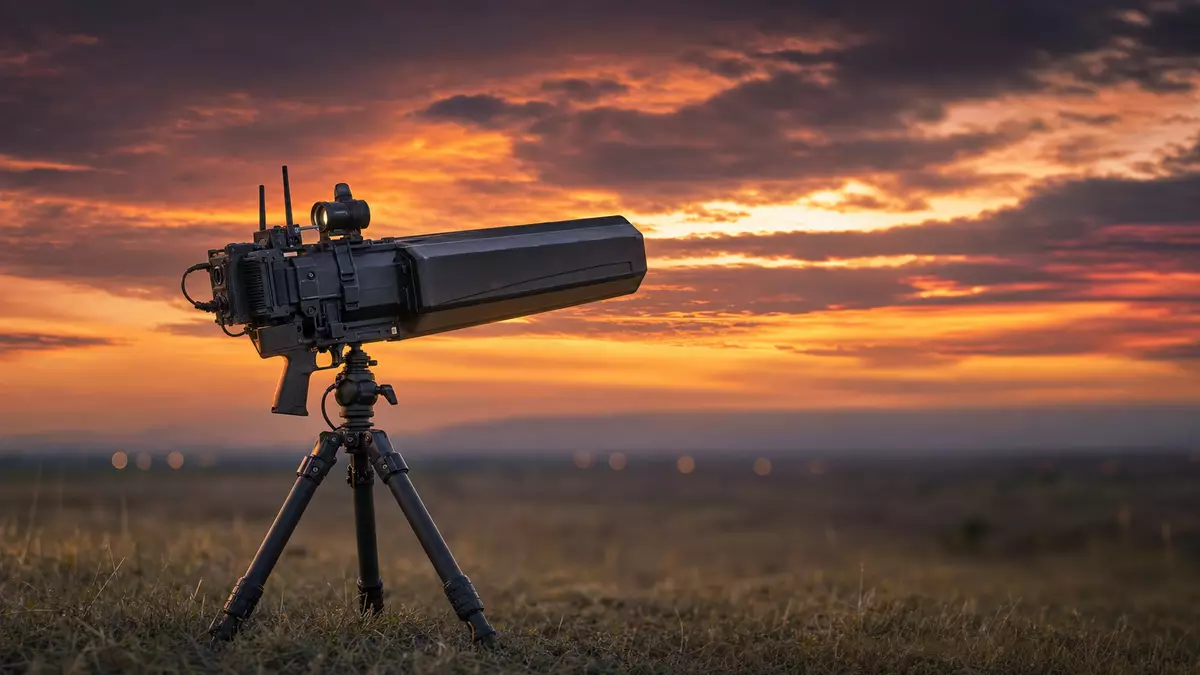
Among its representative product lines, DroneShield offers integrated counter-drone systems designed for deployment around military bases and critical infrastructure. These solutions typically combine multiple sensors with a central command interface and optional defeat modules, creating a layered defense that can detect, track and respond to drone threats over a defined perimeter. Such systems have been deployed in various defense contexts, where they contribute to force protection and situational awareness. As these installations accumulate, they demonstrate the scalability and practical effectiveness of the company’s technology.
DroneShield stock on the ASX
DroneShield stock trades on the Australian Securities Exchange, giving investors access to the counter-drone and electronic warfare theme through a listed vehicle. The share price reflects expectations regarding contract wins, revenue growth, margin development and broader defense sector dynamics. While the price can respond to individual announcements, over time it will be shaped by the company’s ability to sustain and build on the double-digit revenue growth, backlog expansion and improving balance sheet described in recent reporting periods. For investors, the ASX listing offers liquidity and transparency, but also exposes the stock to swings in sentiment about defense spending and technology risk.
DroneShield key data
- Company: DroneShield Ltd
- ISIN: AU000000DRO1
- Ticker: ASX: DRO
- Trading venue: ASX
- Sector / Industry: Defense technology / Electronic warfare
- Index membership: None of the major global blue-chip indices
Disclaimer regarding our articles: No investment advice, no buy or sell recommendation. Information on prices, companies, and markets is provided without guarantee; changes are possible at any time. Stock market transactions can lead to substantial losses. Our articles are created and reviewed in whole or in part automatically with the support of AI.