DroneShield’s Explosive Growth and European Expansion Collide with a Regulatory Storm — Shares Down 60%
25.06.2026 - 09:52:45 | boerse-global.de
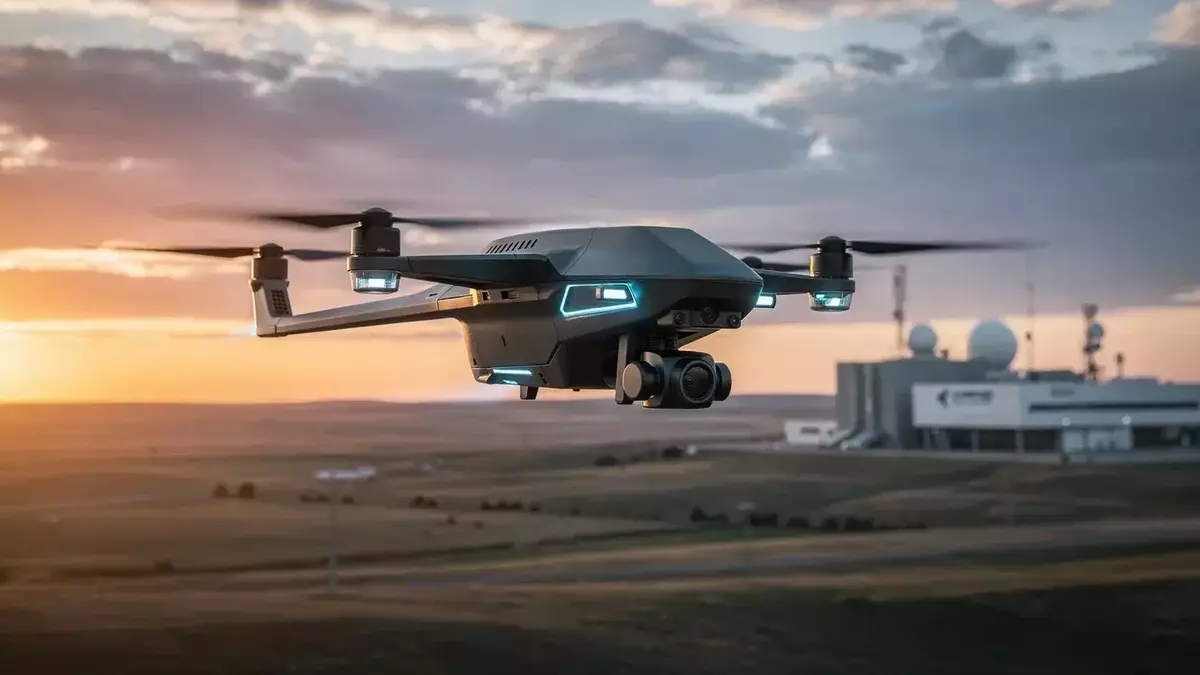
DroneShield is currently the invisible shield protecting Kansas City’s airspace during the 2026 FIFA World Cup, building its first European production line, and posting a 121% jump in quarterly revenue. Yet the stock has been cut by more than half from its 52-week high, hitting a new year low of €1.42 on Thursday before recovering to around €1.50. The culprit: a lingering Australian securities regulator probe that has turned the market deaf to an otherwise blistering operational record.
The World Cup deployment is no minor contract. DroneShield operates a multi-site regional network across Kansas City using RF sensors, sensor fusion, and counter-UAS capabilities spanning multiple jurisdictions — essentially writing the playbook for urban drone defence at major events. Civil applications like this represent about 7% of the total addressable market, but the direction is clear: European and British authorities are showing rising interest. The company’s pipeline now totals A$2.2 billion in potential projects, including 13 individual opportunities worth more than A$20 million each, with the largest single program clocking in at A$730 million.
The software pivot gathering pace
Behind the hardware headlines, DroneShield is quietly transforming its business model. At the May annual general meeting, management put software subscriptions and recurring revenues centre stage. The numbers back the rhetoric: SaaS revenue surged 205% in the first quarter to A$5.1 million, and the share of recurring income has already climbed from 7% in the opening quarter to a forecast of 13% for the full year 2026. Of the roughly 5,800 units deployed, about 4,000 are now software-enabled.
The monteisation strategy follows a classic playbook: ship hardware, then lock in the installed base through recurring updates and data subscriptions. DroneShield’s SaaS offering spans three tiers — device-level, tactical site solutions, and enterprise-wide command systems — and the target is for recurring revenues to exceed 30% of total sales by 2030, with total revenue hitting A$1 billion.
Should investors sell immediately? Or is it worth buying DroneShield?
Planting a flag in Europe
The European expansion is accelerating. At the Eurosatory defence exhibition in Paris, DroneShield signed a memorandum of understanding with Dutch vehicle specialist Defenture to integrate counter-drone systems into military vehicles. More structurally important: the company has already produced its first batch of counter-drone units entirely in Europe, using local supply chains compliant with the EU’s push for domestic defence manufacturing. That move could speed up procurement by NATO members eager to reduce reliance on non-European sources.
The macro tailwinds are formidable. The US Department of Defense is requesting US$75 billion for drone and counter-drone programmes, while the global counter-UAV market is expected to swell from roughly US$5 billion in 2025 to over US$36 billion by 2035 — compound annual growth of more than 22%.
The regulatory cloud that won’t lift
All of this has been shrugged off by investors since early May. That’s when the Australian Securities and Investments Commission (ASIC) disclosed it was examining certain company announcements and share trading between 1 and 20 November 2025. The spotlight falls on a window in which former CEO Oleg Vornik, chairman Peter James, and director Jethro Marks sold significant share parcels. On 10 November, DroneShield announced a A$7.6 million contract as new business — then withdrew the announcement hours later. The stock dropped 16% that day.
DroneShield says it is co-operating fully, and nothing has been proven. But regulatory uncertainty carries its own penalty regardless of the final outcome. Until ASIC provides clarity, positive operational news will continue to land with a thud. The stock now trades nearly 28% below its 200-day moving average of €2.06 and roughly 24% below the 50-day line. The relative strength index has been as low as 24.1 and recently sat at 27.1 — deep in oversold territory on both readings.
DroneShield at a turning point? This analysis reveals what investors need to know now.
The next catalyst
The earliest chance for a fundamental reset comes on 26 August, when DroneShield reports first-half results. The market will get its first look at revenue from the new European production line and a test of whether the record order book is converting into cash. An update on the A$730 million programme is expected in the second half of 2026.
The structural case for counter-drone technology has never been stronger. The operational case for DroneShield — World Cup exposure, European manufacturing, the software pivot, a pipeline swollen to A$2.2 billion — is arguably the best in the company’s history. The stock price tells a completely different story. That divergence is the real narrative until the regulatory fog clears.
Ad
DroneShield Stock: New Analysis - 25 June
Fresh DroneShield information released. What's the impact for investors? Our latest independent report examines recent figures and market trends.