
DroneShield's 58% Detection Speed Boost and Admiral Hire Aim to Rebuild Investor Confidence Amid 25% Slide
Published on 07/06/2026 at 10:07 | Editorial boerse-global.de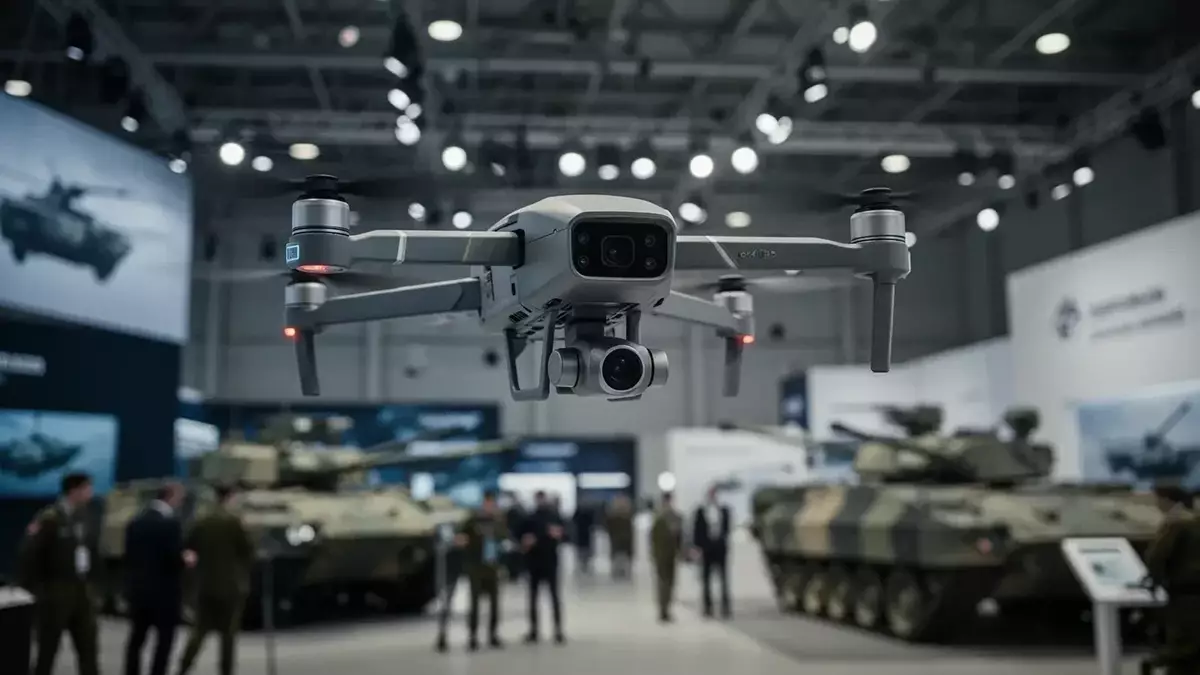
The defence-tech firm DroneShield is executing a strategic pivot that has little to do with its hardware roots. A quarterly software update released this week delivers a step-change in performance — internal tests show the company's counter-drone systems can now identify targets 58% faster than the previous version. Equally critical for military clients operating in disconnected environments, the upgrade can be installed entirely offline via external storage media, a feature demanded in high-security zones that forbid cloud connectivity.
Investors gave the news an immediate thumbs-up, pushing the stock to €1.57 on Monday — a gain of roughly 5%. That bounce builds on what technicians had already interpreted as a tentative bottom following weeks of steady selling. Yet the share remains deep in the red for 2025, down almost 25% year-to-date after closing the prior week at €1.49.
To help turn that sentiment around, DroneShield has strengthened its board with a veteran of the Australian defence establishment. Rear Admiral Lee Goddard (retired) joined as an independent non-executive director on 1 July, bringing decades of experience navigating the procurement machinery of both Australia and the United States. The company expects Goddard's extensive government contacts to open doors to the intelligence networks of the "Five Eyes" alliance, where lucrative classified contracts are common.
The timing could hardly be better. Global defence budgets are swelling. India over the weekend approved military spending worth roughly $5.4 billion, with a specific focus on electronic warfare. Britain, meanwhile, unveiled a four-year investment package of £6.6 billion for autonomous systems. DroneShield is chasing a piece of that pie through a sales pipeline that stood at A$2.2 billion at last count, though management must now convert those prospects into binding contracts.
Should investors sell immediately? Or is it worth buying DroneShield?
That conversion challenge is central to the stock's current struggle. The share price trades stubbornly beneath its 50-day moving average — a key technical level that sat at €1.86 at the end of last week (and was at €1.84 when the software announcement hit). The relative strength index, hovering near 40, signals the stock is approaching oversold territory but has not yet found a floor.
Operationally, DroneShield's fundamentals are robust. The company carries zero debt and holds cash reserves of A$223 million, giving it ample runway to fund research and development. Yet a cloud hangs over the balance sheet: the Australian Securities and Investments Commission (ASIC) is conducting an ongoing investigation into the firm. Details remain scarce, but the uncertainty has eroded investor confidence and contributed to the year's steep decline.
To diversify away from the lumpy nature of pure defence orders, DroneShield is pushing deeper into civil markets. A recent internal study found that nearly 70% of critical-infrastructure operators consider their own drone-protection measures inadequate. The company's systems have already been deployed at major events such as the World Cup in Kansas City. Winning more civilian software-as-a-service contracts, the thinking goes, could generate more predictable recurring revenue to offset the swings of military procurement.
DroneShield at a turning point? This analysis reveals what investors need to know now.
A concrete sign of that dual-track strategy came with a recent contract from the U.S. Department of Defense worth almost $25 million, covering counter-drone hardware and maintenance. It is the kind of deal that validates the company's technological trajectory, but analysts note that a sustained share-price recovery will require a visible acceleration of the A$2.2 billion pipeline into firm order books — and a clear resolution to the ASIC probe. For now, the stock's next move rests on whether the software upgrade and the admiral's arrival can convince the market that the drift is over.
Ad
DroneShield Stock: New Analysis - 6 July
Fresh DroneShield information released. What's the impact for investors? Our latest independent report examines recent figures and market trends.


