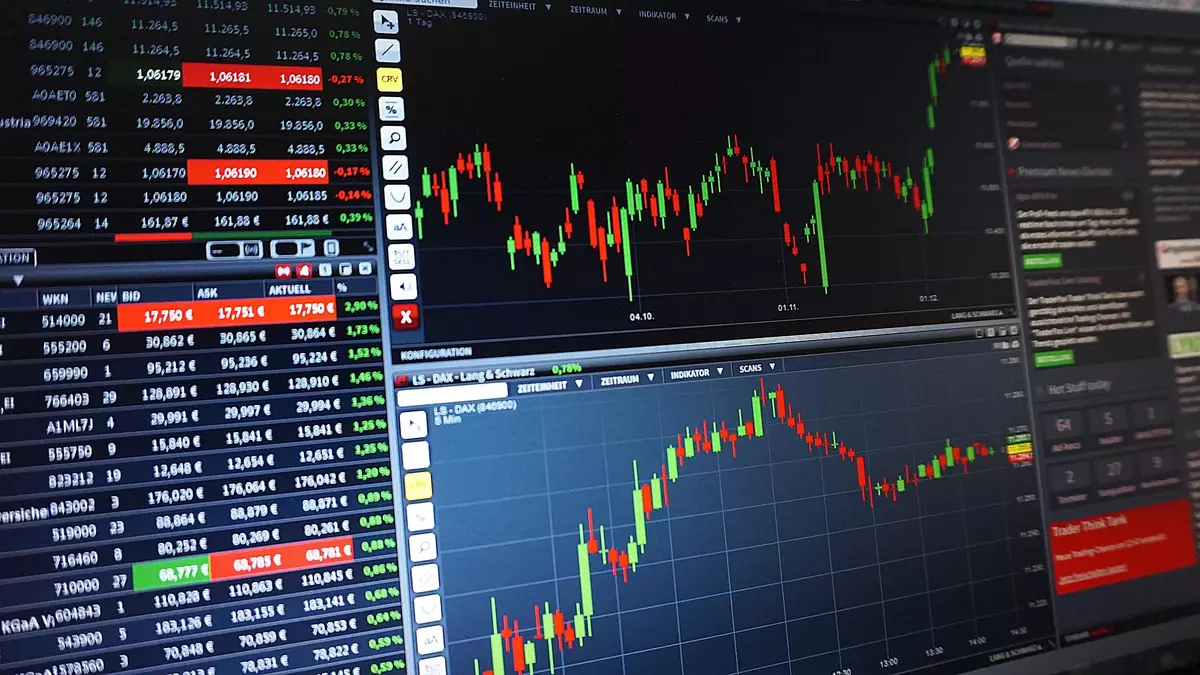
Dow Jones slips as traders weigh tariff and Fed risks after blue-chip retreat
Published on 05/16/2026 at 16:32 | Editorial responsibility: Rafael Müller, Editor-in-Chief AD HOC NEWS
The Dow Jones Industrial Average is trading lower as U.S. investors reprice the outlook for tariffs, Treasury yields and Federal Reserve policy, a combination that tends to hit blue-chip cyclicals, industrials and financials more directly than the broader tech-heavy market. The move matters because the Dow is a price-weighted index, so relatively expensive components can move it more than their market-cap peers in the S&P 500, while Dow futures and Dow-linked ETFs tend to reflect that same blue-chip pressure almost immediately.
As of: May 16, 2026, 10:00 AM America/New_York
Why the Dow Jones is falling now
The immediate market story is not about the Dow Jones Industrial Average as an abstract benchmark. It is about how current macro and policy concerns are feeding into the 30-stock index through its largest and most rate-sensitive components. When investors fear higher-for-longer yields, slower growth, or a tariff shock that could raise input costs and squeeze margins, they tend to reassess conglomerates, banks, industrials, transport-related names and consumer blue chips that help steer the Dow.
That transmission mechanism matters. A rise in Treasury yields can lower the present value of future earnings, but for the Dow the effect is often even more visible because the index is not market-cap weighted. Stocks with higher share prices carry larger index influence, so a sizable move in one or two heavyweight components can pull the cash index more than similar percentage moves would suggest in other benchmarks. That is one reason Dow futures can sometimes look firmer or weaker than the S&P 500 or Nasdaq at the same moment.
Recent market coverage and data screens point to a cautious blue-chip backdrop rather than a single company shock. The key issue for U.S. investors is whether the Dow’s weakness is being driven by a broad de-risking in rate-sensitive segments and economically exposed names, or whether it is just the result of a few large constituents moving on company-specific catalysts. In the current setup, the index-level move is better understood as a macro-sensitive rotation than as a one-stock story.
How the Dow Jones Industrial Average transmits macro pressure
The Dow is often thought of as a legacy blue-chip barometer, but its composition makes it highly sensitive to shifts in the U.S. economic outlook. Financials can react to curve flattening, industrials to trade policy and capex expectations, and consumer names to the confidence that underpins discretionary spending. If investors think the Federal Reserve will stay restrictive for longer, the discount-rate effect can weigh on the cash index even when earnings estimates have not changed much.
Tariff expectations add another layer. Blue-chip multinationals in the Dow often have large supply chains, cross-border revenue exposure or global input costs. If trade tensions threaten margin structure, the market may sell the index’s industrial and multinational names even without fresh company guidance. The Dow’s makeup means such pressure can show up more quickly than in a more diversified broad-market basket.
That helps explain why the index can weaken on what appears to be a mixed day for equities overall. If technology holds up but bank, industrial and health-care heavyweights slip, the Dow can underperform the Nasdaq and S&P 500. For U.S. investors, that relative performance is important because it signals whether the market is pricing growth resilience, policy risk or simply sector rotation into defensive themes.
Dow futures and the cash index are not the same trade
Dow futures provide the earliest read on risk appetite, but they are not identical to the cash index. CME-linked E-mini Dow futures track expectations for the underlying 30-stock basket ahead of the regular session and can move on overnight macro headlines, central-bank commentary or geopolitical developments. The cash Dow Jones Industrial Average, by contrast, only updates during the market session and is affected by the actual trading in its components.
That distinction matters on days like this. A decline in Dow futures does not automatically mean the Dow has “opened lower” unless the U.S. cash market is actually trading. Likewise, a drop in the cash index later in the session can reflect component-level repositioning, index arbitrage, options hedging or sector-specific selling that never showed up cleanly in the futures market. Investors should read the two together, not interchangeably.
Dow-linked ETFs and ETPs also deserve separate treatment. Products designed to track the Dow, such as funds linked to the industrial average, mirror the index’s blue-chip mix but may trade with their own intraday premiums, discounts and liquidity patterns. That means an ETF may look weaker or stronger than the index for short periods without changing the underlying Dow story. For portfolio managers and retail investors, those distinctions matter when deciding whether a move is a signal about macro sentiment or just a market-structure artifact.
Why the Dow can diverge from the S&P 500 and Nasdaq
When the Dow moves differently from the S&P 500 or Nasdaq, it is usually telling investors something specific about leadership. A tech-led rally can leave the Nasdaq stronger while the Dow lags if money rotates out of industrials or banks. Conversely, when investors seek defensive cash flows or dividend stability, the Dow can outperform even as the Nasdaq struggles. The latest weakness should therefore be read in the context of broader U.S. benchmark behavior rather than treated as a generic “stocks down” headline.
In practice, the Dow is often more sensitive to old-economy earnings, policy headlines and bond-market swings, while the Nasdaq is more sensitive to growth-duration and AI/tech sentiment. The S&P 500 sits between them. If the market is worried about higher yields, the Dow can face pressure through banks, industrials and consumer names, while the Nasdaq may react even more sharply through long-duration growth valuations. If tariff risk is the dominant story, the Dow can show the strain through multinational industrial names before the broader market fully reprices the issue.
That relative-performance context is especially useful for U.S. investors watching whether the current pullback is a temporary shakeout or the start of a broader risk-off phase. A Dow drop alongside firmer Treasury yields and a softer cyclical tape would argue that the market is still wrestling with policy and growth uncertainty, not just isolated component weakness.
Which Dow constituents matter most for the move
Because the Dow is price-weighted, the most influential constituents are not always the biggest by market capitalization. High-priced names such as UnitedHealth, Goldman Sachs, Home Depot, Caterpillar and Microsoft can have an outsized effect on the index when they move sharply. That makes component-specific weakness especially important to the current Dow thesis.
Still, it is important not to confuse a constituent move with the index itself. A lower share price in one member of the Dow does not automatically define the entire benchmark unless it is large enough, in price-weighted terms, to explain a material share of the index move. What matters now is whether the decline is broad-based across the 30 components or concentrated in a few high-impact names reacting to earnings, guidance, yields or tariff exposure.
In a tariff-sensitive or yield-sensitive tape, industrials, financials and consumer discretionary names often set the tone. If investors believe higher import costs could compress margins, or that a more restrictive Fed will keep borrowing costs elevated, the market may sell those groups first. That can give the Dow a more cyclical tone than the S&P 500, which has a different sector mix and weighting structure.
What investors should watch next
For U.S. investors, the next catalyst is whether the pressure on the Dow is reinforced by Treasury yields, fresh Fed messaging, or additional trade and tariff headlines. If yields continue to climb, the index could remain under pressure because the market will keep discounting blue-chip cash flows at a higher rate. If policy rhetoric turns more dovish or growth fears intensify, some of that pressure could reverse quickly as investors rotate back into defensive dividend payers and quality cyclicals.
Options positioning can also amplify the move. When traders hedge downside in the Dow through futures or options, the mechanical hedging flow can deepen intraday swings even if the underlying macro news is incremental. That effect is often visible in the relationship between index futures and the cash Dow during volatile sessions. It can also explain why the benchmark may move more sharply around U.S. data releases than many investors expect from the headlines alone.
For now, the relevant investor question is not whether the Dow is down a few points. It is whether the index is signaling a shift in the market’s macro regime: slower growth, stickier inflation, higher financing costs or more trade friction. If that is the case, the Dow’s blue-chip composition makes it a useful early warning system because it captures the pressure on economically sensitive U.S. giants before it spreads more broadly.
Market read-through for U.S. portfolios
A weaker Dow can matter in several ways. For equity allocators, it can be a sign to re-check exposure to rate-sensitive industrials, banks and dividend-heavy blue chips. For tactical traders, it can be a reminder to distinguish between the cash index and Dow futures, especially when overnight pricing is driving sentiment ahead of the U.S. open. And for long-term investors, it offers a cleaner read on blue-chip U.S. cyclicals than a broad index dominated by mega-cap technology.
The current takeaway is that the Dow Jones Industrial Average is being influenced by the same macro forces that shape much of Wall Street, but its structure makes the effect look different. If yields, tariff concerns or policy uncertainty stay elevated, the Dow may continue to lag growth-heavy peers. If those pressures ease, the index could recover faster than some investors expect because it is built around established companies with durable cash flows and a heavy U.S. economic footprint.
The Dow Jones today therefore looks less like a one-off headline move and more like a live test of the market’s confidence in the U.S. blue-chip cycle. That is why traders, index investors and ETF holders should pay attention not just to the point move, but to what is causing it.
Further reading
- CME Group: E-mini Dow Jones Industrial Average Index overview
- Dow Jones: company and data platform
- Dow Jones Industrial Average news flow and market data
- Dow Jones movers and component performance
Disclaimer: Not investment advice. Indices, ETFs and financial instruments are volatile.
Disclaimer regarding our articles: No investment advice, no buy or sell recommendation. Information on prices, companies, and markets is provided without guarantee; changes are possible at any time. Stock market transactions can lead to substantial losses. Our articles are created and reviewed in whole or in part automatically with the support of AI.