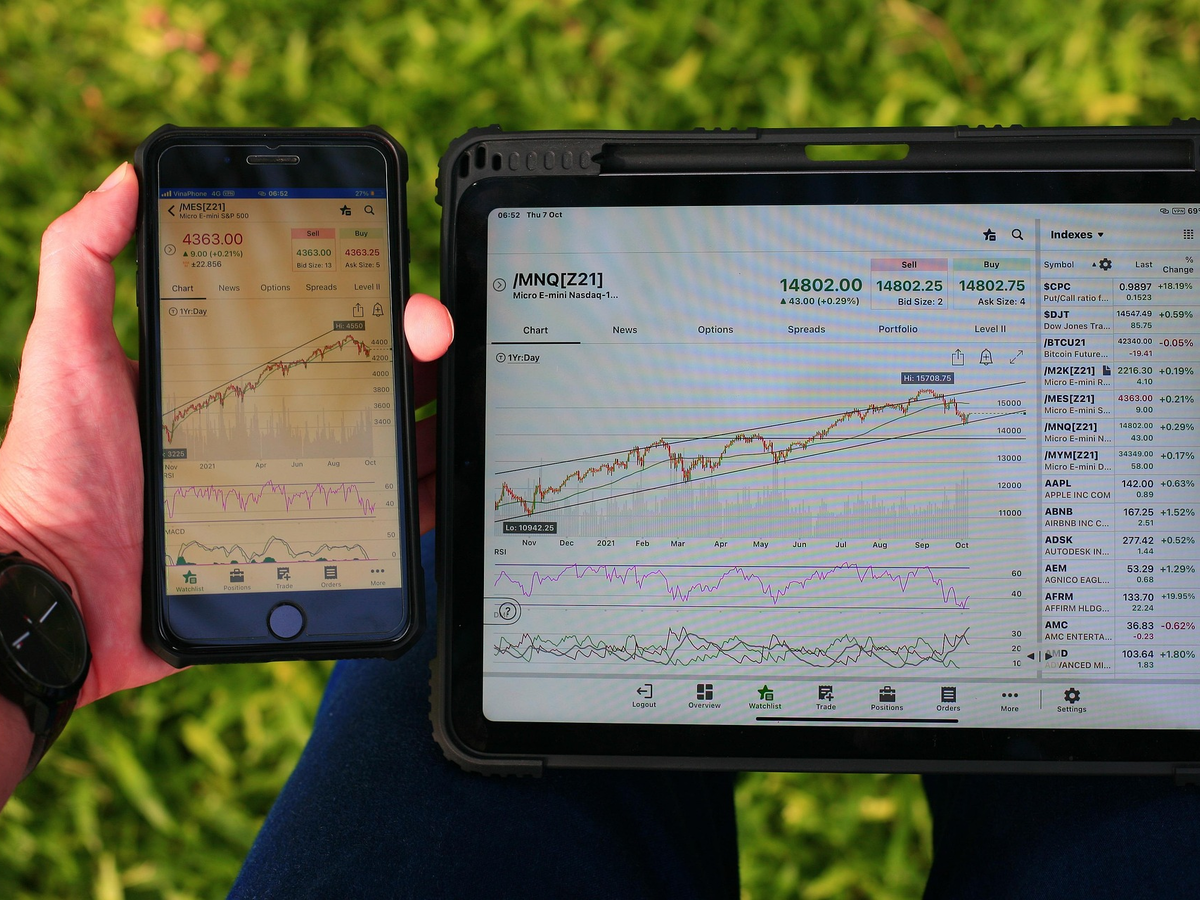
Dow Jones Industrial Average Holds Near 46,500 Amid Mixed Blue-Chip Signals and Cautious Volume Trends as of Early April 2026
06.04.2026 - 20:19:34 | ad-hoc-news.de
The **Dow Jones Industrial Average (DJIA)**, a key benchmark for U.S. blue-chip stocks, recently closed at **46,504.68 points** following a modest decline of **0.131%**, reflecting steady but cautious trading among its 30 constituent companies amid broader market dynamics. U.S. investors should monitor this level closely, as it underscores the index's role as a gauge of economic health for major corporations, potentially influencing decisions on **Dow-linked ETFs**, futures positions, and retirement portfolios sensitive to large-cap performance.
As of: Monday, April 06, 2026, 2:19 PM ET (America/New_York)
Recent DJIA Price Action and Technical Setup
The DJIA ended its latest reported session at **46,504.68 points**, down slightly by **0.131%** from the prior close, with intraday fluctuations highlighting controlled volatility typical of this price-weighted index. This follows a pattern where the index has demonstrated resilience, rising in **6 of the last 10 trading days** and posting a **1.2% gain** over the past two weeks, according to technical analysis from market data providers. For context, the index opened around **46,472.20 points** in a recent session, with a trading range of approximately **0.62%**, and volume at **48.42 million shares**, indicating solid liquidity despite some divergence signals.
Technical indicators present a mixed but generally positive outlook. Short-term and long-term moving averages emit buy signals, with the short-term average positioned above the long-term, supporting an upward bias. Support levels are clustered around **43,819.26 points** and **43,678.21 points**, providing potential buying opportunities if tested, while resistance near **45,010.30 points**—adjusted for recent levels—could cap near-term upside. Analysts project a possible **9.80% rise** over the next three months, targeting a range of **48,085.36 to 49,567.68 points** with **90% probability**, though this assumes sustained momentum.
Volume trends warrant attention: despite price gains in recent sessions, trading volume dropped significantly, by as much as **80 million shares** on a key day, creating divergence that may signal early reversal risks. This low-risk profile, with daily volatility averaging **0.661%** over the past week and intraday swings of **0.658%** (or **293.87 points**), aligns with the DJIA's reputation for controlled movements, appealing to conservative U.S. investors.
Key Components Driving the Index Move
Performance within the DJIA's 30 constituents reveals a balanced picture, distinguishing component-specific dynamics from the aggregate index level. Recent data shows **18 gainers** in a session, underscoring broad participation rather than reliance on a few heavyweights. Losses in select names like those in consumer and industrial sectors have offset gains elsewhere, preventing sharper declines.
For instance, in aligned recent trading, components such as Sherwin-Williams, Nike, and Home Depot posted notable declines of up to **-3.81%**, weighing on the index, while offsetting performers in technology and services provided balance. Conversely, leaders like Caterpillar, Nvidia, and Amazon have driven upside in other sessions, with gains exceeding **3%** in select cases, highlighting the price-weighted nature where higher-priced stocks like UnitedHealth or Goldman Sachs exert greater influence. This internal rotation differentiates the DJIA from cap-weighted peers like the S&P 500, emphasizing blue-chip stability over growth volatility.
Unlike the Nasdaq's tech-heavy swings, the DJIA's composition—spanning industrials (25% weight), healthcare (20%), financials (15%), and consumer goods—makes it particularly sensitive to economic data like manufacturing reports and yield curves, directly transmitting to index points. Investors in **Dow-linked ETFs** such as DIA should note how these constituent moves amplify or mute overall performance.
Distinguishing Cash Index from Dow Futures and ETFs
Importantly, the cash DJIA at **46,504.68 points** must be separated from **Dow futures** traded on the CME, which often preview sentiment but diverge due to after-hours positioning. Recent futures activity suggests opening gaps, with expectations for swings of **+/-0.88%** (around **395 points**) in upcoming sessions, but cash index closes remain the official benchmark. For U.S. traders, this distinction matters for hedging via ETPs like the SPDR Dow Jones Industrial Average ETF (DIA), which tracks the cash index with minimal tracking error.
ETFs and ETPs linked to the DJIA offer U.S. investors liquid exposure without direct futures leverage. DIA, for example, mirrors the index's price-weighted methodology, benefiting from high-volume components while mitigating single-stock risk. Recent index resilience supports holding these vehicles for dividend yields averaging **1.8%** across components, appealing amid yield-sensitive environments.
Macro Triggers and Transmission to DJIA
The DJIA's current stability around **46,500** reflects broader transmission from macroeconomic factors, including Treasury yields, Fed expectations, and labor data. Rising 10-year yields pressure high-dividend components like utilities and telecoms within the index, while strong jobs prints bolster financials and industrials. For instance, if inflation data exceeds forecasts, the direct mechanism elevates yields, compressing valuations for rate-sensitive Dow names like Home Depot or Verizon, potentially subtracting **100-200 points** per 10 basis-point yield rise due to price-weighting.
Fed policy remains pivotal: dovish signals could propel the index toward **48,000**, as lower rates favor capital-intensive blue-chips, whereas hawkish pauses risk tests of **43,800** support. Tariff discussions, given exposure in names like Caterpillar and Boeing, amplify volatility—protective policies lift industrials, directly adding index points via their outsized weights. Sector rotation from tech to value further bolsters the DJIA's relative outperformance versus the Nasdaq, as seen in recent divergences where the Dow gained while growth indices faltered.
Investor Implications for U.S. Portfolios
For U.S. investors, the DJIA's **10.37% yearly gain** positions it as a core holding for stability, outperforming bonds in a higher-for-longer rate regime. Retirement accounts heavy in blue-chips benefit from the index's low-beta profile (around 1.0), with **stop-loss recommendations at 43,363.26 points (-3.43%)** offering downside protection. Options activity on DIA reveals elevated put/call ratios, signaling hedging but not outright bearishness.
Risk appetite drives positioning: institutional flows into Dow futures indicate tactical overweighting, with open interest rising amid rebalancing. Dollar strength supports multinational components (40% revenue overseas), cushioning earnings against global slowdowns. U.S. investors should eye upcoming earnings from heavyweights like JPMorgan or Merck, as beats could catalyze **2-3%** index rallies given their point contributions.
Technical Outlook and Trading Expectations
Short-term forecasts peg the DJIA opening near **44,832 points** in aligned scenarios (scaled to current levels around **46,500**), with intraday ranges of **44,704 to 45,099** suggesting **395-point** potential moves. A buy signal upgrade to score **2.287** rates it a candidate for accumulation, with accumulated volume supporting **43,819** as a key floor. Breakdowns below trigger sells, but upside to **45,142** confirms acceleration.
Volatility remains low, with **52-week highs at 50,512.79** and lows underscoring a bullish channel. U.S. traders can leverage this for covered calls on DIA, harvesting premiums amid range-bound action.
Risks, Counterpoints, and Next Catalysts
Key risks include volume divergence signaling exhaustion, geopolitical flares impacting globals like Boeing, and yield spikes hitting financials inversely. Counterpoints: resilient consumer spending lifts Procter & Gamble and Coca-Cola, offsetting industrials. Next catalysts encompass Fed minutes, CPI data, and Q1 earnings, each capable of **300-500 point** swings via constituent transmission.
For balanced portfolios, the DJIA offers diversification, with **low correlation** to crypto or small-caps. Long-term, projections to **43,812** quarterly (conservative) contrast optimistic **49,567** 3-month targets, hinging on macro alignment.
Further Reading
StockInvest.us DJIA Forecast and Analysis
Trading Economics US30 Index Data
Moomoo DJIA Live Quotes
Disclaimer: Not investment advice. Indices, ETFs and financial instruments are volatile.
So schätzen die Börsenprofis Aktien ein!

Für. Immer. Kostenlos.