Dow Jones: Hidden Crash Risk Or Once-In-A-Decade Opportunity For US30 Traders?
07.02.2026 - 19:45:36 | ad-hoc-news.de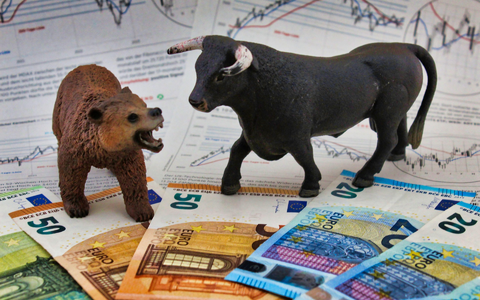
Get the professional edge. Since 2005, the 'trading-notes' market letter has delivered reliable trading recommendations – three times a week, directly to your inbox. 100% free. 100% expert knowledge. Simply enter your email address and never miss a top opportunity again. Sign up for free now
Vibe Check: The Dow Jones right now is in full mind-game mode. Price action is choppy, fake breakouts are everywhere, and both Bulls and Bears are getting whipsawed. With mixed economic data and a Federal Reserve that refuses to give a clear long-term signal, US30 is trading in a tense zone where every candle feels like a vote on the future of the US economy.
Want to see what people are saying? Check out real opinions here:
- Watch live Dow Jones trading battles unfold on YouTube
- Scroll the freshest Wall Street sentiment and chart art on Instagram
- Tap into viral TikTok plays and US30 trading tips
The Story: Right now, the Dow Jones is the purest reflection of a big question: is the US economy heading for a smooth soft landing, or a delayed hard hit that smacks blue chips when nobody is ready?
The backdrop starts with the Federal Reserve. After one of the most aggressive hiking cycles in decades, the Fed has shifted into a cautious wait-and-see mode. Officials keep repeating the same mantra: data dependent, no rush to cut, but also no desire to over-tighten. That leaves the market constantly reacting to every new data print:
- Inflation data (CPI/PPI): When inflation readings cool, the market dreams of earlier and deeper rate cuts, powering risk-on flows into indices like the Dow. When inflation is sticky, that dream dies quickly and you see sudden risk-off rotations, especially in rate-sensitive sectors.
- Labor market data: Strong jobs numbers are a double-edged sword. They support the soft-landing narrative, but also give the Fed cover to keep rates elevated for longer. Weak numbers revive recession fears and trigger defensive flows into classic Dow names while crushing cyclical optimism.
- Corporate earnings: Earnings season has become a real-time stress test for US30. Investors are laser-focused not only on reported profits, but on guidance: are CEOs talking about slowing demand, shrinking margins, or resilient consumers? Every comment about cautious outlooks or delayed investments hits the Dow’s industrial and financial names fast.
At the same time, bond yields are the invisible puppet master. When US Treasury yields rise sharply, discount rates go up, valuations get squeezed, and the market starts asking whether blue chips are priced for perfection. When yields ease back, the risk-on crowd rushes into cyclicals, financials, and industrials that live inside the Dow.
Layer on top the constant background noise of recession chatter versus soft-landing optimism. Some strategists see the economy gliding into a stable, lower-inflation environment with modest growth. Others argue the lagged impact of high rates has not fully hit Main Street yet. That tug-of-war is exactly why Dow price action feels like a sequence of fake breakdowns and fake rallies – nobody has conviction, and liquidity clusters around key zones rather than trending cleanly.
The blue-chip focus of the Dow also matters. While the NASDAQ is about high-growth tech and AI, the Dow is more about real-world business: banks, industrial giants, consumer staples, healthcare, and old-school tech titans. That makes US30 extremely sensitive to:
- Capex plans and industrial orders
- Global trade flows and supply chains
- Consumer strength and corporate pricing power
In other words: the Dow is the macro barometer of Wall Street. When the big players want to express a view on the real economy, they push US30 around.
Deep Dive Analysis: Under the hood, this market is all about macro cross-currents – and the Dow is sitting right at the intersection.
1. Bond Yields: The Gravity Of Valuations
Bond yields are the gravity field for all risk assets. Elevated yields mean cash and Treasuries are finally offering real returns again. That reduces the urgency to chase stocks at lofty valuations and forces investors to be selective.
For the Dow, this plays out in two key ways:
- Financials vs. the rest: Banks and insurers inside the index can benefit from higher yields and steeper curves, but they get hit if fears of credit risk and recession rise. When the yield curve flattens or inverts, the market starts worrying about lending margins and credit quality.
- Dividends vs. risk-free returns: Many Dow components are classic dividend payers. When Treasuries offer comparable or better yields with lower volatility, income-focused capital can rotate out of equities, putting pressure on US30 during risk-off phases.
Sharp, sudden yield spikes tend to trigger quick Dow pullbacks as algorithms reprice equity risk. Gradual, controlled moves are easier to digest and can even support the soft-landing story.
2. The US Dollar Index: Friend Or Foe For Blue Chips?
The Dollar Index (DXY) is another silent driver. A stronger dollar can hurt US multinationals because foreign earnings translate back into fewer dollars. It can also tighten global financial conditions, especially for emerging markets that borrow in USD.
Since many Dow components generate significant revenue overseas, a prolonged dollar upswing acts like a slow drag on earnings. On the flip side, a softer dollar eases pressure on global trade, commodities, and corporate results, providing a tailwind to US30. That is why Dow traders are always watching both DXY and commentary from multinational CEOs about currency headwinds.
3. Fed Policy And The Rate-Cut Fantasy
Every FOMC meeting, every Jerome Powell press conference, and even every offhand Fed comment can move the Dow because it adjusts the entire discount-rate outlook.
Markets have oscillated between aggressive rate-cut expectations and more cautious, shallow-cut scenarios. When traders price in faster and larger cuts, the Dow tends to enjoy relief rallies as discount rates fall and financing conditions are expected to ease. When the Fed pushes back against those expectations, the index can suffer sudden air pockets as reality bites back.
Right now, the Fed is trying to thread the needle: keep inflation under control without crushing growth. That is textbook soft-landing territory, but it is a tiny target to hit in real life. The Dow, as a basket of blue chips, becomes the scoreboard.
4. Sector Rotation Inside The Dow: Quiet But Brutal
Under the surface, there is a constant rotation battle happening:
- Old-school tech vs. new growth: Legacy tech names inside the Dow can lag pure-play AI winners on the NASDAQ during big speculative waves. But when the market cools and investors seek stability, these Dow tech giants become safe havens.
- Industrials and energy vs. defensives: When traders believe in global growth and infrastructure spending, industrial and energy names inside US30 get strong flows. When recession talk gets louder, defensive sectors like healthcare, consumer staples, and utilities often outperform, even if the headline index looks flat.
- Quality trade: In risk-off phases, you often see capital rotate within the Dow – out of cyclical names and into quality balance-sheet champions with strong cash flows and stable dividends.
This sector churn is why you can see the Dow moving sideways overall while under the hood there is an intense bull-bear fight as smart money reshuffles exposure.
5. Global Context: Europe, Asia, And 24/5 Pressure
The Dow does not trade in a vacuum. Overnight sessions in Asia and the European cash open set the tone for the US Opening Bell.
- Europe: Weak European manufacturing data, political instability, or banking stress can trigger global risk-off moves that bleed into US futures and push Dow components lower at the open. Strong European equity performance, especially in exporters and industrials, can support the risk-on mood for US blue chips.
- Asia: China’s growth trajectory is extremely important. Stimulus headlines, property-sector concerns, and export data from Asia all feed into the narrative about global demand. A supportive China policy mix usually boosts commodities, industrials, and shipping – all indirectly bullish for Dow names leveraged to global trade.
- Global liquidity: When central banks outside the US tighten aggressively, global risk appetite can shrink, reducing flows into US equities. When they pivot more dovish, liquidity can spill back into Wall Street indices, including the Dow.
In today’s market, bad news from Europe or Asia can hit US futures hours before New York wakes up, leading to overnight gaps and forcing day traders and swing traders in US30 to constantly respect the global calendar.
6. Sentiment: Fear, Greed, And Smart Money Flow
Sentiment around the Dow right now is best described as cautious, nervous, and opportunistic. Social media is split: one camp is screaming about an imminent crash, the other is ready to buy every dip as if a fresh multi-month rally is just one Fed sentence away.
Typical indicators paint a picture of elevated uncertainty rather than pure panic or euphoria. Fear-and-greed style gauges hover in the middle-to-tilted range, reflecting neither full capitulation nor blow-off top energy. That is classic environment for trap moves: fake breakdowns to shake out late Bulls, and fake rallies to lure in overconfident Bears.
Smart money flows often tell a slightly different story. While retail traders obsess over intraday spikes, institutional players quietly build or lighten positions around important zones instead of chasing extreme candles. The pattern suggests that big funds are not going all-in on a narrative yet – they are staging into positions, hedging with options, and keeping dry powder in case volatility spikes.
- Key Levels: Instead of clean trending, the Dow is currently reacting to important zones where buyers and sellers keep clashing. These are regions where prior rallies stalled or past sell-offs reversed, and they act as liquidity magnets. A decisive breakout above the upper zone could ignite a momentum chase, while a clean breakdown below support could open the door for a much deeper blue-chip correction.
- Sentiment: Bulls vs. Bears On Wall Street
Bulls argue that the soft-landing story is intact: inflation is cooling from previous peaks, earnings are not collapsing, and consumers are still spending. They see every shakeout as a chance to buy quality Dow names at a discount.
Bears counter that the lagged effect of high rates has not fully hit yet, that profit margins are at risk, and that any negative shock – geopolitical, credit, or policy – could flip US30 into a sustained downtrend. They view current resilience as a late-cycle trap.
Conclusion: The Dow Jones right now is not a market for lazy money. It is a battlefield where macro narratives, global flows, and sector rotation collide daily. For traders and investors, the key is to stop thinking in terms of simple bull vs. bear labels and start thinking in scenarios.
Scenario one: the soft-landing dream holds. Inflation keeps cooling without a major spike in unemployment, the Fed manages a cautious but real easing cycle, and earnings remain reasonably solid. In that world, pullbacks in the Dow are opportunities, and quality blue chips continue to grind higher over time.
Scenario two: the delayed-recession punch arrives. Credit conditions tighten, consumer weakness shows up in earnings calls, and corporate guidance turns defensive. In that world, US30 can see a sharp, sentiment-driven sell-off where crowded positions unwind and previous support zones fail fast.
Scenario three: prolonged chop. No clear disaster, no clean boom – just grinding sideways moves where range traders and options sellers make money while trend followers get frustrated. This is exactly what many traders are feeling now: lots of noise, limited follow-through, and constant false signals.
For Gen-Z and active traders, the move is not to gamble blindly on one outcome, but to:
- Respect the big macro drivers: Fed meetings, inflation data, labor numbers, and earnings.
- Watch sector rotation inside the Dow to see where smart money is hiding or attacking.
- Use clearly defined zones for risk management instead of chasing every viral headline.
- Combine sentiment signals from social media with hard data – not the other way around.
If you are going to trade the Dow, you need a process – not just a gut feeling and a social feed. Map your zones, know your time frame, size your positions, and remember: in a market where everyone is loud, risk management is your real edge.
Tired of poor service? At trading-house, you trade with Neo-Broker conditions (free!), but with real professional support. Use exclusive trading signals, algo-trading, and personal coaching for your success. Swap anonymity for real support. Open an account now and start with pro support
Risk Warning: Financial instruments, especially CFDs on indices like the Dow Jones, are complex and come with a high risk of losing money rapidly due to leverage. You should consider whether you understand how these instruments work and whether you can afford to take the high risk of losing your money. This content is for informational purposes only and does not constitute investment advice.
So schätzen die Börsenprofis Aktien ein!

Für. Immer. Kostenlos.