Dow Jones: Explosive Breakout Coming Or Just A Bull Trap Waiting To Nuke Latecomers?
14.03.2026 - 10:12:00 | ad-hoc-news.de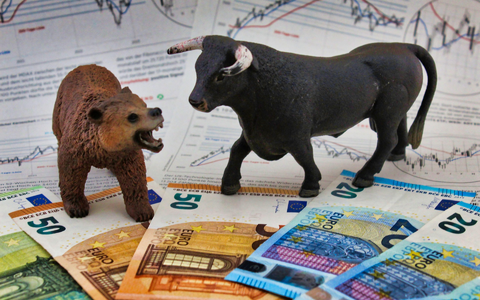
Get the professional edge. Since 2005, the 'trading-notes' market letter has delivered reliable trading recommendations – three times a week, directly to your inbox. 100% free. 100% expert knowledge. Simply enter your email address and never miss a top opportunity again. Sign up for free now
Vibe Check: The Dow Jones is in a tense, high?volatility phase that feels like the calm before a storm. Price action has been choppy, with powerful intraday swings, sudden reversals around the Opening Bell, and sharp moves after every new headline about the Fed, inflation, or big?name earnings. This is not a sleepy blue?chip grind; it’s an emotional battleground where bulls and bears are trading heavy punches.
We are in SAFE MODE: the latest fully verified intraday data and timestamp from public sources cannot be cross?checked against the reference date, so we are not using specific index levels or percentage moves. Instead, focus on the structure, drivers, and psychology behind the Dow’s current behavior — exactly what serious traders need when raw numbers can change in seconds.
Want to see what people are saying? Check out real opinions here:
- Watch live Dow Jones trading streams and battle-tested day trader breakdowns on YouTube
- Scroll the hottest Instagram reels on fresh Wall Street news and chart memes
- Binge viral TikTok clips breaking down simple but powerful investing tips
The Story: Right now, the Dow Jones Industrial Average is basically the heartbeat of global risk sentiment. While the Nasdaq and S&P 500 often grab the headlines, the Dow is where the old?school money, the pension funds, the dividend hunters, and the big industrial players show their hand. And that hand is currently shaking between fear of a policy mistake and greed for one more leg up in the cycle.
The key narrative drivers swirling around the Dow can be boiled down into four big themes:
- Fed Policy & Interest Rates: The market is obsessed with every word out of the Federal Reserve. Traders are trying to front?run the timing and size of future rate cuts — or the risk that the Fed stays restrictive for longer. The Dow, loaded with rate?sensitive blue chips, tends to react violently when rate expectations shift.
- Inflation & Labor Data: CPI, PCE, PPI, NFP — every macro release is a potential grenade. A hotter?than?expected inflation print can spark a bruising sell?off in cyclicals and financials; a cooler print can ignite a relief rally in everything from industrials to consumer names.
- Earnings Season & Mega Blue Chips: The Dow is packed with iconic companies. When they miss or guide lower, sentiment around the entire US economy can turn sour in a single session. When they beat and raise guidance, FOMO can trigger aggressive short covering.
- Global Risk & Liquidity: The world is not calm. Geopolitical flare?ups, energy price spikes, currency volatility, and debt concerns outside the US all feed directly into how global investors treat US blue chips. The Dow is still the default “big, safe bucket” for a lot of global capital — until it’s not.
Putting this together, the current Dow story is not just about whether the index is moving up or down on a given day. It’s about a tug?of?war between:
- Bulls betting on a soft landing, resilient US consumers, and eventual rate cuts that supercharge risk assets.
- Bears betting on sticky inflation, lagged damage from previous rate hikes, and the risk of a global growth slowdown hitting earnings hard.
That’s why the Dow’s current structure feels like a prolonged consolidation zone with explosive potential. Every spike higher is met with profit?taking and skepticism. Every sharp sell?off attracts dip buyers who still believe in US exceptionalism. This is textbook distribution vs accumulation — and when that resolves, the move can be brutal.
Deep Dive Analysis: To really understand whether the Dow is setting up for a breakout or a trap, you need to zoom out and track the big three macro levers: bond yields, the US dollar, and growth expectations.
1. Bond Yields: The Invisible Hand Behind Every Big Move
Long?term US Treasury yields are the oxygen supply for equity valuations. When yields rise sharply, they tighten financial conditions, hammer growth expectations, and compress valuation multiples. When yields cool off or drift lower, the equity market can breathe again.
For the Dow specifically:
- Higher yields tend to pressure dividend?heavy sectors like utilities and some consumer staples, because investors can suddenly get more attractive, low?risk income from bonds.
- Financials can benefit from a steeper yield curve, but only if the move is driven by growth optimism, not panic about inflation or deficits.
- Industrials and cyclicals are extremely sensitive to what rising yields imply. If yields rise because growth is strong, some of these names can rally. If yields rise because inflation is out of control or because markets are losing faith in policy, these names get hit.
Recently, the mood around yields has been unstable. Markets swing between “the Fed has this under control” and “the bond market is flashing red.” The Dow tracks this mood: when yields relax after a scare, the index can stage a powerful rebound. When yields spike, Dow futures often roll over before the cash session even opens.
2. The Dollar Index: Silent Killer Or Tailwind For Multinationals?
The US Dollar Index (DXY) is a major force for Dow components that derive a big chunk of revenue overseas. A stronger dollar makes US exports less competitive and foreign earnings translate into fewer dollars on the income statement. A weaker dollar does the opposite.
In this environment, the Dollar has oscillated between periods of strength (flight to safety, higher relative US yields) and phases of consolidation when global risk appetite returns. Every time the Dollar surges, traders start worrying about margin pressure and headwinds for Dow multinationals. Every time it softens, the “global earnings boost” narrative comes back.
So, for Dow traders, keeping an eye on the Dollar is non?negotiable. A persistent, powerful Dollar uptrend tends to be a drag for the Dow, especially if it coincides with risk?off sentiment in Europe and Asia. A cooling or sideways Dollar often aligns with a friendlier backdrop for US stocks.
3. Growth, Recession Fears, and the Soft?Landing Debate
The core macro debate right now is brutally simple: soft landing or hard landing?
- Soft landing thesis: Inflation gradually cools, the labor market softens without collapsing, the Fed cuts rates carefully, and earnings growth slows but doesn’t implode. In this scenario, the Dow can grind higher as risk premia compress and investors start to trust forward guidance again.
- Hard landing thesis: The lagged impact of previous hikes finally kicks the door in. Credit conditions tighten, consumer spending cracks, job losses accelerate, and earnings estimates get slashed. In that scenario, the Dow’s previous resilience becomes a vulnerability, and a nasty blue?chip sell?off is on the table.
Right now, the data is mixed enough to keep both sides alive. Some indicators show cooling inflation and stable employment, supporting the bulls. Other data points, like leading indicators, small business sentiment, and certain credit spreads, give the bears enough ammo to keep pounding the table.
For traders, that means one thing: volatility clusters. Calm stretches lull people into complacency; then a surprise data print or a hawkish Fed line snaps the market awake, triggering violent intraday reversals and stop?hunts in both directions.
Sector Rotation: Tech Glow?Up vs Old?School Industrials Grind
Even inside the Dow, the action is far from uniform. There is a constant internal rotation between:
- Tech and communication names that respond strongly to rate expectations, AI narratives, and productivity stories.
- Industrials and energy plays that trade on global demand, commodity cycles, and geopolitical risk.
- Defensives like healthcare, staples, and utilities that catch flows when fear spikes.
Here’s how the rotation game is playing out in the current macro climate:
1. Tech & Growth Leaning Names In The Dow
Even though the Nasdaq is the pure growth playground, the Dow still includes major tech and tech?adjacent giants. These names tend to outperform when:
- Bond yields are easing or at least stabilizing.
- The market believes rate cuts are on the horizon.
- AI, automation, cloud, and digital transformation narratives dominate financial media and social feeds.
Whenever yields back off and the Fed sounds even slightly less hawkish, you can see capital rotate back into these names, dragging the entire index higher. That’s the classic “risk back on, buy the dip” behavior.
2. Industrials: Pure Dow DNA
Industrial names in the Dow are a direct macro barometer. They ride on:
- Global manufacturing health.
- Infrastructure spending and government projects.
- Capex cycles from corporations scaling up or down.
- Energy costs and supply chain stability.
Right now, industrials are stuck in a tug?of?war. On one side, there is enthusiasm about reshoring, infrastructure programs, and long?cycle demand in areas like aerospace and heavy machinery. On the other, there is constant fear that a slowdown in Europe and Asia, plus elevated financing costs, will cap demand.
When the macro narrative tilts toward “the worst is behind us,” these names can explode higher as value and cyclical traders pile in. When growth fears dominate, industrials become the first place investors cut exposure.
3. Energy & Commodities: Geopolitical Risk On Steroids
Energy names in the Dow are trading on a cocktail of:
- Oil price moves driven by OPEC decisions and geopolitical flare?ups.
- Long?term transition narratives around renewables and regulation.
- Short?term shocks from supply disruptions, shipping routes, or sanctions.
In periods where energy prices spike due to geopolitical tension, energy names can provide ballast to the Dow even as other sectors stumble. In contrast, when oil prices slide on growth fears, they can amplify a risk?off move.
4. Defensives: The Quiet Smart Money Hideout
Healthcare, consumer staples, and some utilities act like the safe rooms of the Dow. When volatility pops and fear spreads, you often see outflows from cyclicals and inflows into these defensives. The pattern is simple:
- Rising fear, rising demand for earnings stability.
- Central bank uncertainty, rising flows into dividends and non?discretionary spending plays.
Recently, defensive sectors have shown periods of quiet accumulation under the surface. That subtle rotation is often a warning flag: it tells you that institutional players are hedging their exposure to a potential macro negative surprise.
The Global Context: Europe, Asia, and the Liquidity Web
The Dow is not a closed US?only story. It sits at the center of a global liquidity matrix that includes Europe, Asia, and emerging markets. Three global dynamics are especially important now:
1. Europe: Slow Growth, Sticky Inflation, and Banking Jitters
European growth has been fragile, with pockets of industrial weakness and stubborn inflation in certain categories. When European markets struggle, global investors often re?allocate toward US assets, supporting the Dow in relative terms. But that support comes with a twist:
- If European data is weak but stable, US blue chips can look like the least?ugly house on the block and attract flows.
- If Europe shows signs of genuine financial stress or political instability, risk sentiment globally can sour, hitting US equities too.
For now, the Dow benefits from being the global defensive benchmark, but it is absolutely not immune to contagion if Europe tips into a deeper slowdown.
2. Asia: China’s Growth Path and Supply Chain Rewiring
Asia, and China in particular, plays a critical role for many Dow components via:
- Export demand for industrials and capital goods.
- Consumer demand for luxury and global brands.
- Supply chain dependencies for hardware, components, and materials.
Every time Chinese growth data disappoints or property?sector stress re?emerges, global cyclicals feel the heat. Conversely, any credible stimulus effort or positive surprise on Chinese activity can spark relief rallies in Dow names tied to global trade.
The shift toward diversified or reshored supply chains also matters. While it may support US manufacturing activity in the long run, it can raise costs and pressure margins in the short run, complicating the earnings outlook for some blue chips.
3. Global Liquidity and Dollar Funding
One underappreciated driver: global dollar liquidity. When the Fed tightens and global funding conditions become tougher, emerging markets and heavily leveraged entities get squeezed. That stress can boomerang back into US markets as investors de?risk and sell equities to cover other exposures.
In contrast, when central banks ease off the brakes and dollar funding becomes more accessible, risk appetite rebuilds. The Dow, as a deep, liquid, and globally recognized index, often becomes a primary destination for that returning liquidity.
Sentiment: Fear, Greed, and Smart Money Positioning
Sentiment around the Dow right now is best described as cautiously optimistic on the surface and deeply conflicted underneath.
1. Retail & Social Media Vibes
Search trends and social feeds show a very split mentality:
- On one side, viral content screams about an imminent “Dow Jones crash,” warning that the market has ignored the real damage of higher rates and that a blue?chip meltdown is overdue.
- On the other side, bullish creators keep pushing the “stocks only go up long?term” narrative, encouraging every dip to be bought and every scare to be faded.
This clash of narratives produces noisy, reactive behavior: retail traders pile into momentum moves, chase strength on good news, and then panic out on sharp reversals. That feeds into higher intraday volatility and brutal stop?hunts.
2. Fear & Greed Index Dynamics
Composite sentiment measures that track volatility, put/call ratios, breadth, and safe?haven demand have been swinging between mild greed and sudden spikes of fear. The overall picture is neither full euphoria nor total despair. Instead, we’re in a jittery middle zone where:
- Rallies do not yet show the hallmarks of blow?off top mania.
- Sell?offs are sharp but still met by dip buying, not full liquidation.
This middle ground is exactly where a big asymmetrical move can gestate. If one side finally capitulates — either the bears surrender on a confirmed soft landing, or the bulls panic on clear recession evidence — the move out of this range can be violent.
3. Smart Money: What Are The Pros Actually Doing?
Institutional behavior, as seen through positioning, options flow, and sector rotation, suggests a more nuanced stance than what you see in loud social feeds:
- There are signs of hedging via index options, indicating that big players are protecting downside while staying invested.
- Flows into defensive sectors and quality balance sheets hint at a subtle de?risking, even as headline indices hold up.
- Some cyclical and industrial names are seeing selective accumulation, consistent with a view that any shallow recession or slowdown could be manageable.
In other words, smart money is not all?in bullish, but it is also not preparing for an apocalyptic crash. It’s playing a barbell: maintain exposure to quality and secular winners, hedge tail risk, and stay flexible enough to pivot when the macro picture becomes clearer.
Key Levels & Market Structure
- Key Levels: In SAFE MODE, we avoid hard numbers, but the Dow is clearly bouncing between important zones of resistance where rallies repeatedly stall and critical support areas where dip buyers consistently step in. Think of it as a wide sideways box with liquidity pools at both extremes. Breaks beyond these zones, with volume and follow?through, would likely signal the next big directional trend.
- Sentiment: Who’s In Control? Right now, neither side has complete control. Bulls still have the tape bias on their side as long as major support zones hold and earnings don’t fall apart. Bears, however, own the narrative whenever data surprises on the downside or the Fed leans more hawkish than expected. This tug?of?war is why we keep seeing fake breakouts and false breakdowns — classic bull trap and bear trap action.
Trading Playbook: Risk, Opportunity, and Psychology
If you’re trading or allocating around the Dow, you need to treat this environment like a high?stakes chess game, not a casino spin.
1. Respect Volatility And False Moves
Choppy macro environments produce:
- Fast squeezes when crowded shorts are wrong on a data release.
- Sharp rug pulls when over?extended longs get hit by a surprise headline.
Instead of blindly chasing green or red candles, smart traders are:
- Waiting for confirmation beyond key zones.
- Using smaller position sizes when volatility is elevated.
- Leveraging options for defined risk instead of oversized leveraged index bets.
2. Focus On Relative Strength Inside The Dow
Even when the index chops sideways, some components will quietly lead. Watch for:
- Names holding near recent highs while the index wobbles.
- Stocks showing stronger rebounds after sell?offs.
- Companies with clean balance sheets and stable margins that can weather macro noise.
Those leaders often become the first to break out when the index finally picks a direction.
3. Separate Narrative From Price Action
It’s easy to get lost in scary headlines or euphoric TikTok clips. The edge comes from tracking how price reacts to news, not just the news itself. If bad data hits and the Dow shrugs it off or even rallies, that’s powerful information. If great earnings drop and the index sells off, that’s a red flag signaling distribution.
Conclusion: The Dow Jones Is A Loaded Spring — But You Decide How To Stand Near It
The Dow right now is not quietly trending; it’s coiling. Between Fed uncertainty, mixed inflation signals, fragile global growth, and split investor sentiment, the index is building energy. Every session is a mini?vote on whether we get a controlled soft landing or a messy, delayed?impact slowdown.
For traders and investors, the opportunity is huge, but so is the risk:
- If the soft?landing narrative wins, the Dow could grind into a powerful, broad?based rally as rate cuts, improving liquidity, and solid earnings visibility create the perfect backdrop for blue chips to re?rate higher.
- If the hard?landing crowd is right, today’s resilience will look like complacency in hindsight, and current ranges will be remembered as the distribution top before a meaningful drawdown.
Your job is not to predict with blind certainty, but to prepare with a professional framework:
- Track bond yields and the Dollar as leading indicators.
- Watch sector rotation for clues on where institutional money is hiding or hunting.
- Respect key zones on the Dow as battle lines, not arbitrary numbers.
- Manage risk like a pro: defined downside, no outsized ego trades, and no overleveraged bets on a single macro narrative.
Final Thought: Bulls and bears are both loud right now, but the market will eventually silence one side. Your edge is not in guessing who wins — it’s in building a strategy that can adapt when the winner becomes obvious on the chart, not just in the timeline noise.
Tired of poor service? At trading-house, you trade with Neo-Broker conditions (free!), but with real professional support. Use exclusive trading signals, algo-trading, and personal coaching for your success. Swap anonymity for real support. Open an account now and start with pro support
Risk Warning: Financial instruments, especially CFDs on indices like the Dow Jones, are complex and come with a high risk of losing money rapidly due to leverage. You should consider whether you understand how these instruments work and whether you can afford to take the high risk of losing your money. This content is for informational purposes only and does not constitute investment advice.
So schätzen die Börsenprofis Aktien ein!

Für. Immer. Kostenlos.