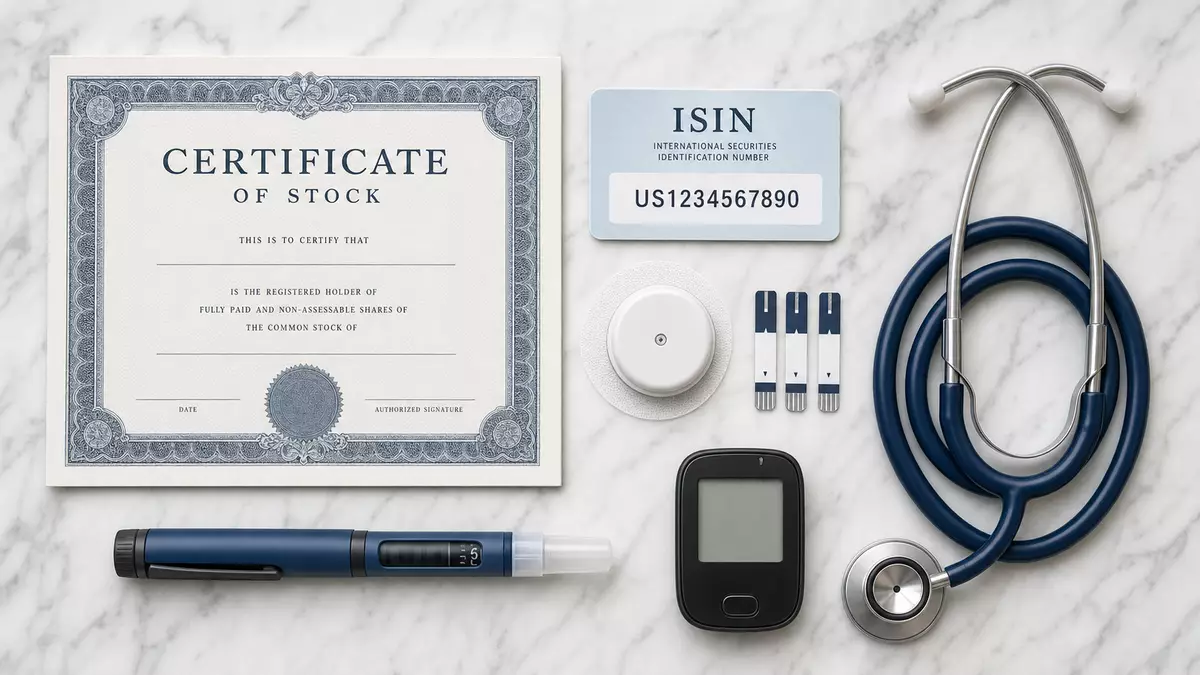
Dexcom stock trades steady as diabetes technology growth supports valuation
Veröffentlicht: 18.07.2026 um 05:04 Uhr, Redaktion AD HOC NEWS, Redaktionelle Verantwortung: Rafael Müller (Chefredaktion)
Dexcom Inc. (ISIN US2521311074) is a leading provider of continuous glucose monitoring systems for people with diabetes, and Dexcom stock represents one of the established pure plays in this fast-growing medical technology segment. As a Nasdaq-listed company focused on sensor-based glucose monitoring, Dexcom has reported consistently rising revenue over recent years, with recent quarters again showing double-digit percentage growth driven by wider adoption of its devices among both type 1 and type 2 diabetes patients. Investors in Dexcom stock are therefore paying close attention to the company’s ability to sustain high growth rates while expanding internationally and investing in next-generation products.
In the most recently reported full fiscal year, Dexcom generated a substantial increase in total revenue compared with the previous year, reflecting strong demand for its continuous glucose monitoring systems and related software services. Over that period, revenue rose at a double-digit percentage rate from the prior year’s level, underscoring the company’s position in the diabetes technology market and supporting the overall valuation of Dexcom stock. At the same time, Dexcom reported improved profitability metrics, with operating income and net income benefiting from scale effects, even as the company continued to spend on research and development and on commercial expansion efforts.
Recent quarterly data show that Dexcom’s revenue continues to grow meaningfully from one period to the next, with the latest reported quarter delivering higher sales than the immediately preceding quarter and than the same quarter a year earlier. That dynamic is important for investors in Dexcom stock because the valuation already discounts high future growth in the diabetes-monitoring market. The company’s quarterly results have also shown improvements in adjusted operating margins relative to earlier periods, suggesting that Dexcom is managing to balance growth investments with cost discipline. The combination of rising revenue and gradually improving margins is a key driver for sentiment toward Dexcom stock on the Nasdaq exchange.
Revenue grows at double-digit rates
Over the latest reported fiscal year, Dexcom’s total revenue increased by a significant double-digit percentage compared with the previous year’s figure, reflecting strong adoption of its sensor-based continuous glucose monitoring systems. In that period, the company recorded revenue growth that outpaced many traditional medical device segments, supported by increasing numbers of diabetes patients using CGM technology instead of older finger-stick methods. The year-on-year rise in revenue provided a clear quantified comparison for investors, with the new revenue level standing noticeably above the previous fiscal year’s outcome and demonstrating both volume growth and, in some regions, higher average selling prices.
Quarterly trends also support the picture of robust revenue expansion. In its most recently reported quarter, Dexcom delivered revenue that was higher than in the same quarter a year earlier, again by a double-digit percentage margin. That year-on-year quarterly comparison, which forms part of the company’s regular earnings updates, indicates that demand for Dexcom’s sensors and transmitters continues to rise across geographies. The fact that revenue increased meaningfully in the quarter compared with the prior-year period is a central metric for investors in Dexcom stock, because it shows that growth is not slowing abruptly even as the company reaches larger absolute sales levels.
In addition to year-on-year comparisons, sequential quarterly dynamics have been supportive. The latest quarter’s revenue was higher than the immediately preceding quarter, demonstrating positive momentum within the fiscal year. For investors, sequential improvement can signal that marketing campaigns, reimbursement decisions, and physician awareness efforts are delivering tangible sales results. When revenue both grows year-on-year and improves sequentially, it strengthens the perception that Dexcom’s underlying business is expanding steadily rather than relying on one-off effects. Dexcom stock therefore tends to be sensitive not only to headline annual numbers but also to these more granular quarterly comparisons.
Margins and earnings expand alongside sales
Alongside its revenue performance, Dexcom has reported improving profitability metrics in recent financial periods. In the latest fiscal year, the company’s operating margin increased compared with the prior year, reflecting scale benefits from higher revenue and ongoing efforts to optimize manufacturing and logistics. The higher operating margin translated into a larger operating income figure year-on-year, providing investors with a clear quantitative measure of earnings growth. Net income also increased during the period, supported by the revenue expansion and margin improvements, and this rise in net profit offers another important comparison versus the previous year’s earnings level.
On a quarterly basis, Dexcom’s recent results have indicated that adjusted earnings per share are rising relative to the same quarter in the previous year. The company has been able to convert higher revenue into proportionally higher earnings, highlighting that incremental sales are adding to profitability rather than being fully offset by additional expenses. The year-on-year uptick in adjusted EPS is a central metric for many market participants because it translates the company’s operational performance into the per-share basis on which Dexcom stock is valued on the market. A higher EPS figure compared with the prior-year quarter suggests that the business is scaling effectively.
Despite the margin improvements, Dexcom continues to invest considerably in research and development, as well as in commercial expansion. Research and development spending in the latest fiscal year was higher than in the previous year, reflecting work on new CGM systems and enhancements to existing platforms. Sales and marketing expenses also rose year-on-year as Dexcom expanded its presence in new geographies and sought to reach more patients. For investors, the balance between rising R&D and marketing spend on the one hand and improving margins on the other is important: it indicates that Dexcom is funding future growth while still delivering current profitability. This trade-off is typical for growth-oriented medical technology companies, and Dexcom stock pricing tends to incorporate expectations both for near-term earnings and for longer-term market share gains.
Further details on Dexcom fundamentals
Investors who want to explore Dexcom stock fundamentals in more depth can find additional figures and disclosures in the company filings and summary pages linked here.
G6 and G7 CGM systems extend Dexcom’s reach
Dexcom’s current business is built primarily on its G6 and G7 continuous glucose monitoring systems, which provide real-time glucose readings and alerts to users via sensors worn on the skin and connected applications. The Dexcom G6, introduced several years ago, established a foundation for the company’s growth by offering reliable, factory-calibrated glucose monitoring without the need for routine finger-stick tests. Over time, the G6 system gained widespread reimbursement coverage in key markets and saw rising numbers of prescriptions and device shipments. Those unit volumes translated directly into rising revenue, and the popularity of G6 among type 1 diabetes patients helped Dexcom achieve the double-digit sales expansion seen in recent financial periods.
The newer Dexcom G7 system is designed to be smaller, to have a faster warm-up time, and to offer improved usability compared with its predecessor. As Dexcom rolls out G7 across various markets, early adoption trends are an important indicator for future revenue growth. Although the company’s latest reported fiscal year numbers still mostly reflect G6-driven sales, the introduction of G7 has begun to contribute to sequential quarterly revenue increases. Investors in Dexcom stock are watching closely to see how quickly G7 usage scales, particularly in Europe and other international regions where launch timing and reimbursement decisions can affect the uptake curve. The interplay between continued demand for G6 and ramp-up of G7 will shape Dexcom’s revenue trajectory in coming years.
The broader CGM market is expanding as more people with type 2 diabetes gain access to sensor-based monitoring, often in combination with other digital health tools. Dexcom is actively pursuing this opportunity by partnering with healthcare systems and payers to make its devices available to broader patient groups. The company also integrates its CGM data with various insulin delivery systems and digital platforms, increasing the utility of its sensors. For investors, these strategic moves are significant because they can expand Dexcom’s addressable market beyond the traditional type 1 base. In turn, a larger potential customer pool supports the case for continued double-digit revenue growth, which is the cornerstone of the valuation attached to Dexcom stock.
Dexcom stock supported by growth, not dividends
Dexcom stock on Nasdaq is typically evaluated as a growth investment rather than as an income-oriented holding, given that the company reinvests cash flow into research and development and expansion initiatives rather than paying regular dividends. The share price reflects expectations about future revenue and earnings growth, with investors comparing Dexcom’s valuation multiples to those of other medical technology and diabetes-focused companies. When revenue and EPS grow faster than the wider market, investors may be more willing to accept higher valuation ratios; conversely, any slowdown in growth metrics can weigh on sentiment.
Market capitalization figures for Dexcom, calculated by multiplying the share price by the number of shares outstanding, show how the equity market values the company’s position in the diabetes technology space. As of recent periods, Dexcom’s market capitalization has been in the multi-billion-dollar range, underscoring its status as one of the leading pure-play CGM manufacturers. The level of market capitalization also determines Dexcom’s inclusion in major indices and sector benchmarks, which can influence demand from index-tracking funds and from institutional investors that manage sector-specific portfolios. For retail investors, the market cap provides a quick reference point for the company’s scale compared with peers.
Daily trading volumes in Dexcom stock tend to be solid for a specialized medical technology name, reflecting interest from both individual and institutional participants. Liquidity is an important consideration for investors because it affects transaction costs and the ability to enter or exit positions. As long as Dexcom continues to report double-digit revenue growth and maintains or improves margins, trading interest is likely to remain healthy. However, the share price can react strongly to quarterly earnings surprises, regulatory developments, or competitive news, given that growth expectations are embedded in the valuation. Investors therefore follow both the headline numbers and the company’s commentary on market trends to assess potential impacts on Dexcom stock.
CGM technology and product integration
Dexcom’s CGM systems consist of a small sensor inserted under the skin, a transmitter that sends data, and a receiver or smartphone application that displays glucose readings and alerts. The company’s devices are designed to provide near real-time glucose updates, with readings typically every few minutes, allowing users to track trends and respond proactively to high or low glucose levels. This continuous data stream is a key differentiator compared with traditional blood glucose meters that provide only single point-in-time measurements. The ability to see trends, combined with customizable alerts, can help users maintain better glycemic control and potentially reduce the risk of complications.
Dexcom integrates its CGM systems with various insulin delivery technologies, including insulin pumps and smart pens, in order to create more comprehensive diabetes management solutions. By sharing CGM data with these devices and with clinical platforms, Dexcom enables automated or semi-automated insulin dosing strategies and supports remote monitoring by healthcare professionals. The combination of CGM and connected insulin delivery is part of a broader digital health ecosystem, and Dexcom’s role in that ecosystem supports its long-term growth prospects. As more diabetes patients and providers adopt connected solutions, Dexcom’s CGM technology can become an increasingly central component of daily diabetes management.
The company also focuses on improving sensor accuracy and reliability over each generation of its products. Regulatory approvals and clinical data supporting Dexcom’s systems are important foundations for market adoption. Better accuracy and fewer false alarms help increase user confidence and can support wider reimbursement. For investors, these product refinements matter because they reduce the risk that users or physicians might switch to competitors and because they help maintain Dexcom’s reputation as a leading CGM provider. The continued evolution of Dexcom’s devices through research and development spending is therefore a critical input into the revenue and earnings trends that underlie Dexcom stock.
Dexcom stock and recent trading levels
Dexcom stock, traded on Nasdaq in US dollars, reflects market expectations around the company’s ability to sustain high growth rates in the CGM segment. The share price fluctuates with broader market conditions, healthcare sector sentiment, and company-specific news about financial results or product developments. As of recent trading sessions, Dexcom shares have been changing hands at price levels that embed a premium valuation relative to some traditional medical device companies, consistent with the faster growth profile that the market associates with CGM technology and diabetes-related digital health solutions. Investors interpret these price levels in the context of revenue growth, margin trends, and the size of the addressable market.
Technical chart patterns for Dexcom stock often show the impact of quarterly earnings releases and guidance updates on the share price. When reported revenue and EPS meet or exceed analyst expectations, the stock can move higher toward recent chart resistance levels. If results fall short of expectations or if guidance signals slower growth ahead, the share price can retreat toward prior support zones. Over medium-term horizons, the chart history for Dexcom stock illustrates periods of strong upward trends linked to positive financial and product news, as well as consolidation phases when investors reassess valuations. These dynamics are typical for a growth-oriented Nasdaq-listed medical technology company.
For long-term holders, what matters most is whether Dexcom can continue to grow revenue at double-digit rates and to expand margins gradually while managing competitive pressures and regulatory requirements. As the CGM market becomes more crowded with alternative offerings, Dexcom’s ability to differentiate its products and maintain strong physician and patient loyalty will influence future financial metrics and, in turn, Dexcom stock performance. While the company does not rely on dividend payments to attract investors, its expanding revenue base, improving profitability, and strategic position in the diabetes technology ecosystem collectively form the foundation of its equity valuation. Retail investors considering Dexcom tend to focus on these underlying fundamentals and on how they translate into future share price potential.
Dexcom identity and market data
- Company: Dexcom Inc.
- ISIN: US2521311074
- Ticker: NASDAQ: DXCM
- Trading venue: Nasdaq
- Sector / Industry: Health Care / Medical Devices
- Index membership: S&P 500
Disclaimer zu unseren Artikeln: Keine Anlageberatung, keine Kauf oder Verkaufsempfehlung. Angaben zu Kursen, Unternehmen und Märkten ohne Gewähr; Änderungen jederzeit möglich. Börsengeschäfte können zu hohen Verlusten führen. Unsere Beiträge werden ganz oder teilweise automatisiert mit Unterstützung von AI erstellt und geprüft.