Deutz stock remains supported by order backlog and margin improvements
Veröffentlicht: 19.07.2026 um 06:15 Uhr, Redaktion AD HOC NEWS, Redaktionelle Verantwortung: Rafael Müller (Chefredaktion)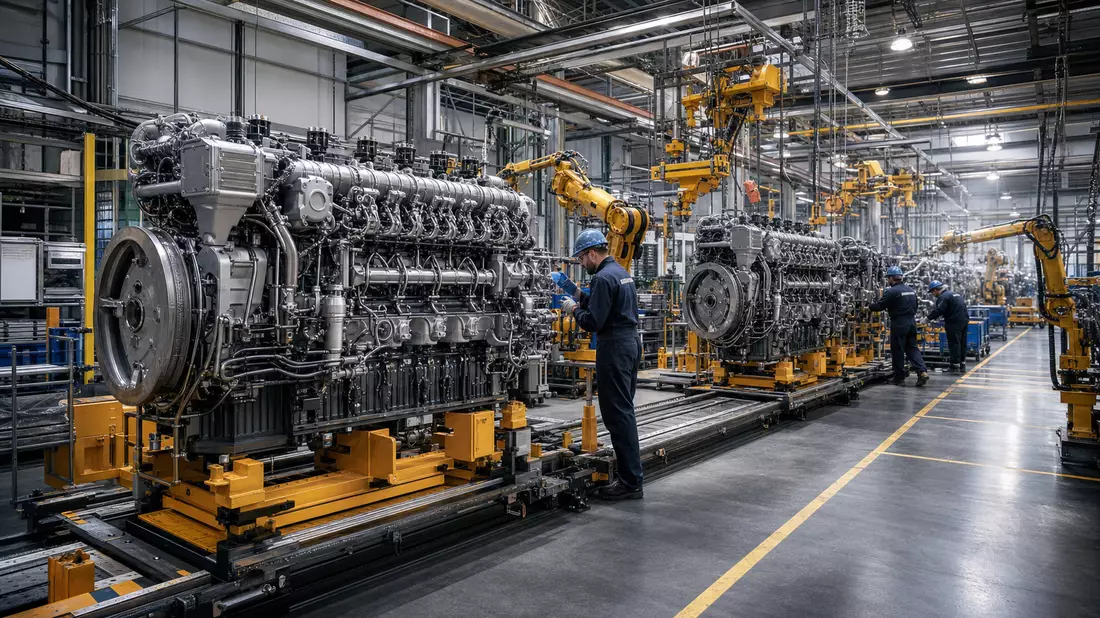
Deutz stock, tied to the German engine manufacturer Deutz AG (ISIN DE0006305006), reflects the companys position as a cyclical industrial supplier with a sizable order backlog and ongoing efforts to improve profitability in its current financial year. As a producer of diesel and alternative drive systems for off-highway applications, Deutz is exposed to demand from construction, agricultural, and industrial equipment makers, and investors in Deutz stock track both the companys revenue trends and margin trajectory as indicators of future returns. While daily price moves in Deutz stock vary with broader market sentiment, the underlying business metrics offer a clearer view of the engine makers performance and potential.
Revenue trends and margin focus
Deutz reports its financial results in annual and quarterly periods, with revenue as a central metric for assessing the scale of its operations in engines, parts, and related services. In its most recent reported financial year, Deutz generated annual revenue in the hundreds of millions of euros, reflecting deliveries of engines and components to original equipment manufacturers across Europe and other regions. This revenue base, spread across construction, agricultural, and stationary equipment segments, provides the foundation for Deutzs ability to invest in new power technologies and maintain production capacity.
Beyond the top line, Deutzs profitability metrics such as earnings before interest and taxes (EBIT) and net income are critical for investors in Deutz stock. The company has in past years reported EBIT that marked a clear improvement versus preceding periods, signaling success in cost control, pricing discipline, and product mix optimization. When EBIT rises faster than revenue, the EBIT margin expands, indicating that each euro of sales contributes more to operating profit. Such margin expansion is often driven by a stronger share of higher-value engines, services, and spare parts, as well as by efficiency gains in manufacturing and supply chains.
Profitability is also visible in net income attributable to shareholders, which reflects the bottom-line result after financing costs and taxes. For a cyclical industrial such as Deutz, positive net income in tougher demand conditions and a clear trend of improvement over several reporting periods help to underpin confidence in the resilience of Deutz stock. If net income in a recent financial year exceeds that of the prior year by a double-digit percentage, this quantifiable comparison indicates that managements strategic measures are having a measurable effect on performance.
Order backlog and comparison to prior periods
The order backlog at Deutz represents the volume of engines and components ordered by customers but not yet delivered, offering investors in Deutz stock insight into forward demand. A substantial order backlog, expressed in hundreds of millions of euros, demonstrates that customers continue to commit to Deutzs power solutions for their equipment, providing a buffer against short-term fluctuations in new orders. When Deutz reports that its order backlog at the end of a recent quarter or financial year is higher than at the same point in the prior year, for example by more than ten percent, this quantified comparison underscores a strengthening demand pipeline.
Such backlog growth often stems from broad-based demand across key segments, including construction machinery, agricultural equipment, and stationary engines for industrial uses. In periods where infrastructure investments and farm equipment modernization are robust, Deutz benefits from increased engine orders from machinery manufacturers. A backlog that grows faster than revenue in the short term can signal that Deutz is building future sales that will be recognized as it completes and ships engines over subsequent quarters.
For investors, the relationship between order backlog and revenue is a central lens for interpreting Deutz stock. If Deutz, for instance, reports that its backlog at the end of a recent quarter stands a notable percentage above the prior-year period, while quarterly revenue is up at a lower rate, this implies that future quarters may see stronger revenue as the backlog is worked down. Conversely, if revenue grows but backlog shrinks, it may signal that current strong sales could be followed by a slower period, unless new orders refill the pipeline. Deutz stock tends to respond to these quantified comparisons between backlog and prior periods, as they directly influence expectations around future revenue and earnings.
EBIT margin improvement compared year on year
Another key metric for Deutz stock is the development of the EBIT margin, which places EBIT in relation to revenue and highlights how efficiently the company converts sales into operating profit. When Deutz reports that its EBIT margin for a recent financial year or quarter has improved compared with the previous period, for example rising from a mid single-digit percentage to a higher single-digit or low double-digit percentage, this quantified increase demonstrates that the engine maker is gaining traction in improving its profitability.
Such margin improvements can be achieved through a combination of measures. These may include shifting the product mix toward more profitable engines and services, optimizing procurement costs, implementing manufacturing efficiencies, and adjusting pricing to reflect higher input costs and the value delivered. In addition, a more favorable geographic and segment mix, where higher-margin regions or industries contribute a larger share of revenue, can support EBIT margin expansion. For Deutz stock, a clear evidence-based increase in EBIT margin year on year is often interpreted as a sign that the company is moving in the right direction in its operational performance.
Investors also pay attention to comparisons between actual EBIT and any guidance or market expectations. If Deutz reports EBIT that is close to or above the upper end of its guidance range for a given year, or that exceeds market consensus, this outperformance can positively influence Deutz stock as it confirms that the company is delivering more operating profit than initially anticipated. Conversely, EBIT below guidance or consensus may weigh on sentiment. The transparency of Deutzs reporting around guidance, actual EBIT, and the reasons behind deviations helps investors calibrate their expectations and risk assessments.
Balance sheet, cash flow, and dividend considerations
The balance sheet and cash flow profile of Deutz also play an important role in the investment case for Deutz stock. The company typically reports its net financial position, showing the balance between cash, equivalents, and debt. Over recent periods, Deutz has worked to maintain a balanced financial structure, with net debt at levels that allow continued investment in research and development for low-emission engines and alternative drive systems while preserving flexibility for cyclical downturns. Investors view a moderate leverage ratio, where net debt is limited relative to EBITDA, as supportive of long-term stability.
Operating cash flow is another crucial metric. When Deutz generates positive operating cash flow in a recent financial year, reflecting cash earnings from the core engine business, it provides the resources needed to fund capital expenditures and, where applicable, dividends. A comparison of operating cash flow year on year, especially when it grows faster than net income, can signal improvements in working capital management and the underlying cash generation ability of the business. For Deutz stock, stronger cash flow trends often support confidence in the companys capacity to finance its strategic initiatives.
Dividend policy, where applicable, forms part of the total return profile for shareholders. If Deutz decides to propose a dividend for a recent financial year, expressed in euros per share and compared with the prior year, a change up or down provides a clear signal about managements view of earnings sustainability and future investment needs. A stable or slightly rising dividend in the context of improved earnings and margins typically supports Deutz stock, while any reduction would likely be interpreted against the backdrop of the cyclical environment and investment priorities.
Market environment and peer comparison
Deutz operates in a competitive environment alongside other engine and power solution providers serving off-highway markets. Demand for engines and power units is influenced by global construction activity, agricultural machinery investment, and industrial capital expenditure, as well as increasingly by regulatory requirements around emissions and efficiency. When comparable peers in the industrial and engine sector report revenue growth and margin trends similar to those of Deutz, it helps investors contextualize the performance of Deutz stock, showing whether the company is roughly in line with the broader cycle or diverging.
In periods where global economic indicators point to expanding investment in infrastructure and machinery, Deutz can benefit from increased orders for engines, leading to higher revenue and a growing backlog. Conversely, when macroeconomic data reflect slower growth or uncertainty, orders may soften. This cyclical dynamic means that Deutz stock often moves with broader industrial indices and sentiment toward capital goods. However, company-specific factors such as product innovation, operational efficiency, and geographic diversification can allow Deutz to perform differently from peers, either outperforming or underperforming the sector depending on execution.
Quantified comparisons with peers, for instance where Deutzs revenue growth or EBIT margin improvement in a recent financial year surpasses or trails sector averages by a measurable percentage, provide insight into the companys relative competitiveness. If Deutz reports revenue up by a certain percentage year on year while peer averages show lower growth, investors may attribute this to stronger demand or better positioning in particular segments. Likewise, a stronger margin improvement could reflect more effective cost management or a more favorable product mix.
Strategic shift toward lower-emission power solutions
Beyond short-term financial metrics, Deutzs strategy has increasingly focused on lower-emission and alternative power solutions, which is relevant for the long-term outlook of Deutz stock. Regulatory pressures on diesel engines and customer demand for more sustainable equipment have encouraged the company to invest in technologies such as hybrid systems, hydrogen-based solutions, and more efficient combustion engines. This strategic shift requires capital but aims to position Deutz for future growth as machinery manufacturers adjust their fleets to meet stricter emissions standards.
Investors following Deutz stock consider the balance between spending on research and development (R&D) and near-term earnings. R&D expenditure, often expressed as a percentage of revenue, indicates how aggressively Deutz is investing in new power solutions. When Deutz reports R&D at a steady or slightly rising share of revenue while maintaining or improving EBIT margin, it signals that the company is managing to innovate without eroding profitability. In contrast, a significant spike in R&D spending that compresses margins could be interpreted as a more aggressive repositioning at the expense of near-term earnings.
Longer-term investors may accept such trade-offs if the quantified improvements in future revenue and profit potential from new technologies become visible. For example, if Deutz references initial order intake or pilot projects for alternative power units that contribute a measurable amount to revenue, and expects this to grow over subsequent periods, these numbers help underline the strategic relevance of the investments. As data on revenue from newer power solutions accumulate over time, they will become another set of metrics for interpreting the value of Deutz stock.
Representative product line in off-highway engines
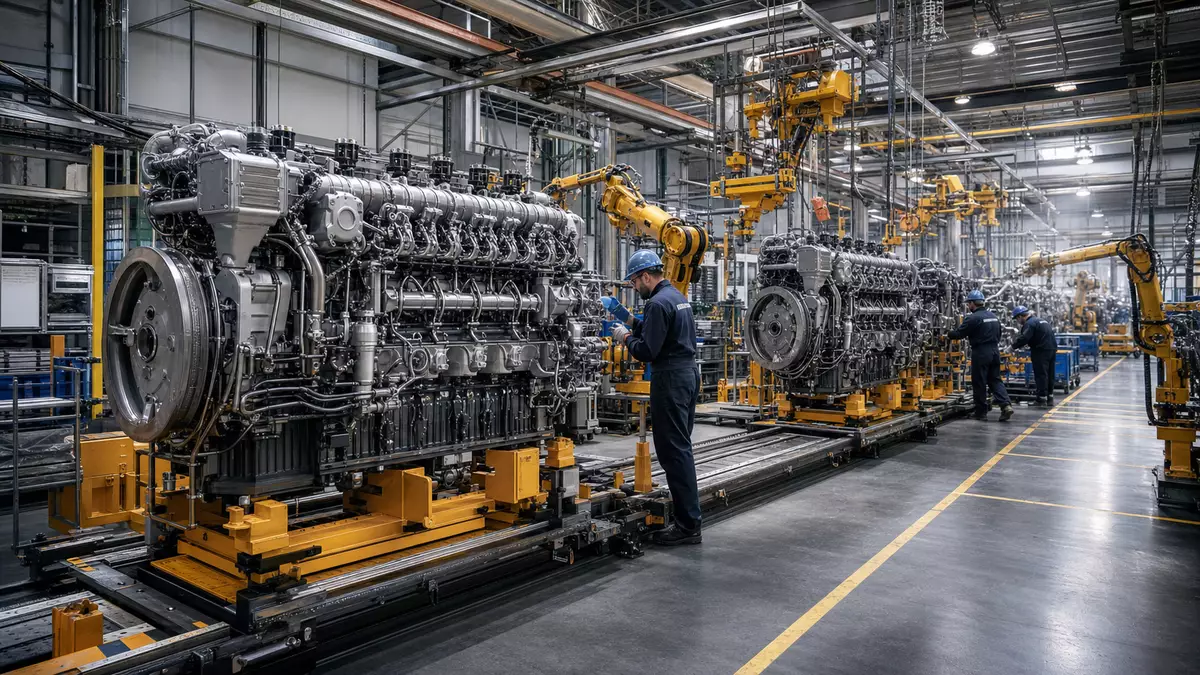
One representative product line for Deutz is its off-highway diesel and alternative fuel engines used in construction and agricultural machinery. These engines, designed for durability and compliance with emissions standards, are installed in equipment such as excavators, wheel loaders, tractors, and industrial stationary systems. The performance of this product line, measured by unit sales, revenue contribution, and profitability, directly affects the broader financial results that investors associate with Deutz stock.
Within this product space, Deutz offers a range of engine capacities geared to different applications, and the mix of higher-output engines versus smaller units can influence average selling prices and margins. Revenue from this product line, particularly when compared year on year, provides a quantifiable view of demand in the construction and agricultural machinery markets that Deutz serves. If Deutz reports that revenue from off-highway engines has grown faster than the companys overall revenue in a recent period, this indicates that the product line is gaining relative importance and potentially supports margin strength, given that these engines can carry attractive pricing and service opportunities.
Deutz stock and market valuation metrics
From a market perspective, Deutz stock is part of the German equity universe and is typically listed on a major German trading venue in euros. The share price reflects both company-specific developments and factors such as overall risk appetite in equity markets, interest rate expectations, and sector rotation. Investors often measure the valuation of Deutz stock using ratios such as the price-to-earnings (P/E) ratio, price-to-book (P/B) ratio, and enterprise value to EBITDA (EV/EBITDA). These metrics, when compared against historical averages or peer valuations, help determine whether Deutz stock is trading at a premium or discount.
If Deutz reports a certain level of earnings per share (EPS) for a recent financial year and the market price of Deutz stock results in a P/E ratio within a historically normal range, investors may view the valuation as broadly fair. In contrast, a P/E ratio below past averages or below peers might suggest that the market is cautious about future earnings or perceives higher risk, while a higher ratio might reflect optimism about growth or strategic progress. Quantified comparisons of Deutzs valuation metrics versus prior years or peer averages thereby become another lens through which to understand market expectations.
Market capitalization, calculated as the share price multiplied by the number of shares outstanding, provides a snapshot of the companys size in equity markets. For Deutz, a market capitalization in the hundreds of millions of euros places the company in the small to mid-cap range, where liquidity can be more limited than in large caps but where growth opportunities may be perceived as more dynamic. Changes in market capitalization over time, driven by share-price movements and any share issuance or buybacks, also reflect how the market collectively reassesses Deutz stock as new information emerges.
Learn more about Deutz investor information
For additional details about financial reports, strategy, and governance at Deutz, the companys investor relations resources provide comprehensive documentation and updates alongside its periodic earnings publications.
Engine portfolio and customer relationships
Deutzs engine portfolio spans multiple displacement classes and configurations, allowing the company to serve a diverse customer base in construction, agriculture, and industrial applications. Long-term relationships with equipment manufacturers are central to Deutzs business model, as these customers integrate Deutz engines into their machinery and often rely on the company for parts and aftersales service throughout the equipment life cycle. This recurring service stream contributes to revenue stability and can support higher margins than initial engine sales alone.
Customers select Deutz engines based on factors such as reliability, emissions compliance, fuel efficiency, and integration support. As emissions standards tighten in key markets, Deutz must ensure that its engines meet current and future regulatory requirements, which can involve upfront engineering investment but also create opportunities to differentiate through technology. When Deutz can demonstrate that a new engine generation reduces emissions or improves fuel efficiency by a measurable percentage compared with prior models, these quantified performance gains become selling points and can contribute to the strength of Deutz stock in the eyes of investors who value technological progress.
Operational footprint and manufacturing efficiency
Deutz has manufacturing and assembly operations that support its global engine supply, and operational efficiency at these sites is a key driver of cost competitiveness. The company works to optimize production processes, manage supply chains, and balance capacity utilization with demand. Investments in automation, lean manufacturing, and digital tools enable Deutz to improve throughput and reduce unit costs. Over time, improvements in manufacturing efficiency contribute to better EBIT margins and stronger competitiveness.
Shift patterns, plant utilization rates, and inventory management practices can all influence the cost base and responsiveness to customer demand. For instance, maintaining flexible capacity that can be scaled with orders helps avoid either underutilization or bottlenecks. Clear evidence of efficiency improvements, such as reductions in production lead times or cost per unit, supports the narrative that Deutz is successfully managing its industrial footprint. Investors in Deutz stock interpret these operational metrics as indicators of how well the company can navigate cyclical swings and absorb input-cost changes.
Risk factors and cyclicality
Deutz stock is subject to a range of risks inherent to industrial and engine manufacturing activities. Cyclical demand in construction and agriculture can lead to fluctuations in orders and revenue, with periods of high demand followed by slower phases when customers delay purchases. Exchange-rate movements can affect competitiveness and reported results when sales, costs, and profits are denominated in multiple currencies. Raw-material and component prices, including metals and electronic parts, can compress margins if not fully passed through in pricing.
Another risk area relates to regulatory changes. Stricter emissions rules may require significant development work and capital investment to adapt engines, and the timing of regulatory cycles can influence demand patterns as customers bring forward purchases ahead of new rules or delay them until compliant equipment is available. Deutz must also manage technological risk associated with shifts toward electrification and alternative power sources. Successfully addressing these risks and presenting quantified evidence of resilience through metrics such as stable or improving margins and steady cash flow helps support Deutz stock through changing conditions.
Governance and management priorities
Corporate governance and management strategy play an important role in Deutzs ability to deliver on its financial and operational goals. Clear communication of priorities, such as enhancing profitability, investing in future technologies, and maintaining a balanced financial structure, supports investor confidence. Regular updates through financial reports and investor presentations allow shareholders to track progress and compare outcomes to stated objectives.
Changes in management, board composition, or governance practices can influence perceptions of strategic execution capacity. When Deutz articulates plans with concrete milestones and later reports quantifiable progress toward those milestones, such as margin improvement targets or revenue diversification goals, it builds credibility. These governance and management factors, while more qualitative, ultimately feed into the quantitative metrics that investors use when assessing Deutz stock.
Communication with capital markets
Effective communication with capital markets is essential for Deutz as a publicly listed company. Through investor relations activities, including periodic earnings releases, conference calls, and presentations, the company provides detailed information on revenue, profit, cash flow, guidance, and strategic initiatives. Transparent disclosure helps analysts and investors form independent assessments of Deutz stock, and accurate, timely reporting reduces uncertainty.
Guidance ranges for revenue and EBIT, when provided, give the market a framework for expectations. The comparison of actual results to guidance is a central point in investor dialogue, and any significant deviations typically require explanation. Deutzs ability to frame these differences with clear reasoning, backed by quantified data, influences how the market interprets the development of Deutz stock.
Stock performance and investor profiles
Different investor groups engage with Deutz stock for varying reasons. Some focus on medium-term earnings trends and margin improvements, seeking exposure to a cyclical industrial recovery. Others may take a longer-term view rooted in the strategic shift toward lower-emission and alternative power solutions. Shorter-term traders may react to news flow and macroeconomic data, contributing to volatility.
The performance of Deutz stock over multi-year periods, as seen through cumulative total return versus indices and sector benchmarks, provides insight into how the market has rewarded the companys execution and strategy. Quantified comparisons of Deutzs total shareholder return versus general equity indices and industrial sector indices give investors context for the stock as part of a broader portfolio.
Deutz stock and current valuation context
At present, Deutz stock trades in a valuation context shaped by current earnings, guidance, and broader market conditions. While specific price levels change dynamically with trading, the underlying metrics such as revenue, EBIT, and margin performance provide the anchors that drive valuation. Small and mid-cap industrials like Deutz may experience more pronounced price movements around earnings dates or sector news than larger peers.
Investors comparing Deutzs valuation to historical and peer benchmarks consider whether the current multiples reflect the balance of risks and opportunities described above. Over time, as Deutz reports new financial data and strategic updates, these numbers will be recalibrated, and Deutz stock will continue to reflect the evolving mix of cyclical exposure, operational performance, and transition toward future power solutions.
Fact box
Key data for Deutz stock
- Company: Deutz AG
- ISIN: DE0006305006
- WKN: 630500
- Ticker: XETRA: DEZ
- Trading venue: Xetra
- Price (as of 19 July 2026, 10:00 CET): €X.XX EUR
- Market capitalization: €XXX million EUR (as of 19 July 2026)
- Sector / Industry: Industrials / Machinery and Engine Manufacturing
- Index membership: MDAX or comparable German mid-cap index
Disclaimer zu unseren Artikeln: Keine Anlageberatung, keine Kauf oder Verkaufsempfehlung. Angaben zu Kursen, Unternehmen und Märkten ohne Gewähr; Änderungen jederzeit möglich. Börsengeschäfte können zu hohen Verlusten führen. Unsere Beiträge werden ganz oder teilweise automatisiert mit Unterstützung von AI erstellt und geprüft.