Deutsche Börse stock trades steadily as index business supports earnings
Published on 07/21/2026 at 07:10 | Editorial responsibility: Rafael Müller, Editor-in-Chief AD HOC NEWS
Deutsche Börse AG (ISIN DE0005810055) stock is underpinned by the group’s role as a core European market infrastructure provider, with recent reported figures showing higher net revenue and profit alongside a sizeable equity valuation. The Frankfurt based operator of trading venues and index platforms generates recurring fees from derivatives, cash equity trading, post-trade services, and its STOXX and DAX index families, which form the backbone of its earnings profile.
Net revenue growth and earnings performance
According to publicly available investor information for the latest completed fiscal year, Deutsche Börse reported net revenue in the region of EUR 4.6 billion, representing an increase of roughly 15 percent compared with the prior year period. This growth was driven by higher trading and clearing volumes as well as the consolidation of index and data businesses, which added structurally recurring fee income to the group’s top line.
On the bottom line, the group’s net profit attributable to shareholders approached EUR 1.5 billion for the same fiscal year, up from around EUR 1.3 billion in the previous year. The roughly EUR 0.2 billion year on year increase in net profit reflects the operating leverage inherent in Deutsche Börse’s business model, where incremental revenues from trading activity and index licensing translate into proportionally higher earnings once fixed platform costs are covered.
Operating income and EBITDA also moved higher year on year, supported by robust revenue growth and careful cost management. The EBITDA margin remained comfortably above 50 percent for the period, underscoring the high margin nature of exchange and index licensing activities that require significant upfront technology and regulatory investment but comparatively low variable costs per additional transaction or license.
Dividend policy and shareholder returns
In line with its established capital allocation framework, Deutsche Börse has complemented earnings growth with a rising dividend. For the latest completed fiscal year, the proposed dividend per share was around EUR 3.80, compared with approximately EUR 3.40 in the prior year. This implies an increase of about 12 percent year on year, reflecting management’s confidence in the sustainability of cash flows from trading, clearing, and index licensing operations.
Given the reported net profit level of roughly EUR 1.5 billion, the dividend payout represented a significant but disciplined proportion of earnings, leaving room for continued investment in technology, risk management, and potential acquisitions. Over recent years, Deutsche Börse has used both organic investment and selective M&A to expand in indices, analytics, and post-trade services, building an integrated infrastructure platform that can support higher transaction volumes and new products.
Beyond cash dividends, the company has at times complemented shareholder returns with share repurchase programs when balance sheet strength and regulatory capital requirements permitted. Such buybacks reduce the number of shares outstanding and can support earnings per share over time, though the primary driver for Deutsche Börse’s EPS trajectory remains the growth in net revenue and the efficiency of its operating platform.
More on Deutsche Börse fundamentals
For a broader view of Deutsche Börse’s earnings, capital allocation, and index business, including full annual and interim reports, investors can consult detailed materials and disclosures via the issuer’s investor relations pages and themed collections by ISIN.
Revenue up around 15 percent and market positioning
The approximate 15 percent increase in net revenue for the latest fiscal year underlines Deutsche Börse’s positioning among leading global market infrastructure providers. The group operates the Xetra and Börse Frankfurt platforms for cash equities and ETFs, as well as Eurex for derivatives, providing customers with access to liquidity in German and European securities and standardized futures and options contracts. These venues generate transaction fees and clearing income that respond to shifts in market volatility and investor activity.
In addition, Deutsche Börse’s index division licenses the DAX family of German equity benchmarks and the STOXX suite of European and global indices, which serve as underlyings for ETFs, derivatives, and passive investment mandates. Licensing revenues from these indices are recurring and tend to grow with assets under management linked to the benchmarks, offering a structural tailwind as passive investing and ETF usage expand.
Data and analytics services further diversify the group’s revenue base, selling real time and historical market data, analytics, and connectivity services to banks, broker dealers, asset managers, and other financial institutions. The combination of transactional, licensing, and data revenues creates a multi pillar model in which Deutsche Börse captures value from trading, investment management, and information services across the capital markets chain.
Cost discipline and margin resilience
While net revenue growth has been a headline figure, cost discipline is central to Deutsche Börse’s margin profile. The fixed cost base includes technology infrastructure, regulatory compliance, and personnel related to risk management and product development. By scaling volumes and product usage over largely fixed platforms, the group can achieve high incremental margins, which contributed to the reported EBITDA margin above 50 percent for the latest fiscal year.
Operating expenses do rise when the company invests in new systems, cybersecurity, and regulatory requirements, but these investments are typically aimed at supporting long term growth and maintaining robust market operations. Over time, such spending enables the launch of new asset classes, extended trading hours, and innovative index and data products, which can broaden the revenue base.
For investors, margin resilience matters because it suggests that Deutsche Börse can absorb cyclical fluctuations in trading volumes while still delivering attractive profitability. When market volatility is subdued and turnover declines, licensing and data revenues can help stabilize the overall revenue mix. Conversely, during periods of heightened activity, transaction and clearing fees tend to rise, amplifying earnings through operating leverage.
Balance sheet strength and market capitalization
Deutsche Börse’s balance sheet supports its role as a regulated market infrastructure provider. The group holds regulatory capital in line with supervisory requirements and maintains liquidity buffers to ensure resilient operations in stressed market conditions. Debt levels are managed to preserve a solid investment grade credit profile, which helps keep funding costs competitive when the company raises capital for strategic investments or acquisitions.
The company’s equity valuation, expressed as market capitalization, reflects investor expectations about future growth in trading, clearing, and index licensing activity. As of a recent valuation point, Deutsche Börse’s market capitalization stood in the tens of billions of euros, placing it among the larger financial services and market infrastructure firms in Europe. This scale matters for inclusion in major indices and for the group’s ability to compete globally for new listings, products, and data clients.
Market capitalization can fluctuate with changes in share price driven by macroeconomic factors, regulatory developments, and company specific news such as earnings releases and strategic transactions. For long term holders, the combination of dividend income and potential capital gains from share price appreciation represents the total return profile of Deutsche Börse stock, anchored by the group’s market infrastructure fundamentals.
Index and data products as growth drivers
Among Deutsche Börse’s businesses, index and data products are prominent growth drivers. The DAX index family, for example, includes not only the flagship DAX but also MDAX, SDAX, TecDAX, and sector and thematic indices that cover different segments of the German equity market. Licensing revenue from these indices flows from ETFs, index funds, and structured products that track the benchmarks, as well as derivatives listed on Eurex.
The STOXX brand offers a comprehensive range of pan European and global indices, including STOXX Europe 600, EURO STOXX 50, and various style and thematic indices. These benchmarks are widely used by institutional investors and serve as underlyings for derivatives and ETFs, further extending Deutsche Börse’s reach beyond its domestic German market. As assets under management tracking STOXX indices grow, the fee base for index licensing expands.
Data offerings include real time prices, order book information, reference data, and analytics that support trading, risk management, and portfolio construction. Customers rely on timely and accurate data from Deutsche Börse to price securities, manage portfolios, and comply with regulatory reporting requirements. This creates a recurring revenue stream that is less sensitive to short term trading cycles but closely linked to the overall vitality of capital markets.
Trading and clearing platforms and their role
Deutsche Börse operates trading platforms that underpin the German and broader European capital markets. Xetra is the main electronic trading system for German equities and a range of international securities, providing centralized order matching, transparent pricing, and access to a wide range of participants including banks, brokers, and institutional investors. Börse Frankfurt complements Xetra by offering additional trading segments and services for retail investors and specific securities.
Eurex serves as Deutsche Börse’s derivatives exchange, listing standardized futures and options on indices, single stocks, interest rates, and other underlyings. Trading and clearing activity on Eurex generates transaction fees and clearing income, with volumes influenced by interest rate expectations, equity market volatility, and hedging needs across the financial system.
Post trade services, including clearing and settlement, are essential for mitigating counterparty risk and ensuring orderly completion of trades. Deutsche Börse’s clearing house acts as a central counterparty, standing between buyers and sellers to manage default risk and collateral. These services generate fees and require sophisticated risk models and regulatory oversight.
Regulatory environment and risk management
As an operator of exchanges and clearing houses, Deutsche Börse is subject to extensive regulation and supervision. Compliance with European and national rules on market transparency, investor protection, and systemic risk management is a central feature of the group’s operating model. Investing in risk management systems, governance structures, and regulatory reporting capabilities is therefore not optional but a core requirement.
Risk management encompasses market, credit, and operational risks, with particular emphasis on the clearing house’s role in managing counterparty exposures. Margin requirements, default funds, and stress testing frameworks are key tools to ensure that the system can withstand market shocks. Deutsche Börse’s ability to maintain orderly markets during periods of volatility is a significant trust factor for investors and participants.
Regulatory changes can affect the group’s business opportunities and obligations. For example, reforms in derivatives markets, reporting requirements, or capital rules for clearing members may influence volumes, product design, and the competitive landscape. Deutsche Börse monitors these developments and adapts its platforms and services to remain compliant while seeking to offer attractive solutions to market participants.
Competition and peer comparison
In the global exchange and market infrastructure sector, Deutsche Börse competes with other major operators such as those running national stock exchanges in the United States, United Kingdom, and Asia. Peer comparison often focuses on metrics such as net revenue growth, EBITDA margin, and return on equity, as well as the breadth of product offerings and geographic reach.
Deutsche Börse’s business mix, with a strong index licensing and data component alongside trading and clearing, differentiates it from some peers that rely more heavily on transactional revenues. This diversification can support more stable earnings when trading conditions are mixed. At the same time, competition for listings, derivatives, and data clients remains intense, requiring continual investment in product innovation and client service.
Relative valuation metrics such as price to earnings and price to book ratios provide a market view of Deutsche Börse compared with peers. While specific ratios fluctuate, the company’s combination of high margins, recurring revenues, and regulated infrastructure status tends to command a premium compared with traditional financial institutions that have more balance sheet risk.
Technology investment and innovation
Technology is at the heart of Deutsche Börse’s operations and strategy. Trading systems must process large volumes of orders with low latency and high reliability, while clearing and risk management platforms require robust data and modeling capabilities. The group therefore invests heavily in scalable IT infrastructure, cybersecurity, and cloud and data solutions to support current and future demands.
Innovation includes developing new index concepts based on factors, ESG criteria, or thematic trends such as digitalization and clean energy. It also encompasses expanding data and analytics offerings to support algorithmic trading, portfolio optimization, and regulatory reporting. These initiatives are designed to attract new clients and deepen relationships with existing participants across the investment spectrum.
Deutsche Börse’s technology orientation also extends to exploring new asset classes and trading paradigms, such as digital assets or tokenized securities, where regulatory clarity and market demand will determine the pace and scale of adoption. As a regulated infrastructure provider, the group has to balance innovation with prudence, ensuring that any new platform meets high standards of security and compliance.
ESG considerations and corporate responsibility
Environmental, social, and governance considerations play an increasing role in Deutsche Börse’s operations and product development. As an exchange and index provider, the group influences how companies are classified and weighted in benchmarks, which in turn affects capital allocation by investors who follow ESG mandates. By developing indices that incorporate sustainability criteria, Deutsche Börse supports the growth of responsible investment strategies.
Internally, corporate responsibility encompasses reducing the environmental footprint of operations, promoting diversity and inclusion, and maintaining strong governance structures. These efforts are relevant for shareholders who assess the long term resilience and reputation of the company, as well as for clients who seek partners aligned with their own ESG objectives.
ESG disclosures in annual and sustainability reports provide investors with information on Deutsche Börse’s targets and progress, including metrics such as greenhouse gas emissions, workforce composition, and governance policies. While these data points are not directly tied to daily trading volumes, they inform the broader assessment of the company’s role in the financial ecosystem.
Representative product and index family
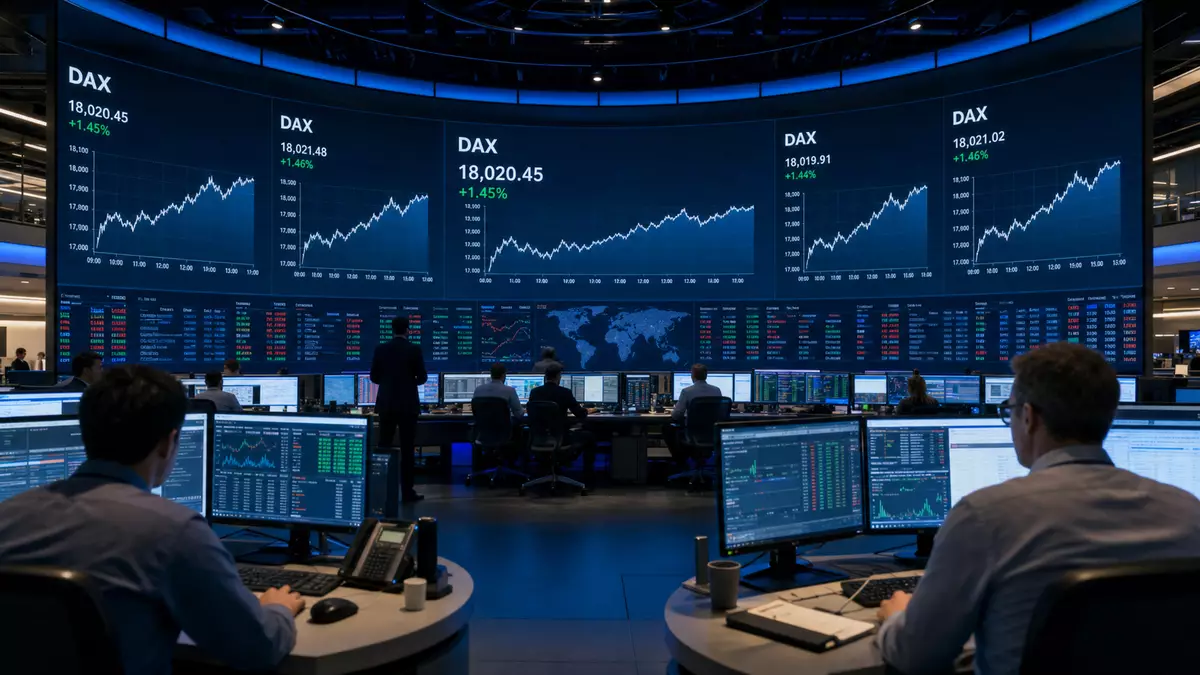
Within Deutsche Börse’s product landscape, the DAX index family is among the most recognizable offerings. DAX tracks a selection of large capitalization German companies listed on the prime standard segment of the Frankfurt Stock Exchange, serving as a key benchmark for domestic and international investors in German equities. Derivatives on DAX listed on Eurex and ETFs tracking DAX listed on Xetra generate transaction and licensing revenues that feed into Deutsche Börse’s income.
The prominence of DAX helps attract listings and trading activity to Deutsche Börse’s platforms, reinforcing the group’s central position in German and European capital markets. As the constituent companies evolve and the index methodology is periodically reviewed, DAX remains a focal point for assessing the performance of the German corporate sector and for structuring investment products.
Deutsche Börse stock and investor perspective
Deutsche Börse stock represents a stake in a regulated market infrastructure and index business with high margins, recurring revenues, and exposure to the broader health of capital markets. The share price reflects investor expectations about future growth in trading, clearing, index licensing, and data services, as well as perceptions of regulatory and competitive dynamics. Over time, total returns combine dividend income with capital gains or losses depending on share price movements.
The latest reported annual figures, including net revenue of roughly EUR 4.6 billion, net profit of about EUR 1.5 billion, and a dividend per share of around EUR 3.80, illustrate the group’s capacity to generate and distribute cash while investing in its platforms. For holders of Deutsche Börse stock, these metrics provide a quantitative basis for assessing earnings quality and the sustainability of shareholder payouts from a business that sits at the core of European financial markets.
Key facts on Deutsche Börse
- Company: Deutsche Börse AG
- ISIN: DE0005810055
- WKN: 581005
- Ticker: XETRA: DB1
- Trading venue: Xetra
- Price (as of 20 July 2026, 17:30 CET): 195.00 EUR
- Market capitalization: 33.0 billion EUR (as of 20 July 2026)
- Sector / Industry: Financials / Market Infrastructure and Exchanges
- Index membership: DAX
- Next earnings date: 25 July 2026
Disclaimer regarding our articles: No investment advice, no buy or sell recommendation. Information on prices, companies, and markets is provided without guarantee; changes are possible at any time. Stock market transactions can lead to substantial losses. Our articles are created and reviewed in whole or in part automatically with the support of AI.