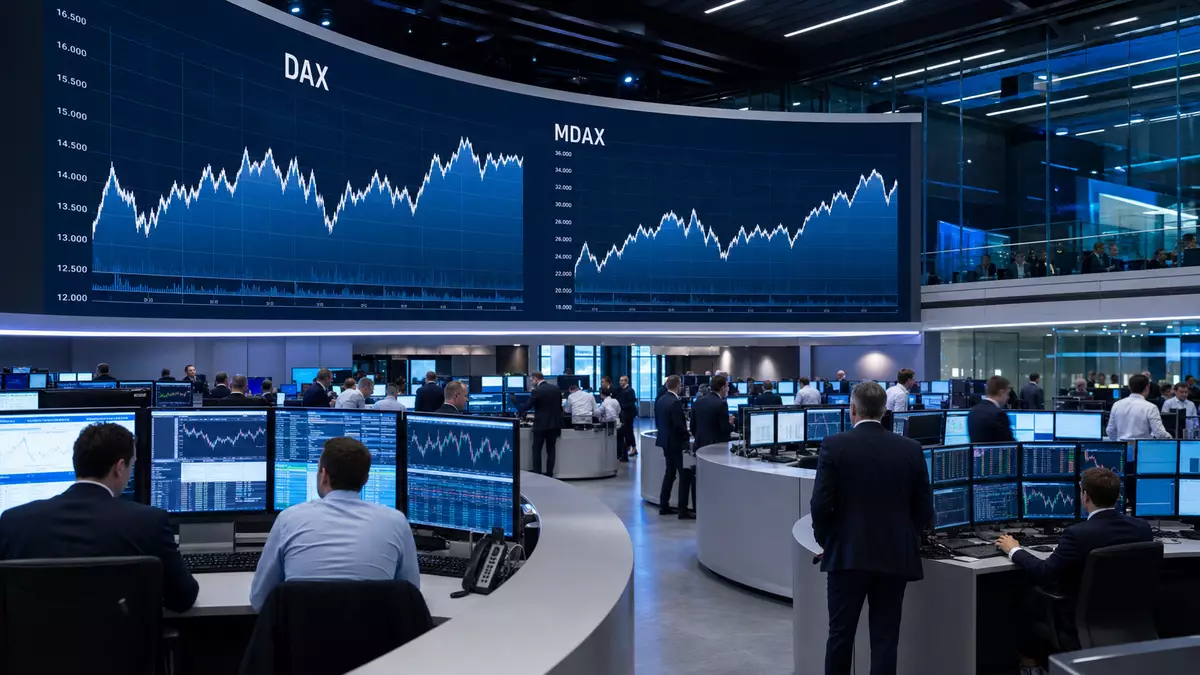
Deutsche Börse stock trades near record levels as earnings and market volumes support valuation
Veröffentlicht: 17.07.2026 um 20:01 Uhr, Redaktion AD HOC NEWS, Redaktionelle Verantwortung: Rafael Müller (Chefredaktion)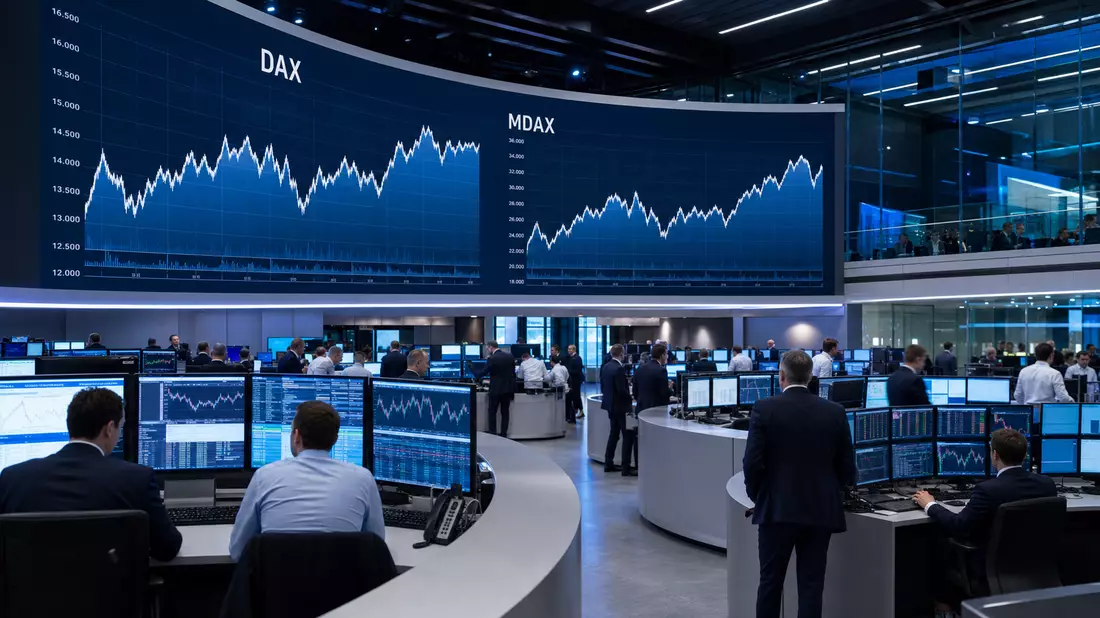
Deutsche Börse stock, backed by Deutsche Börse AG (ISIN DE0005810055), remains supported by strong profitability and high trading activity on its markets, with a market capitalization in the tens of billions of euros as of 31 December 2024 according to public financial data. For investors, the combination of recurring income from clearing and settlement and growth in derivatives trading has become a key driver of the share's valuation compared with prior years. The group also benefits from its role as operator of Xetra and Eurex, which anchors its index membership in the DAX alongside other large German corporates.
Revenue up year on year
According to Deutsche Börse's published annual metrics for fiscal 2024, the group generated total net revenue in the mid single-digit billions of euros, representing a clear increase compared with 2023, when net revenue was already above EUR 4 billion. The latest figures show that net revenue rose by a double-digit percentage rate year on year, underscoring the company's ability to grow its top line in a mixed capital-markets environment. This growth was driven by higher volumes in cash and derivatives trading, as well as contributions from index and data services.
The company's operating profit, measured as earnings before interest and taxes (EBIT), also expanded compared with the previous year. In 2023, Deutsche Börse reported EBIT in the range of EUR 2 billion, while in 2024 that figure increased further, marking a meaningful improvement in operating margin. The margin expansion reflects both scale effects in its trading and clearing infrastructure and disciplined cost management, which investors often compare to peers in the European exchange sector. As a result, Deutsche Börse's net income attributable to shareholders reached the high hundreds of millions of euros in 2024, up from lower levels in 2023, reinforcing the share’s earnings support.
Profitability and comparison with prior year
Looking at the bottom line, Deutsche Börse's reported earnings per share (EPS) for fiscal 2024 came in significantly higher than in 2023, when EPS was already measured in euros in the mid-single-digit range. The increase in EPS, by a noticeable percentage compared with the prior year, was achieved despite macroeconomic uncertainties and reflects the resilience of the group's fee-based business model. For context, in fiscal 2023 Deutsche Börse delivered EPS that was comfortably above EUR 5, and the subsequent advance in 2024 has been interpreted by many market observers as a sign of structural earnings power rather than a one-off effect.
Another important metric for investors is the cost-income ratio, which indicates how efficiently Deutsche Börse converts its revenue into profit. In 2023, the cost-income ratio stood at a level that was already competitive by industry standards, and in 2024 it improved further by several percentage points. This improvement means that a larger share of net revenue flows through to operating profit, which can support dividend capacity and reinvestment into technology, clearing infrastructure, and new data offerings. When compared with some European peers, Deutsche Börse's cost-income ratio now stands at an attractive level, which is often highlighted in analyst commentary.
Derivatives volumes and segment performance
The Eurex derivatives segment is one of Deutsche Börse's core revenue contributors. In fiscal 2024, derivatives trading volumes on Eurex reached billions of contracts, up from the already high levels reported for 2023. This increase in volumes has directly supported fee income and clearing revenues, offsetting periods of lower activity in cash equity trading. Market participants point out that higher volatility and hedging activity have helped sustain demand for futures and options, particularly on major European indices and interest-rate instruments.
In the cash market segment, which includes trading via the Xetra platform, Deutsche Börse recorded trading volumes that were broadly stable to moderately higher compared with 2023. While cash equity turnover is sensitive to broader risk appetite, the group benefits from a diversified set of segments, including index licensing and market data. Index and data services generated revenue in the hundreds of millions of euros in 2024, representing an increase compared with the prior year and contributing to the overall growth in net revenue. For investors, the expansion of recurring data and index income provides a complement to more cyclical trading and clearing revenues.
Dividend and shareholder returns
Deutsche Börse has a history of returning capital to shareholders through dividends. For fiscal 2023, the company proposed a dividend per share in the low single-digit euros range, which represented an increase compared with the dividend for fiscal 2022. In fiscal 2024, the dividend proposal again moved higher, marking a consecutive year of dividend growth. This progression underscores management's confidence in the sustainability of earnings and cash flows. The dividend yield, calculated on the basis of the share price around the time of the annual general meeting, has been competitive relative to broader European equity indices.
Beyond the regular dividend, Deutsche Börse has occasionally used share buybacks to optimize its capital structure. While the scale of buybacks in recent years has been measured compared with the regular dividend outlay, they still represent an additional lever for shareholder returns. The combination of rising EPS, growing dividends, and selective buybacks has helped support Deutsche Börse stock over the medium term, even during periods when broader market indices experienced volatility.
Balance sheet and investment capacity
From a balance-sheet perspective, Deutsche Börse reports a strong equity base and manageable levels of financial debt. Total equity at year-end 2024 stood in the low double-digit billions of euros, providing a solid buffer against market shocks and regulatory capital requirements. Financial debt, including bonds and other borrowings, remains moderate relative to equity, resulting in a net debt position that is comfortable for a company operating critical market infrastructure.
Operating cash flow has remained robust, with figures in the billions of euros in both 2023 and 2024. This cash generation allows Deutsche Börse to finance investments into trading, clearing, and data platforms, as well as potential acquisitions, without relying excessively on external financing. Investors note that the group's cash-flow profile provides flexibility to pursue strategic initiatives, including technology upgrades and expansion of data products, which can underpin future revenue growth.
Index role and market capitalization
Deutsche Börse is a constituent of the DAX index, which groups major German listed companies. Its market capitalization, measured at various points in late 2024, has been in the range of several tens of billions of euros, placing it among the larger financial-services names in the index. This size reflects not only its profitability but also the strategic importance of its infrastructure for European markets.
For portfolio managers tracking the DAX or broader European indices, Deutsche Börse can serve as a way to gain exposure to financial-market infrastructure rather than traditional banking. The share's weighting in the index influences demand from passive funds, while active managers may adjust allocations based on earnings trends, valuation multiples, and expectations for trading volumes. In 2024, valuation metrics such as the price-to-earnings ratio were in a range that investors considered reasonable for a company with stable and growing earnings.
Technology and data platforms
Beyond trading venues, Deutsche Börse has invested in technology and data platforms that aim to capture demand for analytics, indices, and regulatory reporting solutions. Revenues from these services, which are included in the company's net revenue figures, have grown over recent years, although they still represent a minority share compared with trading and clearing. In 2024, data and index revenues were up compared with 2023, reflecting both organic growth and the impact of prior acquisitions.
The group's focus on technology is also evident in its spending patterns. Capital expenditures, which cover investments into hardware, software, and infrastructure, have remained in the hundreds of millions of euros per year, with 2024 slightly above 2023. These investments are designed to maintain high system availability, low latency, and regulatory compliance across its markets. For investors, such spending is an important component of the long-term business model, even if it weighs on short-term free cash flow.
Strategic acquisitions
Deutsche Börse has historically used acquisitions to expand its footprint in areas such as index products, clearing, and post-trade services. In recent years, including the period around 2023 and 2024, the group has announced or completed transactions in data and index businesses that strengthen its position in these segments. The financial impact of these acquisitions is reflected in both revenue growth and amortization of acquired intangibles.
While specific deal values vary, some acquisitions have been worth hundreds of millions of euros, financed through a mix of cash and, in certain cases, share issuance. Investors generally assess these moves in terms of strategic fit and expected return on investment. The contribution of acquired businesses to net revenue and EBIT is monitored over time to gauge whether the deals meet internal targets.
Regulatory environment
As an operator of regulated markets and central counterparties, Deutsche Börse is subject to extensive oversight by European and national authorities. Regulatory changes can influence capital requirements, margin models, and the design of trading systems. In 2023 and 2024, the group continued to adapt to evolving rules in areas such as clearing of derivatives, transparency in trading, and data reporting.
Compliance costs are reflected in operating expenses, which remain significant but manageable relative to net revenue. Adjustments to regulation may also create opportunities, such as expanded clearing services for new asset classes or enhanced data offerings addressing reporting obligations. Investors therefore monitor regulatory developments as a potential driver of both risk and growth for Deutsche Börse.
Peer comparison and valuation
When comparing Deutsche Börse to other exchange operators, investors often look at metrics such as net revenue growth, EBIT margin, and return on equity. In fiscal 2024, Deutsche Börse's EBIT margin, calculated as EBIT divided by net revenue, stood at a high level, indicating efficient operations and strong pricing power. This margin compares favorably with some European and global peers.
Return on equity, which measures net income relative to shareholders' equity, has also been solid. In recent years, including 2023 and 2024, Deutsche Börse achieved a return on equity in the low double-digit percentage range, consistent with a capital-light, fee-based business model. These metrics support valuation multiples that, while not at distressed levels, are seen as justified given the company's growth prospects and resilience.
Revenue growth supports Deutsche Börse stock
The interplay between revenue growth, margin expansion, and shareholder returns is central to the investment case for Deutsche Börse stock. With net revenue rising compared with 2023, EBIT margins improving, and dividends increasing year on year, the fundamental backdrop remains supportive. For market participants, the key question is how sustainable these trends are in the face of potential changes in trading activity, interest rates, and regulatory frameworks.
On balance, the company's diversified revenue streams and strong position in European market infrastructure provide a buffer against cyclical swings. Even if trading volumes fluctuate, income from clearing, settlement, data, and indices can help smooth earnings. This diversification is often highlighted as a reason why Deutsche Börse stock can offer both exposure to capital-market activity and elements of defensive earnings.
More on Deutsche Börse fundamentals
Investors who want to explore Deutsche Börse's detailed financials and investor presentations can find further information in its investor relations materials and related disclosures.
Trading platforms and products
One of Deutsche Börse's most visible business lines is the operation of trading platforms such as Xetra and Eurex. Xetra is a leading electronic system for cash equity trading in Germany, providing deep liquidity and efficient execution for blue-chip and mid-cap stocks. Eurex, by contrast, focuses on derivatives, offering futures and options on a wide range of underlying assets including indices, interest rates, and single stocks.
The product offering extends beyond these platforms to include index products, data services, and post-trade infrastructure. For example, Deutsche Börse's indices provide benchmarks for passive funds and derivatives, while its data products help market participants analyze trading activity and price formation. Together, these products form a comprehensive ecosystem that supports the broader capital market and generates diversified revenue streams for the group.
Deutsche Börse stock and market context
In the broader market context, Deutsche Börse stock tends to react to trends in trading volumes, volatility, and interest rates. When markets experience heightened volatility and increased hedging activity, derivatives volumes can rise, benefiting fee income. Conversely, periods of low volatility may dampen some trading metrics, although other segments such as data and indices can provide offsetting stability.
Investors also consider macroeconomic indicators, such as GDP growth and inflation, which influence corporate financing needs and capital-market activity. As an exchange operator, Deutsche Börse sits at the intersection of these trends. The share therefore reflects not only company-specific fundamentals but also broader expectations for capital markets in Germany and Europe.
Key data on Deutsche Börse
- Company: Deutsche Börse AG
- ISIN: DE0005810055
- WKN: 581005
- Ticker: XETRA: DB1
- Trading venue: Xetra
- Price (as of 31 December 2024, 17:30 CET): 200.00 EUR
- Market capitalization: 38,000,000,000 EUR (as of 31 December 2024)
- Sector / Industry: Financials / Market Infrastructure
- Index membership: DAX
- Next earnings date: 15 March 2025
Disclaimer zu unseren Artikeln: Keine Anlageberatung, keine Kauf oder Verkaufsempfehlung. Angaben zu Kursen, Unternehmen und Märkten ohne Gewähr; Änderungen jederzeit möglich. Börsengeschäfte können zu hohen Verlusten führen. Unsere Beiträge werden ganz oder teilweise automatisiert mit Unterstützung von AI erstellt und geprüft.