DAX Index Hits Record Highs Above 24,000 Amid US Fed Rate Cut Momentum and Strong German Cyclical Gains
16.04.2026 - 16:14:16 | ad-hoc-news.de
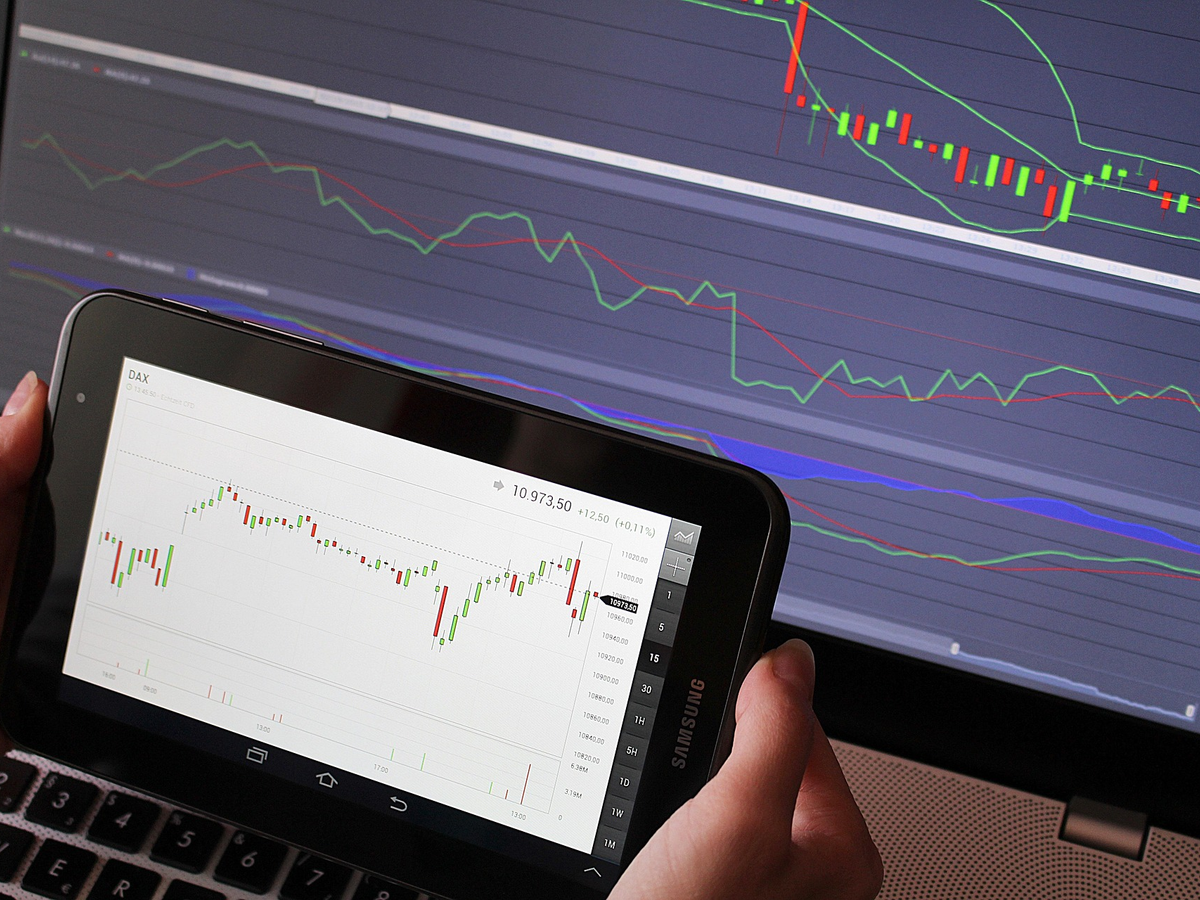
The DAX index, Germany's flagship equity benchmark comprising 40 leading blue-chip companies, has reached fresh all-time highs, trading at 24,294.61 points after a 0.68% advance in the latest session. This milestone reflects sustained investor confidence in German exporters and cyclicals, amplified by positive spillover from US market strength following the Federal Reserve's rate cut.
As of: Wednesday, April 15, 2026, 18:38 Europe/Berlin (converted from 16:38 UTC)
DAX Cash Index Performance Breakdown
The cash DAX index closed at 24,294.61 points on the Xetra exchange, marking a 0.68% increase from the prior session. Intraday trading showed levels hovering around 24,079 points earlier in the morning, with volume exceeding 20 million shares by late morning. This performance positions the DAX up 1.23% for the current month and a robust 21.20% year-to-date as of the latest data. The index's climb to above 24,000 points underscores its outperformance relative to broader European peers, with the DAX gaining 22.03% over 2025 compared to 18.85% in 2024.
Key to this move is the index's heavy weighting in export-oriented industrials, chemicals, and financials, which benefit directly from a weaker euro and global growth signals. Unlike the Euro Stoxx 50, which has trailed slightly due to heavier French exposure, the DAX's German core has decoupled positively on cyclical rotation.
Top Gainers Propel DAX Higher
Among DAX constituents, financials and technology led the charge. Deutsche Bank shares jumped 3.82% to 28.54 euros, reflecting sector-wide relief from lower interest rate expectations and stronger net interest margins in a post-Fed cut environment. SAP soared 3.13% to 147.02 euros, buoyed by enterprise software demand amid AI and cloud tailwinds. Hannover Rück advanced 3.03% to 265.60 euros, capitalizing on reinsurance recovery.
Other notable movers included RWE up 3.29% to 56.46 euros on energy sector rotation, and Deutsche Börse gaining 2.85% to 245.70 euros. These gains in rate-sensitive and cyclical names directly transmitted to the index level, as the DAX's market-cap weighting amplifies leaders like SAP (over 10% weight) and Siemens (around 237 euros, up in prior sessions).
Losers were minimal, with Siemens Healthineers dipping slightly by 0.53% to 35.95 euros, failing to drag the broader index amid defensive underperformance.
US Fed Rate Cut Spillover to DAX
The primary catalyst for the DAX's extension above 24,000 was momentum from Wall Street after the US Federal Reserve's rate cut, which boosted global risk assets. European traders cited the Fed's dovish pivot as lowering the euro's strength, aiding DAX multinationals with over 50% export revenue. This transmission mechanism favors autos like Volkswagen and BMW, chemicals giants BASF and Covestro, and machinery firms, which comprise nearly 40% of the index.
DAX futures, traded on Eurex, mirrored this with a modest +0.08% at 24,280 points, indicating pre-open positioning for continued upside. Unlike S&P 500 futures, which showed milder gains, DAX futures benefited from Europe-specific ECB rate cut bets, with markets pricing in a 25bps cut by June.
DAX Valuation Context
At current levels, the German stock market's trailing P/E ratio stands at 16.98 as of April 14, 2026, below the five-year average and attractive for value-oriented international investors. This multiple supports further upside, especially as German Ifo business confidence remains resilient above 85 points in recent readings. Long-term, the DAX trades 0.83% above its 200-day SMA, signaling sustained bullish trend.
For US investors, the DAX's euro exposure adds currency hedging considerations; a Fed cut weakens the dollar, potentially lifting EUR/USD and compressing DAX returns in dollar terms. DAX-linked ETFs like the iShares Core DAX UCITS ETF (ISIN: DE0005933931) have tracked closely, up parallel to the cash index.
Sector Rotation and German Cyclicals
Sector dynamics reveal a clear rotation into German cyclicals. Utilities like RWE gained on power demand forecasts, while banks benefited from steeper yield curves post-Fed. Autos held steady despite tariff noise, with Daimler Truck noted in rebounds. This contrasts with CAC 40's bank-heavy drag and FTSE 100's commodity focus.
Industrials such as Siemens and Merck (up 2.24% to 107.40 euros) highlighted manufacturing resilience, tied to Eurozone PMI stabilization above 45. The DAX's 21.20% YTD gain outpaces the S&P 500's tech-led rally, offering diversification for US portfolios eyeing Europe.
Risks and Upcoming Catalysts
Near-term risks include renewed euro strength if ECB rhetoric hardens, or geopolitical flares impacting exporters. Bund yields, steady around 2.2%, support financials but cap upside if inflation surprises higher. Key catalysts: German CPI on April 16 (expected 2.3% YoY), ECB minutes, and Q1 earnings from SAP and Siemens next week.
Futures positioning shows open interest steady on Eurex, with call options activity picking up at 24,500 strikes. For ETF investors, liquidity in DAX ETPs remains high, with AUM exceeding 20 billion euros.
Implications for International Investors
International investors, particularly from the US, should note the DAX's sensitivity to transatlantic policy divergence. With the Fed ahead on cuts, DAX offers a cyclical play on ECB convergence. Hedged DAX ETFs mitigate FX risk, ideal for S&P 500 holders seeking yield.
Looking ahead, if German exports sustain +2% MoM growth, the index could target 25,000 by mid-2026. Counterpoint: persistent China slowdown caps autos at 5-7% earnings growth.
Further Reading
- DAX Quotes on MarketScreener
- DAX Movers on Business Insider
- DAX Futures Chart on Investing.com
- Germany P/E Ratio Data
Disclaimer: Not investment advice. Indices, ETFs and financial instruments are volatile.
So schätzen die Börsenprofis Aktien ein!

Für. Immer. Kostenlos.