DAX Breakout or Bull Trap? Is Germany Hiding the Biggest Opportunity in Europe Right Now?
03.02.2026 - 06:27:11 | ad-hoc-news.de
Get the professional edge. Since 2005, the 'trading-notes' market letter has delivered reliable trading recommendations – three times a week, directly to your inbox. 100% free. 100% expert knowledge. Simply enter your email address and never miss a top opportunity again. Sign up for free now
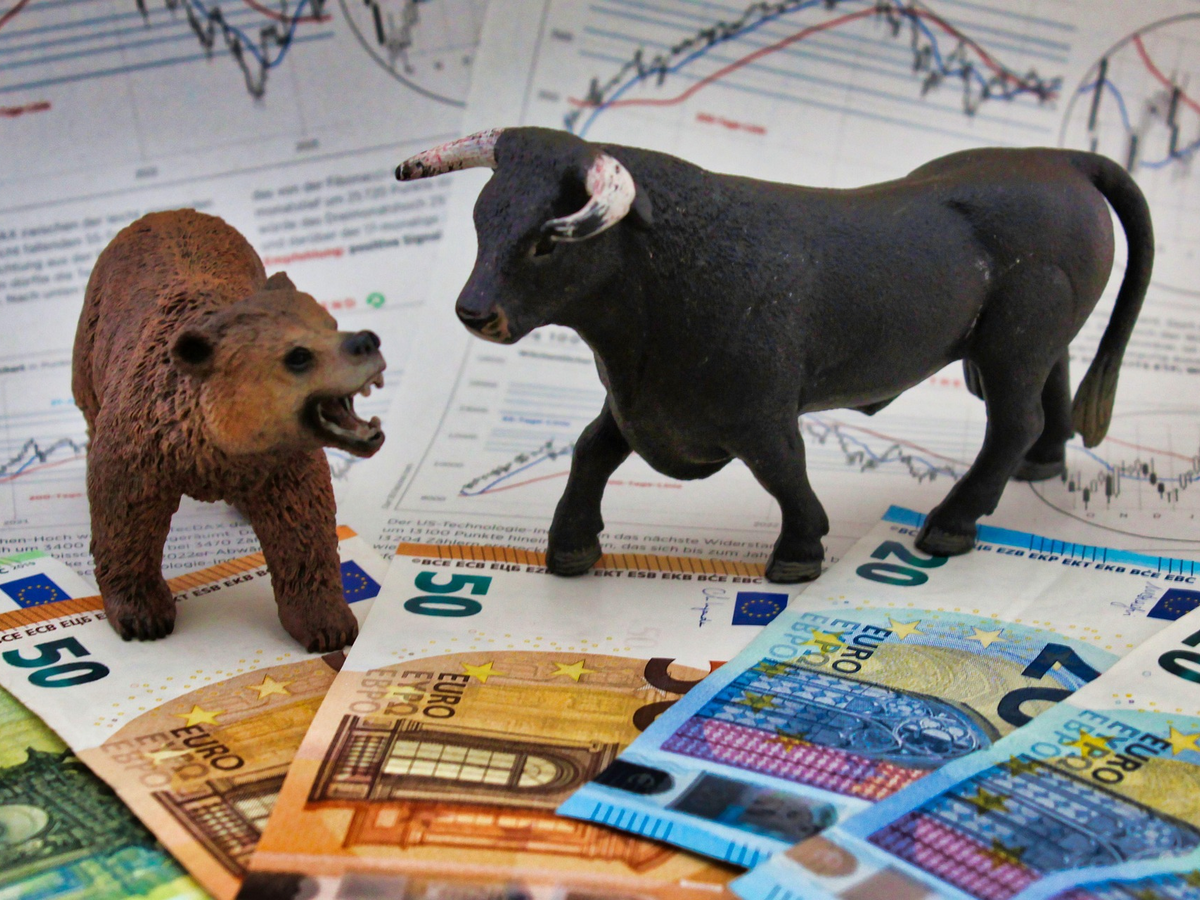
Vibe Check: The DAX 40 is currently locked in a tense tug-of-war between German bulls hunting a renewed European rally and cautious bears pointing at weak industrial data and lingering recession risk. Instead of a clean moonshot or crash, price action has turned into a nerve?wracking consolidation phase: slow grind, sharp intraday reversals, and constant fakeouts around key psychological zones. That is exactly the kind of environment where disciplined traders can outperform, while FOMO-chasers get chopped up.
On a multi-week view, the index is oscillating near historically elevated regions, flirting with levels that many would associate with a high-risk zone. Yet, the market is not collapsing. Every dip attracts new buyers, but every push higher attracts aggressive profit taking. This is classic late-cycle behaviour: trend is still alive, but confidence is fragile.
The Story: To understand what the DAX 40 is doing, you need to zoom out far beyond intraday candles and look at the macro battlefield in Europe.
1. ECB and the rate-cut game
The European Central Bank remains the main puppet master. Inflation in the eurozone has cooled from its brutal peak, but core prices are still sticky in some sectors. Markets are gaming when the next rate cuts will hit and how deep they might go. Whenever traders sense that the ECB is tilting dovish – softer comments from officials, weaker economic data, or lower inflation surprises – European equities, including the DAX, tend to light up as investors price in cheaper money, better financing conditions, and relief for heavily indebted sectors.
But there is a twist: the ECB cannot simply slash rates aggressively without risking a renewed inflation spike or signalling panic about growth. So the message from Frankfurt has been a cautious balancing act: yes, cuts are on the table over the medium term, but the pace will be data-dependent. This keeps volatility alive. Every new inflation print, every economic survey, every Christine Lagarde press conference becomes a potential catalyst for a sharp DAX move, up or down.
2. Germany’s industrial machine – transformation under pressure
Historically, the DAX was all about heavy industry, autos, and exporters. That DNA still matters. German auto giants and industrial names remain key drivers of the index tone. Recently, sentiment around these blue chips has been torn between two narratives:
- The bearish angle: slowing global demand, fierce Chinese competition in electric vehicles, and investment hesitancy due to energy costs and regulatory uncertainty.
- The bullish angle: a powerful long-term transition into green tech, digitalization, and high-value manufacturing, fuelled by efficiency upgrades and global re?shoring trends.
Every time negative headlines hit the German auto names or fresh manufacturing data disappoints, the DAX stumbles. When the narrative swings back toward structural resilience, new orders, or better-than-feared earnings, buyers rush in again. This constant narrative flip is what makes the index feel choppy rather than one-directional.
3. Euro vs. Dollar – the FX lever on the DAX
The euro’s relationship with the US dollar is another quiet but powerful driver. A softer euro tends to support DAX exporters by making their products more competitive abroad and boosting foreign revenue in euro terms. A stronger euro, especially if it climbs without strong growth behind it, can be a drag.
Right now, FX markets are stuck in their own guessing game about relative rate cuts: will the Federal Reserve move faster than the ECB, or the other way around? This affects EUR/USD, which in turn influences earnings expectations for DAX multinationals. When the euro dips, DAX bulls talk about export tailwinds. When the euro strengthens, bears point to margin pressure. As long as there is no decisive trend in EUR/USD, the DAX is likely to see overlapping ranges rather than a clean directional move.
4. Energy prices and Europe’s risk premium
Energy is still the ghost in the machine. Europe’s industrial base remains sensitive to gas and electricity costs, even though prices are far below their crisis highs. Any renewed flare-up in geopolitical tensions, pipeline headlines, or supply shocks can quickly re-price risk across European markets and put pressure on energy-intensive business models.
So far, the situation is tense but manageable. That keeps a modest risk premium embedded into European equities compared to some other regions. Translation: the DAX can rally, but investors always keep one foot near the exit in case energy headlines turn ugly again.
5. Fear and Greed: the sentiment mix
Sentiment around the DAX right now is a weird hybrid:
- Greed: Many see Europe as under-owned versus the US mega-cap tech trade. When global investors look for diversification, the DAX often appears as a prime candidate: large, liquid, and full of global champions.
- Fear: The macro story is fragile. Growth is soft, demographic headwinds are real, and the memory of energy and inflation shocks is fresh. Any bad surprise can flip risk appetite fast.
This produces what traders love to call a “buy the dip, sell the rip” market. Short-term traders can play both sides. Long-term investors must be more selective and patient, focusing on quality names and robust balance sheets.
Social Pulse - The Big 3:
YouTube: Check this analysis: https://www.youtube.com/results?search_query=DAX+40+analysis
TikTok: Market Trend: https://www.tiktok.com/tag/dax40
Insta: Mood: https://www.instagram.com/explore/tags/dax40/
Across social media, the tone is split. Short-form clips hype breakouts and quick scalps, while more serious creators warn about chasing strength into resistance. That split is important: when everyone is screaming “to the moon,” a reversal is often near. When opinions are mixed, ranges can persist longer than expected.
- Key Levels: Instead of fixating on single numbers, traders are watching broad important zones: a high supply area where rallies repeatedly stall, and a lower demand zone where buyers reliably defend dips. These bands define the current battlefield. A decisive breakout above resistance with strong volume and positive macro surprises could open a new leg higher. A clean breakdown below support, especially on bad economic or ECB news, could confirm that a deeper correction is finally starting.
- Sentiment: Are the Euro-Bulls or the Bears in control?
Right now, neither camp has a knockout punch. Euro-bulls are still in the ring, fueled by rate-cut hopes, exporter optimism, and the idea that Europe is overdue for a catch-up rally. Bears counter with weak German data, structural worries, and global growth concerns. The result: a messy equilibrium that can break violently once a big catalyst hits.
Technical Scenarios to Watch
1. Bullish Scenario – Breakout and rotation
If upcoming ECB communication leans more clearly toward future easing and key German macro releases (industrial production, Ifo, PMI surveys) start surprising to the upside, the DAX could punch out of its current range. In that scenario:
- Exporters and industrial leaders could lead the charge as investors price in better margins and more stable demand.
- More cyclical and financial names may catch a secondary bid as investors rotate out of perceived safety plays.
- Social sentiment would likely flip more one-sided bullish, which may extend the move but also increase the risk of a later blow-off top.
2. Bearish Scenario – Breakdown on growth shock
On the flip side, if new data confirms stagnation or recession vibes in Germany, or if the ECB pushes back hard against rate-cut expectations, the DAX could lose its support band. In that environment:
- High-beta names and economically sensitive sectors would likely get hit first.
- Defensive stocks may temporarily outperform, but broad index levels could still slide.
- Dip-buyers might initially step in, but if bounces get weaker, that is classic bear control.
3. Sideways Grind – the trader’s market
The most frustrating, yet highly probable, outcome in the near term is continued sideways chop. In this case:
- Range trading strategies, mean reversion, and intraday scalping work better than long-term trend-following.
- Investors focus more on stock-picking within the DAX rather than calling the index direction.
- News spikes create temporary volatility but fail to trigger lasting trends.
Risk Management: How to play this environment
For active traders, the DAX right now is less about blind conviction and more about execution:
- Respect the important zones; do not chase moves in the middle of the range.
- Size positions with the understanding that macro headlines can cause gaps and sudden reversals.
- Use clear invalidation levels: if the market proves your thesis wrong, exit instead of hoping.
For longer-term investors, the question is simple but tough: Do you believe in a gradual European recovery and the resilience of German blue chips over the next years, despite short-term noise? If the answer is yes, the current environment of alternating fear and relief can be an opportunity to accumulate quality positions on weakness instead of panic-selling into volatility.
Conclusion: The DAX 40 is not in a simple “up only” or “crash imminent” narrative. It is in a high-stakes transition phase where macro uncertainty, ECB policy, energy risk, and structural industrial shifts collide. That makes the index both dangerous and full of opportunity.
Germany is no longer the quiet, predictable backbone of Europe; it is now one of the most hotly debated markets on the planet. Traders who treat the DAX like a casino will likely get punished by whipsaws and fakeouts. Those who combine macro awareness, technical discipline, and strict risk management can turn this choppy, emotional market into a powerful edge.
Whether the next big move is a breakout into a new bull cycle or a hard reset lower, one thing is clear: ignoring the DAX right now is not an option. This is where European risk, narrative, and opportunity collide – and where prepared traders can write their next chapter.
Tired of poor service? At trading-house, you trade with Neo-Broker conditions (free!), but with real professional support. Use exclusive trading signals, algo-trading, and personal coaching for your success. Swap anonymity for real support. Open an account now and start with pro support
Risk Warning: Financial instruments, especially CFDs on indices like the DAX 40, are complex and come with a high risk of losing money rapidly due to leverage. You should consider whether you understand how these instruments work and whether you can afford to take the high risk of losing your money. This content is for informational purposes only and does not constitute investment advice.
So schätzen die Börsenprofis Aktien ein!

Für. Immer. Kostenlos.