
DAX 40: Massive Risk Or Once-In-A-Decade Opportunity For Brave Bulls?
16.02.2026 - 06:42:48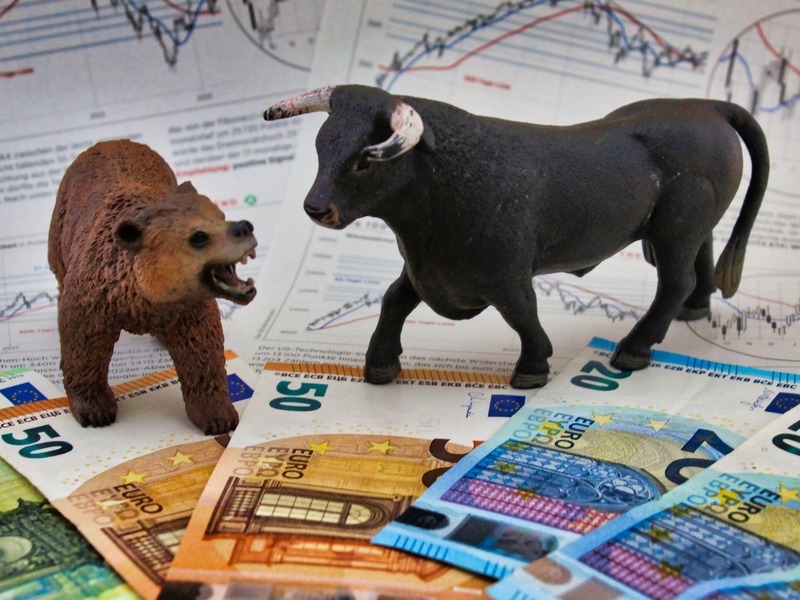
Get the professional edge. Since 2005, the 'trading-notes' market letter has delivered reliable trading recommendations – three times a week, directly to your inbox. 100% free. 100% expert knowledge. Simply enter your email address and never miss a top opportunity again. Sign up for free now
Vibe Check: The DAX 40 is in full drama mode right now – not a quiet sideways market, but a real battleground between nervous bears and opportunistic bulls. With global risk sentiment swinging day by day, the German benchmark is showing choppy moves, sharp intraday reversals, and repeated attempts to push toward the upper end of its trading range. Think heavy volatility, rapid profit taking, and constant retests of important zones instead of a calm, controlled trend.
Want to see what people are saying? Check out real opinions here:
- Watch fresh DAX breakdowns from top YouTube traders
- Scroll the latest German stock market mood on Instagram
- Catch viral DAX trading setups on TikTok in real time
The Story: What is actually driving this wild price action in the DAX 40 right now? Under the surface, it’s a complex mix of central bank policy, currency moves, sector rotation, and hard macro reality in Germany.
1. ECB Policy: Lagarde Is The Puppet Master
The European Central Bank under Christine Lagarde is the main risk switch for the DAX. Every word from her press conferences can flip the market from green rally to sudden sell-off. Traders are obsessed with one key question: is the ECB done tightening, and when will real rate cuts hit?
Here’s the logic flow most DAX traders are running:
- If the ECB stays aggressive and keeps rates elevated for longer, financial conditions remain tight. That means more pressure on highly leveraged companies, weaker domestic demand in Germany, and ongoing stress for cyclical industrials and automakers.
- If the ECB signals a softer stance or hints at an earlier easing cycle, German blue chips suddenly look like an attractive leveraged bet on recovery. Risk appetite jumps, and money flows back into European equities from global funds that have been underweight the region.
The twist: the ECB has to fight inflation without completely crushing already fragile growth, especially in Germany, which has been flirting with recession territory. That constant balancing act is exactly why the DAX keeps reacting so violently to each rate decision, each line of ECB guidance, and every inflation print.
2. Euro/USD: The FX Side-Quest That Moves DAX Earnings
The Euro versus the US Dollar is another sneaky driver of DAX performance. A stronger Euro is usually a headwind for the index, because a big chunk of DAX company earnings comes from exports outside the eurozone. When the Euro strengthens, those foreign revenues translate into fewer euros, compressing reported earnings. When the Euro weakens, the opposite happens – exporters suddenly look more profitable.
So traders watch Euro/USD almost like a second chart for the DAX:
- A firm Euro, often linked to a relatively hawkish ECB compared to the Fed, can cap DAX upside and trigger profit taking on rallies.
- A softer Euro, especially if the Fed is perceived as more aggressive, can fuel a fresh appetite for German exporters as they become more competitive globally.
Bottom line: if you are trading the DAX and you ignore what the ECB is doing or how Euro/USD is trending, you are basically running blind. The real edge comes from connecting policy, currency, and earnings expectations into one consistent macro story.
Deep Dive Analysis: Now let’s zoom in on the battleground sectors inside the DAX 40 – because the index is not moving as one clean block. Underneath, there’s a brutal tug-of-war between old-economy metal and new-economy software and automation.
1. Automotive: Germany’s Former Superpower, Now Under Pressure
The German auto giants – think Volkswagen, BMW, Mercedes-Benz and other traditional champions – used to be the undisputed backbone of the DAX. Today, they are more like highly sensitive cyclical plays with massive structural problems hanging over their heads.
Key headwinds crushing sentiment around autos:
- EV Transition Pain: They are being forced to pivot aggressively towards electric vehicles while still running huge legacy combustion engine infrastructures. That means enormous capex, margin pressure, and the constant fear of being out-innovated by US and Chinese EV competitors.
- Demand Uncertainty: Global car demand is no longer a straight up-and-to-the-right story. Higher interest rates hit auto financing, and consumer confidence in Europe is shaky. That means a lot of traders see the auto names as pure cyclical risk – great for short-term trades, dangerous for long-term comfort.
- Regulation & Emissions: Stricter EU regulation, emissions rules, and potential tariffs keep hanging over the sector. Each new political headline can trigger a fast swing in these stocks and in turn jolt the DAX.
On social media, you can clearly see the split mood: some traders still love buying deep dips on big German car brands, banking on their global brand power; others call them value traps, arguing margins and market share will keep getting squeezed. For the index, that means the auto cluster has turned from a reliable growth engine into a highly volatile risk block inside the DAX.
2. SAP, Siemens & The Rise Of Quality Defensives
On the other side of the ring, you have DAX heavyweights like SAP and Siemens – companies that, in many global portfolios, are treated as high-quality, strategic holdings rather than pure cyclical flyers.
Why global funds still love these names and, by extension, the DAX:
- Digital & Automation Exposure: SAP gives exposure to enterprise software and digital transformation; Siemens gives access to automation, infrastructure, and industrial digitalization. These are long-term secular themes, not just short-term economic cycles.
- Solid Balance Sheets: Many of these quality names are better capitalized, with more resilient cash flows. In a world of macro uncertainty, that stability is a big plus.
- Index Weight & Defensive Aura: Because of their weight in the DAX, when investors want to quietly build exposure to Europe without going full YOLO on banks or autos, they often rotate into these safer giants. That rotation can hold the DAX up even while cyclical names suffer.
So within the index, you effectively have a tug-of-war between stressed cyclical Germany (autos, some industrials) and resilient, globally positioned Germany (software, automation, quality industrial tech). The DAX chart is the net result of that internal battle.
3. Macro Reality: PMI And Energy – The Hard Truth
Now we get to the uncomfortable part: Germany’s real economy backdrop.
Manufacturing PMI:
German manufacturing Purchasing Managers’ Index readings in recent months have consistently pointed to a weak industrial environment. PMIs hovering around contraction territory show that factories are not running at full power, order books are under pressure, and global demand – especially from key markets like China – is not firing on all cylinders.
For the DAX, weak PMI data usually means:
- Pressure on cyclical industrials and autos, as growth expectations get cut.
- Defensive rotation into quality names and sectors perceived as more stable.
- Bouts of fear-driven selling when PMI surprises hit the tape worse than expected.
Energy Prices:
Energy remains a structural headache for Europe’s largest economy. While the extreme crisis spikes have cooled, energy is still not back to the ultra-cheap level that powered the German export miracle for years. That means cost pressure remains a core issue for energy-intensive industries.
DAX companies impacted include chemicals, heavy manufacturing, and segments of the industrial complex that are highly sensitive to power and gas prices. Traders know this – every push higher in energy prices tends to revive the narrative that Germany is losing its edge against cheaper production regions.
4. Sentiment: Fear, Greed, And Real Money Flows
So how do traders and institutions actually feel right now?
Fear/Greed:
Sentiment indicators and social feeds show a mixed but edgy picture:
- On one side, you have global macro bears loudly calling Europe a value trap, pointing to structural issues, slow growth, and political risk. They see every DAX rally as an opportunity to fade the move and re-enter shorts at higher levels.
- On the other side, you see tactical bulls talking about under-owned Europe, attractive valuations versus US tech, and the possibility of a sharp catch-up rally if the ECB shifts dovish and global growth stabilizes.
This standoff creates a classic high-volatility environment: strong rallies as underweight funds scramble to cover, followed by aggressive profit taking as bears reload and macro headlines turn sour again.
Institutional Flows:
Many large global funds have been underweight Europe for years in favor of US mega-cap tech. That underweight positioning is exactly what makes the DAX interesting: if policy and macro data improve even slightly, asset allocators may be forced to rotate some capital back into European equities just to avoid underperformance.
So from a flow perspective, the DAX is like a compressed spring: as long as the macro clouds hang low, it stays under pressure; but if sentiment improves, the upside reaction could be powerful as money rushes back into the region.
Key Tactical Takeaways For Traders
- Key Levels: The market is currently trading around important zones where previous rallies stalled and prior sell-offs found support. Bulls want to defend the lower band of this range and push toward prior swing highs; bears are eyeing any failure at those resistance zones as a fresh short entry signal.
- Sentiment: Right now, neither side has full control. Euro-bulls are trying to build a base for a bigger breakout move, but bears are still strong enough to trigger nasty pullbacks on bad news. Expect sharp squeezes followed by sudden shakeouts – not a slow grind.
Conclusion: Is The DAX A Trap Or A Gift?
The DAX 40 right now is not a sleepy index for passive spectators. It is a high-beta expression of everything that is both wrong and right with Europe at the same time.
On the risk side:
- Germany’s manufacturing engine is sputtering; PMI data keeps reminding us that the old model of cheap energy plus massive export demand is under severe stress.
- The auto giants are under structural pressure from EV disruption, regulatory risks, and margin compression. Any global growth wobble hits them first and hardest.
- The ECB still has to tread carefully between killing inflation and killing growth; one misstep and markets will punish European risk assets fast.
On the opportunity side:
- Valuations in Europe remain more attractive versus many US peers, especially for quality names like SAP and Siemens that still deliver solid fundamentals.
- Any credible pivot towards easier ECB policy or a stabilization in global growth could trigger a powerful rotation into under-owned European equities, with the DAX front and center.
- The internal structure of the DAX means that strength in quality defensives and industrial tech can offset some of the pain in autos and legacy cyclicals, creating interesting stock-picking and sector-rotation opportunities.
For active traders, the message is clear: this is not the moment to fall asleep at the wheel. The DAX is offering big swings, sharp intraday ranges, and a real chance to capitalize on both upside breakouts and downside flushes – if you respect risk.
That means:
- Have a clear plan around those important zones instead of chasing random noise.
- Watch ECB communication and Euro/USD like a hawk – they are the macro steering wheel.
- Differentiate between Germany’s legacy problems (autos, energy-heavy manufacturing) and its world-class strengths (software, automation, high-quality industrial tech).
This market is not for tourists, but for traders with a framework. If you can connect central bank policy, currency moves, macro data and sector dynamics into one consistent DAX strategy, you are no longer reacting – you are setting up ahead of the crowd.
Buy the dip or fade the rip? That’s your call. Just understand: the DAX 40 right now is pure opportunity wrapped in risk – exactly the kind of playground where disciplined traders can thrive while the rest of the market panics or hesitates.
Tired of poor service? At trading-house, you trade with Neo-Broker conditions (free!), but with real professional support. Use exclusive trading signals, algo-trading, and personal coaching for your success. Swap anonymity for real support. Open an account now and start with pro support
Risk Warning: Financial instruments, especially CFDs on indices like the DAX 40, are complex and come with a high risk of losing money rapidly due to leverage. You should consider whether you understand how these instruments work and whether you can afford to take the high risk of losing your money. This content is for informational purposes only and does not constitute investment advice.
@ ad-hoc-news.de
Hol dir den Wissensvorsprung der Profis. Seit 2005 liefert der Börsenbrief trading-notes verlässliche Trading-Empfehlungen – dreimal die Woche, direkt in dein Postfach. 100% kostenlos. 100% Expertenwissen. Trage einfach deine E-Mail Adresse ein und verpasse ab heute keine Top-Chance mehr.
Jetzt anmelden.


