
DAX 40: Hidden Trap or Once-in-a-Decade Opportunity for German Blue-Chip Hunters?
08.02.2026 - 20:48:01 | ad-hoc-news.de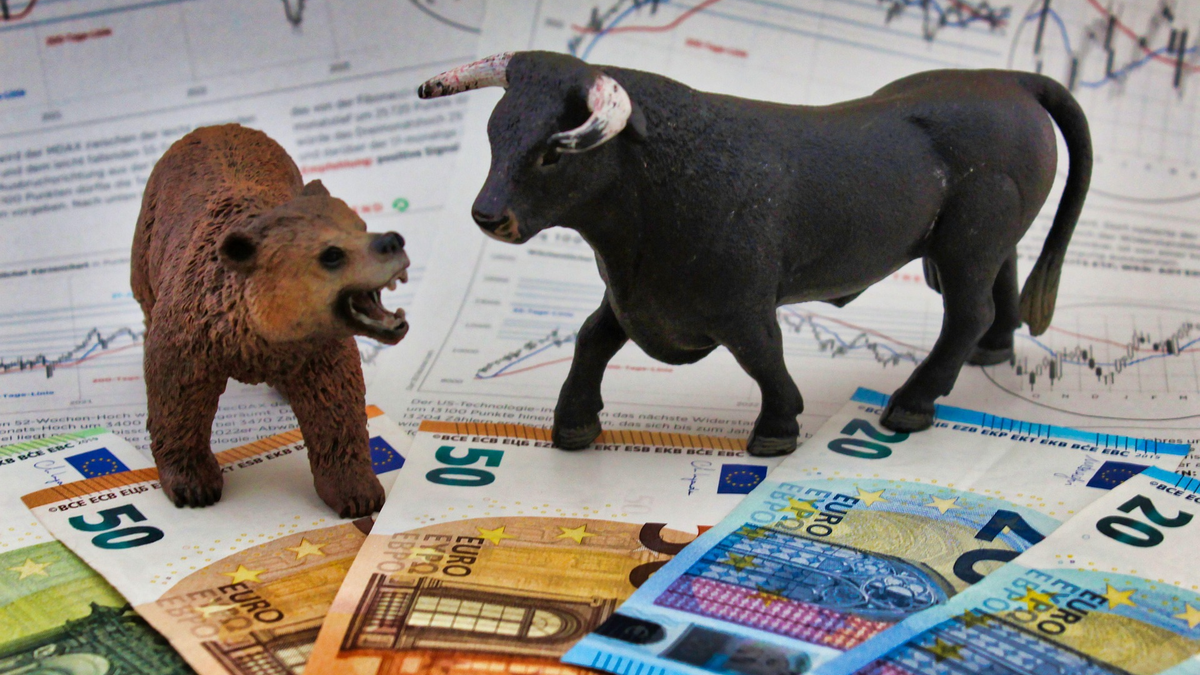
Get the professional edge. Since 2005, the 'trading-notes' market letter has delivered reliable trading recommendations – three times a week, directly to your inbox. 100% free. 100% expert knowledge. Simply enter your email address and never miss a top opportunity again. Sign up for free now
Vibe Check: The DAX 40 is locked in a high-tension zone right now. After a series of choppy moves and failed breakouts, the index is circling around important zones where bulls and bears are fighting for control. We are not seeing a calm, sleepy market; this is a nervous, headline-driven battlefield with sharp swings, aggressive profit taking, and fast dip-buying every time fear spikes.
Want to see what people are saying? Check out real opinions here:
- Watch fresh DAX 40 breakdowns from top YouTube chart nerds
- Scroll Insta moodboards of German stock market winners and losers
- Hit TikTok for raw, unfiltered DAX trading setups and hype clips
The Story: What is really driving the DAX 40 right now? Under the surface, it is not just about charts and candles. The whole narrative is being pulled in four big directions:
- ECB policy and what Christine Lagarde says between the lines.
- The brutal split between legacy German autos and the new-school winners like SAP and Siemens.
- Weak German manufacturing data colliding with still-sensitive energy prices.
- Global risk sentiment and whether big institutions are quietly rotating back into Europe.
1. ECB Policy: Why Lagarde’s Tone Is the Real Market Maker
The DAX is essentially a leveraged bet on what the European Central Bank does next. Even small shifts in wording from Christine Lagarde can flip the mood from fear to euphoria in one press conference. Recently, the narrative has circled around one question: Is the ECB done hiking for this cycle, and how fast could cuts come if growth keeps wobbling?
Here is the key logic chain traders are running in their heads:
- If the ECB stays hawkish for too long, financing costs for German corporates stay elevated, earnings forecasts get slashed, and DAX valuations come under pressure. That keeps the index in a stress zone.
- If the ECB softens its tone, signals patience, and hints at future easing, the DAX usually reacts with a relief rally as equity risk premia compress and investors rotate from cash back into stocks.
Now bring in the EUR/USD factor. When the euro weakens against the dollar, many DAX companies with global exports—especially industrials and autos—get a tailwind because their products become more competitive in international markets and foreign revenues translate into more euros. A stronger euro, on the other hand, can be a drag.
So traders are watching this triangle very closely:
- Lagarde’s pressers and official ECB statements
- EUR/USD trend and volatility
- Movement in big DAX export names
Recently, the combination has produced a cautious, jittery mood rather than full-blown panic or full-blown euphoria. The DAX is showing nervous sideways chop around key zones, with sharp intraday spikes whenever rate expectations shift on new data or ECB comments.
2. Sector Check: Old-School German Autos vs. New-School Tech and Industrials
This is where the DAX story gets really spicy. Under the index hood, there is a huge rotation battle:
German Auto Industry: Under Pressure
Names like Volkswagen, BMW, and Mercedes-Benz are facing a perfect storm:
- China exposure risk: A lot of their growth story still depends on China. Any sign of weaker demand or political risk there hits sentiment fast.
- EV price war: Aggressive competition from Tesla and Chinese EV makers is squeezing margins. Autos are being forced to invest heavily in EV platforms while still supporting combustion and hybrid fleets. That is capital-intensive and messy.
- Regulation and emissions: More EU regulation and climate targets raise costs and increase strategic uncertainty.
The result: auto stocks have been trading like cyclicals with mood swings. When macro data hints at slowdown, they sell off hard. When there is a hint of stimulus, reopening, or strong Chinese data, they bounce—but often into resistance where sellers are waiting to take profits.
SAP, Siemens & Co.: The Relative Strength Heroes
On the other side, the DAX is being quietly supported by more resilient names:
- SAP: Cloud and software revenues give it a more defensive growth profile. In an environment where investors want quality growth and strong balance sheets, SAP often acts like a stabilizer.
- Siemens: Leveraged to automation, digitalization, and infrastructure trends. Even if Germany’s old-school manufacturing is sluggish, global capex on efficiency and tech upgrades still supports demand.
- Healthcare, chemicals, and utilities: Not always flashy, but when recession fears pop up, money rotates into these more stable cash-flow machines.
This sector rotation explains why the DAX can look relatively firm even when auto headlines are ugly. The internal market is basically saying: we are done paying peak multiples for old narratives; we want tech-enabled, asset-light, structurally growing blue chips.
3. Macro: PMI Data, Recession Fears, and the Energy Overhang
The macro backdrop in Germany is not friendly, and the market knows it.
German Manufacturing PMI
Recent manufacturing PMI readings have been signaling weakness. Whenever these numbers come in soft—or even just less bad than feared—the DAX reacts. The pattern has been:
- Disappointing PMIs trigger quick sell-offs in cyclicals like autos, machinery, and chemicals.
- But deep red reactions often get bought back as bargain hunters step in, betting that the worst is already priced in and that any stabilization could spark a big relief move.
For traders, PMI days are now key event risks. Volatility often spikes around the releases, and if you are trading the DAX intraday, ignoring that calendar is like trading blindfolded.
Energy Prices: Not the 2022 Panic, But Still a Drag
Germany’s energy shock may no longer be at full crisis levels, but prices remain structurally higher than the pre-crisis years. That matters because:
- Energy-intensive industries (chemicals, metals, heavy manufacturing) are still under margin pressure.
- The competitive position of German industry vs. the US and parts of Asia has weakened, which is a long-term headwind for valuations.
- Any renewed spike in gas or power prices would immediately revive the old fear narrative.
The market is currently pricing in a kind of uneasy stabilization: not outright disaster, but not a clean recovery story either. This is exactly why the DAX trades in a band of important zones rather than exploding higher in a clean breakout.
4. Sentiment: Fear, Greed, and Where the Big Money Is Flowing
Sentiment toward European equities has been depressed for a long time compared to the US, but that is precisely what makes the DAX interesting for contrarians right now.
Fear/Greed Mood
Indicators proxying risk appetite show a mixed picture:
- There is still plenty of skepticism about Europe’s growth prospects. Many global investors remain underweight European stocks.
- At the same time, we are not in full panic. The DAX is not collapsing; it is grinding, consolidating, and absorbing bad news surprisingly well at times.
This combination—persistent skepticism without full capitulation—can be powerful. It means there is a lot of room for positioning to flip if the data stops getting worse or if the ECB turns more supportive.
Institutional Flows
Flows into Europe have shown periods of cautious re-engagement. Asset managers hunting for diversification away from crowded US tech plays are eyeing the DAX for:
- Dividend yield from big blue chips.
- Currency diversification vs. USD-heavy portfolios.
- Potential valuation re-rating if and when Europe finally exits the stagnation narrative.
But the flows are tactical, not blindly bullish. Funds are not chasing every bounce; they are scaling in on weakness, respecting the risk, and managing exposure around key macro events.
Deep Dive Analysis: Automotive Pain, Energy Costs, and the DAX Trade Setup
Automotive Sector Crisis – More Than Just a Dip
The auto sector’s struggle is structural, not just cyclical. Here is how that bleeds into the DAX playbook:
- Margin compression: Heavy EV capex, discounts, and regulatory costs pressure earnings quality.
- Valuation trap risk: Autos can look cheap on classic metrics, but the risk is that the market is correctly pricing a business model under long-term threat.
- Headline risk: Any negative policy move, recall, or China-related headline can spark fast sell-offs.
For DAX traders, that means:
- A DAX rally led by autos is more fragile than one led by SAP, Siemens, or healthcare.
- If the index rises while autos lag, the move may actually be more sustainable, signaling a rotation into quality rather than blind beta chasing.
Energy Costs and Industrial Margins
Energy-intensive names remain a key swing factor:
- If energy prices drift lower or stay contained, it gives breathing room to chemicals, basic materials, and heavy industry.
- If we see any renewed energy spike, especially into winter periods, that could quickly revive the “German industry under siege” narrative and weigh on the DAX again.
Right now, the market is cautiously optimistic but far from complacent. Energy is a sleeping risk that can wake up fast.
Key Levels and Sentiment Snapshot
- Key Levels: Instead of one magic number, think in clusters: an upper resistance band where every bullish spike meets selling pressure from trapped longs and profit-takers, and a lower support zone where dip-buyers and institutions quietly step in. As long as the DAX chops between these important zones, it is a trader’s market, not a passive investor’s paradise.
- Sentiment: Neither full-on Euro-bulls nor doomster bears are completely in control. It is a tug-of-war. Short-term bears are leaning on recession fears and sector headwinds, while medium-term bulls are betting that bad news is largely priced in and that any policy or macro stabilization could unlock an upside re-rating.
Conclusion: Risk or Opportunity – How to Frame the DAX 40 Right Now
The DAX 40 is not a sleepy index anymore. It is a live stress test of Europe’s ability to adapt: autos vs. tech, old industry vs. digital, expensive energy vs. efficiency, tight ECB vs. the need for growth.
On the risk side, you have:
- Ongoing recession and PMI worries in Germany.
- Structural problems in the auto sector, with heavy China exposure and EV disruption.
- Lingering energy risk and a still-watchful ECB that cannot fully ignore inflation.
On the opportunity side, you have:
- Valuations that are generally more conservative than in the US mega-cap space.
- Strong global players like SAP and Siemens that can still deliver growth and resilience.
- A sentiment mix where many investors remain underweight Europe, creating upside if the narrative shifts even slightly positive.
For active traders, this environment is pure gold: ranges to trade, false breakouts to fade, and momentum bursts around macro data and ECB events.
For longer-term investors, the DAX looks like a high-beta bet on any future normalization: if Germany stabilizes, energy risk stays controlled, and the ECB eventually leans more dovish, the current consolidation in important zones could be remembered as a rare accumulation window rather than noise.
The key is to stay risk-aware. The DAX 40 is not a one-way street. It is a market where you respect the macro, watch Lagarde like a hawk, track sector rotations daily, and never forget that in Germany’s flagship index, old-world autos and new-world software are fighting for the steering wheel.
Opportunity or trap? That depends less on the next headline and more on whether you have a clear plan: which sectors you want exposure to, how you size your trades, and how you react when those important zones finally give way in either direction.
Tired of poor service? At trading-house, you trade with Neo-Broker conditions (free!), but with real professional support. Use exclusive trading signals, algo-trading, and personal coaching for your success. Swap anonymity for real support. Open an account now and start with pro support
Risk Warning: Financial instruments, especially CFDs on indices like the DAX 40, are complex and come with a high risk of losing money rapidly due to leverage. You should consider whether you understand how these instruments work and whether you can afford to take the high risk of losing your money. This content is for informational purposes only and does not constitute investment advice.
So schätzen die Börsenprofis Aktien ein!

Für. Immer. Kostenlos.


