DAX 40: Hidden Time Bomb or Once-in-a-Decade Opportunity for Global Bulls?
13.03.2026 - 04:53:12 | ad-hoc-news.de
Get the professional edge. Since 2005, the 'trading-notes' market letter has delivered reliable trading recommendations – three times a week, directly to your inbox. 100% free. 100% expert knowledge. Simply enter your email address and never miss a top opportunity again. Sign up for free now
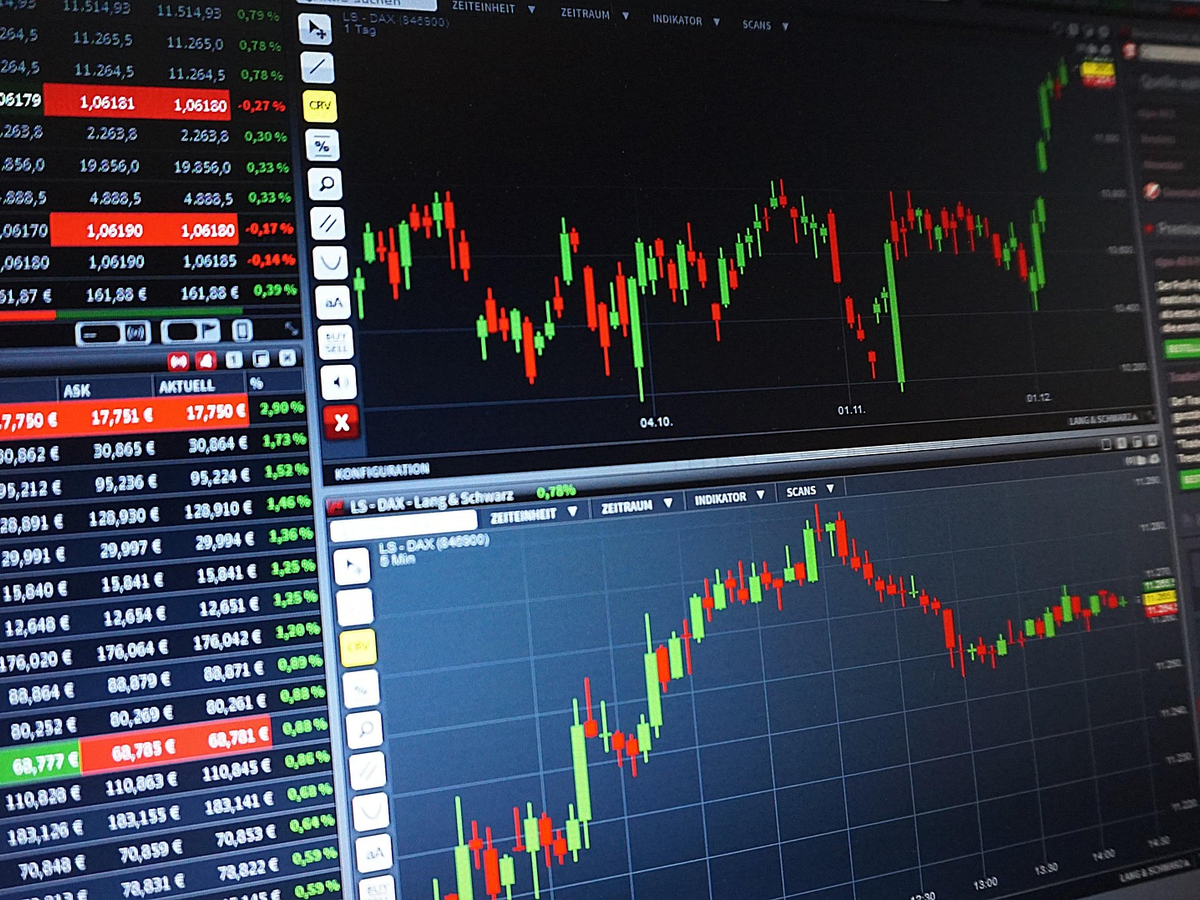
Vibe Check: The DAX 40 is locked in a tense, emotional tug-of-war. Instead of a clean vertical moonshot or a brutal waterfall crash, you are seeing a nervy trading range, sharp intraday reversals and constant fakeouts. German blue chips are grinding through a choppy phase where every ECB headline and every macro datapoint can flip sentiment from cautious optimism to sudden fear.
Want to see what people are saying? Check out real opinions here:
- Watch fresh DAX 40 breakdowns from real traders on YouTube
- Scroll the latest German stock momentum trends on Instagram
- Swipe through viral DAX trading strategies on TikTok
The Story: The German DAX 40 is more than just a domestic index – it is the heartbeat of European risk sentiment. Global fund managers watch it as a high?beta proxy for Europe: when confidence returns to the continent, the DAX usually leads the charge; when fear spikes, it often takes the first hit.
Right now, the story is layered and messy – exactly the kind of environment where disciplined traders can find serious opportunity, but tourists get chopped up.
Here is the simplified playbook of what is driving the DAX 40 under the hood:
- ECB Policy & Christine Lagarde: Every press conference from the European Central Bank has become a volatility event. The market is obsessed with how quickly the ECB will pivot from restrictive policy toward more accommodative cuts. The DAX reacts instantly to any hint that borrowing costs for corporates could fall sooner or stay higher for longer.
- Euro vs. US Dollar: The EUR/USD cross is a turbocharger for index earnings. A softer euro can boost export-heavy DAX names on paper, while a stronger euro compresses margins but signals improving confidence in the European story. Traders are constantly cross?checking DAX candles with the euro chart.
- Sector Rotation: The old-school pillars of the index – autos, industrials, banks – are wrestling with structural challenges, while tech-related names and software champions like SAP, and industrial tech leaders like Siemens, have become the stealth backbone of the benchmark.
- Macro Headwinds: German manufacturing has gone from global superstar to under intense pressure. Sluggish order books, weaker PMI data, and elevated energy costs are a recurring theme in every serious DAX review. The market is asking: is this cyclical pain or a deeper structural shift?
- Sentiment Swings: Social feeds and institutional flows tell the same story: traders oscillate between cautious dip?buying and defensive de?risking. Nobody wants to miss the next European relief rally, but nobody wants to be long if the macro dam breaks.
Put differently: the DAX is standing at a psychological crossroads. Depending on how the upcoming macro data and ECB guidance evolve, this sideways environment can morph into either a powerful breakout continuation or a painful downside reset.
ECB Policy, Lagarde and the Euro: Why the DAX Trades Like a Central Bank Derivative
If you trade the DAX and ignore the ECB, you are basically playing poker with your cards face down. The index has become hyper?sensitive to interest rate expectations because Germany’s corporate sector lives and dies on financing costs and global demand.
1. The ECB’s balancing act
The European Central Bank is stuck in one of the toughest macro puzzles in years:
- Inflation has eased from peak levels, but the ECB is still haunted by the risk of letting price pressures re?accelerate.
- Growth is fragile, especially in Germany, where industrial production and sentiment indicators have cooled sharply.
- Financial stability matters: after previous rate hikes, the market is alert for stress in banks, credit markets, and weaker corporates.
For DAX traders, the key question is not only if the ECB will cut, but how aggressively and how fast it will signal that the tightening cycle is truly behind us.
Whenever Christine Lagarde steps up to the microphone, markets look for micro?cues:
- Does she stress data dependency and patience? That usually leans more cautious and can weigh on the index.
- Does she highlight downside risks to growth and softening inflation trends? That tends to fuel hopes of earlier cuts and can support a wave of relief buying in cyclicals and rate?sensitive stocks.
2. EUR/USD: The stealth driver of German earnings
The DAX is loaded with world?class exporters: autos, machinery, chemicals, industrial tech. A large chunk of their sales and profits are generated outside the eurozone. That is why the euro’s dance against the US dollar is so critical.
- When the euro weakens versus the dollar, foreign revenues translate into more euros. On paper, that supports earnings and can justify higher valuations, especially for industrials and autos. Traders often respond with renewed appetite for export names.
- When the euro strengthens, translation effects go the other way. Earnings faces a currency drag, and investors worry that European exports might become less competitive globally. That can cap DAX rallies and trigger profit taking around resistance zones.
The twist: ECB policy directly influences expectations for the euro. A slower or more cautious cutting cycle than the US Federal Reserve can stabilize or even boost the euro, whereas aggressive rate cuts might pressure it. So every ECB decision is effectively a double?impact event for the DAX: it hits discount rates and the currency channel at the same time.
3. Why global traders care
For global macro funds, the DAX has become a tactical instrument to express views on:
- The relative speed of ECB vs. Fed easing, and hence EUR/USD direction.
- The probability that Germany can avoid a deeper industrial recession.
- Whether Europe as a whole is investable again or still stuck in a slow?growth trap.
This is why you see sharp moves around macro releases like eurozone inflation, German Ifo, ZEW, and PMI readings: the DAX is constantly repricing this policy and growth puzzle.
Sector Check: Old Economy Pain vs. New Economy Resilience
The DAX 40 is not a monolithic block. Under the hood, you have a real?time war between laggards and leaders, between the old industrial backbone and new digital winners. Understanding this rotation is key if you want to trade the index with an edge instead of randomly buying every dip.
1. German Auto Industry – the wounded giants
Volkswagen, BMW, Mercedes?Benz and their broader ecosystem used to be the rock?solid foundation of the DAX. Today, they are controversial, high?beta plays with a lot of directional risk attached.
Why the struggle?
- EV transition pressure: Global competition in electric vehicles has exploded. Asian manufacturers are coming hard with aggressive pricing, while US players push software?centric cars and direct?to?consumer models. German brands, famous for engineering perfection, are racing to adapt but face heavy capex demands and margin pressure.
- Regulation and climate targets: Tighter emissions rules and the long?term phase?out of internal combustion engines force legacy car makers to invest massively in new platforms, battery tech, and software ecosystems. Every euro poured into transformation reduces short?term profitability.
- Global demand uncertainty: Weakness in key markets, combined with geopolitical tensions and trade risks, adds another layer of volatility to order books. For DAX traders, autos have become a pure sentiment barometer: if the market is optimistic about global demand and EV transition, they can lead; if fear spikes, they get punished quickly.
Result: The autos are no longer a sleepy dividend play. They are high?risk cyclicals you trade, not marry. They often amplify DAX moves both up and down, adding velocity to any breakout or breakdown.
2. SAP & the software premium
On the opposite side of the spectrum stand tech?oriented names like SAP. While industrials fight with factories, logistics and commodities, SAP is plugged into the structural tailwind of digital transformation and cloud adoption.
Key points:
- Recurring revenue models give more predictable cash flows than many old?economy peers.
- Global customer base reduces dependency on purely German macro conditions.
- Margin profile is less exposed to direct energy price shocks or raw material volatility.
When global investors rotate into quality growth stories, SAP and similar names can quietly prop up the index even when cyclicals wobble. They effectively function as a stabilizer for the DAX, masking some of the pain in autos and heavy industry.
3. Siemens and the industrial tech angle
Siemens sits at an interesting intersection: classic industrial engineering plus advanced automation, digitalization, and infrastructure tech. It is deeply tied to mega?trends like factory automation, smart grids, and energy efficiency.
That makes Siemens a hybrid:
- Sensitive to capex cycles – if companies cut back on investment, orders can cool.
- Beneficiary of reshoring and modernization – as global supply chains are re?wired, demand for smarter, more flexible production systems grows.
- Leveraged to energy transition – electrification, renewables integration and grid upgrades all play to its strengths.
For the DAX, Siemens often acts as a bellwether for global industrial confidence beyond just Germany. Strong performance here can offset weakness in classic smokestack industries.
4. Banks, chemicals and the old guard
Banks feel the double?edge of ECB policy: higher rates support margins to a point, but slow growth and potential credit stress limit the upside. Chemicals and materials are heavily exposed to both energy costs and global demand cycles. Together, these groups add a lot of cyclical torque to the DAX – great during synchronized recoveries, painful during macro slowdowns.
The Macro: Manufacturing PMI and Energy – Germany’s Twin Headaches
To understand why the DAX sometimes looks tired even when US indices are partying, you have to zoom into Germany’s real?economy backbone: manufacturing and energy.
1. Manufacturing PMI – the mood barometer
The Purchasing Managers’ Index for manufacturing is one of the cleanest snapshots of how corporate decision makers feel. When the PMI hovers in contraction territory, it tells you that:
- New orders are under pressure.
- Production plans are cautious.
- Hiring intentions are muted or defensive.
Germany, once branded the export machine of Europe, has seen manufacturing sentiment under sustained stress. Weak global demand, especially from key trading partners, combined with structural shifts in autos and machinery, has created a drag.
For the DAX, soft PMI prints often trigger:
- Instant sell programs in cyclicals – autos, industrials, materials.
- Rotation into defensives and quality – healthcare, utilities, software.
- Increased intraday volatility – as algos react within seconds to the data release.
What traders are watching now is not just the level of PMI, but the direction and momentum. Any sign that the worst is behind us – stabilization or gradual improvement – can spark a narrative shift from doom to recovery, fueling a strong DAX relief rally.
2. Energy prices – the competitive edge dilemma
Energy costs are not just another input for Germany; they are a strategic factor. The spike in energy prices after recent geopolitical shocks revealed how vulnerable energy?intensive industries are.
Impact on DAX names:
- Higher production costs for chemicals, metals, glass, and many industrial processes.
- Margin compression if companies cannot fully pass on costs to customers.
- Investment hesitation as firms rethink where to locate new plants or expand capacity.
Markets are trying to assess whether Germany can adapt fast enough by diversifying energy sources, speeding up renewables, and redesigning industrial processes. In the meantime, elevated energy uncertainty hangs over valuations as a persistent risk premium.
3. Recession fears and the DAX narrative
Put manufacturing and energy together, and you get the core of the German risk story. It feeds into:
- Recession chatter across research reports and financial media.
- Cautious guidance from management teams on earnings calls.
- Defensive portfolio positioning by large asset managers.
However, markets are forward?looking. If incoming data even modestly beats gloomy expectations, the DAX can flip from cautious drift to aggressive catch?up as investors rush to price in a soft landing rather than a deep downturn.
The Sentiment: Fear, Greed and Flows into Europe
Beyond hard data, the DAX is driven by vibes – institutional flows, retail positioning, and social?media energy.
1. Fear vs. greed – where we are in the cycle
Sentiment indicators and risk gauges suggest a fragile equilibrium:
- Not full panic: There is no sense of systemic meltdown. Credit spreads and funding markets are tense but functional.
- Not full euphoria: Positioning is still cautious; most investors prefer selective exposure rather than all?in bets on a European boom.
- Moderate risk appetite: Traders are willing to buy dips in high?quality blue chips, but they cut positions quickly when macro headlines sour.
This creates the classic chop zone: rallies are sold, selloffs are bought, and trend followers get frustrated. Short?term traders love this environment; longer?term investors need discipline to avoid emotional whipsaws.
2. Institutional flows – is Europe back on the map?
Global funds have been underweight Europe for years, preferring US tech and, more recently, selective emerging markets. Now, some early movers are starting to sniff around European value again:
- Valuations in many DAX names look attractive relative to US peers.
- Dividend yields can be a strong draw in a low?yield world if recession is avoided.
- Diversification motives push asset allocators to reduce an extreme US bias.
But the big, aggressive reallocations need a clear signal: evidence that German and eurozone growth has stabilized and that energy and industrial shocks are contained. Until then, flows are selective and tactical, not yet a full?on flood.
3. Social media and retail traders
On YouTube, TikTok and Instagram, you see two parallel narratives:
- Bearish storytellers highlighting charts of German industry, weak PMI data and political noise to argue that the DAX is a value trap.
- Bullish contrarians posting long?term charts, dividend statistics and valuation metrics to claim that this is exactly when smart money accumulates European blue chips.
The result is a polarized but energetic debate – perfect fuel for above?average volatility. Every sharp intraday move becomes content. Every ECB presser becomes a live?stream opportunity.
Deep Dive Analysis: Autos, Energy and the Real Risk/Reward
Now let’s zoom into the two biggest pressure points for DAX traders: the auto sector crisis and the energy issue.
1. Automotive – adapt or fade
The German auto complex faces a multi?front battle:
- Technology gap risk: The transition from hardware?centric vehicles to software?defined, connected cars is brutal. New players iterate faster, while legacy brands juggle massive legacy costs and dealer structures.
- Capex overload: Battery plants, new platforms, software teams, charging networks – the bill is huge. Markets constantly question whether return on these investments will justify current valuations.
- Brand power vs. commoditization: As EVs evolve, there is a risk that many cars start to feel similar in performance and features, increasing pricing pressure. German brands rely heavily on premium perception to defend margins.
For the DAX, this means:
- Volatility spikes around earnings season, new model launches, and any policy change on emissions or subsidies.
- High sensitivity to Chinese and US policy moves, tariffs, and trade conflict headlines.
- Binary sentiment swings – from "legacy is doomed" to "German engineering will dominate EVs" and back again.
From a trading perspective, the auto complex often acts as a leveraged bet on global risk appetite. When macro data improves and EV narratives turn optimistic, these names can power sharp DAX rebounds. When recession fears or trade tensions flare, they drag the index down fast.
2. Energy costs – the industrial margin crusher
Elevated and unstable energy prices are like a tax on German industry. They hit exactly where the country used to dominate: energy?intensive, high?value manufacturing.
Consequences:
- Offshoring risk: Companies consider shifting production to regions with cheaper energy, which undermines the domestic industrial base.
- Investment delays: Uncertainty about long?term energy policy makes big investment decisions tricky. That keeps capex low and slows modernization.
- Long?term competitiveness question: Investors worry if Germany can remain a top location for heavy industry in a world of diverging energy regimes.
In market terms, this translates into a persistent valuation discount for some DAX sub?sectors and a higher risk premium priced into cyclical industrials and chemicals.
3. The flip side – opportunity in adversity
Crises also create winners:
- Energy efficiency and automation specialists can see strong demand as companies try to reduce consumption and increase productivity.
- Renewable and grid?related plays gain as the transition accelerates.
- Software and services that help optimize industrial processes enjoy structural tailwinds.
This is why the DAX is not collapsing under the weight of these problems: the index is constantly reshaping, with winners quietly offsetting some of the pain in the old guard.
Key Levels and Trading Zones for the DAX 40
- Key Levels: In the current SAFE MODE, instead of quoting hard numbers, focus on important zones: a broad resistance band near prior swing highs where rallies have repeatedly stalled, and a support region around recent pullback lows that buyers have defended multiple times. The DAX is effectively ranging between this upper ceiling and lower floor, forming a nervous sideways corridor.
- Sentiment: Inside this corridor, neither side has full control. Euro?bulls step in on dips, betting on an eventual ECB pivot and global recovery. Bears sell into strength, pointing to weak manufacturing data and unresolved energy risks. The order book shows more two?way flow than clear trend.
For tactical traders, these important zones matter more than precise ticks. Aggressive players fade extremes of the range; breakout traders wait for a decisive close outside of it with volume and follow?through.
How to Think About Risk vs. Opportunity in the DAX Right Now
The DAX 40 is not a simple "up only" or "doomed" story. It is a nuanced trade?off between structural challenges and cyclical opportunity.
Risks to respect:
- Prolonged industrial weakness if PMI data stays depressed and order books keep shrinking.
- Sticky energy costs that keep eating into margins and dampen investment.
- Slower?than?hoped ECB easing if inflation surprises to the upside again.
- Geopolitical shocks that hit exports, supply chains or energy supply.
Opportunities to hunt:
- Valuation discounts in quality blue chips that can weather the storm and emerge stronger.
- Rotation trades from over?owned US tech into under?owned European value.
- Recovery asymmetry – if the macro data just improves from "bad" to "less bad", the DAX can move sharply as sentiment re?rates.
- Stock picking inside the index – backing winners like software and advanced industrial tech while hedging or avoiding structurally challenged segments.
Conclusion: Is the DAX 40 a Trap or a Springboard?
The DAX 40 sits at the intersection of global flows, European policy and German industrial reality. That makes it messy, volatile and narrative?driven – but also rich with opportunity for traders who actually do the homework instead of blindly following headlines.
On one side, you have genuine downside risks: manufacturing stress, auto?sector disruption, energy headaches and a central bank that cannot pivot as fast as the market would like without risking its inflation credibility.
On the other side, you have serious upside optionality: attractive valuations compared to US peers, world?class companies in software and industrial tech, and the possibility that expectations are already so low that any macro stabilization sparks a powerful re?rating.
For short?term traders, the current environment is a playground of sharp intraday swings, false breakouts and rapid sentiment resets. Respect the important zones, manage risk tightly, and do not marry your bias – the DAX will punish stubbornness.
For medium?term investors, the index offers a classic contrarian test: Can you stomach bad headlines today to own structurally strong names at a discount, or do you wait for clearer macro data and risk missing some of the initial move?
One thing is clear: ignoring the DAX 40 right now means ignoring one of the most important live stress tests for the global economy’s next chapter. Whether it becomes a hidden time bomb or a once?in?a?decade accumulation zone will depend on how the ECB, German industry and global demand evolve over the coming quarters.
Either way, the smart move is not to look away, but to watch closely, prepare your levels, and let the market show its hand.
Action Step: Build your own playbook. Map out the important zones on the chart, track ECB communication, follow German PMI and energy headlines, and watch how autos trade relative to SAP and Siemens. When price, macro and sentiment align, that is when high?conviction DAX trades emerge.
Stay nimble, stay skeptical, and treat the DAX not as a static index – but as a living, breathing reflection of Europe’s fight between fear and opportunity.
Tired of poor service? At trading-house, you trade with Neo-Broker conditions (free!), but with real professional support. Use exclusive trading signals, algo-trading, and personal coaching for your success. Swap anonymity for real support. Open an account now and start with pro support
Risk Warning: Financial instruments, especially CFDs on indices like the DAX 40, are complex and come with a high risk of losing money rapidly due to leverage. You should consider whether you understand how these instruments work and whether you can afford to take the high risk of losing your money. This content is for informational purposes only and does not constitute investment advice.
So schätzen die Börsenprofis Aktien ein!

Für. Immer. Kostenlos.